
A Natural Wonder Unlike Any Other
Hidden in the northeastern Indian state of Manipur lies one of the world’s most extraordinary ecosystems—a national park that doesn’t rest on solid ground. Instead, it floats.
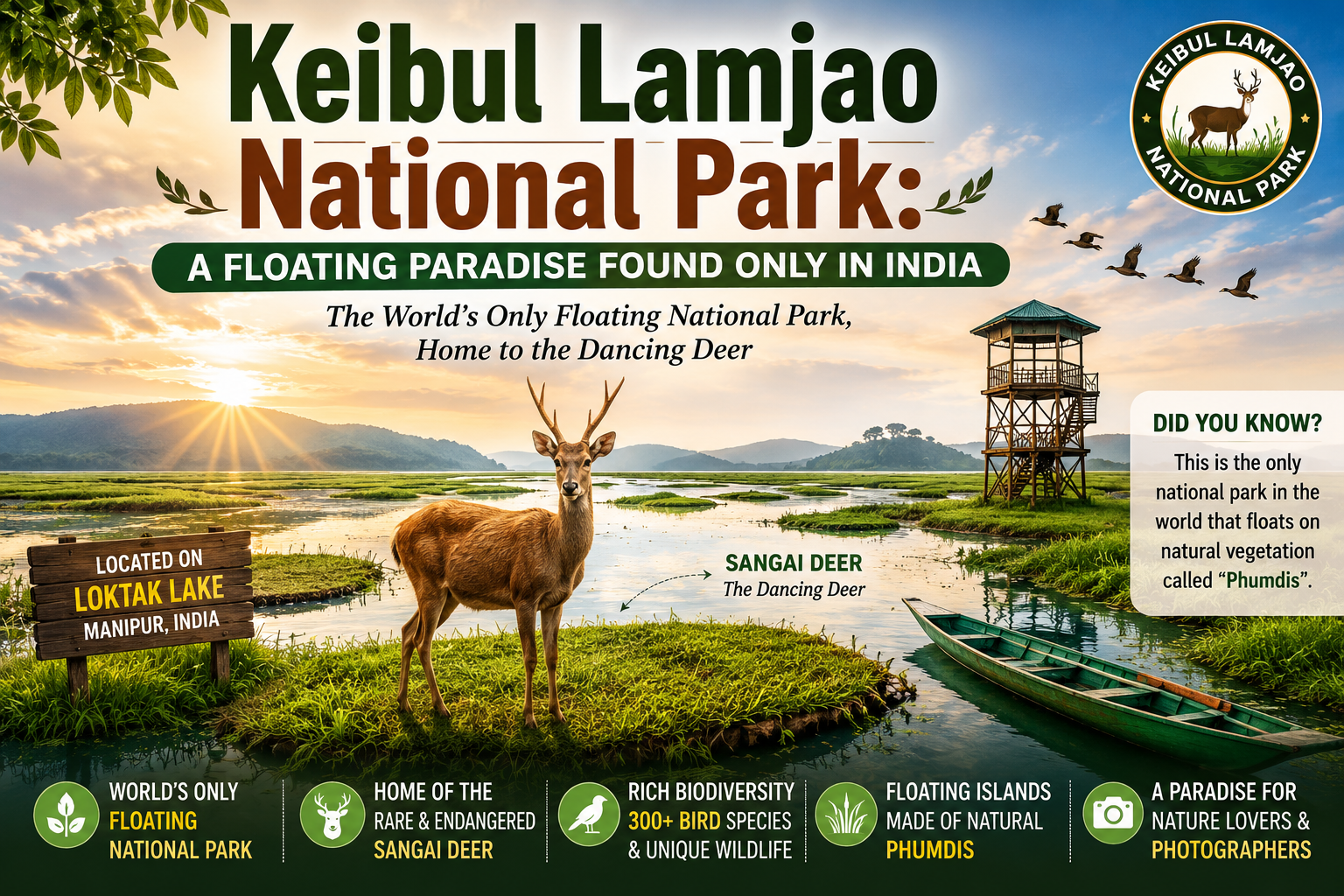
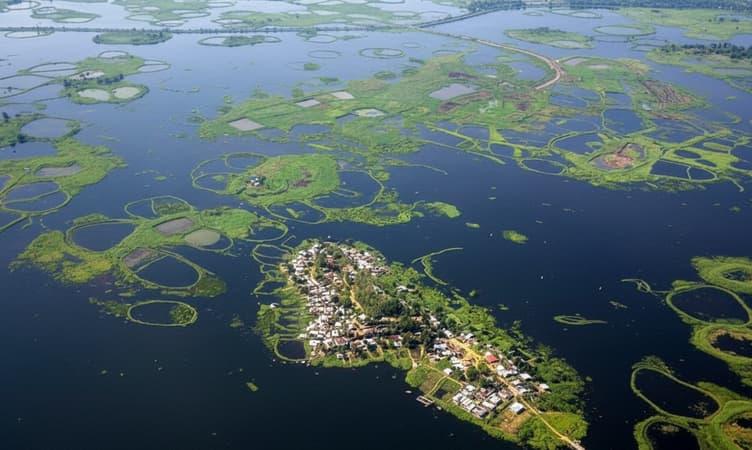
Keibul Lamjao National Park, located on the southern part of Loktak Lake, is recognized as the world’s only floating national park. Unlike conventional national parks built on stable land, this remarkable protected area is formed on naturally floating masses of vegetation, soil, and organic matter known locally as phumdis. These floating islands drift gently with the movement of water, creating an ecosystem unlike any other on Earth.
Spanning approximately 40 square kilometers, Keibul Lamjao is not only a breathtaking tourist destination but also one of India’s most important biodiversity hotspots. It serves as the last natural home of the endangered Sangai deer, also known as the “Dancing Deer.”
The park is a symbol of nature’s incredible ability to adapt and thrive under unique environmental conditions.
What Makes the Park “Floating”?
The defining feature of Keibul Lamjao National Park is its phumdis.
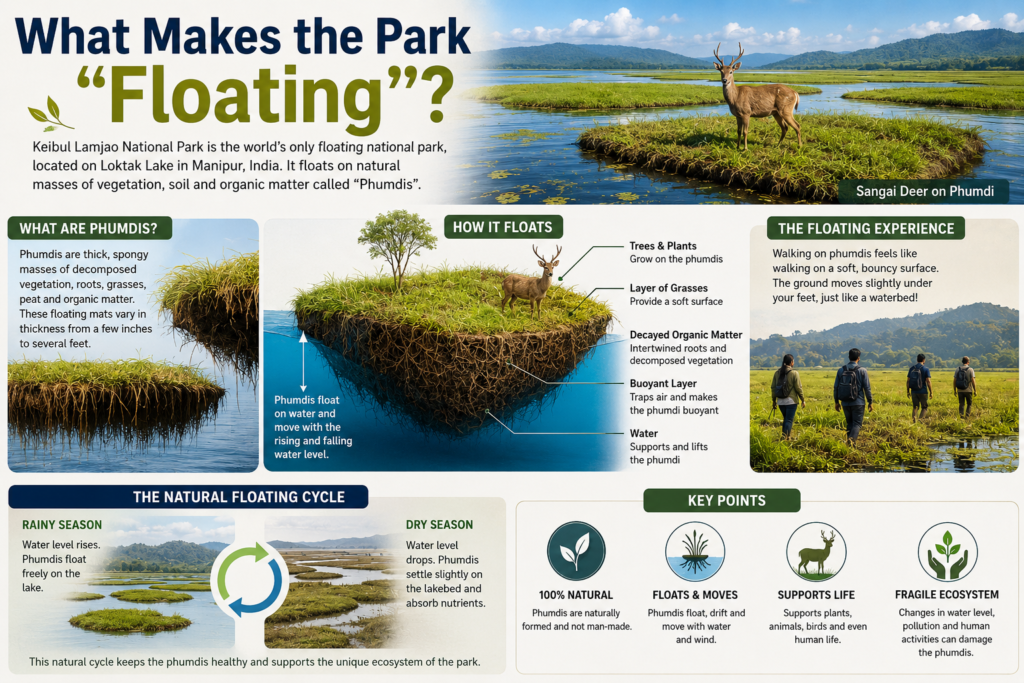
Phumdis are thick floating mats made from decomposed vegetation, roots, grasses, peat, and organic matter accumulated over decades. Some phumdis are several feet thick, making them strong enough to support trees, shrubs, animals, and even humans.
Unlike artificial floating platforms, these are entirely natural formations.
During the rainy season, when the water level in Loktak Lake rises, the phumdis float freely. In the dry season, they settle slightly onto the lakebed, absorbing nutrients essential for maintaining their ecological balance.
This annual floating cycle is what keeps the ecosystem alive.
Walking across these floating islands is a surreal experience. Visitors often describe the sensation as walking on a giant waterbed, where the ground gently moves beneath their feet.
No other national park in the world offers such an experience.
The Last Refuge of the Sangai Deer
The greatest ecological significance of Keibul Lamjao lies in its role as the only natural habitat of the Sangai deer (Rucervus eldii eldii).
The Sangai is Manipur’s state animal and one of the rarest deer species on Earth.
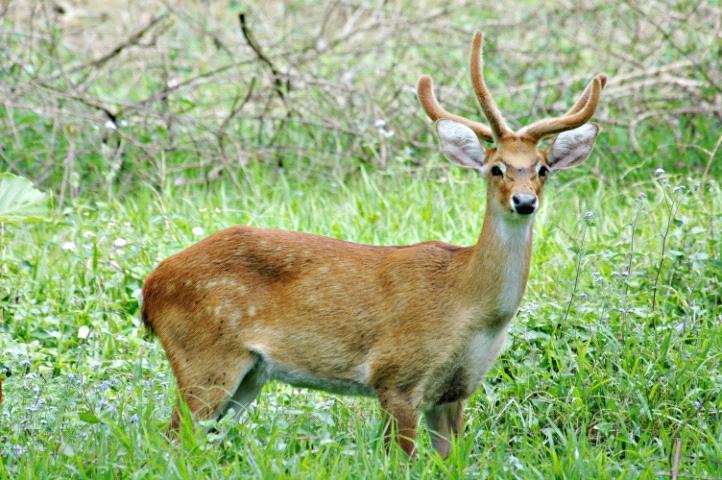
Often called the “Dancing Deer,” the Sangai moves gracefully across the soft phumdis with slow, delicate steps that resemble a dance. Its unique walking style helps it maintain balance on the floating vegetation.
By the middle of the twentieth century, the Sangai was believed to be almost extinct.
Conservation efforts by the Government of India, the Government of Manipur, forest officials, wildlife experts, and local communities have helped revive its population.
Today, although its numbers have improved, the Sangai remains endangered and continues to depend entirely on the fragile ecosystem of Keibul Lamjao National Park.
Its survival is directly linked to the health of the floating phumdis.
A Rich Biodiversity Hotspot
While the Sangai attracts the most attention, the park supports a remarkable range of wildlife.
The floating grasslands provide habitat for:
- Wild boars
- Hog deer
- Otters
- Civets
- Fishing cats
- Python species
- Numerous amphibians and reptiles
The surrounding wetlands also support a rich aquatic ecosystem with various species of fish, freshwater mollusks, and insects.
Keibul Lamjao is equally famous among birdwatchers.
Every winter, migratory birds arrive from Central Asia, Siberia, and other parts of the world, transforming Loktak Lake into a paradise for bird enthusiasts.
Species commonly observed include:
- Northern Pintail
- Lesser Whistling Duck
- Purple Heron
- Black Kite
- Cormorants
- Egrets
- Kingfishers
This extraordinary biodiversity makes the park one of India’s most significant wetland ecosystems.
Loktak Lake: The Lifeline of the Park
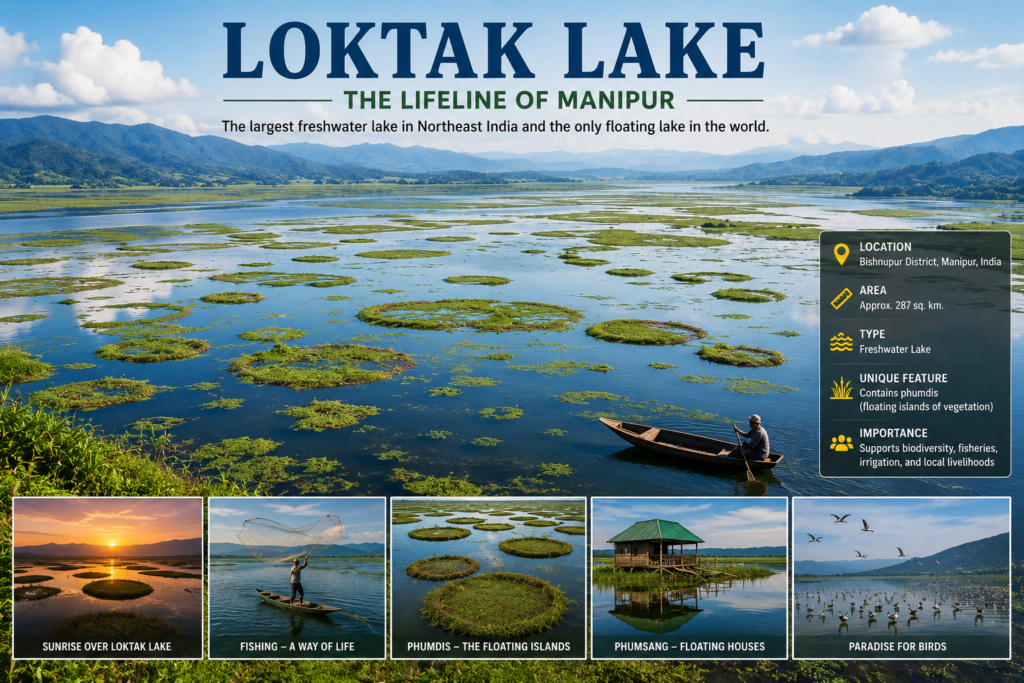
Keibul Lamjao National Park cannot exist without Loktak Lake, the largest freshwater lake in Northeast India.
Covering nearly 287 square kilometers, Loktak Lake supports thousands of local fishermen and farming communities.
The lake also plays a crucial role in:
- Irrigation
- Drinking water supply
- Fisheries
- Hydroelectric power generation
- Tourism
Its floating islands create one of the most unique freshwater landscapes in the world.
Local communities have lived in harmony with the lake for centuries, building floating huts known as phumsangs and relying on fishing as their primary livelihood.
Challenges Facing the Floating National Park
Despite its global significance, Keibul Lamjao faces several environmental threats.
1. Altered Water Levels
The construction of dams and hydroelectric projects has changed Loktak Lake’s natural water cycle.
Because phumdis depend on seasonal fluctuations in water levels, persistently high water levels reduce their ability to absorb nutrients from the lakebed.
As a result, many phumdis are becoming thinner and weaker.
2. Climate Change
Changing rainfall patterns, increasing temperatures, and unpredictable weather conditions threaten the long-term stability of the floating ecosystem.
Scientists warn that climate change may significantly alter the lake’s ecological balance.
3. Pollution
Plastic waste, agricultural runoff, and domestic sewage entering Loktak Lake have increased pollution levels.
Poor water quality affects fish populations, aquatic plants, and wildlife dependent on clean freshwater.
4. Human Encroachment
Expanding settlements, illegal fishing practices, and unregulated tourism have increased pressure on the fragile ecosystem.
Forest officials continue to monitor human activities to reduce environmental damage.
Conservation Efforts
Recognizing the ecological importance of Keibul Lamjao, several conservation programs are underway.
The Government of Manipur, the Ministry of Environment, Forest and Climate Change, and various environmental organizations are working together to protect the park.
Key conservation measures include:
- Regular wildlife monitoring
- Sangai population surveys
- Phumdi restoration projects
- Anti-poaching patrols
- Community awareness programs
- Wetland conservation initiatives
- Sustainable tourism development
Local communities have also become active partners in conservation.
Their traditional ecological knowledge plays an essential role in protecting the floating ecosystem.
Tourism in Keibul Lamjao
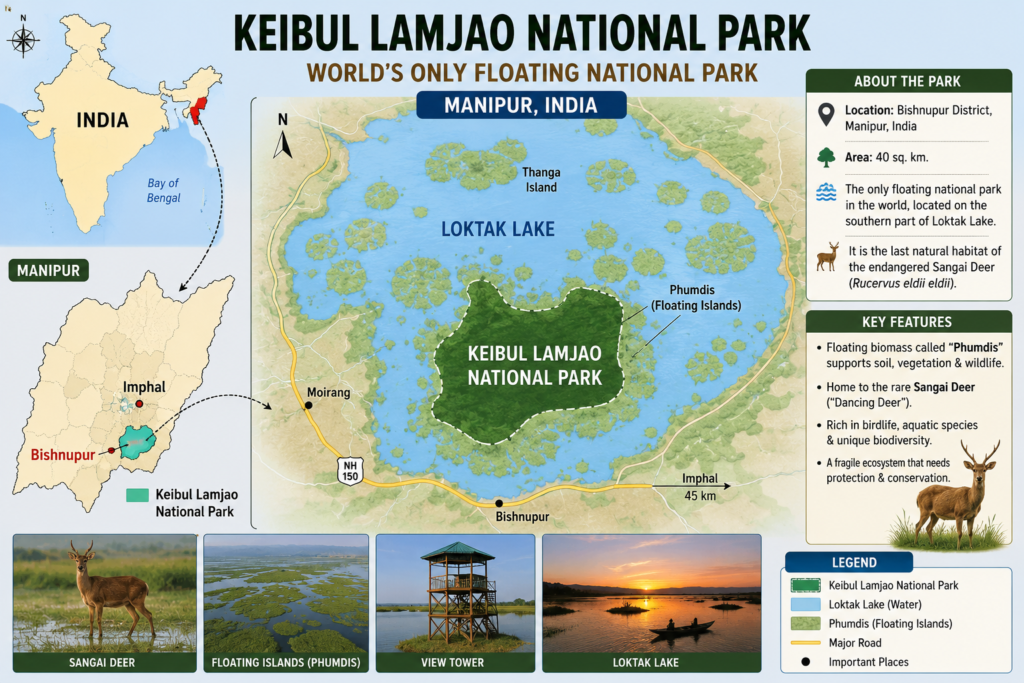
The national park has become one of Northeast India’s most fascinating eco-tourism destinations.
Visitors can enjoy:
- Boat rides across Loktak Lake
- Wildlife photography
- Birdwatching
- Nature walks
- Observation towers overlooking the floating grasslands
- Local Manipuri culture and cuisine
The nearby Sendra Tourist Resort offers panoramic views of the lake and its floating islands.
The best time to visit is between November and March, when the weather is pleasant, and wildlife sightings are more frequent.
Why the World Should Care
Keibul Lamjao National Park is far more than a tourist attraction.
It represents one of the planet’s rarest ecosystems—a living example of how nature can create habitats under extraordinary conditions.
As wetlands around the world disappear due to urbanization and climate change, Keibul Lamjao reminds us of the importance of conserving fragile ecosystems before they are lost forever.
The survival of the Sangai deer, the health of Loktak Lake, and the future of the floating phumdis are interconnected.
Protecting one means protecting them all.
A Living Symbol of Nature’s Innovation
Few places on Earth demonstrate nature’s creativity as beautifully as Keibul Lamjao National Park.
Floating grasslands, endangered wildlife, crystal-clear wetlands, migratory birds, and centuries-old traditions combine to create a landscape found nowhere else on the planet.
For scientists, it is a priceless ecological laboratory.
For conservationists, it is a global priority.
For travelers, it is a once-in-a-lifetime destination.
And for India, it remains one of the country’s greatest natural treasures.
As the world increasingly recognizes the importance of protecting wetlands and biodiversity, Keibul Lamjao National Park stands as a powerful reminder that even the most fragile ecosystems deserve our strongest protection.