

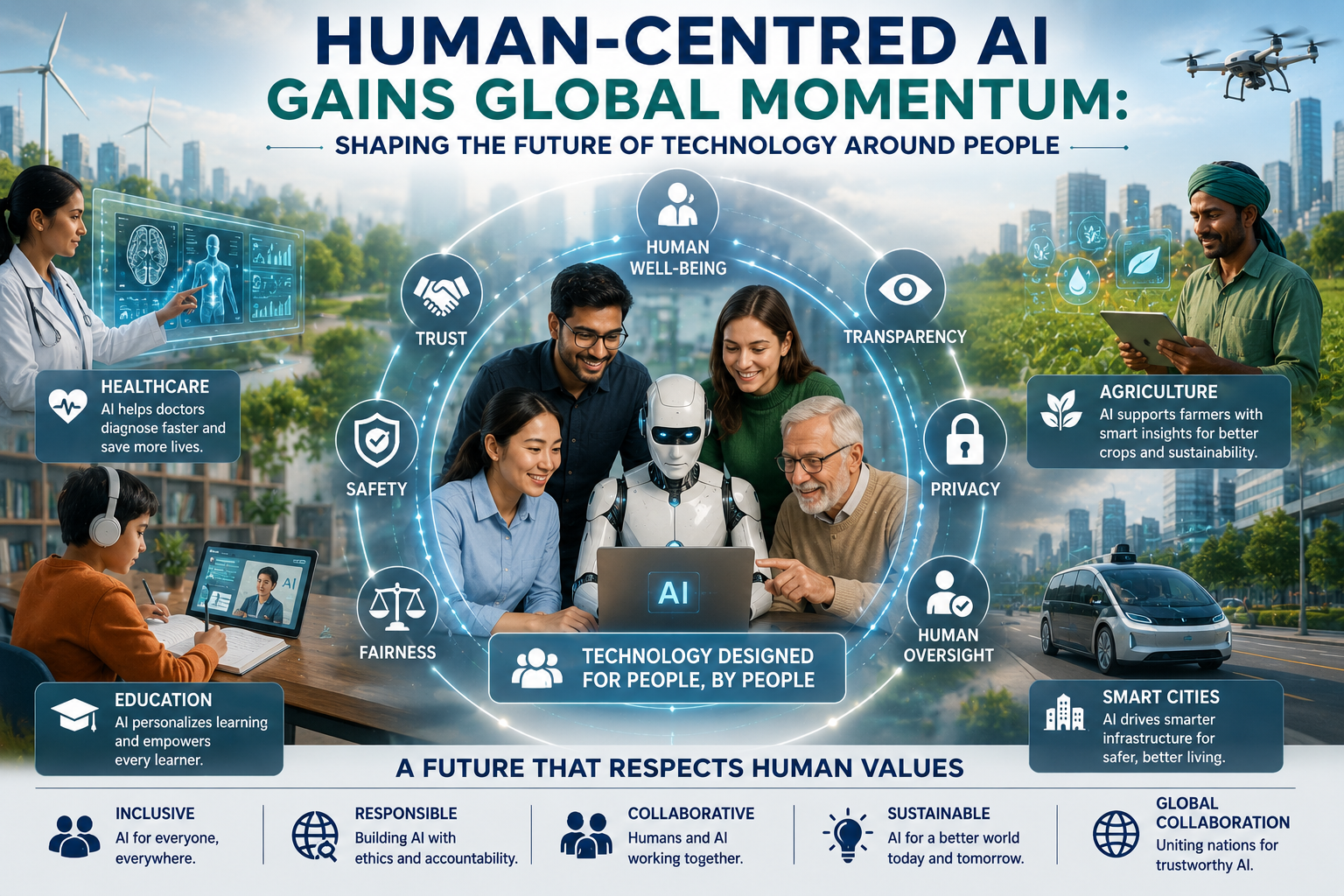

Artificial Intelligence (AI) has become one of the most transformative technologies of the 21st century. From healthcare and education to finance, transportation, agriculture, and scientific research, AI is reshaping industries and changing how people live and work. Over the past few years, the rapid development of generative AI has demonstrated extraordinary capabilities, including creating text, images, videos, software code, and complex data analysis within seconds.
However, as AI becomes increasingly powerful, governments, researchers, technology companies, and policymakers around the world are asking an important question: Should AI simply become more intelligent, or should it be designed to serve humanity responsibly?
This question has given rise to the concept of Human-Centred AI (HCAI)—an approach that places people, rather than technology, at the heart of AI development. Instead of replacing human intelligence, Human-Centred AI focuses on empowering people, improving decision-making, protecting human rights, and ensuring that AI systems operate safely, ethically, and transparently. Today, Human-Centred AI is emerging as one of the most important priorities in global AI policy and innovation.
What Is Human-Centred AI?
Human-Centred AI is a design philosophy that emphasizes creating AI systems that enhance human capabilities rather than replace them. It focuses on developing technologies that respect human values, support collaboration between humans and machines, and ensure fairness, accountability, and transparency.
Unlike traditional AI development, which often prioritizes technical performance alone, Human-Centered AI considers the broader social impact of technology. It seeks to answer questions such as:
- How will AI affect people’s lives?
- Can AI make decisions fairly?
- Is user privacy protected?
- Can humans understand and control AI decisions?
- Does AI benefit society as a whole?
The goal is not to build machines that outperform humans in every task but to create intelligent systems that help people solve real-world problems more effectively.
Why the World Is Focusing on Human-Centred AI
The rapid rise of generative AI has brought remarkable opportunities, but it has also introduced significant challenges. AI-generated misinformation, deepfakes, algorithmic bias, cybersecurity risks, and concerns about job displacement have highlighted the need for responsible AI governance.
As AI systems become integrated into everyday life, public trust has become just as important as technological innovation. Governments and international organizations now recognize that AI must be developed with ethical principles and human welfare in mind.
Experts argue that technology should always remain under meaningful human oversight. AI may assist in making decisions, but humans must remain responsible for those decisions, especially in critical sectors such as healthcare, criminal justice, finance, education, and public administration.
The Core Principles of Human-Centred AI
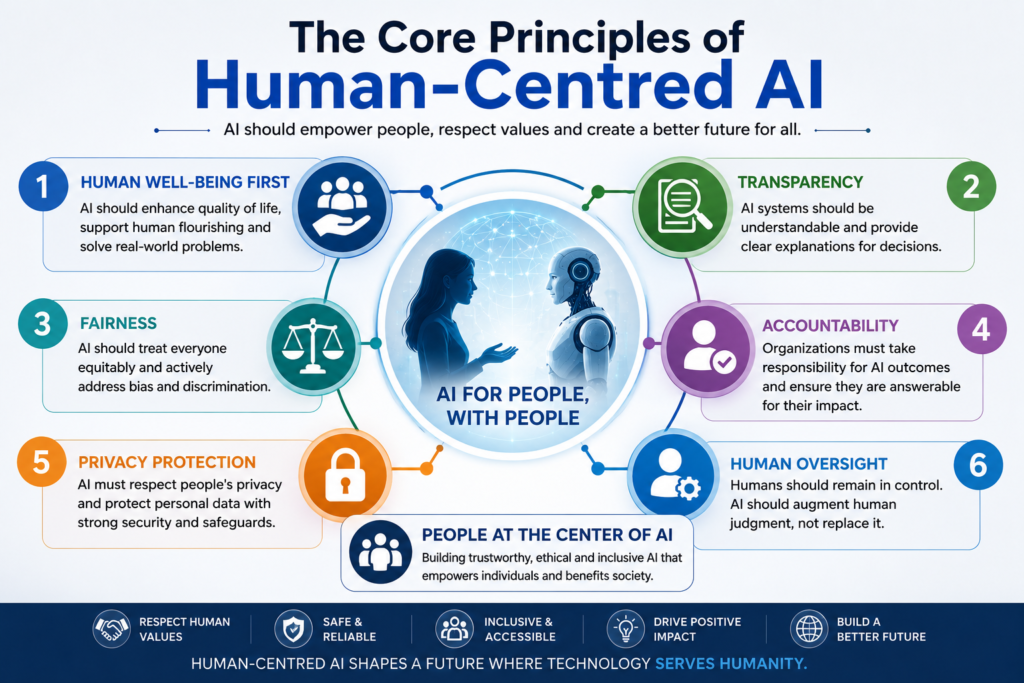
Human-Centred AI is built upon several fundamental principles.
1. Human Well-being First
AI systems should improve people’s quality of life rather than create new risks. Their primary objective should be to help individuals and communities.
2. Transparency
Users should understand how AI reaches important decisions. AI systems should provide explanations whenever possible.
3. Fairness
AI should treat all users equally, regardless of gender, ethnicity, religion, nationality, or socioeconomic background.
4. Accountability
Organizations developing AI must remain responsible for how their systems operate and address any harmful outcomes.
5. Privacy Protection
Human-Centered AI prioritizes secure handling of personal information and respects individuals’ privacy rights.
6. Human Oversight
Humans should always have the ability to supervise, correct, or override AI systems whenever necessary.
Together, these principles help ensure that AI serves humanity rather than creating unintended harm.
Human Feedback: The Foundation of Modern AI
One of the most important aspects of Human-Centered AI is the role of human feedback.
Although modern AI models are trained using enormous datasets, they still require continuous guidance from human experts. Researchers, data annotators, engineers, and quality reviewers evaluate AI-generated responses and teach models whose answers are more accurate, useful, safe, and appropriate.
This process, commonly known as Reinforcement Learning from Human Feedback (RLHF), has become a cornerstone of modern AI development. Human reviewers compare multiple AI-generated responses, rank them based on quality and safety, and provide feedback that helps improve future performance.
Without human feedback, AI systems would be far less reliable and significantly more likely to produce misleading or harmful content. Human expertise remains essential for aligning AI with real-world values and expectations.
Human-Centred AI in Everyday Life
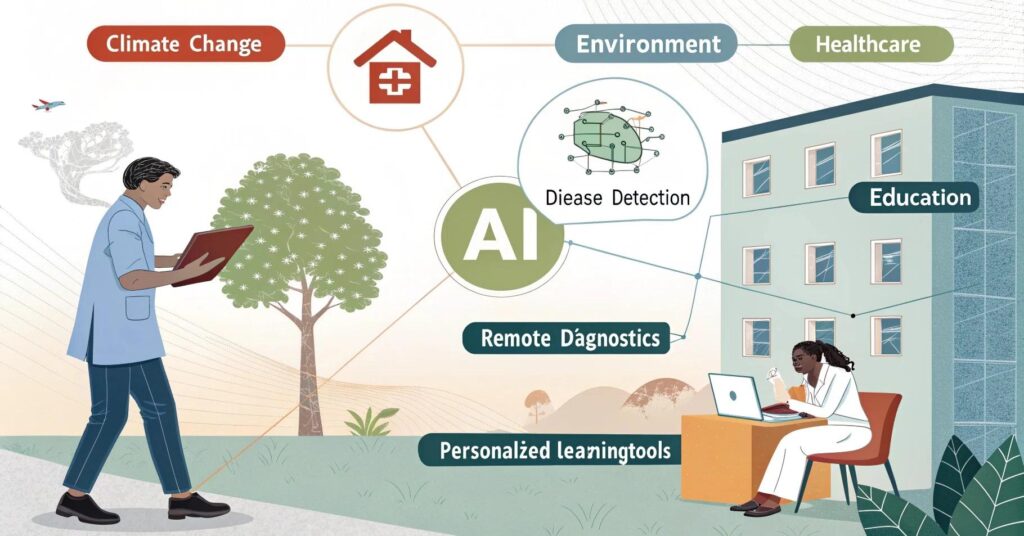
Human-Centred AI is already improving lives across many sectors.
Healthcare
AI assists doctors by analyzing medical images, identifying diseases earlier, recommending treatment options, and reducing diagnostic errors. Rather than replacing physicians, AI acts as a decision-support tool that enables better patient care.
Education
Educational AI platforms provide personalized learning experiences based on each student’s strengths and weaknesses. Teachers use AI to create customized lesson plans, automate routine tasks, and monitor student progress.
Agriculture
Farmers benefit from AI-powered weather forecasting, soil analysis, crop monitoring, pest detection, and irrigation management, helping increase agricultural productivity while reducing costs.
Disaster Management
AI analyzes satellite imagery, weather data, and emergency communications to predict floods, wildfires, storms, and earthquakes. Governments use these insights to improve disaster preparedness and emergency response.
Accessibility
Human-Centered AI supports people with disabilities through speech recognition, real-time translation, vision assistance, smart prosthetics, and assistive communication technologies.
These examples demonstrate how AI works alongside humans rather than replacing them.
India’s Growing Role in Human-Centred AI
India has emerged as one of the leading countries promoting responsible and inclusive AI development.
The government has emphasized AI applications in healthcare, agriculture, education, governance, and digital public infrastructure. Indian policymakers increasingly advocate for AI systems that are transparent, trustworthy, and beneficial to society.
India’s approach also focuses on making AI accessible to multiple languages and diverse communities, ensuring that technological progress benefits people across urban and rural regions alike. This vision aligns closely with the principles of Human-Centered AI.
Global Collaboration for Responsible AI
International cooperation is becoming increasingly important as AI evolves.
Organizations, including the United Nations, UNESCO, the OECD, and various international AI forums, have developed ethical guidelines encouraging countries to prioritize human rights, fairness, transparency, and accountability in AI development.
Technology companies are also investing heavily in AI safety research, responsible innovation, and governance frameworks to ensure that increasingly capable AI systems remain aligned with human values.
Experts believe that no single country can address AI challenges alone. Global collaboration will be essential for establishing common standards that encourage innovation while protecting society.
Challenges That Still Need Solutions
Despite significant progress, Human-Centered AI faces several important challenges.
One major concern is algorithmic bias. AI systems trained on imperfect or unbalanced data may unintentionally produce discriminatory outcomes.
Another challenge involves privacy protection. AI systems often require large amounts of data, making secure data management increasingly important.
Cybersecurity also remains a concern, as AI systems could become targets for malicious attacks or manipulation.
In addition, the rapid automation of certain tasks raises questions about the future of employment and workforce adaptation. Governments, educational institutions, and businesses must work together to prepare workers for an AI-driven economy through reskilling and lifelong learning.
Finally, regulating AI without slowing innovation presents an ongoing policy challenge for governments worldwide.
The Future of Human-Centred AI
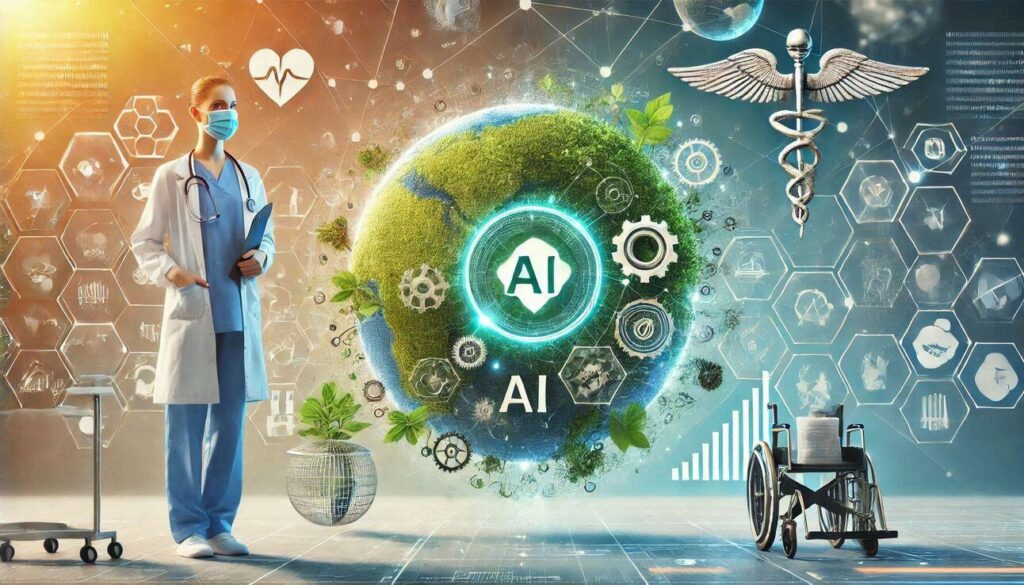
The future of artificial intelligence will likely be defined not only by more powerful algorithms but also by stronger collaboration between humans and machines.
Future AI systems are expected to become:
- More transparent
- More explainable
- More trustworthy
- More secure
- More energy-efficient
- More personalized
- More inclusive
- Better aligned with human values
Rather than replacing professionals, AI will increasingly serve as an intelligent assistant that enhances creativity, productivity, scientific discovery, and decision-making.
Human-centered design will also become a competitive advantage for technology companies. Organizations that build trustworthy AI are likely to gain greater public confidence and long-term success.
Conclusion
Human-Centred AI represents a significant shift in the future of artificial intelligence. Instead of measuring success solely by computational power or automation, this approach places human needs, ethical principles, and social responsibility at the centre of technological innovation.
As AI becomes deeply integrated into every aspect of society, ensuring that these systems remain safe, transparent, fair, and accountable will be essential. Human feedback, responsible governance, and international cooperation will continue to shape the next generation of intelligent technologies.
Ultimately, the future of AI is not about replacing people with machines—it is about creating technology that amplifies human potential, supports better decisions, and contributes to a more inclusive, sustainable, and prosperous world.