

Accra, Ghana | Special Report
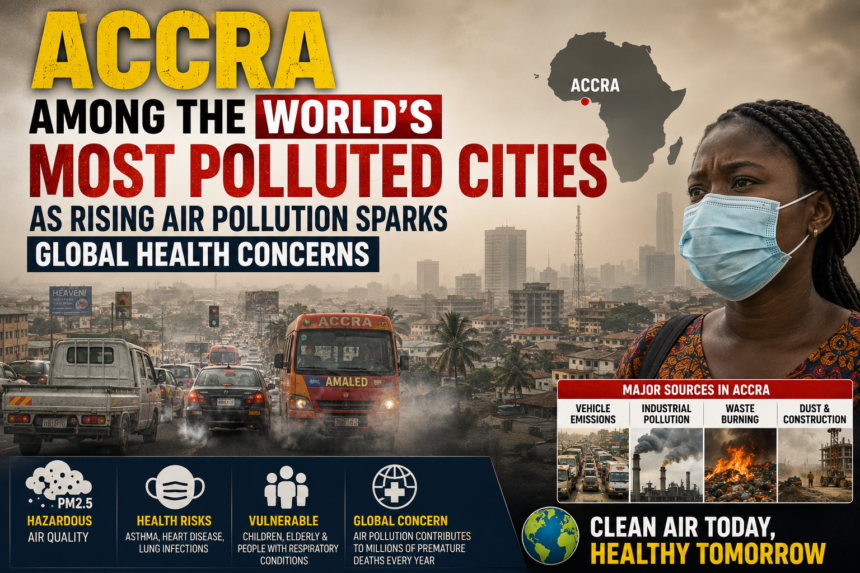
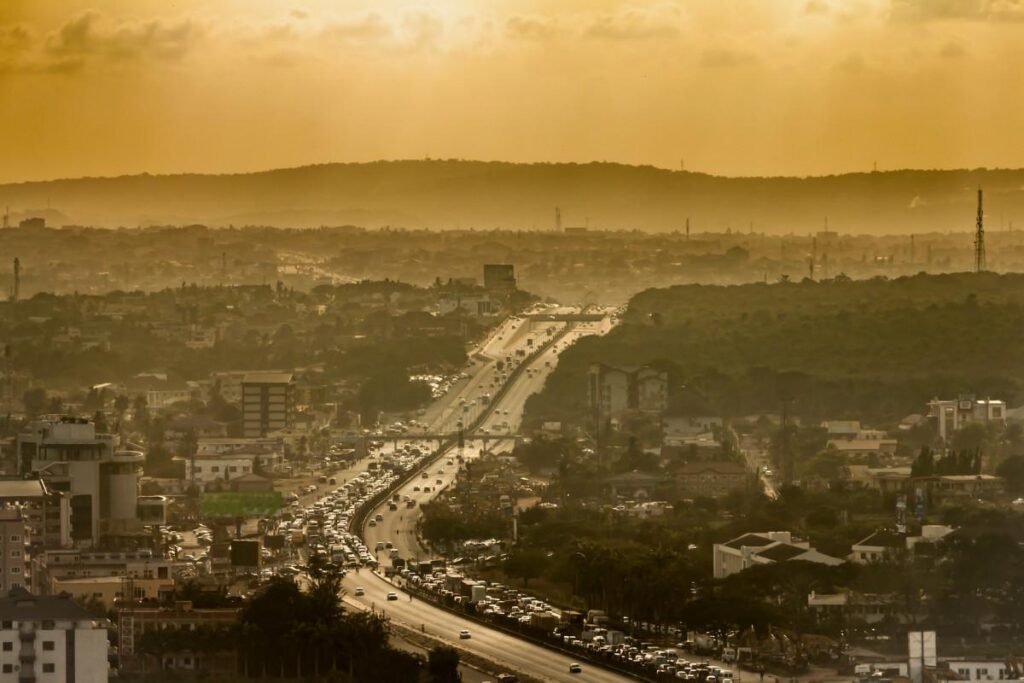
Ghana’s capital Accra has recently been ranked among the world’s most polluted cities according to real-time air quality monitoring by IQAir, raising serious concerns among environmental experts, health professionals, and policymakers. The city’s Air Quality Index (AQI) reached unhealthy levels on 10 July 2026, making breathing conditions hazardous for millions of residents. The report has once again highlighted the growing challenge of urban air pollution in rapidly developing cities across Africa and other parts of the world.
Air pollution has become one of the biggest environmental threats facing humanity today. According to the World Health Organization (WHO), nearly 99% of the global population breathes air that exceeds recommended pollution limits, contributing to millions of premature deaths every year. Fine particulate matter (PM2.5), nitrogen dioxide (NO₂), sulfur dioxide (SO₂), ozone (O₃), and carbon monoxide (CO) are among the major pollutants affecting human health.
Accra’s appearance among the world’s most polluted cities reflects broader environmental challenges associated with rapid urbanization, increasing vehicle ownership, industrial expansion, poor waste management, and climate-related weather conditions.
Why Has Air Pollution Increased in Accra?
Environmental scientists point to several factors contributing to the city’s worsening air quality.
1. Traffic Emissions
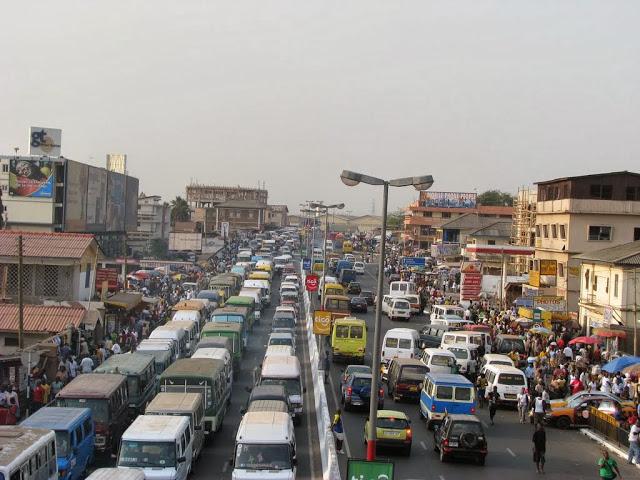
Road transport remains the single largest contributor to air pollution in Accra.
Every day, thousands of vehicles—including aging diesel buses, trucks, taxis, and motorcycles—release harmful pollutants into the atmosphere.
Major pollutants include:
- PM2.5
- PM10
- Nitrogen Oxides (NOx)
- Carbon Monoxide
- Black Carbon
Traffic congestion allows these pollutants to accumulate over busy roads throughout the day.
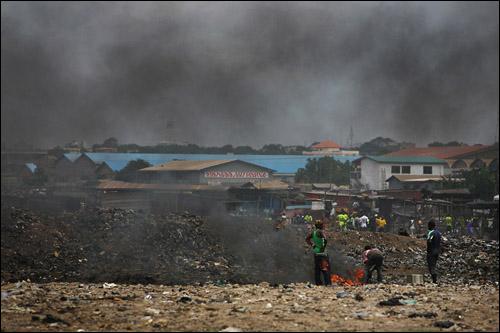
2. Open Waste Burning
Open burning of household garbage remains common in several parts of Accra.
Plastic waste, rubber, electronic waste, and domestic refuse release highly toxic substances including:
- Dioxins
- Heavy metals
- Fine particulate matter
- Toxic smoke
Environmental experts say eliminating open waste burning could significantly improve air quality.
3. Industrial Pollution
Accra is Ghana’s largest commercial and industrial center.
Factories involved in:
- Cement production
- Food processing
- Metal manufacturing
- Chemical production
- Energy generation
Release pollutants into the atmosphere.
Although emission standards exist, experts believe stronger monitoring and enforcement are necessary.
4. Household Cooking
Many families continue using:
- Charcoal
- Firewood
- Biomass fuel
for cooking.
Indoor smoke frequently escapes outdoors, adding to citywide pollution.
5. Dust and Construction
Rapid urban development has increased:
- Construction activities
- Road dust
- Demolition work
These generate large quantities of suspended particulate matter.
Understanding AQI and PM2.5
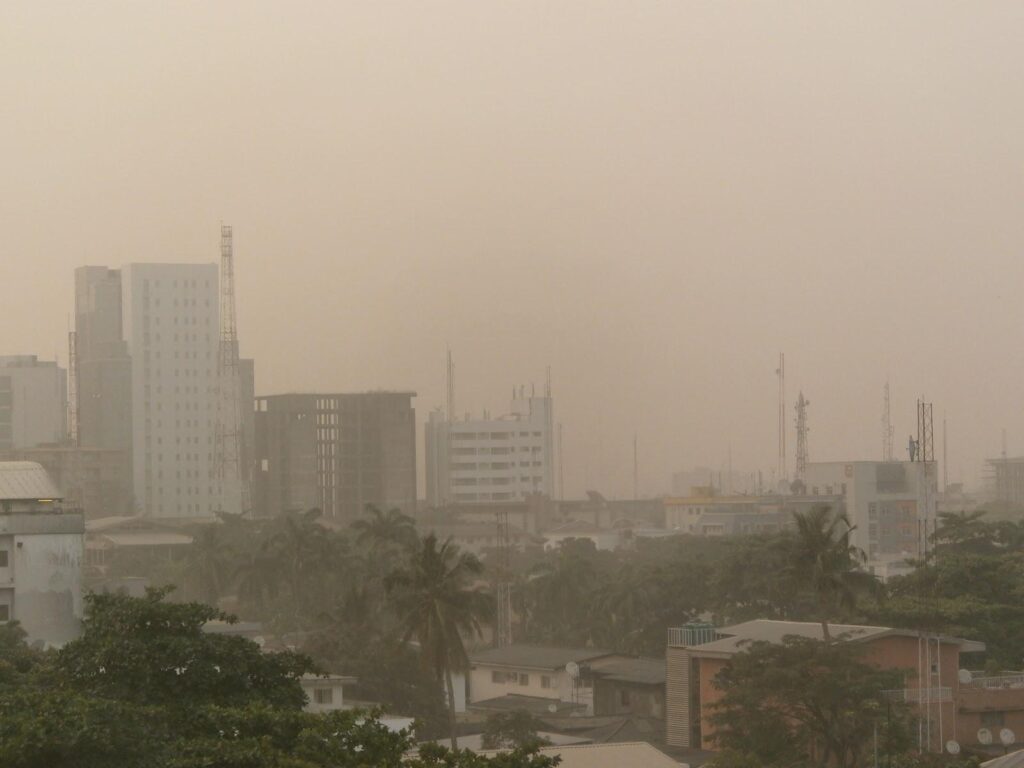
The Air Quality Index (AQI) measures how clean or polluted the air is.
Generally:
- 0–50: Good
- 51–100: Moderate
- 101–150: Unhealthy for sensitive groups
- 151–200: Unhealthy
- 201–300: Very unhealthy
- 301+: Hazardous
One of the most dangerous pollutants is PM2.5, which consists of microscopic particles less than 2.5 micrometers in diameter.
Because of their tiny size, they can:
- Reach deep into the lungs.
- Enter the bloodstream.
- Damage the heart.
- Affect the brain.
- Increase the risk of chronic diseases.
WHO recommends an annual PM2.5 concentration of no more than 5 µg/m³, yet many major cities regularly exceed this guideline.
Health Effects of Air Pollution
Medical experts warn that prolonged exposure to polluted air can lead to severe health problems.
Respiratory Diseases
Air pollution increases the risk of:
- Asthma
- Bronchitis
- Pneumonia
- Chronic Obstructive Pulmonary Disease (COPD)
Children are particularly vulnerable because their lungs are still developing.
Heart Disease
Fine particles entering the bloodstream increase the likelihood of:
- High blood pressure
- Heart attacks
- Stroke
- Cardiovascular disease
Cancer
WHO classifies outdoor air pollution as a carcinogenic environmental exposure.
Long-term exposure may increase the risk of:
- Lung cancer
- Bladder cancer
Impact on Children
Children exposed to polluted air may experience:
- Reduced lung growth
- Learning difficulties
- Increased respiratory infections
- Weakened immune systems
Economic Impact
Air pollution also affects national economies through:
- Higher healthcare costs
- Reduced worker productivity
- Increased absenteeism
- Lower tourism
- Damage to infrastructure
The World Bank estimates that air pollution costs countries billions of dollars annually through healthcare expenses and lost economic output.
Government Response
Ghanaian authorities have announced several measures aimed at improving air quality.
These include:
- Expanding air quality monitoring stations.
- Promoting cleaner public transportation.
- Strengthening vehicle emission inspections.
- Improving waste management.
- Encouraging cleaner household cooking fuels.
- Increasing urban green spaces.
Environmental organizations stress that long-term success will depend on consistent implementation and public participation.
Air Pollution: A Global Problem
Although Accra has recently attracted attention, air pollution remains a worldwide crisis.
Rapid industrialization, fossil fuel consumption, climate change, and urban growth continue to worsen air quality across many regions.
Many cities frequently record dangerous pollution levels during winter, dust storms, wildfire seasons, or periods of stagnant weather.
World’s Most Polluted Cities (Examples)
The list of the world’s most polluted cities changes frequently because many rankings are based on real-time AQI, weather conditions, and local emissions. Cities that often appear among the most polluted include:
| Rank | City | Country |
| 1 | Delhi | India |
| 2 | Lahore | Pakistan |
| 3 | Dhaka | Bangladesh |
| 4 | Kabul | Afghanistan |
| 5 | Kathmandu | Nepal |
| 6 | Accra | Ghana (during recent high AQI episode) |
| 7 | Ulaanbaatar | Mongolia |
| 8 | Beijing | China |
| 9 | Hanoi | Vietnam |
| 10 | Jakarta | Indonesia |
These rankings can change daily depending on weather and local pollution levels.
Countries Most Affected by Air Pollution (Long-Term PM2.5 Trends)
Based on long-term air quality reports, countries that frequently experience some of the highest PM2.5 pollution levels include:
| Rank | Country |
| 1 | Chad |
| 2 | Bangladesh |
| 3 | Pakistan |
| 4 | India |
| 5 | Democratic Republic of the Congo |
| 6 | Nepal |
| 7 | Tajikistan |
| 8 | Burkina Faso |
| 9 | Iraq |
| 10 | Rwanda |
These long-term rankings are generally based on annual PM2.5 concentrations rather than day-to-day AQI values.
What Can Citizens Do?
Experts recommend the following precautions during periods of poor air quality:
- Monitor the daily AQI before going outdoors.
- Wear a well-fitting protective mask when pollution is high.
- Reduce strenuous outdoor activities.
- Keep windows closed during severe pollution episodes.
- Use air purifiers where possible.
- Avoid burning waste or biomass.
Conclusion
Accra’s inclusion among the world’s most polluted cities is a warning that urban air pollution is becoming an increasingly urgent global challenge. Rapid population growth, industrial development, traffic congestion, and poor waste management have combined to degrade air quality in many cities, threatening public health and economic development.
Experts agree that solving the crisis will require coordinated action from governments, industries, and citizens. Investments in clean energy, sustainable transport, stricter environmental regulations, improved waste management, and greater public awareness will be essential to ensuring cleaner air for future generations.