

Beijing | Special Report
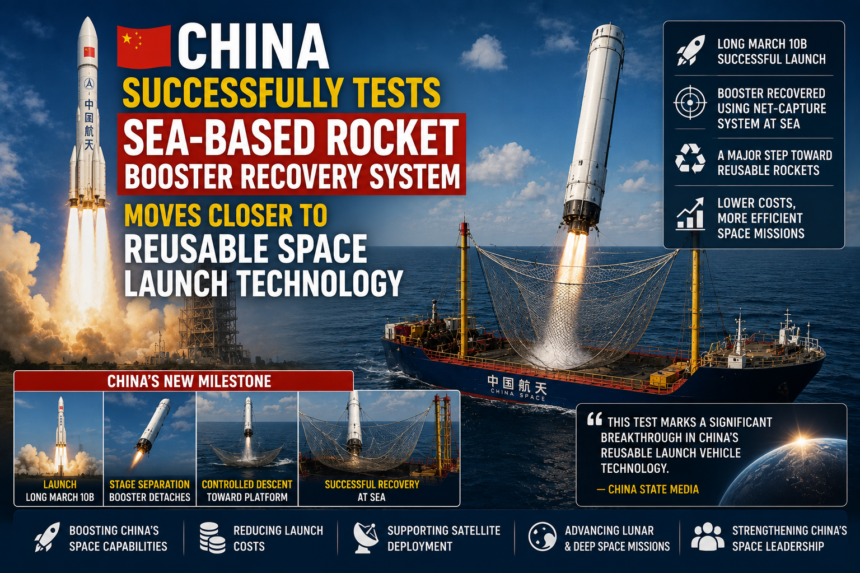
China has achieved a major milestone in its space program by successfully testing a sea-based rocket booster recovery system for the first time. Chinese state media said the breakthrough was demonstrated during the maiden flight of the Long March 10B rocket, whose first-stage booster was recovered using a net-based capture system mounted on an offshore platform. The achievement marks China’s first successful controlled recovery of an orbital-class rocket booster and moves the country closer to reusable launch vehicles.
The successful recovery is being viewed as a significant technological advancement because reusable rockets dramatically reduce launch costs, shorten mission turnaround times, and improve the efficiency of satellite launches and future lunar missions. China’s space agency believes the new recovery system could play a crucial role in supporting the country’s ambitious plans for space exploration, commercial satellite deployment, and eventual crewed missions to the Moon.
A Historic Achievement for China’s Space Program
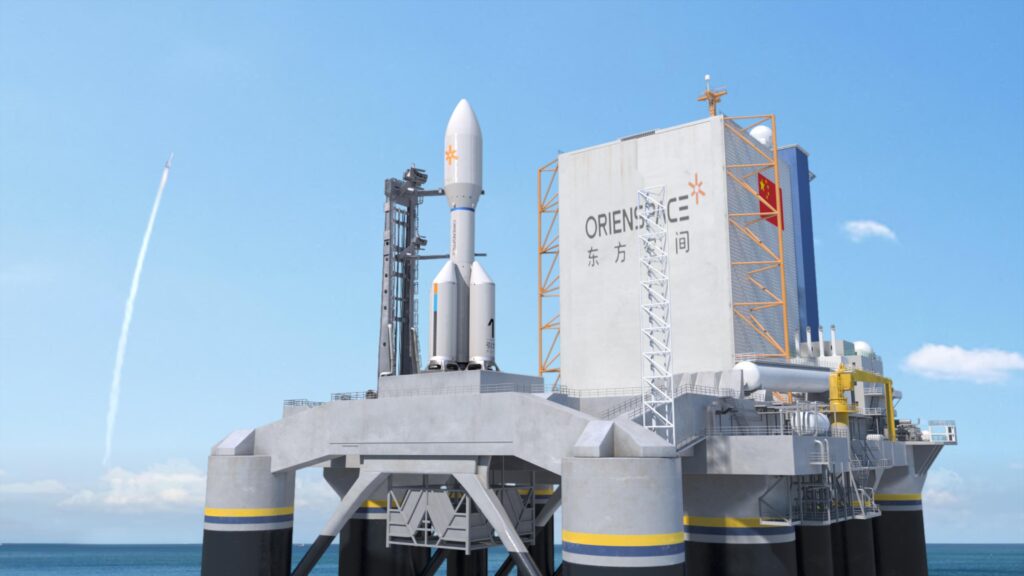
The mission lifted off from the Hainan Commercial Space Launch Site in southern China.
The Long March 10B successfully carried its payload into orbit before separating its first-stage booster.
Approximately six minutes after stage separation, the booster performed a controlled vertical descent toward a specially designed offshore recovery platform positioned in the South China Sea.
Instead of landing on deployable legs like SpaceX’s Falcon 9, the booster descended into a large net-capture recovery system, where it was safely secured.
Chinese state broadcaster CCTV described the event as China’s first successful recovery of an orbital-class launch vehicle booster, marking a major breakthrough in reusable launch technology.
What Makes This Recovery System Different?
Unlike SpaceX, which lands boosters vertically on autonomous drone ships using landing legs, China’s system uses a different recovery concept.
The recovery platform consists of:
- A reinforced offshore vessel.
- A giant suspended capture net.
- Precision guidance systems.
- Radar tracking equipment.
- Automated stabilization controls.
During recovery, the booster performs a controlled vertical descent before being caught by the suspended net, reducing the need for heavy landing legs.
According to Chinese engineers, eliminating landing legs reduces the rocket’s weight, allowing it to carry heavier payloads into orbit.
Why Reusable Rockets Matter
Traditional rockets are typically used only once.
After launch, most rocket stages fall into the ocean or burn up in the atmosphere, making every mission extremely expensive.
Reusable rockets change this model by allowing major components to be recovered, inspected, refurbished, and flown again.
Key benefits include:
- Lower launch costs.
- Faster mission preparation.
- Reduced manufacturing expenses.
- Increased launch frequency.
- Improved sustainability in space operations.
SpaceX revolutionized the industry by repeatedly reusing Falcon 9 boosters, significantly reducing the cost of launching satellites.
China now hopes to develop a similar capability through its own engineering approach.
The Long March 10B Rocket
The Long March 10B is one of China’s newest heavy-lift launch vehicles.
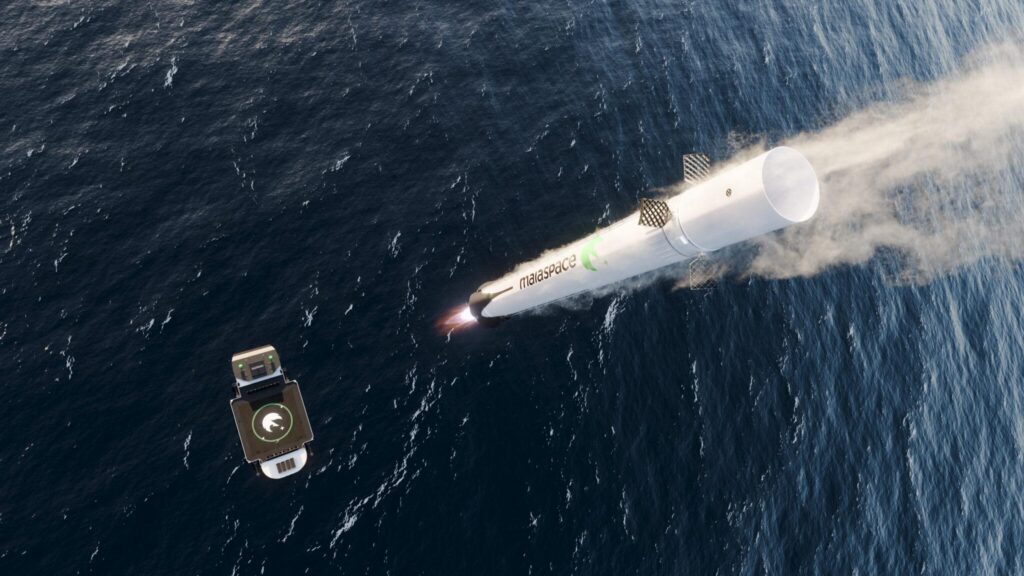
According to official information, the rocket:
- Stands approximately 63 meters tall.
- Has a diameter of 5 meters.
- Can carry at least 16 metric tonnes into low-Earth orbit.
- Uses liquid-fueled engines designed for future reuse.
The rocket is expected to become a key component of China’s future commercial launch services and deep-space exploration missions.
Hainan: China’s Expanding Space Hub
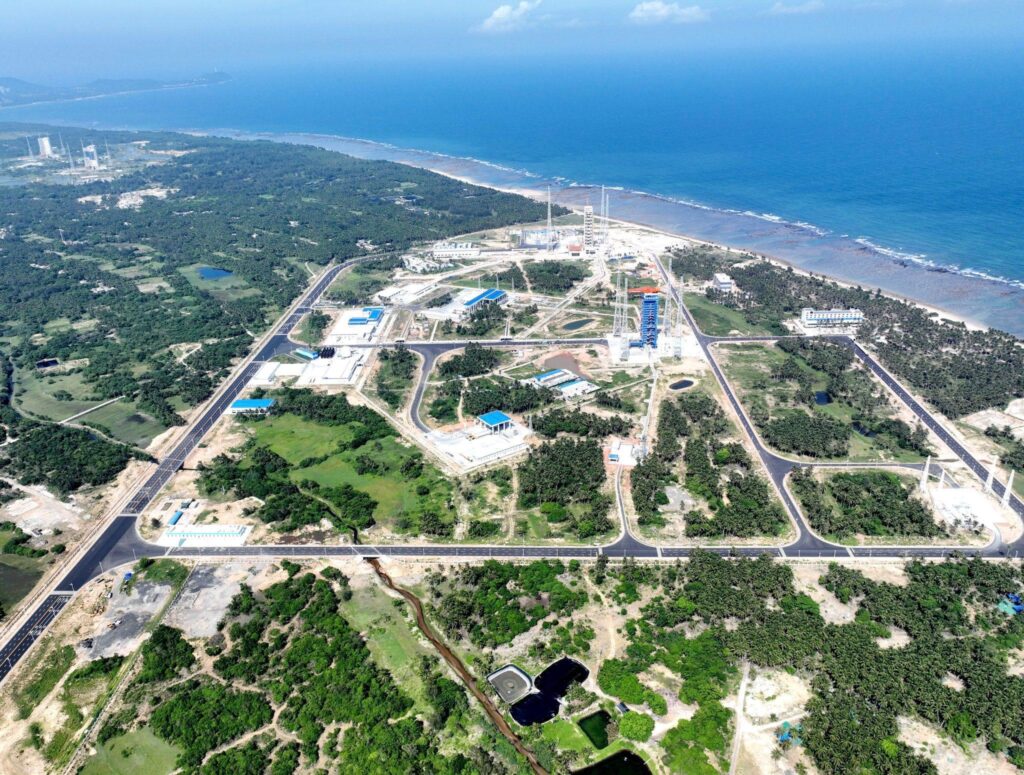
The launch took place at the Hainan Commercial Space Launch Site, one of China’s newest and most advanced launch facilities.
Located on Hainan Island, the site offers several advantages:
- Launches over open ocean.
- Reduced risk to populated areas.
- Easier offshore recovery operations.
- Improved logistics for reusable rockets.
Hainan has become the centerpiece of China’s commercial space ambitions, supporting both government and private launch providers.
Competing with SpaceX
China’s latest success is widely viewed as part of its broader effort to challenge American leadership in reusable spaceflight.
SpaceX first demonstrated successful booster recovery in 2015 and has since completed hundreds of reusable missions using Falcon 9 rockets.
China’s new system does not yet match the operational experience or flight cadence achieved by SpaceX, but experts say the successful test demonstrates rapid progress.
Unlike SpaceX’s landing-leg approach, China’s net-based recovery system represents a different engineering solution that may offer advantages in payload capacity and structural efficiency.
Economic Benefits
Reusable launch technology has enormous commercial potential.
Recovering boosters can reduce launch costs by millions of dollars per mission.
Potential benefits include:
- Cheaper satellite launches.
- Lower costs for commercial customers.
- Expansion of broadband satellite networks.
- Increased scientific missions.
- Improved military space capabilities.
China’s growing commercial space sector is expected to benefit significantly if reusable rockets become operational.
Supporting Lunar Ambitions
China has announced ambitious plans to send astronauts to the Moon before 2030.
Reusable launch vehicles are expected to play an important role in:
- Lunar cargo transportation.
- Space station logistics.
- Deep-space exploration.
- Future Mars missions.
Reducing launch costs allows governments to conduct more missions within the same budget.
Environmental Advantages
Rocket reusability also provides environmental benefits.
Manufacturing fewer new rockets reduces:
- Industrial emissions.
- Raw material consumption.
- Manufacturing waste.
Although rocket launches still produce emissions, reusing major components improves the overall efficiency of space transportation.
Experts React
Space industry analysts describe the achievement as technically impressive.
However, they also caution that one successful recovery is only the beginning.
To establish a fully reusable launch system, China must demonstrate:
- Multiple successful recoveries.
- Rapid refurbishment.
- Reliable repeated flights.
- Cost-effective operations.
If these objectives are achieved, China could become only the second country to operate reusable orbital-class launch vehicles on a large scale.
Impact on the Global Space Race
The success is expected to intensify competition among leading space powers.
Major players now include:
- United States (SpaceX, Blue Origin, NASA)
- China
- Europe
- India
- Japan
Growing competition is accelerating innovation in:
- Rocket propulsion.
- Satellite deployment.
- Lunar exploration.
- Space transportation.
- Commercial launch services.
Many experts believe reusable rockets will become the global standard over the next decade.
What Comes Next?
Chinese officials say another Long March 10B launch is planned later this year.
The recovered booster may undergo inspection and refurbishment before being reused in a future mission.
Engineers will evaluate:
- Structural integrity.
- Engine performance.
- Thermal protection systems.
- Guidance and navigation equipment.
- Recovery efficiency.
Successful reuse would represent the next major milestone in China’s reusable rocket program.
Conclusion
China’s successful test of a sea-based rocket booster recovery system marks a major advance in the country’s rapidly evolving space program. By recovering the Long March 10B booster using an innovative offshore net-capture system, China has demonstrated a new approach to reusable launch technology that could significantly reduce mission costs and strengthen its position in the global space race.
Although SpaceX remains the world leader in operational reusable rockets, China’s latest achievement shows that competition in space technology is accelerating. If future tests confirm reliable booster reuse, the breakthrough could reshape commercial launch services, satellite deployment, and deep-space exploration in the years ahead.