

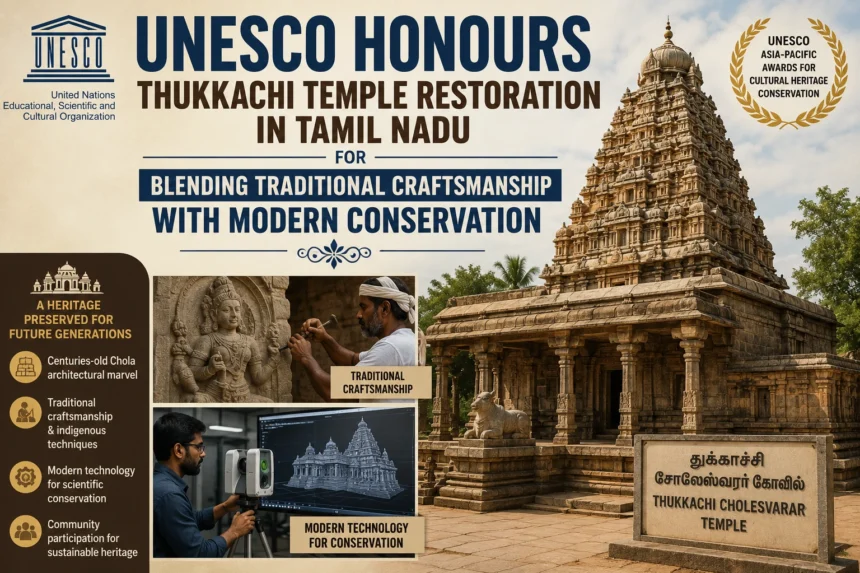
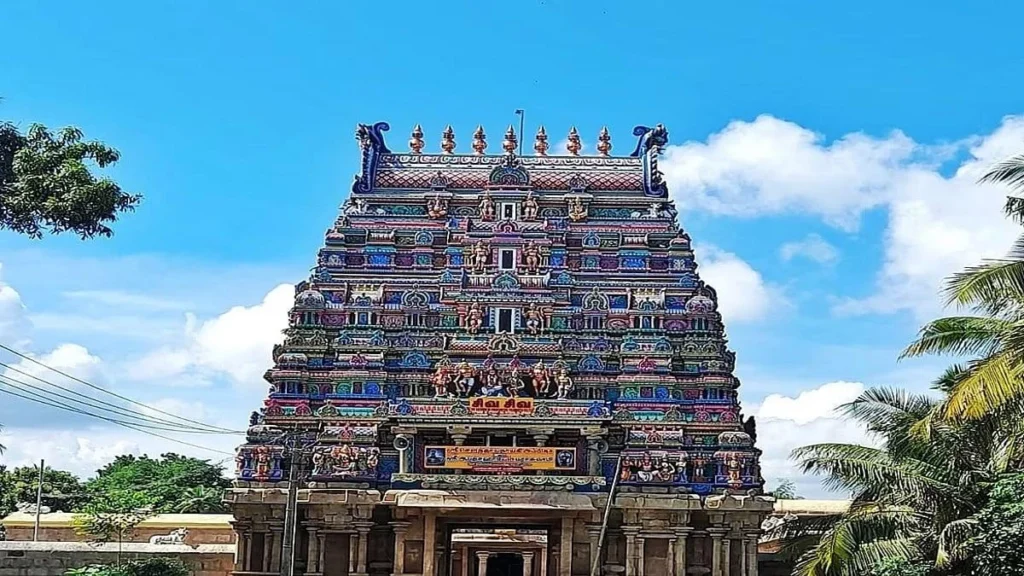
Tamil Nadu has added another proud chapter to India’s rich cultural heritage after the restoration of the Thukkachi Cholesvarar Temple received international recognition from UNESCO. The restoration project, which successfully combined centuries-old traditional construction techniques with advanced conservation technology, has been honoured under the UNESCO Asia-Pacific Awards for Cultural Heritage Conservation.
The recognition highlights India’s growing leadership in heritage conservation and demonstrates how ancient monuments can be preserved for future generations without compromising their historical authenticity. Experts have praised the project as an outstanding example of how modern scientific methods can complement traditional craftsmanship in restoring culturally significant structures. (unesco.org)
A Temple with Deep Chola Heritage
The Thukkachi Cholesvarar Temple is located near Kumbakonam in Tamil Nadu’s Thanjavur region, an area renowned for its magnificent Chola-era temples.
Built during the reign of the Later Chola dynasty, the temple is dedicated to Lord Shiva and reflects the architectural excellence that made the Cholas one of India’s greatest temple-building civilizations.
The temple is admired for:
- Intricately carved granite sculptures.
- Traditional Dravidian architecture.
- Beautiful vimana (tower).
- Stone inscriptions documenting Chola history.
- Exceptional craftsmanship preserved for centuries.
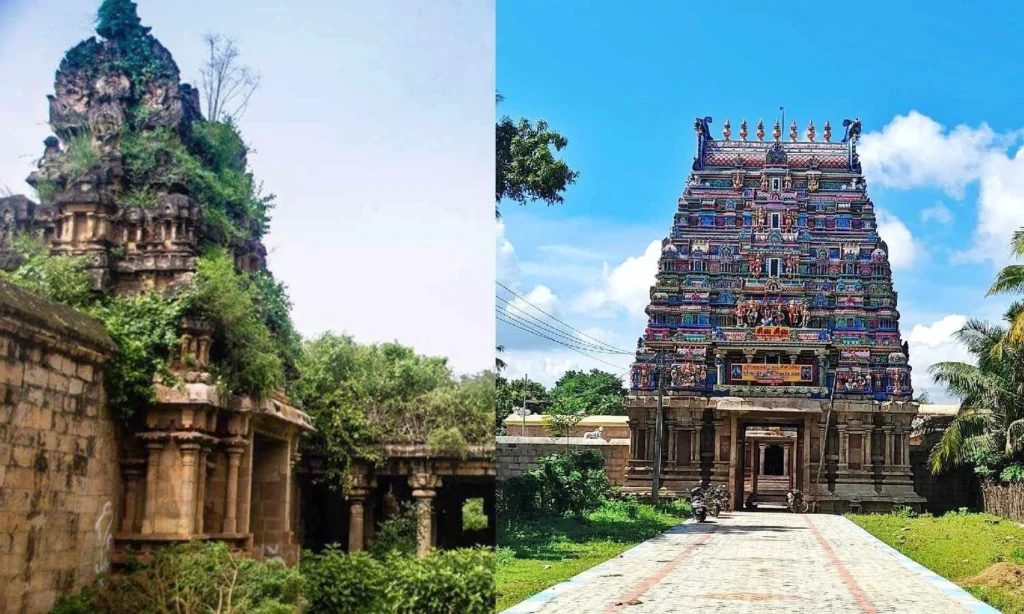
Like many ancient monuments, however, decades of weathering, vegetation growth, moisture damage, and structural deterioration threatened its survival.
Why Restoration Was Necessary
Years of natural ageing had affected several portions of the temple.
Conservation experts identified multiple challenges, including:
- Cracks in stone structures.
- Water seepage.
- Damaged masonry joints.
- Biological growth such as moss and lichens.
- Weather erosion.
- Weakening of traditional lime mortar.
Without timely intervention, many original architectural features risked irreversible damage.
The restoration therefore focused not on rebuilding the monument but on preserving as much original material as possible.
UNESCO Recognition
The project received recognition under UNESCO’s Asia-Pacific Awards for Cultural Heritage Conservation, which honour outstanding efforts to protect historical monuments while maintaining authenticity.
The awards evaluate projects based on several criteria, including:
- Conservation quality.
- Authenticity.
- Community participation.
- Sustainable restoration.
- Technical excellence.
- Respect for traditional architecture.
UNESCO noted that the Thukkachi Temple restoration demonstrated how traditional knowledge can successfully work alongside modern conservation science to safeguard cultural heritage. (unesco.org)
Blending Traditional Wisdom with Modern Technology
One of the most remarkable aspects of the project was its balanced approach.
Instead of replacing ancient components with modern materials, conservation teams prioritized traditional construction methods wherever possible while using technology for documentation and structural analysis.
Traditional Techniques Used
The restoration relied heavily on:
- Traditional lime mortar prepared using historical recipes.
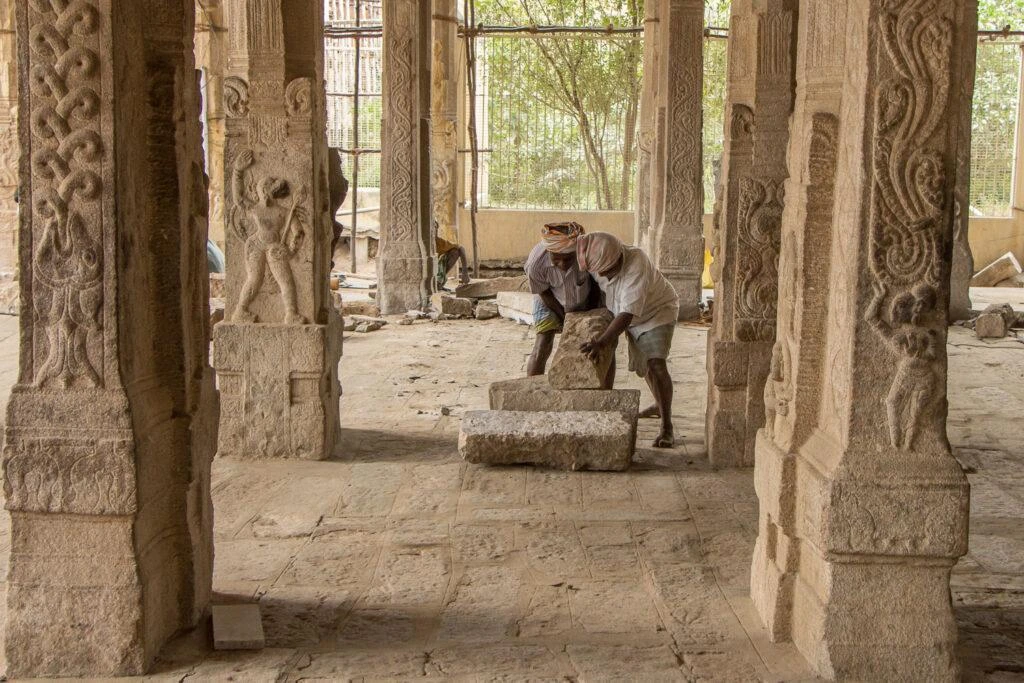
- Hand-carved replacement stones matching original designs.
- Indigenous masonry techniques.
- Traditional stone joining methods.
- Skilled temple artisans (Sthapathis).
These techniques helped preserve the temple’s original appearance and structural integrity.
Modern Technologies Applied
Modern conservation tools played an equally important role, including:
- 3D laser scanning.
- Digital documentation.
- Structural engineering analysis.
- Material testing.
- Moisture monitoring.
- Scientific mapping of damaged areas.
These technologies enabled experts to identify hidden structural weaknesses without causing additional damage.
Importance of Traditional Lime Mortar
Unlike modern cement, ancient South Indian temples were constructed using lime-based mortars.
During restoration, experts avoided Portland cement because it can trap moisture inside historical stone structures and accelerate deterioration.
Instead, they recreated traditional lime mixtures that:
- Allow stone to breathe.
- Improve flexibility.
- Prevent moisture accumulation.
- Maintain historical authenticity.
This approach reflects internationally accepted conservation principles.
Preserving Original Stonework
Another guiding principle was minimum intervention.
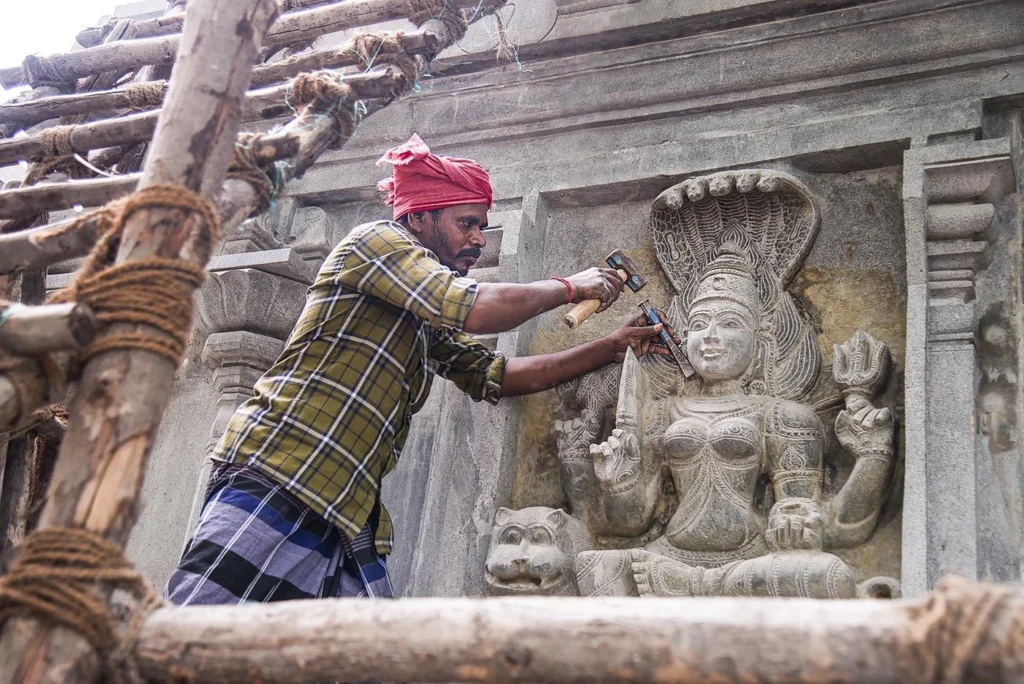
Rather than replacing damaged sculptures unnecessarily, conservators:
- Cleaned stone surfaces carefully.
- Stabilized existing carvings.
- Repaired cracks.
- Reused original architectural blocks wherever possible.
Only severely deteriorated components beyond repair were replaced using carefully matched stone.
Community Participation
The restoration also involved local communities, temple authorities, historians, and traditional craftsmen.
Their participation ensured that:
- Religious practices continued during conservation.
- Traditional knowledge was preserved.
- Local heritage awareness increased.
- Community ownership strengthened long-term protection.
UNESCO has consistently emphasized that successful heritage conservation depends on public engagement rather than technical expertise alone.
Why the Award Matters for India
India possesses one of the world’s richest collections of historical monuments.
International recognition strengthens:
- Heritage tourism.
- Conservation funding.
- Global appreciation of Indian architecture.
- Preservation of traditional craftsmanship.
- Scientific conservation standards.
The Thukkachi project demonstrates that India is increasingly adopting internationally recognised best practices while respecting indigenous knowledge.
A Model for Future Conservation
Experts believe the project can serve as a model for restoring other historical temples across India.
Many ancient monuments face similar threats:
- Climate change.
- Pollution.
- Urban expansion.
- Heavy tourism.
- Natural ageing.
The Thukkachi restoration illustrates that combining scientific research with traditional building techniques offers a sustainable path for long-term preservation.
Tourism and Cultural Benefits
The UNESCO recognition is expected to increase interest in the temple among:
- Domestic tourists.
- International visitors.
- Historians.
- Archaeologists.
- Architecture students.
- Heritage enthusiasts.
Greater visibility can contribute to local economic development while encouraging further investment in heritage conservation.
Challenges in Heritage Restoration
Restoring centuries-old monuments remains a complex process.
Conservation teams must balance:
- Historical authenticity.
- Structural safety.
- Religious significance.
- Visitor accessibility.
- Environmental sustainability.
Any inappropriate restoration can permanently alter a monument’s historical character, making careful planning essential.
India’s Growing Conservation Success
India has recently achieved several notable successes in cultural heritage conservation through collaborations involving the Archaeological Survey of India (ASI), state governments, conservation architects, and international organisations.
Projects like Thukkachi highlight the country’s commitment to protecting both tangible and intangible cultural heritage.
Looking Ahead
Following the UNESCO recognition, experts hope similar conservation strategies will be adopted for many lesser-known heritage sites across India.
Future priorities include:
- Digital documentation of monuments.
- Regular structural monitoring.
- Climate-resilient conservation practices.
- Training traditional artisans.
- Increased public awareness.
Protecting historical monuments today ensures that future generations inherit not only remarkable architecture but also the stories, traditions, and craftsmanship embedded within them.
Conclusion
The UNESCO-recognised restoration of the Thukkachi Cholesvarar Temple stands as a remarkable example of how traditional craftsmanship and modern conservation science can work together to preserve cultural heritage. By respecting the temple’s original materials, employing skilled artisans, and using advanced documentation technologies, the project has safeguarded an invaluable piece of India’s architectural legacy.
As India continues to protect its rich historical treasures, the Thukkachi restoration offers an inspiring model for future conservation efforts—one that honours the wisdom of the past while embracing the innovations of the present.
Read More : – Chiang Mai Declared the World’s Third-Best City: A Global Honour for Thailand’s Tourism Industry