
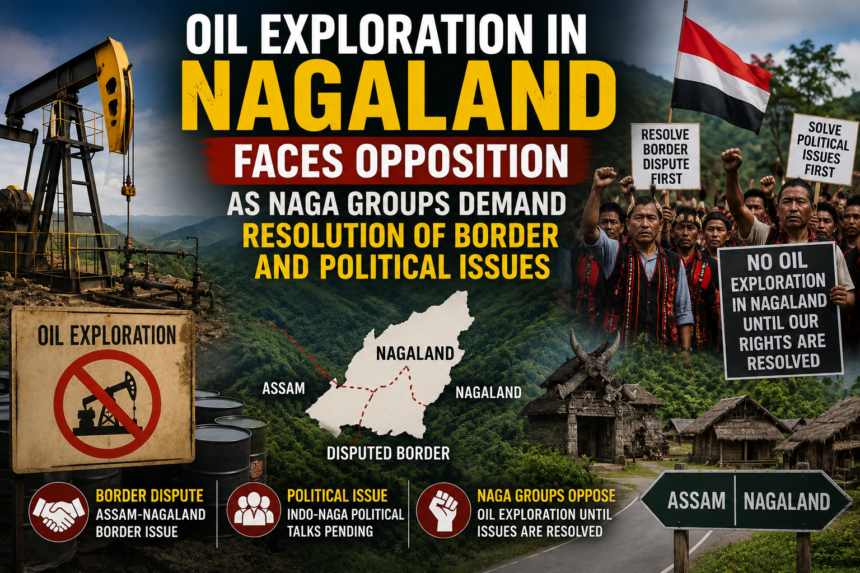
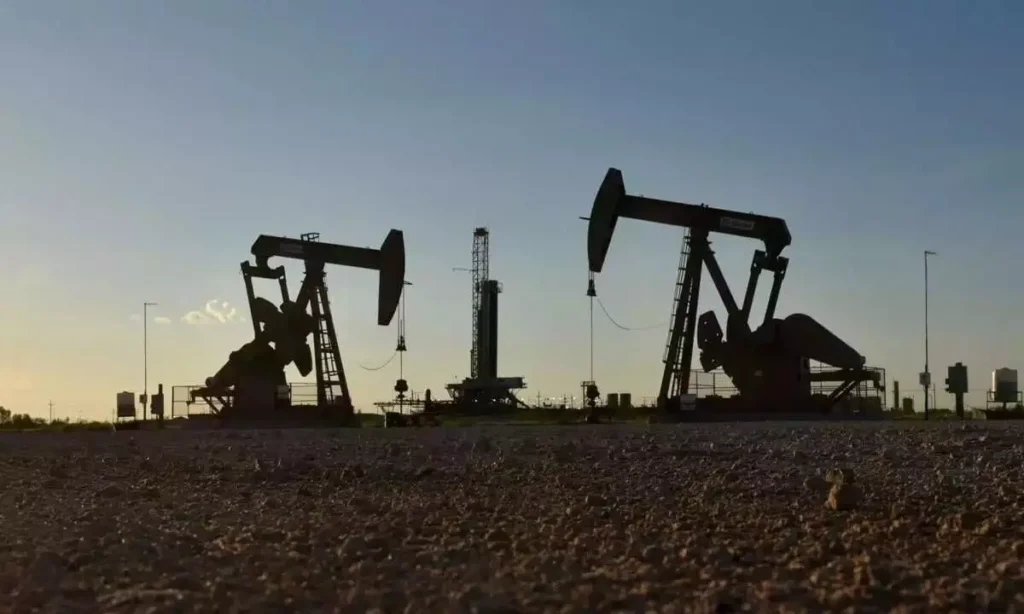
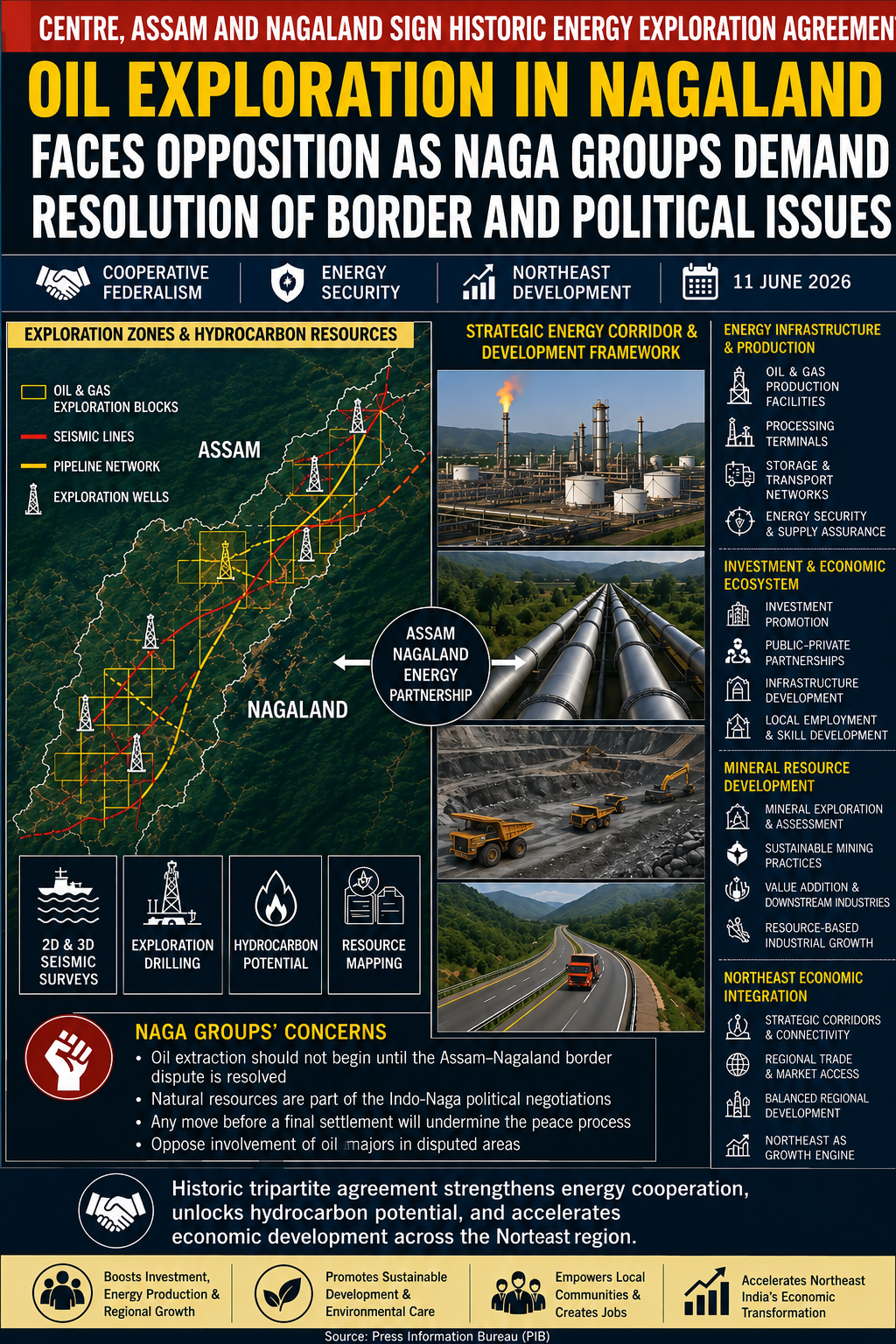
A fresh debate has emerged over oil exploration in Nagaland after several Naga political and tribal organisations opposed the resumption of petroleum exploration and extraction in the state. The groups argue that no national or international oil company should be allowed to resume operations until the long-pending Assam–Nagaland interstate border dispute and the Indo-Naga political issue are resolved.
The opposition follows the signing of a tripartite Memorandum of Understanding (MoU) between the Central Government and the governments of Assam and Nagaland to facilitate crude oil and natural gas exploration in areas along the disputed interstate boundary. While the agreement has been welcomed by the Centre as an important step toward economic development in the Northeast, several Naga organisations say the move is premature and inconsistent with ongoing political negotiations.
Why Has the Issue Become Controversial?
The controversy began after the Government of India, Assam, and Nagaland signed a tripartite agreement aimed at enabling exploration and production of crude oil and natural gas in the Disputed Area Belt (DAB) along the Assam–Nagaland border.
The agreement seeks to unlock the region’s energy potential while reducing long-standing administrative hurdles that have delayed exploration activities for years. However, shortly after the announcement, the Working Committee of the Naga National Political Groups (WC-NNPGs) publicly opposed the move. (Press Information Bureau)
Why Are Naga Organisations Opposing Oil Exploration?
The WC-NNPGs, an umbrella body of seven Naga political groups engaged in peace negotiations with the Centre, argue that ownership and control over natural resources form part of the 2017 Agreed Position signed with the Government of India.
According to the organisation:
- Petroleum and natural resources are part of the ongoing political negotiations.
- Any extraction before a final political settlement would violate the agreed principles.
- Exploration should not proceed until the Indo-Naga political issue is formally resolved.
The group has stated that it would oppose attempts by both domestic and international companies to extract petroleum from what it considers Naga territory before a final agreement is reached. (Nagaland Post)
The Assam–Nagaland Border Dispute
One of the major concerns raised by Naga organisations is the unresolved boundary dispute between Assam and Nagaland.
The dispute dates back to the creation of Nagaland in 1963 and centres on overlapping territorial claims in forested border areas.
Over the decades, disagreements have occasionally led to:
- Administrative conflicts.
- Land ownership disputes.
- Law-and-order incidents.
- Litigation before the Supreme Court.
- Delays in development projects.
The disputed region is also believed to contain significant reserves of crude oil and natural gas, making it strategically and economically important. (MorungExpress)
What Is the Indo-Naga Political Issue?
The Indo-Naga political issue refers to the decades-long peace process between the Government of India and various Naga political organisations.
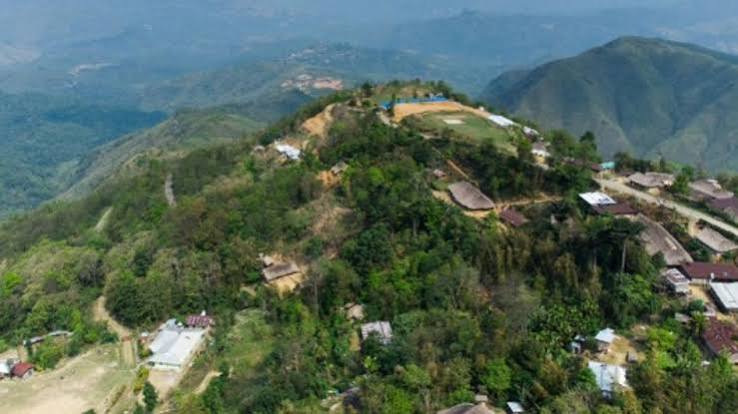
Negotiations have focused on finding a lasting political settlement addressing the aspirations of Naga groups while remaining within India’s constitutional framework.
Important milestones include:
- The 1997 ceasefire with the NSCN-IM.
- The 2015 Framework Agreement.
- The 2017 Agreed Position with the WC-NNPGs.
Although negotiations have continued for several years, a final settlement has yet to be concluded. Some issues—including demands related to political arrangements and symbols—remain unresolved. (India Today NE)
What Does the Tripartite MoU Aim to Achieve?
The agreement between the Centre, Assam, and Nagaland seeks to facilitate:
- Exploration of crude oil.
- Natural gas production.
- Mineral development.
- Improved coordination between the two States.
- Economic growth in the Northeast.
Union Home Minister Amit Shah described the agreement as a significant step toward unlocking the region’s development potential and strengthening cooperative federalism. (Press Information Bureau)
Economic Importance of Oil Exploration
Geological surveys suggest that parts of the Assam–Nagaland belt possess commercially valuable hydrocarbon reserves.
If developed successfully, these resources could contribute to:
- Employment generation.
- Infrastructure development.
- Increased State revenue.
- Energy security.
- Industrial growth.
Supporters of the agreement argue that responsible resource development could significantly benefit local communities if accompanied by transparent governance and environmental safeguards.
Concerns Raised by Tribal and Political Groups
Opposing organisations maintain that the issue is not solely economic.
They argue that:
- Resource ownership remains linked to the broader political settlement.
- Boundary disputes must be resolved before commercial extraction.
- Revenue-sharing arrangements should not be finalised while territorial claims remain contested.
The WC-NNPGs have also questioned the legality of any revenue-sharing model involving disputed areas before political negotiations are concluded. (ThePrint)
Government’s Position
The Central Government and the State governments of Assam and Nagaland have presented the MoU as a development-oriented initiative.
According to official statements, the agreement aims to remove obstacles that have prevented exploration in resource-rich areas while promoting cooperation between the neighbouring States.
The governments have not indicated that the agreement alters the ongoing peace negotiations related to the Indo-Naga political process. (Press Information Bureau)
Balancing Development and Political Dialogue
The controversy illustrates the challenge of balancing economic development with unresolved political and territorial issues.
Supporters of early exploration argue that:
- Development should not be indefinitely delayed.
- Resource extraction can generate employment and investment.
- Energy projects may strengthen regional growth.
Opponents believe that beginning commercial operations before resolving core political questions could create new disputes and undermine trust in the peace process.
Impact on Energy Companies
The uncertainty may affect both public-sector and private companies interested in hydrocarbon exploration.
Companies generally seek:
- Legal certainty.
- Stable operating conditions.
- Community acceptance.
- Security for personnel and infrastructure.
Any prolonged disagreement could delay investment decisions until greater clarity emerges regarding land ownership and political arrangements.
Wider Significance for Northeast India
The issue also highlights broader questions about resource governance in India’s Northeast.
Many infrastructure and energy projects intersect with:
- Indigenous land rights.
- Customary governance.
- Environmental conservation.
- Federal-State relations.
- Ongoing peace negotiations.
Finding a balance among these interests remains essential for sustainable development in the region.
What Happens Next?
At present:
- The tripartite MoU remains in force.
- Naga organisations continue to oppose oil extraction before a political settlement.
- Peace negotiations between the Government of India and Naga groups remain unresolved.
- The Assam–Nagaland border dispute also continues to await a long-term resolution.
Future progress is likely to depend on continued dialogue among governments, political organisations, tribal bodies, and local communities. (MorungExpress)
Conclusion
The opposition to renewed oil exploration in Nagaland reflects the complex relationship between economic development, indigenous rights, and long-standing political negotiations. While the Centre views the tripartite agreement as a milestone for energy development and regional prosperity, several Naga organisations maintain that exploration should not proceed until the Assam–Nagaland border dispute and the Indo-Naga political issue are resolved.
As discussions continue, the challenge for policymakers will be to pursue development while addressing legitimate political and constitutional concerns through dialogue. The outcome could shape not only the future of energy exploration in Nagaland but also the broader trajectory of peace and development in Northeast India.
More Read : –