

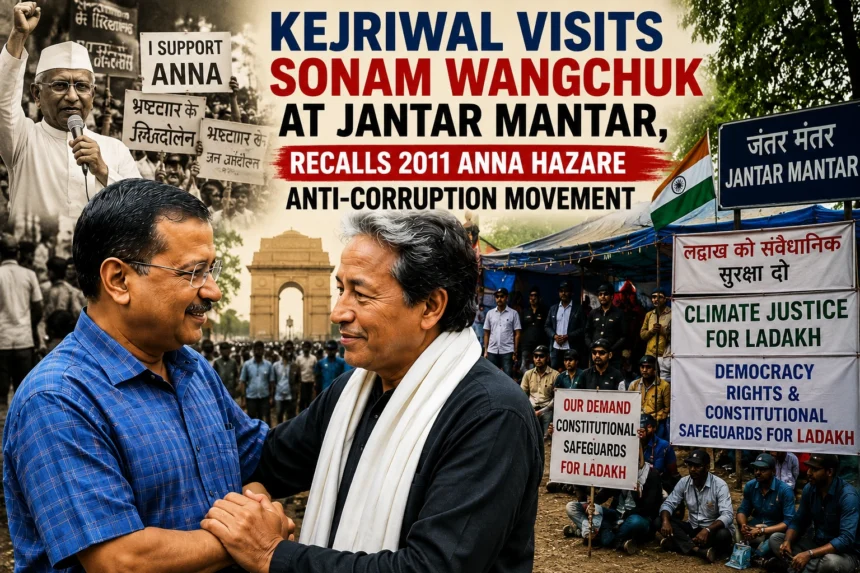
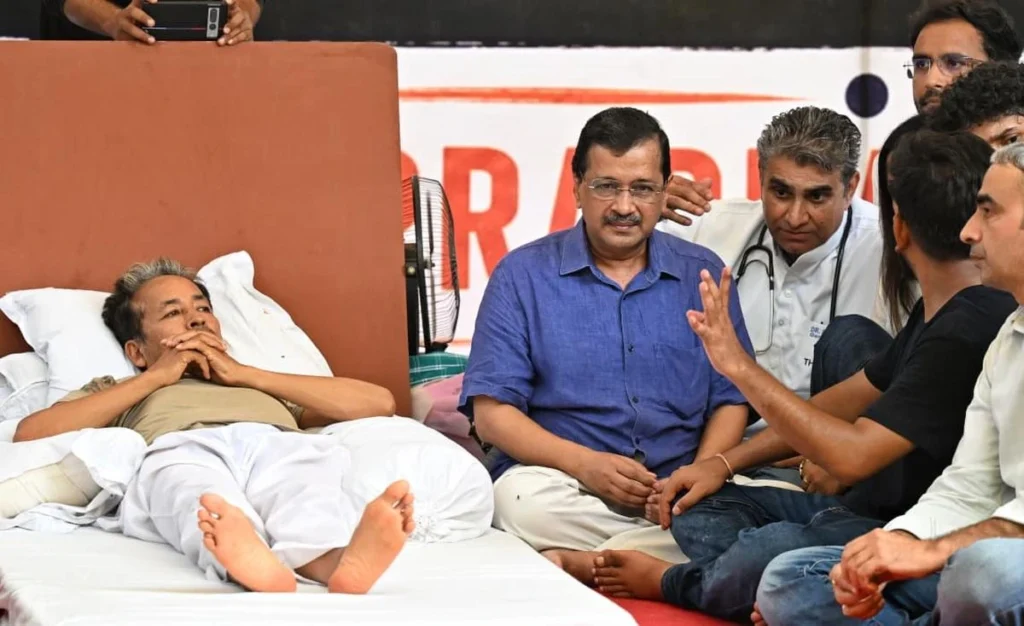
New Delhi: A significant political and symbolic moment unfolded at Jantar Mantar when former Delhi Chief Minister Arvind Kejriwal met education reformer and climate activist Sonam Wangchuk, who has been leading a public campaign highlighting issues related to Ladakh. During the meeting, Kejriwal drew parallels between Wangchuk’s movement and the historic 2011 anti-corruption movement led by Anna Hazare, saying the gathering reminded him of the mass public mobilisation that transformed India’s political landscape more than a decade ago.
The meeting attracted attention from political observers because it linked one of India’s most influential civil society movements with a contemporary campaign centered on environmental protection, democratic participation, and constitutional safeguards for Ladakh. The visit also reignited discussions about the role of peaceful public protests in shaping national policy and political discourse.
Kejriwal Meets Wangchuk at Protest Site
Arvind Kejriwal arrived at Jantar Mantar to express solidarity with Sonam Wangchuk and those participating in the ongoing campaign.
Addressing supporters after meeting Wangchuk, Kejriwal said the atmosphere reminded him of the nationwide anti-corruption movement of 2011, when thousands of citizens gathered under the leadership of social activist Anna Hazare demanding the enactment of the Jan Lokpal Bill.
According to Kejriwal, the public participation visible at Jantar Mantar reflected the continuing importance of democratic engagement through peaceful protest.
What Kejriwal Said
During his address, Kejriwal recalled his own participation in the Anna Hazare movement and described it as a defining moment in modern Indian politics.
He said:
- The 2011 movement united citizens across political and social backgrounds.
- Public participation ultimately influenced national political discourse.
- Peaceful democratic movements remain an important part of India’s constitutional framework.
Kejriwal also praised Sonam Wangchuk for raising issues affecting the people of Ladakh through non-violent and constitutional means.
Why Sonam Wangchuk Is Protesting
Sonam Wangchuk has been campaigning on several issues concerning Ladakh after it became a Union Territory in 2019.
Among the major demands raised by Wangchuk and supporting organisations are:
- Constitutional safeguards for Ladakh.
- Greater environmental protection for the fragile Himalayan ecosystem.
- Sustainable development policies.
- Enhanced local participation in decision-making.
- Protection of land and employment opportunities for local residents.
Supporters argue that these measures are necessary to preserve Ladakh’s unique ecological and cultural identity.
Remembering the 2011 Anti-Corruption Movement
Kejriwal’s reference to the Anna Hazare movement carries considerable political significance.
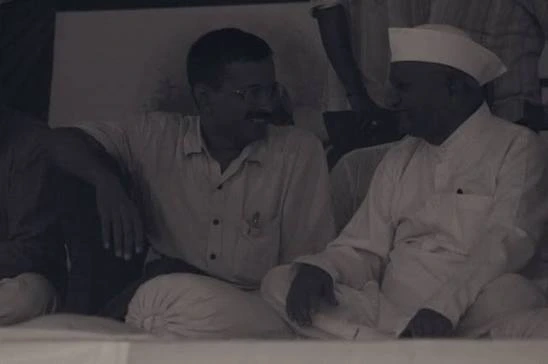
The anti-corruption movement that began in 2011 at Delhi’s Jantar Mantar and later shifted to Ramlila Maidan became one of India’s largest public movements in recent decades.
The campaign demanded:
- Strong anti-corruption legislation.
- Greater government accountability.
- Creation of an independent Lokpal institution.
- Transparency in public administration.
The movement eventually led to the formation of the Aam Aadmi Party (AAP), with Kejriwal emerging as one of its principal leaders.
Symbolism of Jantar Mantar
Jantar Mantar has long served as one of India’s most recognised locations for peaceful demonstrations.
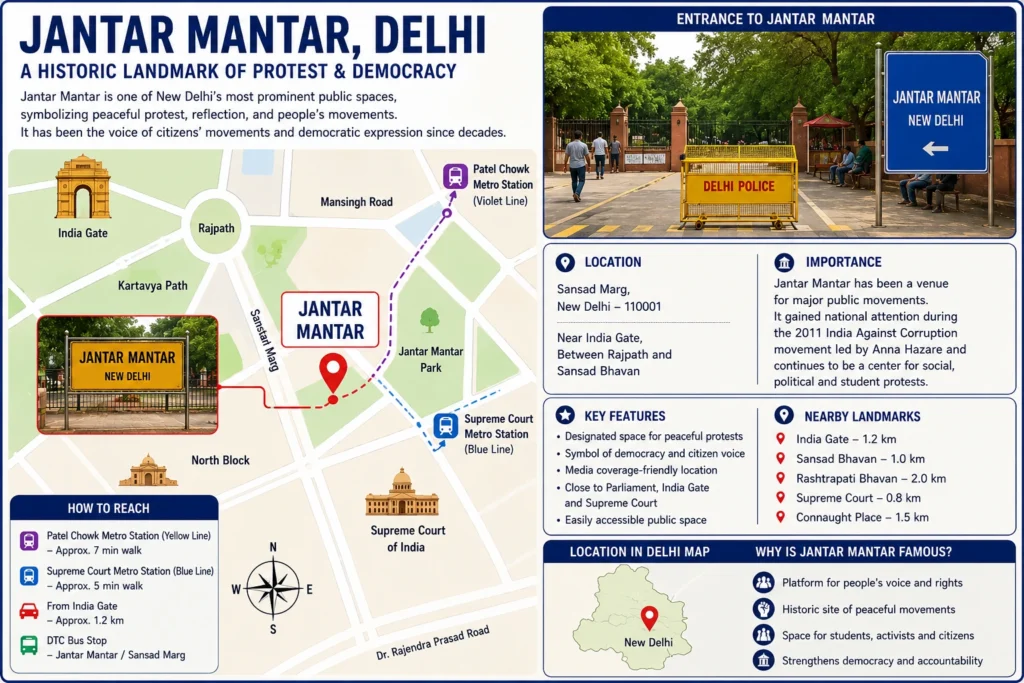
Over the years it has hosted protests concerning:
- Farmers’ rights.
- Employment.
- Environmental issues.
- Social justice.
- Women’s rights.
- Government policy.
By meeting Wangchuk at Jantar Mantar, Kejriwal reinforced the symbolic importance of the venue as a platform for democratic expression.
Wangchuk’s Message
Sonam Wangchuk thanked visitors and supporters for standing with the people of Ladakh.
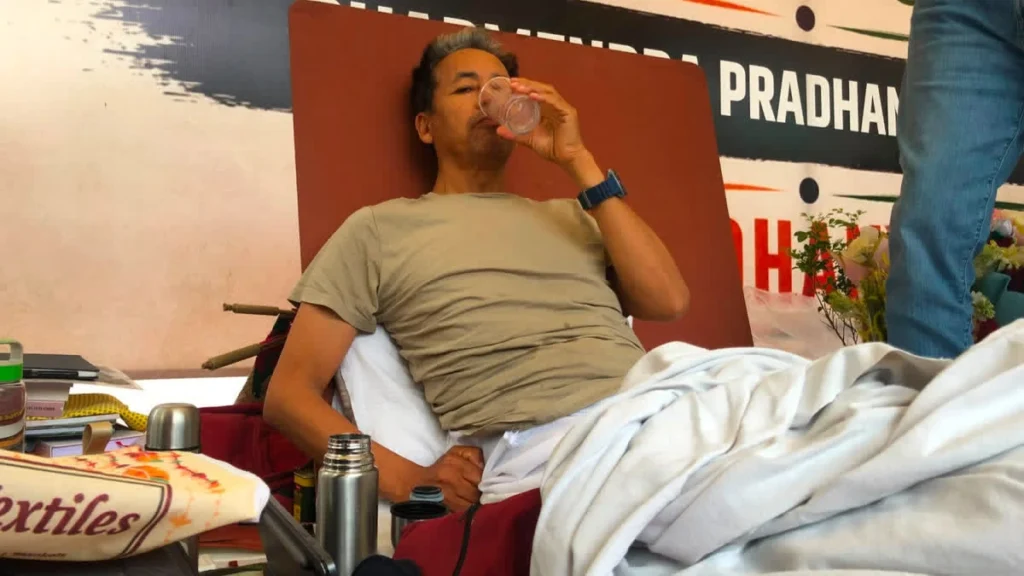
Throughout his campaign, Wangchuk has emphasised that the movement is not directed against any particular political party but seeks long-term protection of Ladakh’s ecology, culture, and constitutional interests.
He has repeatedly appealed for peaceful dialogue between the government and representatives of Ladakh.
Political Reactions
Kejriwal’s visit has generated political discussion across party lines.
Supporters of the meeting describe it as an expression of solidarity with a peaceful citizens’ movement.
Some political commentators view the visit as an attempt to reconnect with the ideals associated with the 2011 anti-corruption movement, while others see it as support for issues concerning Ladakh’s future governance.
The Union Government has maintained that development and governance initiatives in Ladakh continue under constitutional and administrative processes.
Environmental Dimension
One of Wangchuk’s principal concerns is environmental sustainability.
Experts note that Ladakh’s fragile ecosystem faces challenges including:
- Climate change.
- Glacier retreat.
- Water scarcity.
- Infrastructure expansion.
- Tourism pressure.
Environmentalists argue that development projects should balance economic growth with ecological conservation to protect the Himalayan region.
Why Ladakh Matters
Ladakh occupies strategic, environmental, and cultural importance.
The region:
- Shares international borders with China and Pakistan.
- Contains fragile mountain ecosystems.
- Supports unique biodiversity.
- Holds strategic significance for India’s national security.
Consequently, governance issues in Ladakh often involve multiple policy considerations beyond local administration.
Public Participation in Democracy
Kejriwal’s remarks also highlighted the broader role of public participation in democratic societies.
Peaceful demonstrations remain protected under India’s constitutional framework, subject to reasonable restrictions for public order.
Civil society movements have historically influenced policy debates on issues ranging from environmental conservation to anti-corruption reforms.
Looking Ahead
Political observers believe Wangchuk’s campaign will continue to attract national attention as discussions regarding Ladakh’s constitutional demands progress.
The government’s future response to these demands may shape the next phase of dialogue between local organisations and the Centre.
Meanwhile, Kejriwal’s visit has added a political dimension to a movement that has primarily focused on environmental and constitutional concerns.
Conclusion
Arvind Kejriwal’s visit to Sonam Wangchuk at Jantar Mantar has revived memories of the 2011 Anna Hazare anti-corruption movement while drawing attention to ongoing debates surrounding Ladakh’s future. By comparing the current campaign with one of India’s most influential public movements, Kejriwal underscored the continuing significance of peaceful civic participation in democratic governance.
As Wangchuk continues advocating for constitutional safeguards and environmental protection, the campaign is expected to remain an important subject of national discussion. Whether through political dialogue or policy initiatives, the issues raised at Jantar Mantar are likely to shape future conversations about Ladakh’s development, governance, and ecological sustainability.
Also Read : – Sonam Wangchuk Hunger Strike Enters Day 17: Appeals Grow as Political Leaders Call for an End to the Fast