

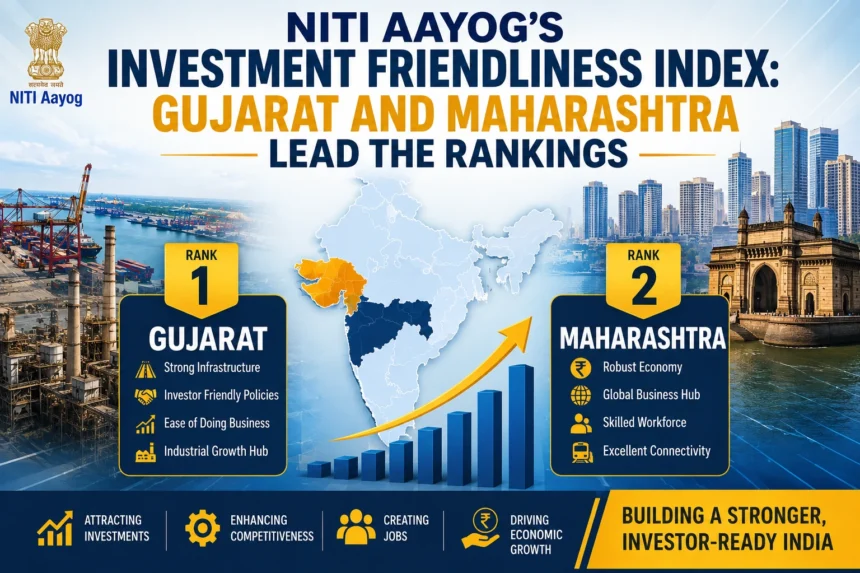
India’s economic transformation has increasingly become a story of competition among its states to attract domestic and foreign investment. In a significant development, NITI Aayog’s latest Investment Friendliness Index has identified Gujarat and Maharashtra as the country’s leading destinations for investors. The ranking reflects the two states’ sustained efforts in improving governance, industrial infrastructure, policy reforms, ease of doing business, and investment facilitation.
The index comes at a time when India is positioning itself as a preferred global manufacturing and investment hub amid shifting global supply chains. As multinational corporations diversify production away from traditional manufacturing centres, Indian states are racing to create investor-friendly ecosystems capable of attracting long-term capital.
The latest assessment underscores how state-level reforms have become a key driver of India’s broader economic ambitions.
What is the Investment Friendliness Index?
The Investment Friendliness Index is designed to evaluate how effectively Indian states create an environment conducive to investment and industrial growth. While economic size remains important, the index places greater emphasis on governance quality, infrastructure readiness, policy stability, regulatory efficiency, and institutional support.
The assessment examines multiple parameters, including:
- Ease of Doing Business reforms
- Industrial infrastructure
- Digital governance
- Land availability
- Power supply reliability
- Logistics connectivity
- Skilled workforce
- Labour regulations
- Single-window clearance systems
- Environmental approval mechanisms
- Investment promotion policies
- Startup ecosystem
- Innovation capabilities
Together, these indicators provide investors with a comprehensive picture of each state’s business climate.
Gujarat Retains Its Leadership Position
Gujarat has once again secured the top position owing to decades of industrial planning and consistent policy implementation.
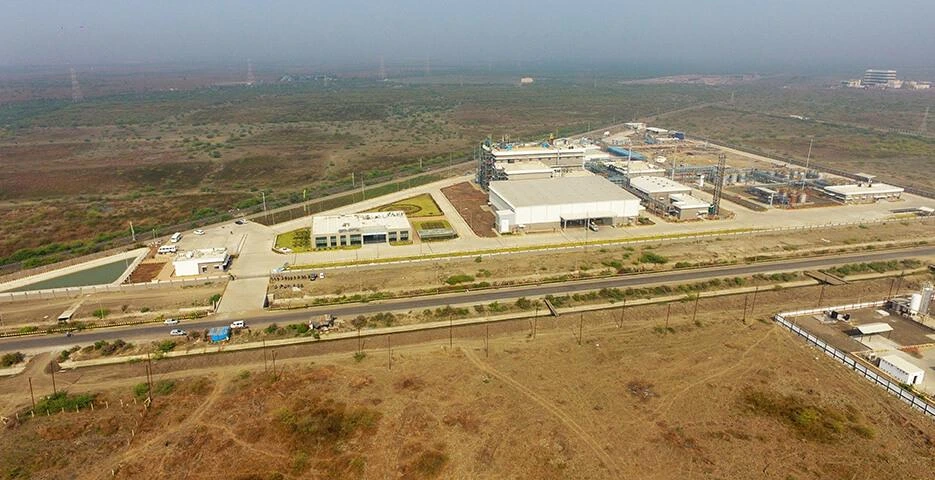
The state has built a reputation as India’s manufacturing powerhouse by developing world-class industrial parks, ports, highways, and logistics infrastructure. Major sectors contributing to Gujarat’s investment attractiveness include:
- Petrochemicals
- Chemicals
- Renewable energy
- Pharmaceuticals
- Engineering
- Automobiles
- Textiles
- Electronics manufacturing
The state’s proactive industrial policy and efficient governance continue to attract both domestic and international investors.
Large-scale infrastructure projects such as the Delhi-Mumbai Industrial Corridor (DMIC), dedicated freight corridors, modern ports, and smart industrial cities have further strengthened Gujarat’s competitive position.
Maharashtra Continues to Attract Massive Investments
Maharashtra secured the second position due to its diversified economy and strong financial ecosystem.
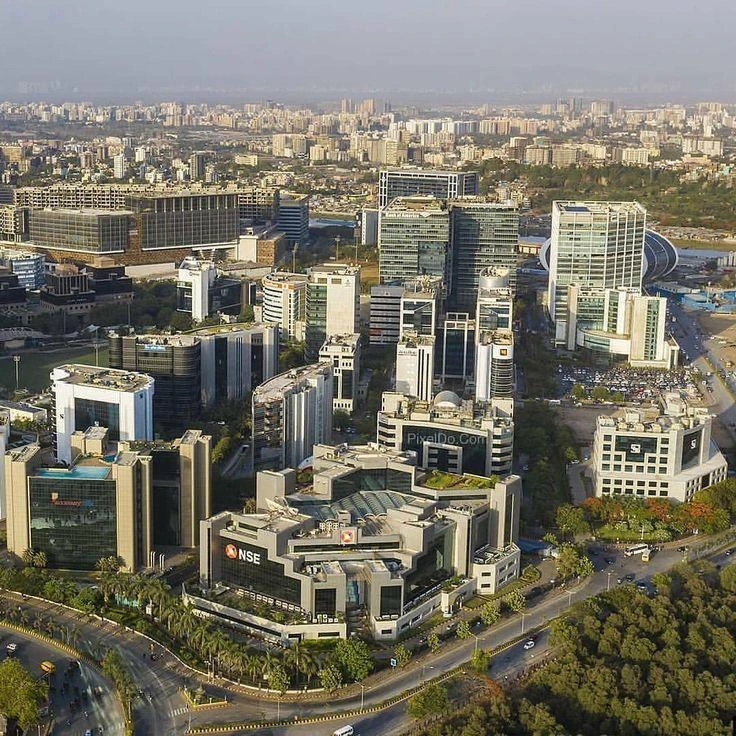
Home to Mumbai—the financial capital of India—the state benefits from:
- India’s largest banking network
- Bombay Stock Exchange (BSE)
- National Stock Exchange (NSE)
- Major multinational headquarters
- Strong startup ecosystem
- Advanced service sector
- Large consumer market
Beyond finance, Maharashtra has emerged as a leader in:
- Automobile manufacturing
- Information Technology
- Pharmaceuticals
- Biotechnology
- Electronics
- Logistics
- Data centres
- Fintech
The state’s extensive infrastructure projects, including the Mumbai Coastal Road, Navi Mumbai International Airport, Mumbai Trans Harbour Link, and metro expansions, have significantly enhanced investor confidence.
Ease of Doing Business Drives Growth
One of the strongest factors influencing the rankings is the implementation of Ease of Doing Business (EoDB) reforms.
Both Gujarat and Maharashtra have simplified administrative procedures through:
- Online approvals
- Digital land records
- Time-bound clearances
- Single-window investment portals
- Transparent regulatory systems
- Reduced compliance burden
These reforms have lowered operational costs while improving predictability for businesses.
Investors increasingly prefer states where approvals are faster and regulatory uncertainty is minimal.
Infrastructure Remains a Key Advantage
Modern infrastructure plays a decisive role in attracting investment.
Both leading states have invested heavily in:
- Expressways
- Freight corridors
- International airports
- Deep-water ports
- Industrial parks
- Logistics hubs
- Warehousing facilities
- Urban transport systems
- Renewable energy infrastructure
Efficient logistics reduce transportation costs, improve supply-chain resilience, and make manufacturing more competitive.
Manufacturing Receives Fresh Momentum
India’s manufacturing ambitions under initiatives such as Make in India and the Production Linked Incentive (PLI) scheme have encouraged states to compete aggressively for investments.
Gujarat and Maharashtra have successfully attracted projects in:
- Electric vehicles
- Semiconductor components
- Green hydrogen
- Battery manufacturing
- Solar equipment
- Defence manufacturing
- Aerospace
- Electronics
These investments are expected to generate thousands of skilled jobs while strengthening India’s export competitiveness.
Foreign Direct Investment Continues to Rise
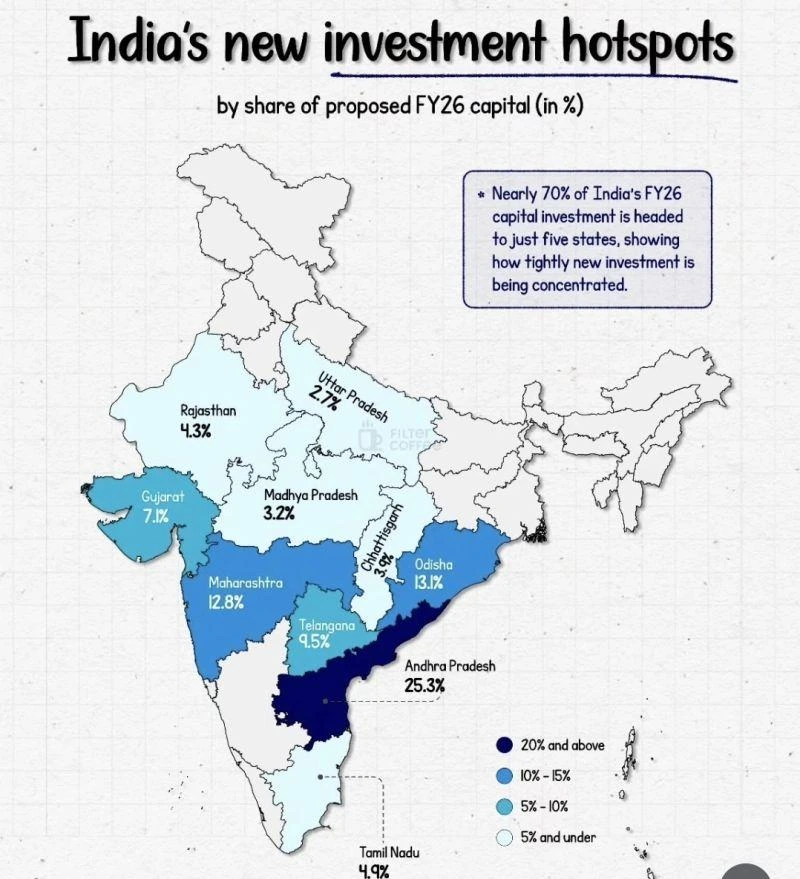
Both states consistently rank among India’s largest recipients of Foreign Direct Investment (FDI).
International companies value:
- Policy stability
- Transparent governance
- Strong legal systems
- Skilled human resources
- Access to global markets
- Reliable infrastructure
As geopolitical uncertainties reshape global production networks, India has emerged as an attractive destination for companies seeking supply-chain diversification.
Digital Governance Improves Investor Confidence
Digital transformation has become another major contributor to investment friendliness.
States increasingly provide:
- Online business registration
- Electronic approvals
- Digital tax services
- GIS-based land information
- E-procurement
- Online dispute resolution
Such initiatives reduce corruption, improve transparency, and shorten project implementation timelines.
Skilled Workforce Supports Industrial Expansion
Investment decisions increasingly depend on the availability of skilled labour.
Both Gujarat and Maharashtra benefit from:
- Engineering colleges
- Technical institutes
- Research universities
- Industrial training centres
- Startup incubators
- Innovation hubs
These institutions ensure industries have access to trained professionals capable of supporting advanced manufacturing and technology sectors.
Competition Among States Intensifies
While Gujarat and Maharashtra occupy the top positions, several other states continue improving rapidly.
States including:
- Karnataka
- Tamil Nadu
- Telangana
- Uttar Pradesh
- Andhra Pradesh
- Odisha
have launched ambitious industrial policies aimed at attracting investment in manufacturing, renewable energy, electronics, and technology.
This healthy competition benefits India’s overall economic development by encouraging policy innovation and administrative reforms.
Challenges Still Need Attention
Despite impressive progress, experts highlight several areas requiring continued improvement.
These include:
- Faster judicial dispute resolution
- Urban congestion
- Land acquisition challenges
- Environmental sustainability
- Water availability
- Skilled workforce shortages in emerging sectors
- MSME financing
- Rural industrialisation
Balanced regional development remains essential to ensure investment reaches smaller cities and underserved regions.
Impact on Employment and Economic Growth
Higher investment directly contributes to:
- Job creation
- Industrial expansion
- Higher exports
- Technology transfer
- Income generation
- Infrastructure development
- Innovation
- Increased tax revenues
Economists believe continued competition among states will accelerate India’s journey toward becoming a multi-trillion-dollar economy.
Investment-led growth also strengthens domestic manufacturing while reducing dependence on imports in strategic sectors.
Role of NITI Aayog
NITI Aayog continues to play an important role in encouraging cooperative and competitive federalism.
By publishing comparative assessments, the institution motivates states to improve governance, adopt best practices, and implement investor-friendly reforms.
The rankings also provide valuable guidance for policymakers seeking to remove regulatory bottlenecks and improve business competitiveness.
Global Investors Watching India Closely
International investors increasingly view India as one of the world’s fastest-growing major economies.
Factors supporting this outlook include:
- Large domestic market
- Stable democratic institutions
- Young workforce
- Digital economy
- Manufacturing incentives
- Infrastructure expansion
- Strong consumption growth
The performance of Gujarat and Maharashtra demonstrates how state-level reforms can strengthen India’s position in the global investment landscape.
Conclusion
The latest NITI Aayog Investment Friendliness Index highlights Gujarat and Maharashtra as India’s most attractive investment destinations, reflecting years of sustained reforms, infrastructure development, and governance improvements. Their success illustrates how policy consistency, efficient administration, and modern infrastructure can create an environment that attracts both domestic and international investors.
As India seeks to establish itself as a global manufacturing and innovation hub, the healthy competition among states is likely to accelerate economic growth, improve ease of doing business, and generate millions of employment opportunities. While challenges such as sustainability, regional inequality, and infrastructure gaps remain, the continued focus on investor-friendly reforms positions India for stronger long-term economic development and greater global competitiveness.