

Canberra | Special Report | PaperPatrika
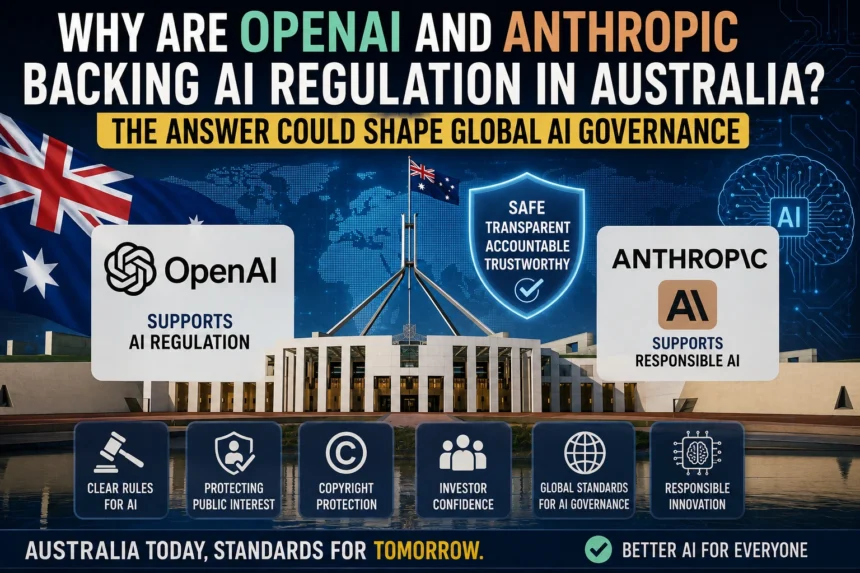
In a move that has surprised many in the technology industry, OpenAI, the creator of ChatGPT, and Anthropic, the company behind Claude AI, have publicly welcomed Australia’s plans to introduce stronger artificial intelligence (AI) regulations. While technology companies have traditionally resisted tighter government oversight, these AI leaders argue that clear regulations are essential for the safe development of advanced AI systems.
Experts believe the companies’ support is about far more than Australia. It reflects a broader strategy involving global AI governance, investor confidence, copyright protection, geopolitical competition with China, and the establishment of international standards for the next generation of artificial intelligence. (The Guardian)
Australia’s AI Regulation Plan
The Australian government is developing one of its most comprehensive AI governance frameworks to date.
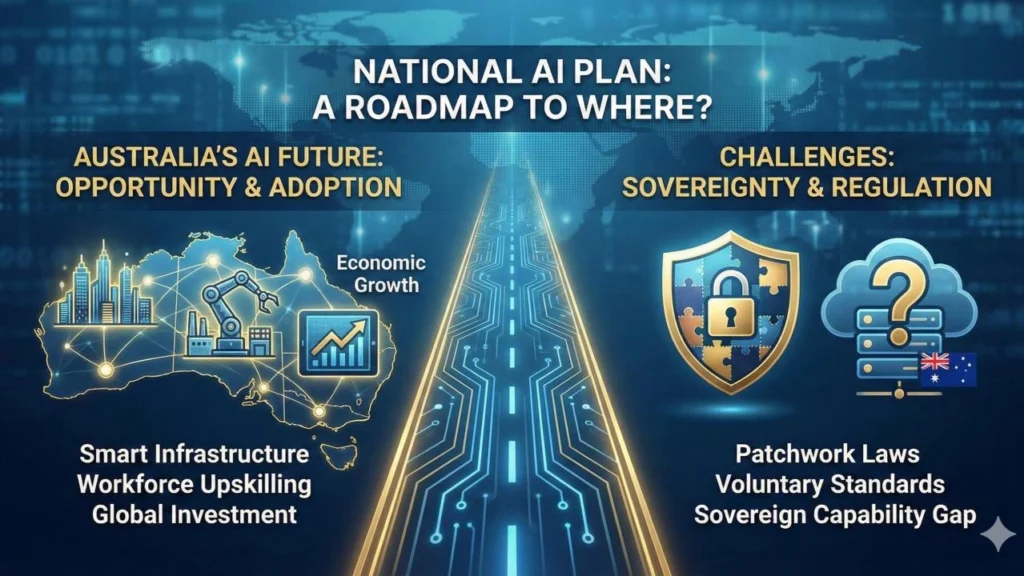
The proposed policy aims to address several key issues, including:
- Transparency in advanced AI systems
- Accountability for high-risk AI models
- Copyright protection for creators
- Compensation for authors, journalists, artists, and publishers whose work is used to train AI
- Independent oversight and safety standards
- Responsible AI deployment across government and industry
Prime Minister Anthony Albanese’s government has emphasized that the goal is not to slow innovation, but to ensure AI develops safely while protecting public trust and creative industries.
Why Would AI Companies Support More Regulation?
At first glance, it may seem unusual for companies developing cutting-edge AI to support stricter rules.
However, OpenAI and Anthropic believe that well-designed regulation offers several long-term advantages:
- Greater legal certainty
- Higher investor confidence
- Increased public trust
- Reduced misuse of powerful AI systems
- Clear standards for responsible innovation
Rather than viewing regulation as an obstacle, both companies increasingly see it as essential infrastructure for the future AI economy.
Australia Could Become a Global AI Policy Model
Australia’s AI initiative is attracting worldwide attention because it may become a blueprint for other democratic nations.
If Australia’s framework proves successful, similar approaches could be adopted across:
- Europe
- North America
- Asia-Pacific
- Other democratic economies
Policy experts compare this possibility to how Europe’s GDPR eventually influenced global data privacy standards. (The Guardian)
China’s Growing AI Competition
Another major reason behind the companies’ support is the rapid rise of Chinese AI developers.
Recent advances by Chinese startup Moonshot AI, including its powerful open-source model Kimi K3, have intensified competition with Western AI companies.
This changing competitive landscape has encouraged OpenAI and Anthropic to advocate for regulatory systems that emphasize:
- AI safety
- Democratic governance
- Transparency
- Responsible deployment
Industry observers say both companies hope trusted regulatory frameworks will distinguish Western AI models from competitors operating under different regulatory environments.
Investor Confidence Matters
OpenAI and Anthropic are among the world’s most valuable AI companies and continue attracting billions of dollars in investment.
For investors, regulatory certainty reduces long-term risks by providing:
- Predictable legal environments
- Clear compliance requirements
- Better management of liability
- Lower uncertainty surrounding AI deployment
Stable regulations can strengthen company valuations while encouraging additional investment into AI research and infrastructure.
Copyright Has Become a Central Issue
One of the most controversial aspects of AI development involves the use of copyrighted material for training large language models.
Australia’s proposed framework seeks to ensure that:
- Authors
- Journalists
- Musicians
- Artists
- Publishers
receive appropriate recognition and potentially compensation when their creative works contribute to AI training.
Creative industries have argued that AI companies should not freely use copyrighted content without fair licensing or payment. (The Guardian)
Australia’s Partnership with Anthropic
Australia has already strengthened its relationship with Anthropic through a formal Memorandum of Understanding (MoU).
The agreement focuses on:
- AI safety research
- Government collaboration
- Skills development
- AI infrastructure
- Cybersecurity
- Technical exchanges
- Responsible deployment of advanced AI
Anthropic has also announced plans to expand its Australian operations, including establishing a Sydney office and collaborating with government agencies and research institutions. (Industry.gov.au)
Anthropic’s Long-Term Vision
Anthropic CEO Dario Amodei has consistently argued that advanced AI should undergo rigorous independent evaluation before deployment.
The company advocates:
- Third-party safety testing
- Government oversight
- Risk assessments
- Independent audits
- Mechanisms to delay deployment if serious risks are identified
Anthropic believes increasingly capable AI systems require stronger governance comparable to oversight in aviation or nuclear safety. (WIRED)
OpenAI’s Policy Position
OpenAI has repeatedly stated that AI governance should involve collaboration between:

- Governments
- Researchers
- Civil society
- Industry
- Independent experts
- The general public
According to the company, no single organization should determine how artificial intelligence evolves. Instead, shared governance and transparent policymaking are necessary to maximize AI’s benefits while minimizing its risks. (OpenAI)
Critics Remain Skeptical
Despite the public support for regulation, not everyone is convinced of the companies’ motivations.
Some analysts argue that:
- Large AI companies can more easily afford regulatory compliance.
- Smaller startups may struggle with costly requirements.
- Complex regulations could strengthen the market dominance of established AI leaders.
Critics therefore warn against “regulatory capture,” where regulations unintentionally benefit the largest companies while limiting competition. (WIRED)
Why This Matters Beyond Australia
Although Australia’s proposed AI rules are national policies, their implications extend globally.
Potential long-term effects include:
- New international AI safety standards
- Global copyright frameworks for AI training
- Greater transparency requirements for frontier AI models
- Stronger democratic cooperation on AI governance
- Increased geopolitical competition between Western and Chinese AI ecosystems
Many experts believe AI regulation is becoming one of the defining policy issues of the coming decade, much like internet governance and data privacy were in previous years. (The Guardian)
The Road Ahead
As AI systems become increasingly powerful, governments around the world face the difficult challenge of balancing innovation with public safety.
Australia’s regulatory approach could influence future legislation across multiple countries, while OpenAI and Anthropic’s support signals that leading AI developers now recognize regulation as an inevitable—and potentially beneficial—part of the industry’s future.
Whether these rules ultimately foster innovation or create barriers for smaller competitors will depend on how policymakers strike the balance between safety, competition, transparency, and technological progress.
Conclusion
OpenAI and Anthropic’s endorsement of Australia’s AI regulation is not simply about one country’s domestic policy. It reflects a broader effort to shape the future of global AI governance. By supporting transparent rules, stronger safety standards, and responsible innovation, both companies hope to build public trust and establish international norms for advanced artificial intelligence. At the same time, critics caution that these regulations must remain balanced to ensure they protect society without limiting competition or innovation. As nations race to define the future of AI, Australia’s decisions may influence regulatory frameworks well beyond its borders.
Also Read: – AI and Cybersecurity Become Key Topics in Global Strategic Discussions as Nations Race to Secure the Digital Future