

International Desk | PaperPatrika
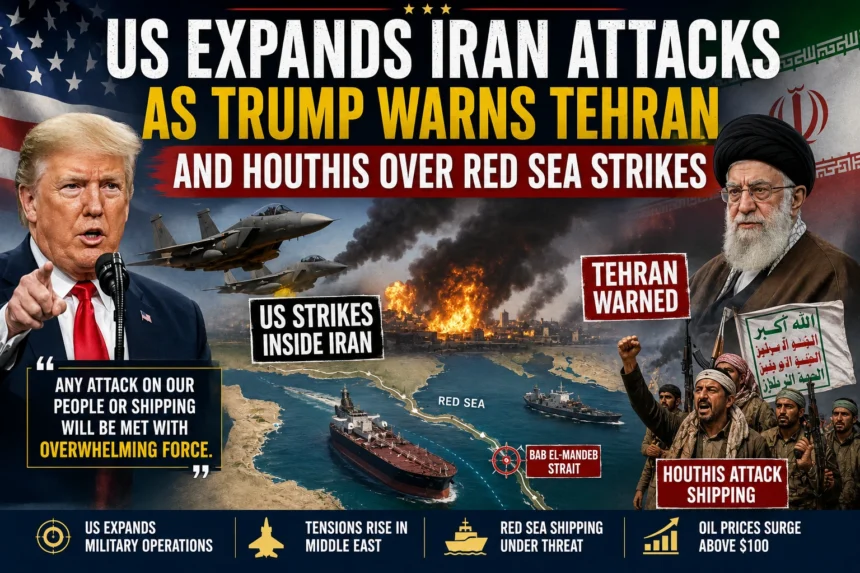
The conflict in the Middle East has entered a more dangerous phase as the United States expanded its military strikes across Iran, while U.S. President Donald Trump issued a strong warning to Tehran and the Iran-backed Houthi rebels over their attacks on commercial shipping in the Red Sea. The escalation follows Houthi attacks on two Saudi oil tankers, raising fears that the conflict is spreading beyond the Strait of Hormuz into another vital global shipping route.
The latest military developments have heightened concerns about regional stability, global energy supplies, and international trade. With both Washington and Tehran refusing to back down, analysts warn that the confrontation could evolve into one of the most serious geopolitical crises in recent years.
United States Expands Military Campaign
The U.S. military launched another wave of air and missile strikes targeting Iranian military infrastructure across multiple parts of the country, including locations extending as far north as the Caspian Sea. According to U.S. officials, the strikes are intended to degrade Iran’s military capabilities and prevent further threats to international shipping and American forces stationed in the region. (Al-Monitor)
The expanded campaign comes after weeks of escalating exchanges between the two countries following the collapse of efforts to reduce hostilities.
Trump Issues Stern Warning
President Donald Trump declared that the United States would impose “major military punishment” on both Iran and the Houthi movement if attacks on commercial vessels in the Red Sea continue.
Trump accused Tehran of supporting and directing the Houthis, stating that Washington would hold Iran responsible for future attacks carried out by the Yemeni group. He also warned that further aggression against international shipping would trigger an even stronger U.S. military response. (Investing.com)
The White House emphasized that protecting freedom of navigation remains one of America’s highest security priorities.
Why the Red Sea Matters
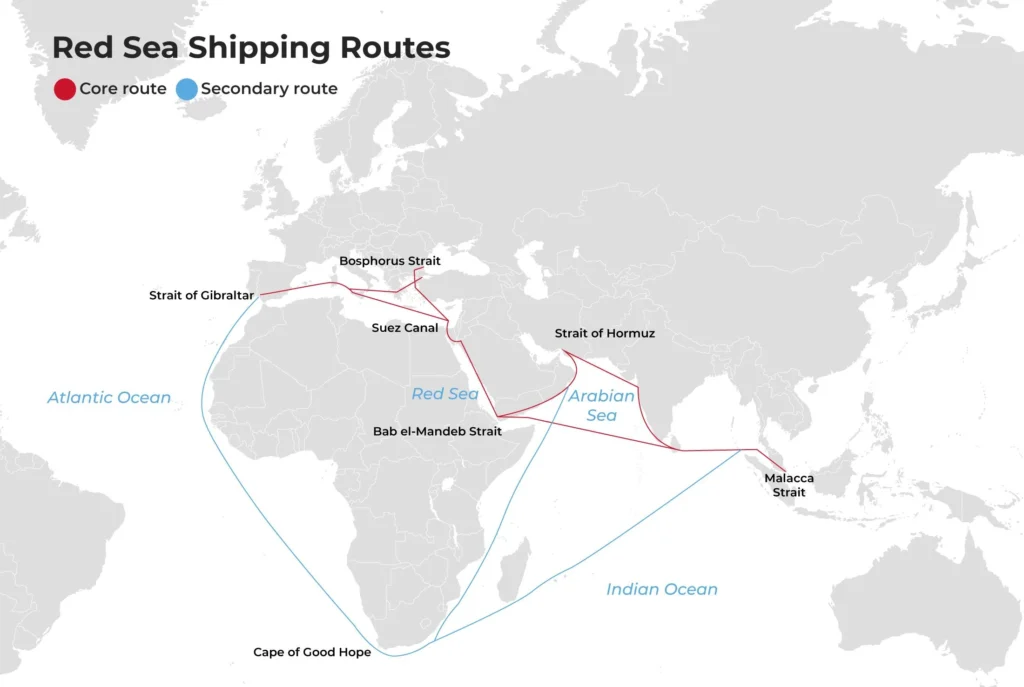
The latest crisis has shifted attention from the Strait of Hormuz to the Bab el-Mandeb Strait, the narrow entrance to the Red Sea connecting Europe and Asia.
Around 12% of global trade and a significant share of international container shipping passes through this route. Any prolonged disruption could affect global supply chains, increase freight costs, and delay deliveries worldwide. (euronews)
The Houthis recently claimed responsibility for attacks on two Saudi oil tankers transiting the Red Sea, significantly increasing concerns among shipping companies and energy markets.
Role of the Houthis
The Houthis, who control large areas of northern and western Yemen, have intensified attacks on commercial shipping in recent weeks.
The group says its actions are linked to the broader regional conflict, while the United States and its allies argue that the attacks threaten international maritime security and violate freedom of navigation.
Washington maintains that Iran provides political, military, and logistical support to the Houthis, an allegation Tehran has repeatedly denied. (Investing.com)
Iran Responds
Iran condemned the expanded U.S. strikes as a violation of its sovereignty and warned that it would continue responding to what it described as American aggression.
Iranian forces reportedly launched missiles and drones toward U.S. military installations in neighboring Gulf countries, while officials warned civilians to avoid American military facilities due to the possibility of further retaliation. (AP News)
Tehran also rejected reports suggesting it would immediately agree to a ceasefire, insisting that it would continue defending its national interests.
Oil Prices Rise Above $100
Financial markets reacted quickly to the growing tensions.
Concerns that fighting could disrupt shipping through both the Strait of Hormuz and the Bab el-Mandeb Strait pushed Brent crude oil above $100 per barrel for the first time in months.
Energy analysts believe that prolonged instability in these strategic waterways could significantly increase fuel prices, transportation costs, and inflation across many countries.
Global Shipping Under Pressure
Several international shipping companies have already altered their routes to avoid high-risk areas.
Many vessels are now traveling around the Cape of Good Hope in southern Africa, adding considerable time and expense to international trade.
Insurance premiums for commercial vessels operating in the region have also increased sharply, creating additional financial pressure for shipping operators and global supply chains. (The Guardian)
Diplomatic Efforts Stall
Despite growing international concern, diplomatic efforts have made little progress.
Reports indicate that Iran rejected a U.S.-backed ceasefire proposal delivered through regional mediators. Meanwhile, countries including China and Pakistan have urged both sides to return to negotiations and avoid further escalation.
The United Nations has also expressed concern over the expanding conflict and its humanitarian and economic consequences.
Regional Security Risks Increase
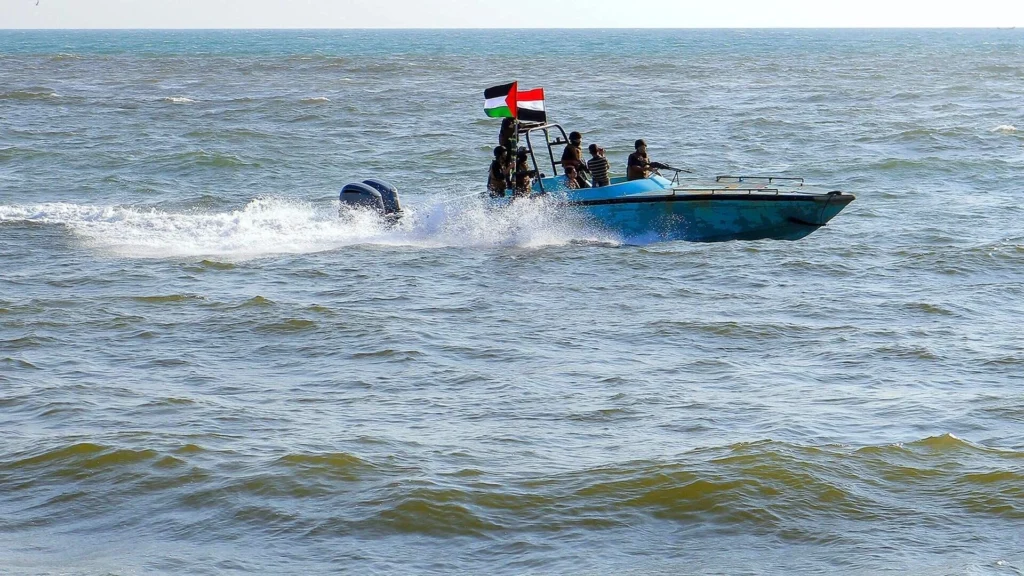
Security experts warn that the conflict is no longer confined to direct U.S.-Iran military exchanges.
The involvement of the Houthis has opened a second maritime front, increasing the likelihood of broader regional instability involving Gulf states, Yemen, Israel, and other Middle Eastern actors.
If attacks continue across both major shipping corridors, the consequences could extend well beyond the region, affecting global commerce and energy security. (AP News)
Expert Analysis
Defense analysts believe Washington’s immediate objective is to ensure safe passage through strategic waterways while weakening Iran’s military capabilities.
However, they also caution that continued military escalation without meaningful diplomatic engagement increases the risk of miscalculation and a wider regional conflict.
The simultaneous pressure on the Strait of Hormuz and the Red Sea represents one of the most significant threats to international maritime trade in recent years. (Al-Monitor)
What Comes Next?
The coming days will be critical in determining whether:
- The United States expands its military campaign further.
- Iran intensifies retaliatory missile and drone attacks.
- The Houthis continue targeting commercial shipping.
- Diplomatic mediation succeeds in preventing a broader regional war.
Global governments, shipping companies, and financial markets will closely monitor developments as tensions remain at one of their highest levels in years. (Investing.com)
Conclusion
The expansion of U.S. military strikes against Iran, combined with President Donald Trump’s warning to Tehran and the Houthis, marks a significant escalation in the Middle East conflict. The growing threat to both the Strait of Hormuz and the Red Sea has transformed the crisis from a regional security issue into a matter of global economic concern.
With oil prices rising, shipping routes under pressure, and diplomatic efforts struggling to gain momentum, the international community now faces the challenge of preventing a conflict that could have far-reaching consequences for global trade, energy markets, and regional stability.
Also Read:- West Asia War: U.S. Strikes Iran for 10th Consecutive Night as Tehran Targets Tanker in the Strait of Hormuz