
New Delhi | National Desk | PaperPatrika
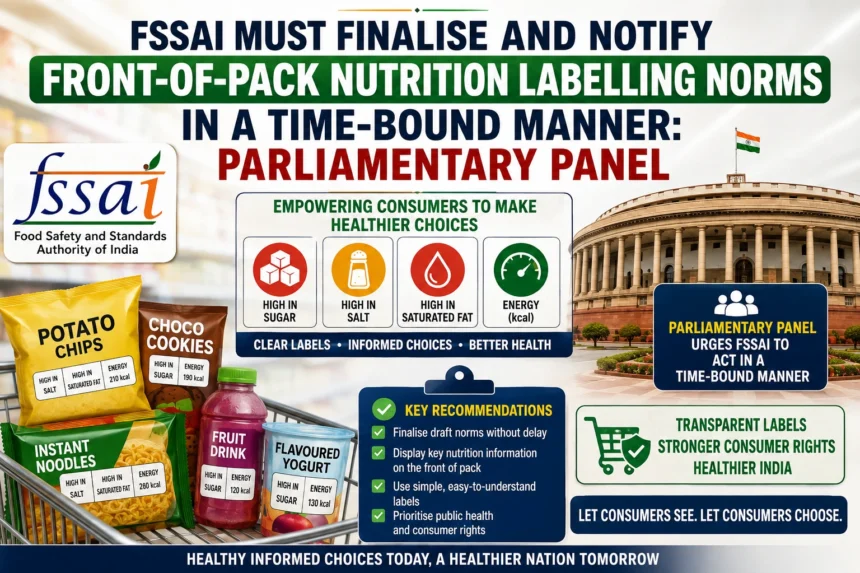
In a significant move aimed at improving public health and consumer awareness, the Parliamentary Standing Committee on Consumer Affairs, Food and Public Distribution has urged the Food Safety and Standards Authority of India (FSSAI) to finalise and officially notify the Front-of-Pack Nutrition Labelling (FOPNL) regulations without further delay.
The committee emphasized that consumers should have access to clear, simple, and easy-to-understand nutritional information on the front of packaged food products, enabling them to make healthier food choices. The recommendation comes amid rising concerns over obesity, diabetes, cardiovascular diseases, and the growing consumption of ultra-processed foods in India.
Parliamentary Panel Calls for Immediate Action
In its latest report titled “Regulation of Packaged Commodities with Specific Reference to Sugar Content in Baby Products and Other Food Products,” the Parliamentary Committee noted that the proposed Front-of-Pack Nutrition Labelling regulations have remained pending for nearly four years.
The committee observed that FSSAI had released the draft regulations in September 2022 and received more than 14,000 comments and suggestions from stakeholders. However, despite extensive consultations, the final notification has not yet been issued.
The panel recommended that FSSAI complete the process within a definite timeline, stating that delays directly affect consumers’ right to informed food choices.
What is Front-of-Pack Nutrition Labelling (FOPNL)?
Front-of-Pack Nutrition Labelling (FOPNL) is a nutrition information system that displays key nutritional details prominently on the front of packaged food products rather than only on the back panel.
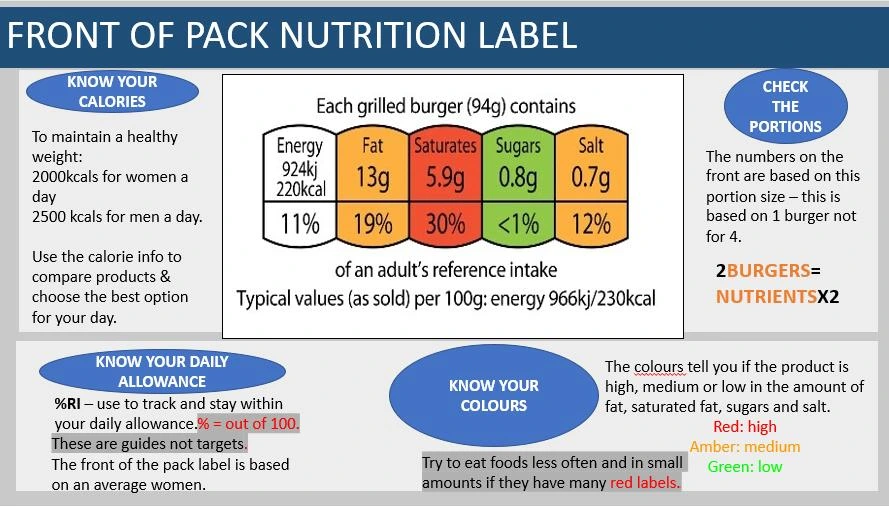
The objective is to help consumers quickly understand whether a product contains excessive amounts of:
- Sugar
- Salt (Sodium)
- Total Fat
- Saturated Fat
- Calories
- Energy
Many countries use warning symbols, traffic-light colours, or star-rating systems to communicate this information in a simple and easily understandable format.
Why is India Considering FOPNL?
India has witnessed a rapid increase in the consumption of packaged and ultra-processed food products over the past decade.
Health experts believe that excessive intake of foods high in sugar, salt, and unhealthy fats has contributed significantly to the increasing burden of:
- Obesity
- Type-2 Diabetes
- Hypertension
- Heart Diseases
- Childhood Obesity
- Metabolic Disorders
The Parliamentary Committee believes that displaying nutritional warnings on the front of food packages will empower consumers to make healthier purchasing decisions and reduce the risk of lifestyle-related diseases.
Special Concern Over Baby Food
One of the major observations in the Parliamentary report relates to packaged baby food and children’s food products.
The committee expressed concern over the sugar content found in several baby food products and stressed that nutritional information on products meant for infants and children should be more transparent.
Parents should be able to identify products containing excessive sugar or unhealthy ingredients before making purchasing decisions.
Public health experts have repeatedly argued that better labelling standards are essential for protecting children’s long-term health.
Draft Rules Pending Since 2022
FSSAI released the draft Front-of-Pack Nutrition Labelling regulations on 13 September 2022.
Following the publication of the draft, food manufacturers, consumer organisations, nutrition experts, public health institutions, and industry bodies submitted thousands of comments.
Despite extensive stakeholder consultations, the regulations have yet to be officially notified, prompting the Parliamentary Committee to express dissatisfaction with the prolonged delay.
Key Recommendations of the Parliamentary Committee
The Committee recommended that:
- FSSAI should finalise FOPNL regulations without unnecessary delay.
- Nutrition labels should be simple and easy for ordinary consumers to understand.
- Products containing high levels of sugar, salt, and saturated fat should carry clear front-of-pack information.
- Public health should receive priority over commercial considerations.
- Consumer awareness should be strengthened through effective nutrition labelling.
The committee stated that transparent food labelling is an essential component of informed consumer choice and preventive healthcare.
Food Industry’s Perspective
Some food industry organisations have raised concerns regarding the proposed labelling framework.
Industry representatives argue that:
- Scientific evidence should guide the final standards.
- Uniform criteria should apply across all food categories.
- Labelling formats should avoid unnecessarily alarming consumers.
- Businesses should be given adequate time to comply with new regulations.
However, public health experts maintain that consumer health should remain the foremost priority and that transparent labelling ultimately benefits both consumers and responsible food manufacturers.
Global Practices
Several countries have already implemented Front-of-Pack Nutrition Labelling systems.
These include:
- Chile
- Mexico
- France
- Australia
- New Zealand
- United Kingdom
Different countries have adopted warning labels, traffic-light systems, or health star ratings to simplify nutritional information and encourage healthier food choices.
Studies from these countries suggest that simplified nutrition labels improve consumer awareness and motivate food manufacturers to reformulate products with healthier ingredients.
Benefits for Consumers
If implemented effectively, Front-of-Pack Nutrition Labelling could offer several advantages:
- Easier comparison of packaged food products.
- Better understanding of nutritional quality.
- Reduced consumption of excessive sugar, salt, and unhealthy fats.
- Improved protection for children’s health.
- Increased public awareness regarding nutrition.
- Encouragement for food manufacturers to produce healthier products.
The system is expected to support India’s broader public health objectives by promoting healthier eating habits.
Role of FSSAI
The Food Safety and Standards Authority of India (FSSAI) is India’s apex food regulator responsible for ensuring food safety and establishing food standards.
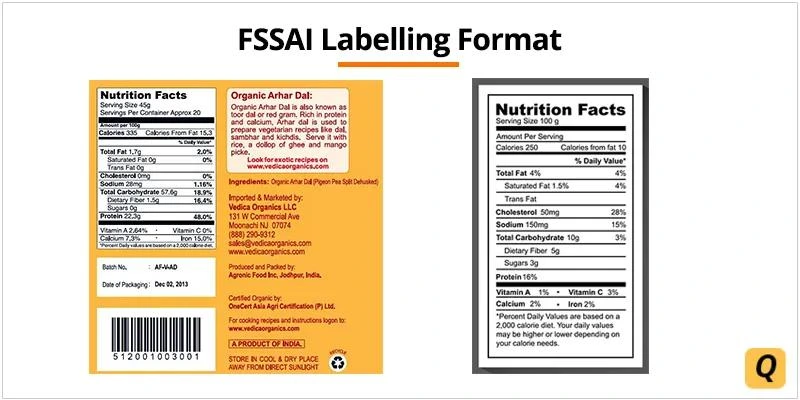
Its responsibilities include:
- Framing food safety regulations.
- Issuing food licences.
- Monitoring food quality.
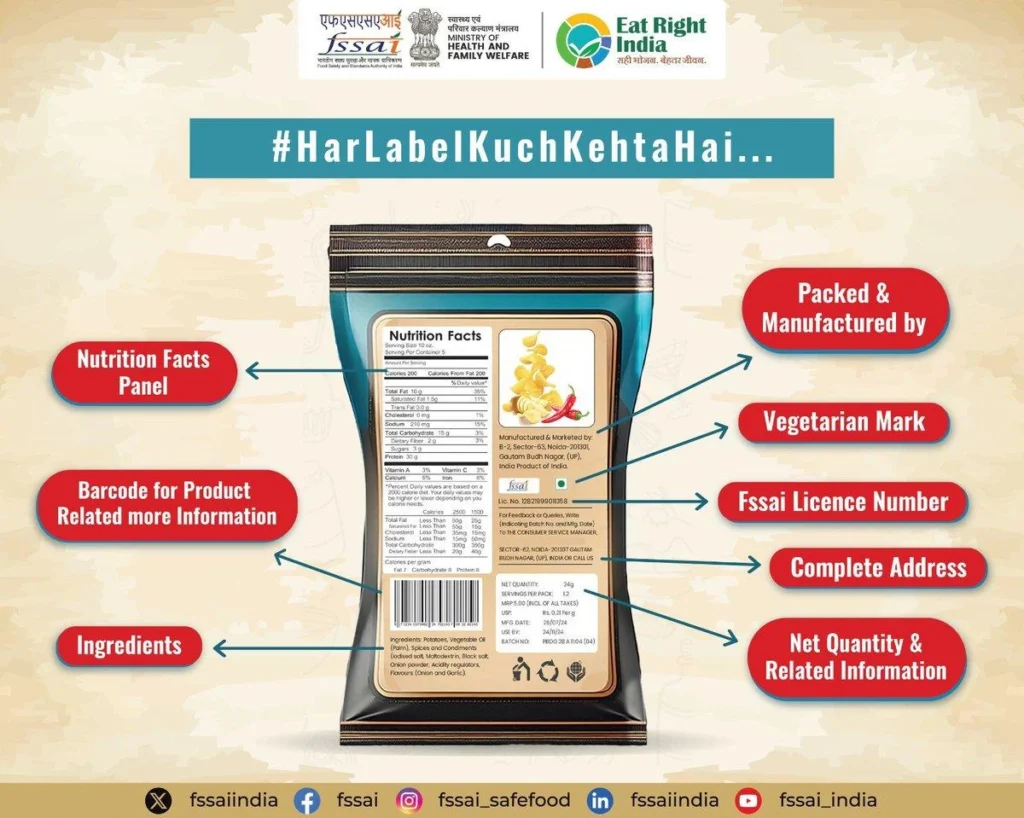
- Regulating food labelling.
- Protecting consumer interests.
- Promoting safe and nutritious food.
Over the years, FSSAI has introduced several amendments to food labelling regulations, but Front-of-Pack Nutrition Labelling remains one of the most awaited reforms.
Expert Opinion
Nutrition and public health experts believe that India urgently needs an effective Front-of-Pack Nutrition Labelling system due to the country’s rapidly increasing burden of non-communicable diseases.
According to experts, when consumers can immediately identify products containing excessive sugar, salt, or unhealthy fats, they are more likely to make healthier purchasing decisions.
Experts also believe that improved labelling could encourage food manufacturers to reduce unhealthy ingredients in processed foods.
What Happens Next?
Attention is now focused on FSSAI’s next steps.
Key questions include:
- When will the pending regulations be finalised?
- What labelling format will India adopt?
- Will warning symbols, traffic-light colours, or another model be used?
- How much transition time will manufacturers receive?
- How will compliance be monitored?
The Parliamentary Committee expects FSSAI to complete the regulatory process promptly so that consumers can benefit from clearer nutritional information.
Conclusion
The Parliamentary Committee’s recommendation for time-bound implementation of Front-of-Pack Nutrition Labelling (FOPNL) marks an important step toward improving consumer rights, transparency, and public health in India.
With packaged food consumption rising rapidly and lifestyle-related diseases becoming increasingly common, clear and scientifically designed nutrition labels can empower millions of Indians to make informed dietary choices.
If FSSAI acts swiftly to notify the long-pending regulations, the reform could become one of India’s most significant public health initiatives, encouraging healthier eating habits while improving transparency across the food industry.