

New Delhi | Education & Technology | PaperPatrika
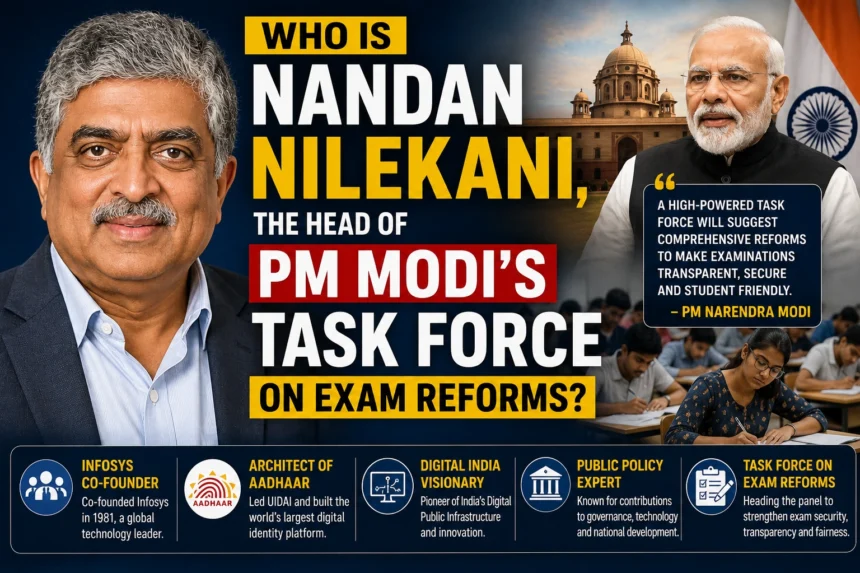
Prime Minister Narendra Modi has appointed Infosys co-founder Nandan Nilekani to lead a newly constituted high-powered task force on examination reforms, a move aimed at restoring trust in India’s public examination system after months of nationwide protests over paper leaks and alleged irregularities. The announcement marks one of the government’s most significant education reform initiatives in recent years. It reflects its intention to use technology, governance reforms, and institutional restructuring to strengthen examination security.
Nilekani’s appointment has attracted widespread attention because of his long-standing reputation as one of India’s foremost technology leaders. Best known as the co-founder of Infosys and the architect of the Aadhaar digital identity programme, he has spent decades building large-scale digital public infrastructure that serves hundreds of millions of Indians. The government believes his experience in technology, digital governance, and large public systems makes him well suited to lead reforms of India’s examination ecosystem.
PM Modi Announces High-Powered Task Force
The Prime Minister announced the formation of the task force in a public statement, confirming that Nandan Nilekani will head the panel tasked with recommending comprehensive reforms to examinations. The government said the committee will examine structural weaknesses in the current system and suggest measures to make examinations more transparent, secure, technology-driven, and resistant to malpractice. (Prime Minister of India)
The decision comes after large-scale protests demanding accountability for alleged examination paper leaks and stronger safeguards to protect students’ interests. Along with broader reforms, the government has also indicated that it plans legislative measures to strengthen anti-paper-leak laws. (Reuters)
Who Is Nandan Nilekani?
Born on 2 June 1955 in Bengaluru, Nandan Mohanrao Nilekani is one of India’s most influential entrepreneurs and public policy leaders.
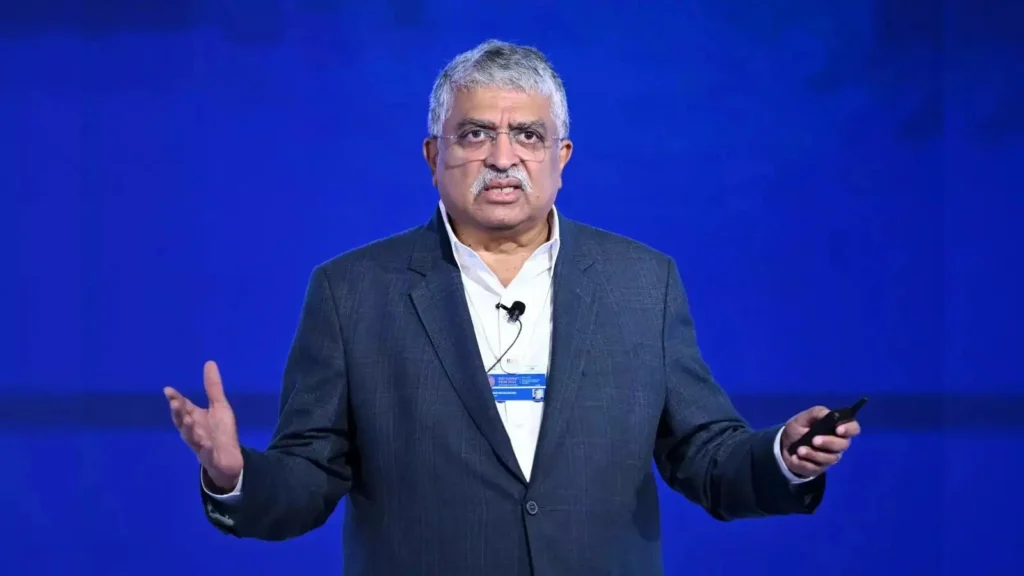
He graduated in Electrical Engineering from the Indian Institute of Technology (IIT) Bombay before beginning his professional career. In 1981, he became one of the seven co-founders of Infosys, a company that would later emerge as one of India’s largest and most respected information technology firms.
During his years at Infosys, Nilekani held several senior leadership positions before becoming the company’s Chief Executive Officer and later its Chairman. Under his leadership, Infosys expanded globally and became a symbol of India’s rise as a major technology powerhouse. (The Times of India)
Architect of Aadhaar

Although Infosys made him internationally known, Nilekani’s most transformative public contribution came after he accepted the government’s invitation in 2009 to lead the Unique Identification Authority of India (UIDAI).
As founding Chairman of UIDAI, he supervised the creation of Aadhaar, now the world’s largest biometric digital identity programme.
Today, Aadhaar serves more than a billion residents and supports numerous government welfare programmes, banking services, tax administration, digital payments, and identity verification across India.
Many experts regard Aadhaar as one of the country’s most significant digital governance initiatives, and Nilekani’s leadership during its implementation is widely recognised as a milestone in public-sector technology innovation. (The Times of India)
Champion of India’s Digital Public Infrastructure
Beyond Aadhaar, Nilekani has remained one of the strongest advocates of India’s Digital Public Infrastructure (DPI).
He has consistently supported initiatives involving:
- Digital identity
- UPI-based digital payments
- Data governance
- Artificial intelligence
- Open digital ecosystems
- Technology-driven public services
His policy recommendations have frequently focused on combining technology with transparency and efficient governance.
Government officials believe this experience could prove valuable in modernising India’s examination system, where issues such as paper leaks, impersonation, logistics, and data security have become recurring concerns. (The Economic Times)
Why Has He Been Chosen?
According to government sources, Nilekani’s appointment reflects confidence in his ability to manage complex national projects involving millions of citizens.
His experience includes:
- Building nationwide digital platforms.
- Managing large public databases.
- Leading complex technology projects.
- Working with government institutions.
- Promoting transparency through digital systems.
- Integrating technology into public administration.
Officials believe these strengths can help redesign examination processes from registration to result declaration. (The Times of India)
What Will the Task Force Do?
The newly formed committee has been entrusted with recommending reforms across the examination ecosystem.
Its expected areas of work include:
- Strengthening examination security.
- Preventing paper leaks.
- Improving digital monitoring.
- Enhancing cybersecurity.
- Introducing AI-based surveillance tools.
- Modernising logistics.
- Reforming the National Testing Agency (NTA).
- Improving transparency in evaluation.
- Reducing opportunities for malpractice.
- Strengthening institutional accountability.
The panel is expected to consult education experts, technology specialists, administrators, and examination authorities before submitting its recommendations to the government. (The Times of India)
A Response to Recent Examination Controversies
The creation of the task force follows intense public debate over alleged irregularities in several high-profile examinations.
Students across the country demanded:
- Leak-proof examinations.
- Transparent recruitment.
- Faster investigations.
- Stronger punishment for offenders.
- Better technological safeguards.
Following discussions with protest representatives, the government accepted several demands and announced a comprehensive reform process. The Nilekani-led task force has become the centrepiece of that effort. (Reuters)
Technology at the Core of Reform
Experts expect the committee to recommend extensive use of advanced technology.
Possible focus areas include:
- Artificial Intelligence
- Blockchain verification
- Encrypted question-paper distribution
- Biometric candidate authentication
- Real-time examination monitoring
- Cloud-based security systems
- Digital audit trails
- Automated anomaly detection
While the government has not yet released the committee’s detailed terms of reference, officials have repeatedly emphasised that technology will play a central role in rebuilding confidence in India’s examination process. (The Economic Times)
Leadership Beyond Business
Nandan Nilekani is widely regarded as more than a technology entrepreneur.
Over the years he has:
- Advised governments.
- Written extensively on governance and technology.
- Supported public policy initiatives.
- Promoted innovation through philanthropy.
- Encouraged digital inclusion.
His combination of private-sector management experience and public-sector leadership has made him one of India’s most respected voices on digital transformation.
Expectations from the Committee
Education experts believe the task force’s recommendations could influence examination reforms for years to come.
If implemented successfully, the reforms may help:
- Improve fairness.
- Increase transparency.
- Reduce examination fraud.
- Modernise testing infrastructure.
- Strengthen public trust.
- Protect students’ interests.
- Enhance India’s global reputation in educational assessment.
Observers also expect the recommendations to influence recruitment examinations conducted by both central and state agencies.
Challenges Ahead
Despite Nilekani’s extensive experience, the committee faces significant challenges.
India conducts thousands of competitive examinations each year involving millions of candidates.
The task force will need to balance:
- Accessibility.
- Security.
- Cost efficiency.
- Privacy.
- Technological feasibility.
- Administrative coordination.
- Federal cooperation between the Centre and states.
Experts say achieving meaningful reform will require not only technological innovation but also institutional coordination and legislative support.
Conclusion
Nandan Nilekani’s appointment as head of Prime Minister Narendra Modi’s high-powered task force on examination reforms represents a major attempt to restore credibility to India’s examination system. With decades of experience in building Infosys, leading the Aadhaar project, and shaping India’s digital public infrastructure, Nilekani brings a unique combination of technological expertise and governance experience to one of the country’s most important education reforms.
As the committee begins its work, students, educators, policymakers, and parents across the country will be watching closely. Its recommendations are expected to play a decisive role in creating a more secure, transparent, and technology-driven examination system capable of meeting the expectations of millions of aspirants in the years ahead.