

Varanasi | July 27, 2026 | PaperPatrika Special Report
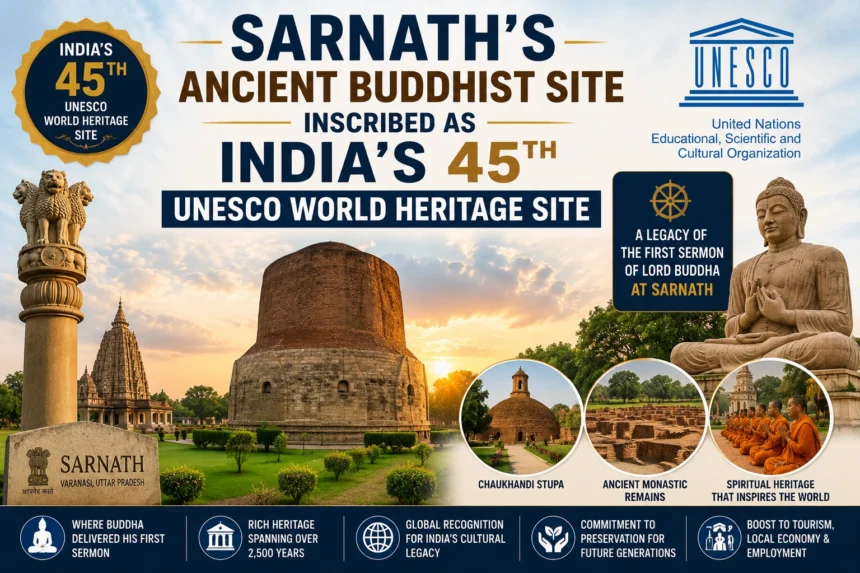
In a landmark achievement for India’s cultural and spiritual heritage, the Ancient Buddhist Site of Sarnath in Uttar Pradesh has officially been inscribed on the UNESCO World Heritage List, becoming India’s 45th World Heritage Site. The announcement was made during the 48th Session of the UNESCO World Heritage Committee held in Busan, South Korea. This prestigious recognition highlights Sarnath’s outstanding universal value and reinforces India’s position as one of the world’s richest custodians of cultural heritage.
The inscription is far more than an archaeological milestone. It is a global acknowledgment of the place where Lord Buddha delivered his first sermon after attaining enlightenment, setting in motion the spread of Buddhism across Asia and eventually the world. With this recognition, Sarnath joins the ranks of globally celebrated heritage sites that symbolize humanity’s shared history and civilization.
A Historic Moment for India
UNESCO’s decision marks the culmination of decades of conservation efforts by the Archaeological Survey of India (ASI), the Ministry of Culture, and heritage experts. After remaining on UNESCO’s Tentative List for nearly three decades, Sarnath has finally received full World Heritage status.
The recognition increases India’s total number of UNESCO World Heritage Sites to 45, further strengthening the country’s standing as one of the leading nations in preserving cultural and natural heritage.
Government officials described the inscription as a proud moment that reflects India’s commitment to protecting monuments of exceptional historical and spiritual significance.
Why Sarnath Is So Important
Sarnath is regarded as one of the four holiest pilgrimage destinations in Buddhism.
According to Buddhist tradition, after attaining enlightenment beneath the Bodhi Tree in Bodh Gaya, Gautama Buddha traveled to Sarnath, where he delivered his first sermon, known as the Dhammacakkappavattana Sutta (Turning of the Wheel of Dharma).
This event marked the beginning of the Buddhist Sangha and the formal establishment of Buddhism as a spiritual tradition.
For millions of Buddhists around the world, Sarnath represents the birthplace of Buddhist teaching and philosophy. Together with Lumbini (birthplace), Bodh Gaya (enlightenment), and Kushinagar (Mahaparinirvana), Sarnath forms one of the four principal Buddhist pilgrimage sites.
Why UNESCO Selected Sarnath
UNESCO recognized Sarnath for its Outstanding Universal Value (OUV), acknowledging its extraordinary contribution to world history, religion, architecture, and cultural exchange.
The World Heritage Committee concluded that Sarnath fulfills important cultural criteria because:
- It represents a unique testimony to the origins of Buddhism.
- It illustrates the evolution of Buddhist architecture and monastic traditions.
- It has had an enduring influence on civilizations across Asia.
- It continues to serve as an active pilgrimage destination more than two millennia after Buddha’s first sermon.
The inscription recognizes Sarnath as a heritage site of importance not only for India but for all humanity.
Monuments Included in the Heritage Property
The UNESCO-listed property encompasses several historically significant monuments, including:
- Dhamek Stupa
- Dharmarajika Stupa
- Ashoka Pillar
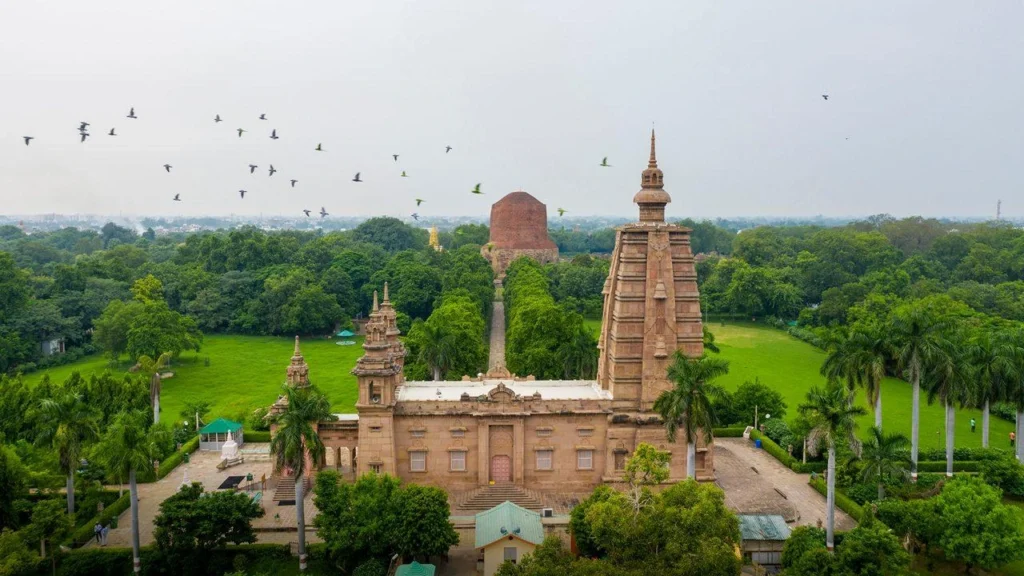
- Mulagandha Kuti Temple ruins
- Ancient monasteries (Viharas)
- Excavated temple complexes
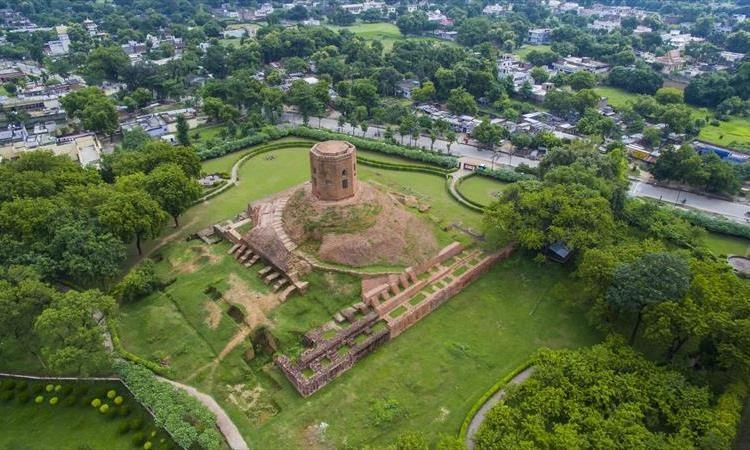
- Chaukhandi Stupa
These monuments collectively preserve centuries of Buddhist religious, artistic, and architectural development, spanning from the Mauryan Empire through the Gupta period and beyond.
Among them, the Dhamek Stupa remains the most iconic structure, standing as a symbol of Buddha’s first sermon and attracting pilgrims from across the world.
Prime Minister Narendra Modi Welcomes the Decision
Prime Minister Narendra Modi welcomed UNESCO’s decision, calling it “a proud moment for every Indian.”
He said the recognition celebrates India’s timeless civilizational values of peace, compassion, and wisdom embodied in Lord Buddha’s teachings.
According to the Prime Minister, Sarnath’s inclusion on the World Heritage List will inspire more people around the world to explore India’s spiritual traditions while boosting cultural tourism and international appreciation of India’s heritage.
Ministry of Culture’s Statement
India’s Ministry of Culture described the inscription as a major achievement for the country’s heritage conservation efforts.
The ministry noted that UNESCO recognition would:
- Strengthen scientific conservation.
- Promote archaeological research.
- Encourage international collaboration.
- Increase heritage tourism.
- Generate greater awareness about Buddhist history.
Officials also emphasized that preserving Sarnath is not merely about protecting monuments but safeguarding one of humanity’s most influential spiritual traditions.
Major Boost for Tourism
Experts believe UNESCO recognition will significantly increase tourism in Varanasi and eastern Uttar Pradesh.
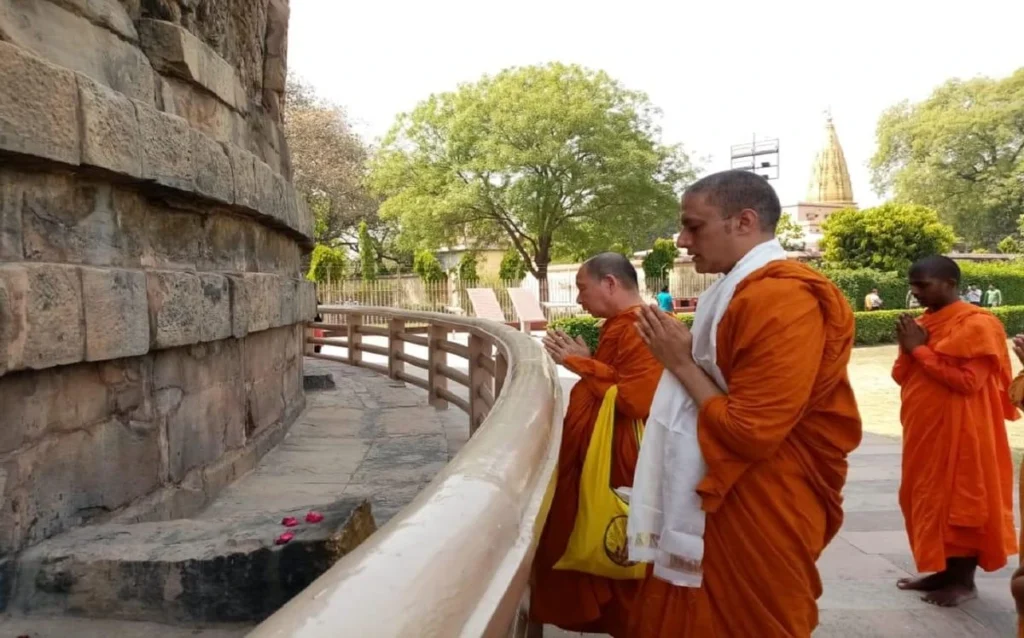
Pilgrims from countries with strong Buddhist traditions—including Sri Lanka, Thailand, Myanmar, Japan, South Korea, Vietnam, Bhutan, Nepal, and Cambodia—are expected to visit Sarnath in larger numbers.
The expected benefits include:
- Growth in religious tourism.
- Increased hotel and hospitality business.
- Higher employment opportunities.
- Development of local handicrafts.
- Improved tourism infrastructure.
- Expansion of the Buddhist Circuit.
The inscription is likely to position Sarnath as one of the world’s leading destinations for spiritual and cultural tourism.
Strengthening Uttar Pradesh’s Heritage Identity
With Sarnath’s inclusion, Uttar Pradesh now hosts another globally recognized heritage destination.
The state government has been actively promoting the Buddhist Circuit, connecting Sarnath with Kushinagar, Shravasti, Kaushambi, and other important Buddhist sites.
Officials believe UNESCO recognition will attract greater international investment in tourism infrastructure and strengthen the state’s position as a global pilgrimage destination.
Conservation Responsibilities Increase
World Heritage status brings not only international prestige but also greater responsibility.
UNESCO expects member countries to ensure:
- Scientific conservation of monuments.
- Sustainable tourism management.
- Protection from urban encroachment.
- Environmental preservation.
- Comprehensive documentation.
- Community participation in heritage management.
The Archaeological Survey of India is expected to implement additional conservation measures to preserve Sarnath for future generations.
Boost to India’s Cultural Diplomacy
The recognition also enhances India’s cultural diplomacy.
For years, India has promoted Buddhist heritage as an important element of its international engagement, especially with Southeast Asia and East Asia.
Sarnath’s World Heritage status is expected to deepen cultural relations with Buddhist-majority nations while strengthening India’s global soft power through shared civilizational values.
Buddha’s teachings of peace, compassion, non-violence, and harmony continue to resonate across international communities, making Sarnath an enduring symbol of intercultural dialogue.
What Is the UNESCO World Heritage List?
The UNESCO World Heritage List identifies cultural and natural sites considered to possess Outstanding Universal Value deserving protection for future generations.
These sites represent the shared heritage of humanity and are protected under the 1972 World Heritage Convention.
Being inscribed on the list often leads to:
- Greater international recognition.
- Increased tourism.
- Better conservation funding.
- Scientific cooperation.
- Global awareness of heritage preservation.
Sarnath now joins more than 1,200 World Heritage Sites across the globe as one of humanity’s most treasured cultural landmarks.
Global Significance
Beyond India’s borders, Sarnath symbolizes the beginning of one of the world’s greatest philosophical traditions.
For over 2,500 years, Buddha’s teachings originating from Sarnath have influenced ethics, governance, education, meditation, and social thought across Asia and beyond.
The UNESCO inscription ensures that this sacred landscape will receive greater international attention while inspiring future generations to appreciate its universal message of peace and compassion.
Conclusion
The inscription of the Ancient Buddhist Site of Sarnath as India’s 45th UNESCO World Heritage Site marks a defining moment in the nation’s cultural history. It is recognition not only of an archaeological treasure but also of the birthplace of Buddhist teaching, whose influence has shaped civilizations across continents.
As India celebrates this historic achievement, Sarnath stands as a powerful reminder that cultural heritage is not merely about preserving monuments—it is about safeguarding ideas, values, and traditions that continue to inspire humanity. With UNESCO’s recognition, Sarnath is poised to become an even more prominent center for global pilgrimage, research, heritage conservation, and cultural exchange in the decades to come.
Also Read: – UNESCO Honours Thukkachi Temple Restoration in Tamil Nadu for Blending Traditional Craftsmanship with Modern Conservation