
New Delhi | Special Report | PaperPatrika
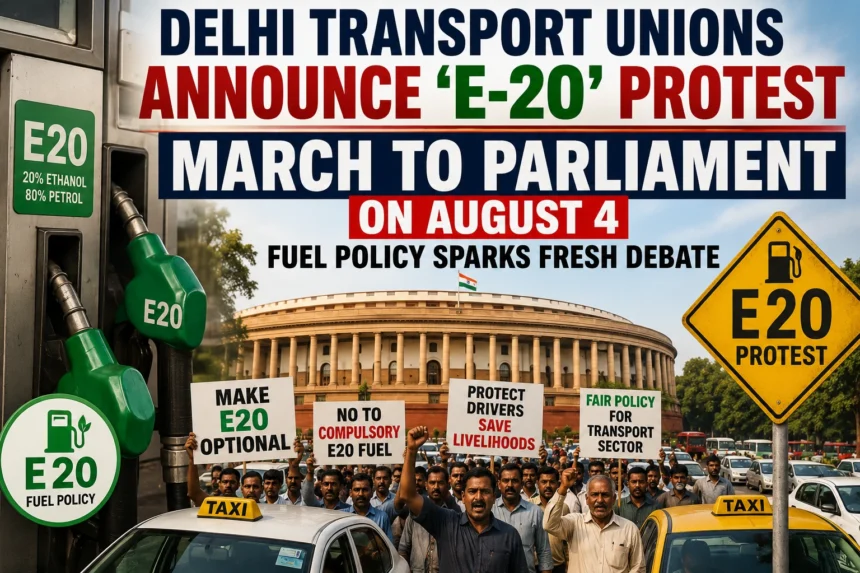
The debate over India’s ethanol-blended fuel policy has intensified after several Delhi-based transport unions announced a major protest march to Parliament on August 4, demanding that the Centre withdraw or make optional the use of E20 petrol. The demonstration, being described as the “E-20 Protest March,” is expected to draw participation from taxi operators, tourist transport associations, commercial vehicle owners, and transport workers from different parts of the country.
The protest has been called by the Delhi Taxi and Tourist Transporters and Tour Operators Association, with support from other transport organisations, including representatives of the All India Motor Transport Congress and other commercial transport bodies. The unions argue that compulsory availability of E20 fuel has created operational challenges for vehicle owners, especially those operating older petrol-powered vehicles. (The Economic Times)
Why are transport unions protesting?
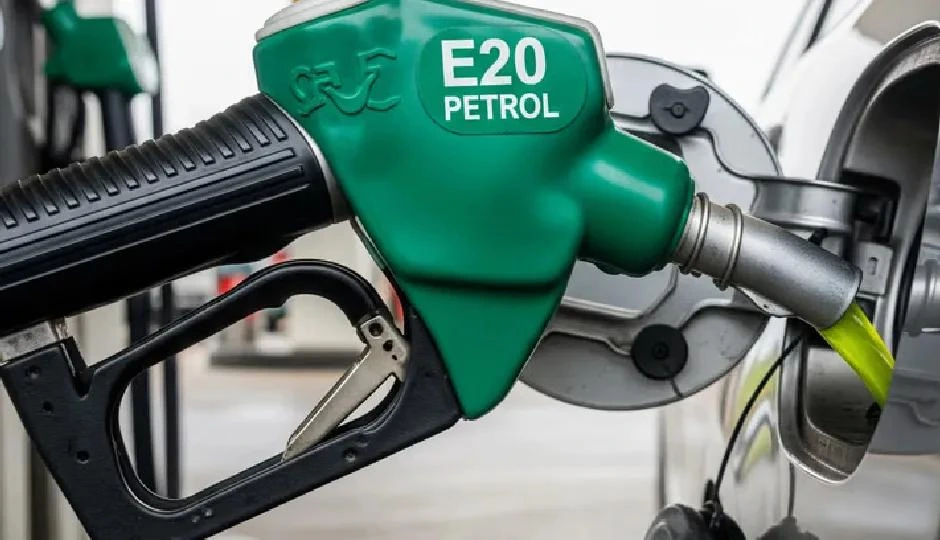
At the centre of the controversy is E20 petrol, a fuel containing 20 percent ethanol blended with 80 percent petrol. The Government of India has promoted ethanol blending as part of its strategy to reduce dependence on imported crude oil, lower carbon emissions, and support domestic sugarcane farmers.
Transport unions, however, contend that many commercial vehicles—particularly those manufactured before newer fuel compatibility standards—were not designed for sustained use of E20 fuel. According to union leaders, drivers and fleet operators have reported issues such as:
- Reduced fuel efficiency
- Increased maintenance costs
- Concerns over long-term engine durability
- Higher operating expenses for commercial transport
They argue that these concerns deserve an independent scientific review before the policy is implemented universally. (The Indian Express)
Protest march scheduled for August 4
Union leaders have announced that thousands of transport workers are expected to participate in a peaceful march towards Parliament on August 4.
According to Sanjay Samrat, President of the Delhi Taxi and Tourist Transporters and Tour Operators Association, the objective is to draw lawmakers’ attention to what transport operators describe as practical difficulties arising from ethanol-blended fuel.
He stated that the protest is intended as a “wake-up call” for Members of Parliament, urging them to review the current fuel policy in consultation with stakeholders from the transport sector. (The Economic Times)
Unions deny political links.
One of the notable aspects of the announcement is the organisers’ insistence that the proposed march is non-political.
Following discussions on social media involving groups branding themselves as the “E-20 Janta Party,” union leaders clarified that they have no association with any political organisation or campaign.
They emphasised that their protest focuses solely on transport-related issues and seeks policy changes through democratic means rather than political mobilisation. (The Economic Times)
Demand: Make E20 optional
Instead of completely opposing ethanol blending, several transport associations have suggested that consumers should be allowed to choose between regular petrol and E20 petrol.
Harish Sabharwal, representing the All India Motor Transport Congress, said that transport operators primarily want consumer choice rather than compulsory implementation.
According to the associations, allowing multiple fuel options would protect vehicle owners whose engines may not be fully compatible with higher ethanol blends while enabling others to continue using E20 if they prefer. (The Economic Times)
Independent scientific review sought.
Transport organisations have also demanded an independent scientific review of the E20 programme.
They have proposed that the review include:
- Automobile manufacturers
- Vehicle owners
- Consumer rights organisations
- Transport unions
- Fuel experts
- Independent technical institutions
The associations believe such a review would provide transparent evidence regarding the long-term effects of E20 fuel on different categories of vehicles. (The Indian Express)
Government’s position
The Government of India has consistently defended the ethanol blending programme.

According to official statements cited in recent reports, extensive laboratory testing and field trials conducted by organisations including the Automotive Research Association of India (ARAI), Society of Indian Automobile Manufacturers (SIAM), Indian Oil Corporation (IOCL), the Indian Institute of Petroleum (IIP), and automobile manufacturers indicate that E20 fuel is safe for vehicles designed or certified for its use under prescribed standards. (The Economic Times)
The government maintains that ethanol blending delivers several long-term benefits:
- Lower dependence on imported crude oil
- Reduced greenhouse gas emissions
- Better income opportunities for sugarcane farmers
- Improved energy security
- Promotion of cleaner transport fuels
Officials have repeatedly described ethanol blending as a key component of India’s transition toward sustainable mobility. (Business Today)
Concerns of taxi operators
Taxi operators argue that commercial vehicles travel far greater distances than privately owned cars and therefore experience maintenance issues more quickly.
Some operators claim that even a small reduction in fuel efficiency can significantly affect monthly earnings because commercial vehicles consume much larger quantities of fuel.
Many fleet owners also point out that replacing vehicles before the end of their operational life is financially difficult for small transport businesses. (Informist Media)
Wider participation expected
Organisers say the protest is likely to attract:
- Taxi drivers
- Tourist vehicle operators
- Commercial transport companies
- Fleet owners
- Goods carriers
- Independent drivers
Several associations from outside Delhi are also expected to participate, making the march one of the largest transport-sector demonstrations related to fuel policy in recent years. (Informist Media)
No strike announced
Despite announcing the Parliament march, transport organisations have clarified that no nationwide strike has been called at present.
This means taxi services, tourist vehicles, and commercial transport operations are expected to continue normally unless future decisions are taken after discussions with members.
Union leaders have said the immediate objective is to submit their concerns to lawmakers rather than disrupt public transport. (The Economic Times)
Economic implications
Transport experts note that fuel accounts for one of the largest operating expenses in commercial transportation.
Any policy affecting fuel prices, mileage, or maintenance costs can have wider economic consequences, including:
- Taxi fares
- Logistics costs
- Tourism transport charges
- Delivery services
- Small business operating expenses
Supporters of the protest argue that commercial operators should be consulted more extensively before major fuel policy changes are implemented. Critics, however, say delaying ethanol blending could slow India’s energy transition goals. (Business Today)
Environmental perspective
Environmental experts continue to support ethanol blending because it can reduce fossil fuel consumption and contribute to lower emissions when implemented with compatible vehicles and infrastructure.
India has steadily increased ethanol blending percentages over recent years as part of its broader clean-energy strategy.
The challenge, according to policy analysts, lies in balancing environmental objectives with the practical concerns of millions of vehicle owners and commercial operators. (The Economic Times)
Political significance
The planned protest comes at a time when Parliament is in session, and public attention is focused on several policy debates.
Although transport unions have repeatedly stated that the march is not politically motivated, its timing is expected to bring additional attention to the government’s fuel policy and may encourage broader discussions among lawmakers regarding consumer choice, vehicle compatibility, and implementation timelines. (The Economic Times)
What happens next?
The transport associations intend to proceed with the August 4 march unless fresh discussions with government representatives result in policy changes or assurances.
Their principal demands remain:
- Make E20 petrol optional.
- Conduct an independent scientific review.
- Consult transport stakeholders before further expansion.
- Protect older commercial vehicle owners from additional financial burdens.
Whether the government modifies its approach or continues with the existing rollout strategy will likely shape the next phase of this debate. (The Indian Express)
Conclusion
The planned E-20 protest march to Parliament on August 4 reflects growing concerns among sections of India’s transport industry regarding the implementation of ethanol-blended petrol. While the government views E20 as an essential component of India’s energy security and environmental agenda, transport unions argue that commercial vehicle owners require greater flexibility, stronger technical evidence, and adequate consultation.
As the date of the march approaches, attention will remain focused on whether dialogue between the government and transport associations can bridge the gap between environmental objectives and the operational realities faced by millions of drivers across the country.