

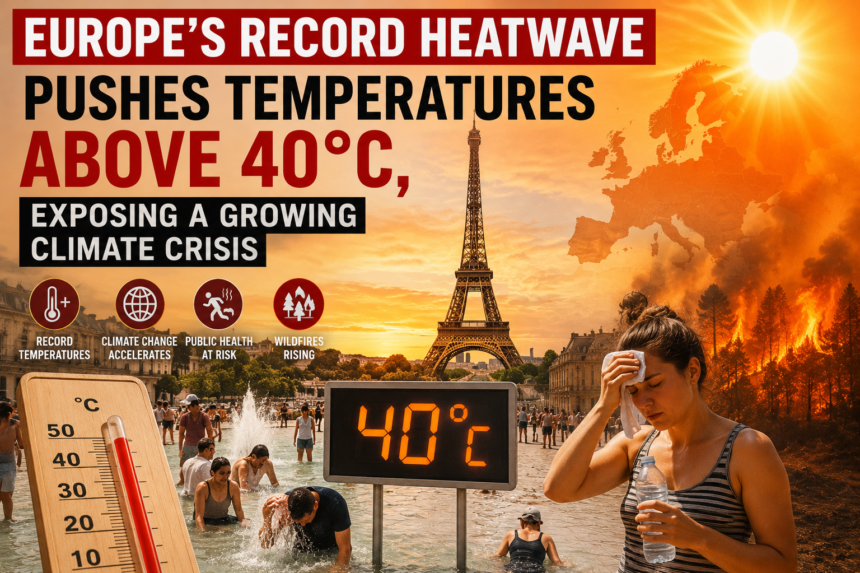
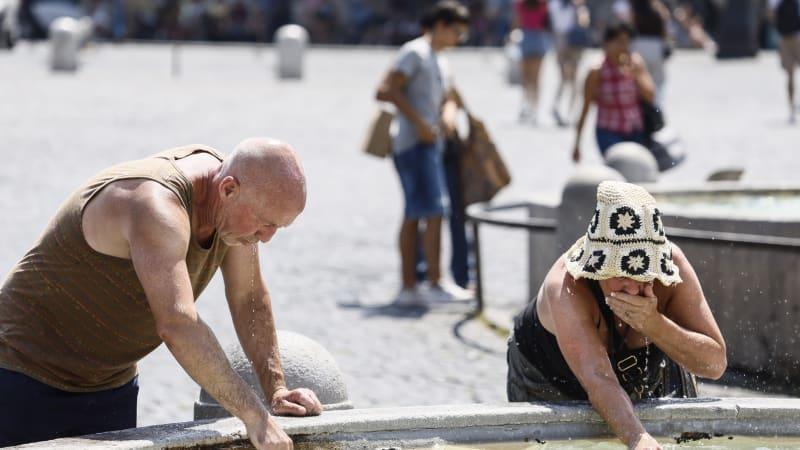
Europe is facing one of the most severe heatwaves in its modern history, with temperatures exceeding 40°C (104°F) across several countries. What was once considered an unusual summer event has now become an increasingly frequent and dangerous reality. Cities traditionally designed to survive freezing winters are struggling to cope with prolonged periods of extreme heat, exposing major weaknesses in infrastructure, public health systems, transportation, and energy networks.
Countries including France, Germany, Spain, Italy, Hungary, Poland, Romania, and the Czech Republic have issued red weather alerts as millions of people endure dangerously high temperatures. Scientists warn that Europe is warming faster than many other regions, and climate change is making these extreme heat events both more frequent and more intense.
Europe Was Designed for Cold, Not Heat
For centuries, European architecture and urban planning focused on protecting people from harsh winters rather than scorching summers.
Many homes across Europe were built with:
- Thick insulated walls
- Small windows
- Limited natural ventilation
- Heating systems instead of cooling systems
- Very little or no air conditioning
Unlike countries where hot summers are common, air conditioning has never been considered essential in much of Europe. Even today, a large proportion of homes, schools, hospitals, and public buildings lack modern cooling systems.
As temperatures repeatedly cross 40°C, these buildings effectively trap heat, turning homes into dangerous environments during prolonged heatwaves.
Heatwave Sweeps Across the Continent
The latest heatwave has spread from Western Europe into Central and Eastern Europe under the influence of a powerful heat dome, trapping hot air over the continent for several days.
Several countries have recorded extraordinary temperatures:
- Germany recorded new all-time temperature highs.
- Slovakia registered temperatures above 40.5°C.
- Hungary, Romania, Serbia, Croatia, and Poland issued red heat warnings.
- France and Spain experienced prolonged periods of dangerous heat.
- The United Kingdom also reported unusually high June temperatures.
Meteorologists say these temperatures are well above seasonal averages and have broken numerous national records.
Public Health Under Severe Pressure
Extreme heat has become one of Europe’s deadliest natural hazards.
Health authorities report that the elderly, young children, outdoor workers, and people with chronic illnesses face the greatest risks.
Hospitals across several countries have experienced rising admissions for:
- Heat exhaustion
- Heat stroke
- Severe dehydration
- Respiratory complications
- Cardiovascular emergencies
France alone has reported approximately 1,000 excess deaths linked to the recent heatwave, while scientists warn that the overall death toll across Europe could rise further as additional data becomes available.
Infrastructure Is Reaching Its Limits
One of the biggest weaknesses exposed by the heatwave is Europe’s aging infrastructure.
Extreme temperatures have caused:
Railway disruptions
Steel tracks expand under intense heat, forcing trains to slow down or suspend services due to safety concerns.
Roads and bridges
Road surfaces soften and expand, increasing maintenance challenges.
Energy systems
Electricity demand has surged as more households and businesses use cooling devices.
Nuclear power plants
Some nuclear facilities have reduced output because rivers used for cooling have become too warm.
Airports
High temperatures have occasionally affected airport operations and increased pressure on air traffic systems.
Experts believe many European transport and energy systems were never designed for sustained temperatures above 40°C.
Wildfires and Environmental Damage

The heatwave has also intensified environmental risks across Europe.
Several regions have reported:
- Large forest fires
- Dry riverbeds
- Drought conditions
- Agricultural losses
- Damage to ecosystems
Italy’s Po River has experienced unusually low water levels, allowing seawater to move further inland and threatening farmland and freshwater ecosystems.
Croatia, Greece, Portugal, and Spain have also faced increased wildfire activity as vegetation dries rapidly under extreme temperatures.
Climate Change Is Intensifying Heatwaves
Climate scientists overwhelmingly agree that human-induced climate change has significantly increased both the likelihood and intensity of Europe’s recent heatwaves.
According to recent scientific analyses:
- Similar heatwaves would have been far cooler several decades ago.
- Human-caused global warming has made these events substantially more likely.
- Nearly half of Europe’s monitored cities have broken temperature records during the latest heatwave.
Researchers estimate that comparable heatwaves in the 1970s would have been approximately 3.5°C cooler than those experienced today.
Why Europe Is More Vulnerable Than Expected
Although Europe is economically developed, it remains surprisingly vulnerable to extreme heat.
Several factors contribute to this vulnerability:
Low Air Conditioner Usage
Unlike North America or parts of Asia, residential air conditioning remains relatively uncommon across much of Europe.
Aging Population
Europe has one of the world’s oldest populations, making heat-related illnesses more common.
Dense Urban Areas
Concrete buildings and asphalt roads absorb heat, creating powerful urban heat islands where temperatures remain dangerously high even after sunset.
Older Buildings
Historic buildings often lack modern ventilation and cooling technologies.
Public Awareness
Many European societies traditionally viewed heatwaves as temporary discomfort rather than major public health emergencies.
These vulnerabilities are becoming increasingly apparent as climate conditions continue to change.
Governments Respond with Emergency Measures
Authorities across Europe have introduced emergency measures to reduce the impact of the heatwave.
These include:
- Opening public cooling centres
- Extending swimming pool hours
- Issuing red weather alerts
- Restricting outdoor work during peak temperatures
- Increasing ambulance services
- Advising residents to remain indoors
- Monitoring elderly and vulnerable populations
Several countries have also urged employers to adjust working hours to reduce exposure during the hottest parts of the day.
Economic Impact
The heatwave is also affecting Europe’s economy.
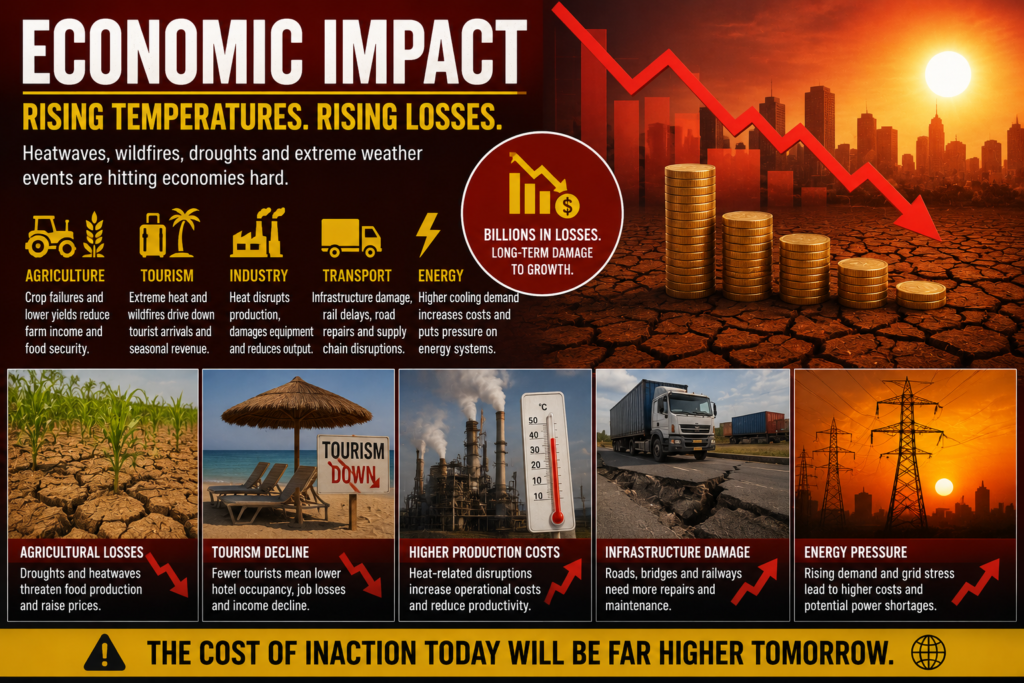
Industries experiencing disruption include:
- Agriculture
- Tourism
- Construction
- Transportation
- Energy production
- Retail
Reduced worker productivity, transport delays, crop losses, and increased electricity demand are expected to generate billions of euros in economic costs if extreme heat continues throughout the summer.
Insurance companies are also preparing for increased claims related to infrastructure damage, wildfires, and public health emergencies.
The Need for Climate-Resilient Cities
Experts believe Europe must fundamentally rethink how cities are designed.
Future adaptation strategies may include:
- Expanding urban green spaces
- Planting millions of additional trees
- Installing cool roofs
- Improving building ventilation
- Expanding public cooling centres
- Modernizing transport infrastructure
- Increasing renewable energy resilience
- Improving emergency warning systems
Many climate experts argue that adaptation is no longer optional—it has become essential for protecting lives and maintaining economic stability.
Looking Ahead
Meteorologists expect periods of extreme heat to become more frequent across Europe over the coming decades unless global greenhouse gas emissions are significantly reduced.
Governments, scientists, urban planners, and businesses are increasingly recognizing that Europe must prepare for a future in which 40°C summers may become far more common than they once were.
The continent’s challenge is no longer simply surviving winter—it is adapting to an entirely new climate reality.
Conclusion
Europe’s record-breaking heatwave is more than a temporary weather event; it is a warning about the growing impacts of climate change on societies that were never designed for prolonged extreme heat. As temperatures climb beyond 40°C, the continent’s buildings, transport systems, healthcare infrastructure, and energy networks are being pushed to their limits.
The crisis has highlighted the urgent need for climate-resilient infrastructure, stronger public health preparedness, and long-term adaptation strategies. While emergency measures may reduce the immediate risks, experts agree that only sustained investment in climate adaptation and global efforts to reduce greenhouse gas emissions can help Europe cope with the increasingly intense heatwaves expected in the decades ahead.