



Introduction
India’s financial markets are becoming increasingly connected to global economic and geopolitical developments. Events taking place thousands of miles away—from conflicts in the Middle East to monetary policy decisions in the United States—are having a direct impact on the Indian rupee and government bond markets.
On June 30, 2026, investors remained cautious as concerns over tensions in the Middle East, uncertainty surrounding the U.S. Federal Reserve’s interest-rate policy, fluctuations in crude oil prices, and global capital flows influenced market sentiment. While India’s economic fundamentals remain relatively strong, external risks continue to shape investor behavior and financial market movements.
Why Are Global Markets Influencing India?
In today’s interconnected financial system, no major economy operates in isolation. India, one of the world’s fastest-growing economies, attracts significant foreign investment in equities and bonds. As a result, international developments have an immediate effect on domestic financial markets.
Recent geopolitical tensions involving Iran and broader instability in the Middle East have increased concerns about global energy supplies. At the same time, uncertainty over future interest-rate decisions by the U.S. Federal Reserve has encouraged investors to adopt a cautious approach.
These two factors have become the biggest drivers of movements in the Indian rupee and government bond yields.
Middle East Tensions Add to Market Uncertainty
The Middle East remains one of the world’s most important energy-producing regions. Any escalation in regional conflict raises fears of supply disruptions, particularly around major oil shipping routes such as the Strait of Hormuz.
Although oil prices have shown some stability recently, investors remain concerned that renewed tensions could push crude prices higher.
For India, which imports more than 85% of its crude oil requirements, rising oil prices could significantly increase import costs, widen the current account deficit, and put pressure on the Indian rupee.
Impact on the Indian Rupee
The Indian rupee is influenced by both domestic and international factors.
Key global factors affecting the currency include:
- U.S. dollar strength
- Crude oil prices
- Foreign institutional investment
- Global risk sentiment
- Interest-rate expectations
- Geopolitical developments
During recent trading sessions, the rupee traded cautiously as demand for the U.S. dollar remained firm. Even though several Asian currencies showed resilience, investors preferred safer assets amid geopolitical uncertainty.
Currency dealers believe the rupee could remain range-bound until greater clarity emerges regarding global events and U.S. monetary policy.
Government Bond Market Remains Stable
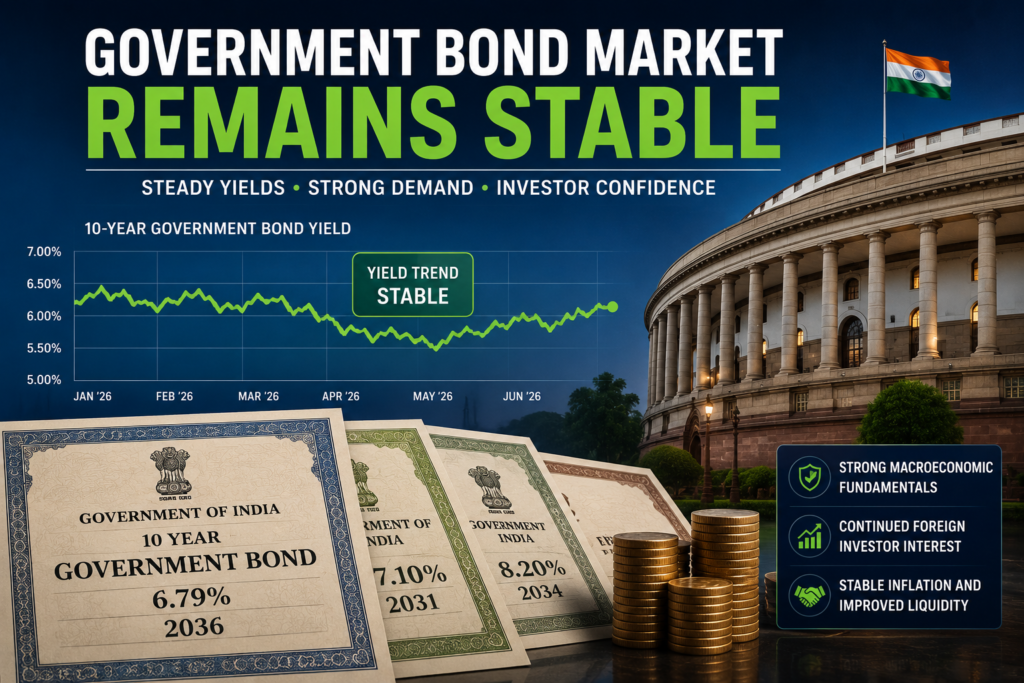
Unlike the foreign exchange market, India’s government bond market has remained relatively stable despite global uncertainty.
Benchmark 10-year government bond yields have declined modestly over recent sessions. Lower bond yields generally indicate increased investor confidence and stronger demand for government securities.
Several factors have supported India’s bond market:
- Moderating crude oil prices
- Stable domestic inflation
- Improved liquidity conditions
- Continued foreign investor interest
Analysts believe India’s bond market continues to benefit from relatively strong macroeconomic fundamentals compared with many other emerging economies.
Why the U.S. Federal Reserve Matters
One of the biggest influences on global financial markets is the monetary policy of the U.S. Federal Reserve.
When the Federal Reserve keeps interest rates high:
- U.S. Treasury yields increase.
- The U.S. dollar strengthens.
- Investors shift funds toward American assets.
- Capital flows out of emerging markets.
- Emerging-market currencies may weaken.
For countries like India, changes in U.S. monetary policy can directly influence foreign investment, exchange rates, and bond yields.
Market participants are closely monitoring upcoming U.S. inflation data, employment figures, and Federal Reserve commentary for clues about future interest-rate decisions.
Why Crude Oil Prices Matter So Much
Crude oil remains one of the most important variables for India’s economy.
A sustained increase in oil prices affects the country in several ways:
Higher Import Bill
India spends billions of dollars annually on crude oil imports. Rising prices increase overall import costs.
Pressure on the Rupee
Higher oil imports require more U.S. dollars, increasing demand for the dollar and potentially weakening the rupee.
Rising Inflation
More expensive crude oil raises transportation, manufacturing, and logistics costs, contributing to inflation across multiple sectors.
Fiscal Challenges
Higher fuel subsidies or reduced tax revenues can also influence government finances.
Fortunately, recent moderation in crude oil prices has provided temporary relief to India’s external sector, although risks remain elevated.
Foreign Investors Continue Watching India
Foreign Portfolio Investors (FPIs) remain an important source of capital for India’s financial markets.
In recent months, India’s bond market has attracted growing international interest due to:
- Strong economic growth
- Stable banking system
- Controlled inflation
- Inclusion of Indian government bonds in major global bond indices
- Regulatory reforms improving market accessibility.
Many global investors continue to view India as one of the most attractive long-term investment destinations among emerging economies.
RBI’s Role in Maintaining Stability
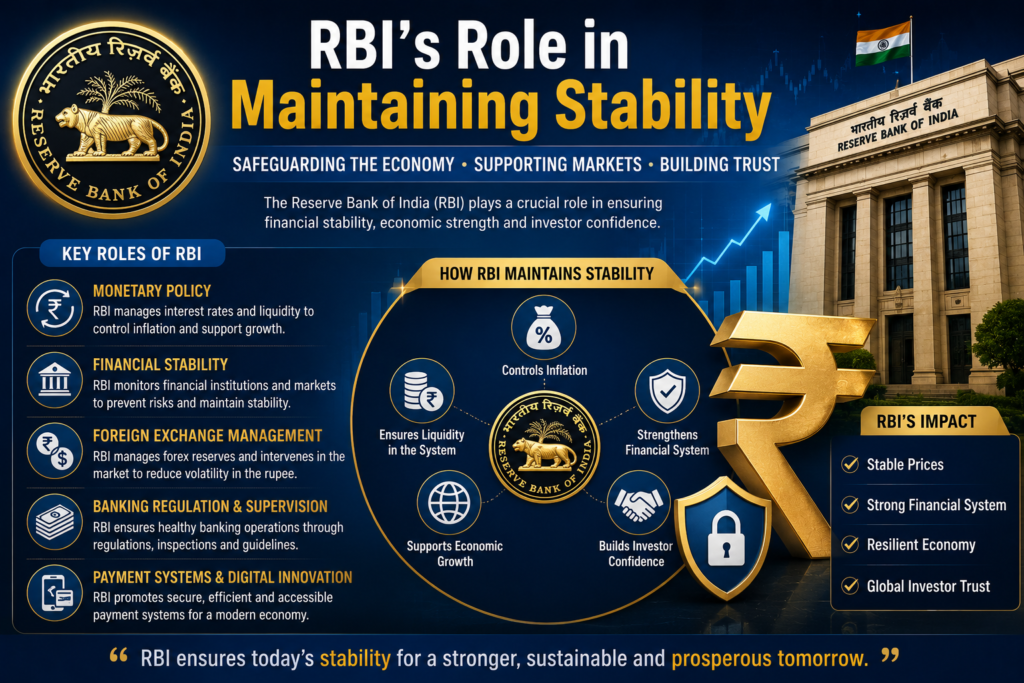
The Reserve Bank of India (RBI) continues to play a critical role in maintaining financial stability.
The central bank monitors:
- Foreign exchange market volatility
- Banking system liquidity
- Inflation expectations
- Bond market conditions
- Capital flows
Whenever excessive volatility emerges, the RBI has several policy tools available, including liquidity operations and foreign exchange market interventions aimed at maintaining orderly market conditions.
Recent liquidity measures are expected to reduce banks’ funding costs and improve overall financial system stability.
What Investors Are Watching Next
Market participants are expected to closely monitor several important developments over the coming weeks:
- Geopolitical developments in the Middle East
- U.S. Federal Reserve policy announcements
- U.S. employment and inflation data
- International crude oil prices
- Foreign investment flows
- India’s manufacturing and services PMI data
- Domestic inflation indicators
Each of these factors could influence both the Indian rupee and government bond yields in the near term.
India’s Economic Strength Offers Support
Despite external challenges, economists believe India’s macroeconomic position remains relatively strong.
Key strengths include:
- Robust GDP growth
- Healthy foreign exchange reserves
- Stable banking sector
- Strong domestic consumption
- Expanding infrastructure investment
- Growing digital economy
These factors provide a cushion against short-term external shocks and continue to support investor confidence.
However, experts caution that prolonged geopolitical instability or a sharp rise in crude oil prices could still create headwinds for the economy.
Outlook
Financial analysts expect the Indian rupee to remain relatively stable in the coming weeks unless global risks escalate significantly.
The government bond market is also likely to remain supported by healthy domestic demand and continued foreign investor participation.
Much will depend on three major factors:
- Whether geopolitical tensions in the Middle East ease.
- The future direction of U.S. Federal Reserve interest rates.
- The movement of international crude oil prices.
If oil prices remain under control and global financial conditions stabilize, both the rupee and India’s bond market could strengthen further during the second half of 2026.
Conclusion
Global economic and geopolitical developments are playing an increasingly important role in shaping India’s financial markets. The Indian rupee and government bond market are being closely influenced by Middle East tensions, U.S. monetary policy, crude oil prices, and international investment flows.
Although investors remain cautious amid ongoing uncertainty, India’s strong economic fundamentals, prudent monetary policy, and resilient financial system continue to provide confidence. As global markets await greater clarity on geopolitical risks and central bank policies, India’s financial markets are expected to remain resilient while carefully navigating an increasingly complex global environment.