

Introduction
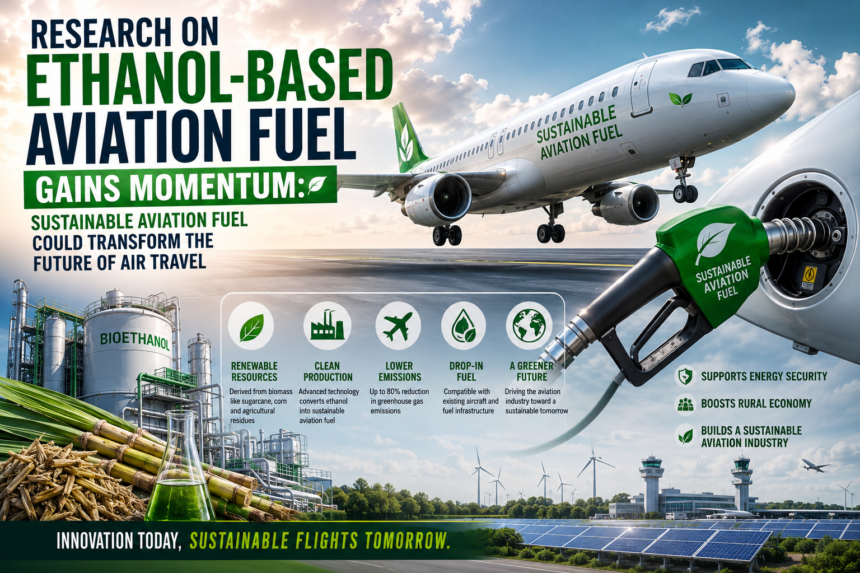
The global aviation industry is accelerating its search for cleaner alternatives to conventional jet fuel as governments and airlines work toward achieving net-zero carbon emissions by 2050. Among the most promising solutions is Sustainable Aviation Fuel (SAF) produced through ethanol-to-jet (ETJ) technology. Researchers, fuel producers, aircraft manufacturers, and governments are investing heavily in this emerging field because aviation remains one of the most difficult sectors to decarbonize.
Unlike electric vehicles, commercial aircraft require energy-dense liquid fuels for long-distance operations. This makes ethanol-derived aviation fuel an attractive option that could significantly reduce greenhouse gas emissions without requiring major changes to existing aircraft engines or airport infrastructure.
Why Aviation Needs Cleaner Fuel
Commercial aviation contributes approximately 2–3% of global carbon dioxide emissions, and air travel demand is expected to continue growing over the coming decades.
Since large passenger aircraft cannot yet rely entirely on batteries or hydrogen for long-haul flights, Sustainable Aviation Fuel is widely viewed as the most practical near-term solution for reducing aviation’s carbon footprint.
Experts believe SAF could reduce lifecycle carbon emissions by up to 80%, depending on the feedstock and production process used.
What Is Ethanol-Based Aviation Fuel?
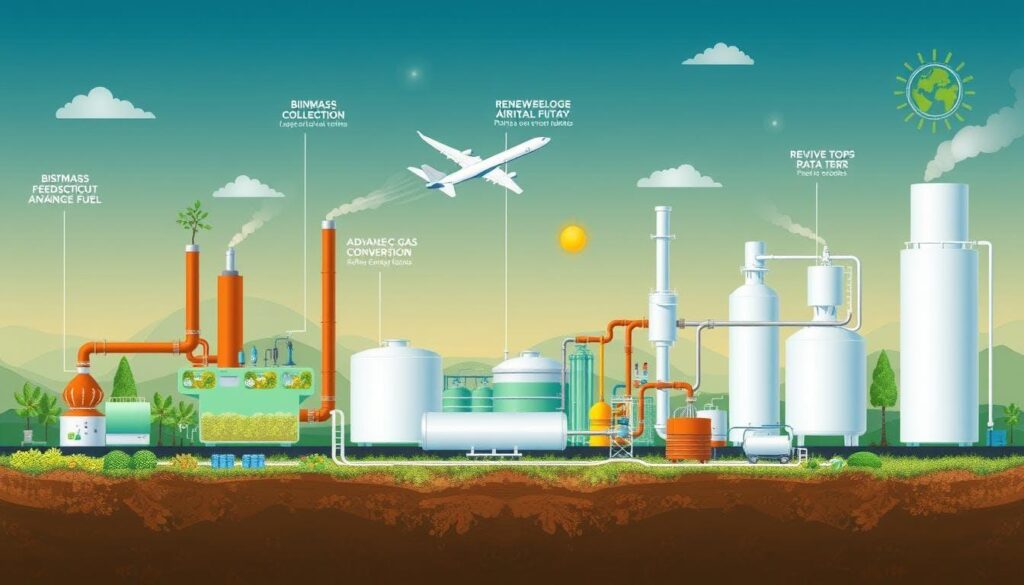
Ethanol-based aviation fuel is produced through a process known as Ethanol-to-Jet (ETJ).
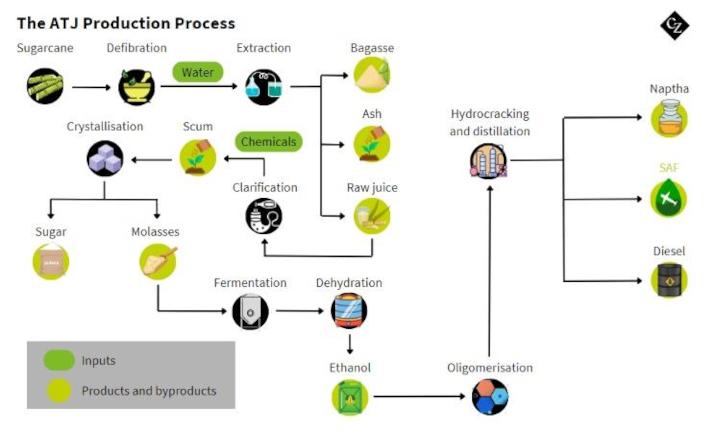
The production generally involves:
- Producing ethanol from biomass such as sugarcane, corn, agricultural residues, or other renewable feedstocks.
- Converting the ethanol into hydrocarbon molecules suitable for jet engines through advanced chemical processing.
- Blending the resulting Sustainable Aviation Fuel with conventional aviation turbine fuel before commercial use.
The final product is chemically compatible with existing aircraft and fuel infrastructure, making adoption easier than entirely new propulsion technologies.
Global Research Gains Momentum
Research into ethanol-based aviation fuel has accelerated across several countries.
Recent developments include:
- Expansion of commercial ETJ production facilities in North America.
- Increased government funding for Sustainable Aviation Fuel projects in the United Kingdom.
- Brazil positioning itself as a major SAF producer due to its strong sugarcane ethanol industry.
- Universities and research institutions studying ways to improve fuel efficiency and reduce production costs.
Scientists are also exploring advanced catalysts, biomass feedstocks, and carbon capture technologies to make SAF production even more sustainable.
India’s Growing Interest
India has emerged as one of the world’s fastest-growing aviation markets and is increasingly focusing on Sustainable Aviation Fuel.
The government has already promoted ethanol blending in road transport, and policymakers are now examining the gradual introduction of ethanol-derived aviation fuel.
Reports indicate that India is targeting phased adoption of ethanol-blended aviation fuel beginning in the coming years, supported by domestic biofuel production, research initiatives, and government incentives. Trial flights using sustainable aviation fuel have already demonstrated the technology’s potential.
Benefits of Ethanol-Based Aviation Fuel
The transition to Sustainable Aviation Fuel offers several important advantages.
Reduced Carbon Emissions
SAF can significantly lower lifecycle greenhouse gas emissions compared with conventional jet fuel.
Energy Security
Producing aviation fuel from locally available biomass reduces dependence on imported crude oil.
Support for Farmers
Agricultural crops and crop residues used in ethanol production can create additional income opportunities for rural communities.
Existing Infrastructure Compatibility
Unlike hydrogen or battery-powered aircraft, ethanol-derived SAF can generally be used within existing airport fuel systems and aircraft after certification.
Economic Growth
Expanding the SAF industry could generate employment in agriculture, biotechnology, refining, logistics, and aviation sectors.
Challenges That Remain
Despite rapid progress, several obstacles must still be addressed.
High Production Costs
SAF currently remains more expensive than conventional aviation fuel.
Feedstock Availability
Large-scale production requires sustainable biomass supplies without affecting food security.
Technology Scale-Up
Commercial ETJ facilities are still limited, and production capacity must increase significantly to meet future aviation demand.
Certification and Standards
Every new fuel pathway must undergo extensive safety testing and certification before widespread adoption by airlines.
Researchers are working to overcome these challenges through improved technology and supportive government policies.
Airline Industry Response
Many international airlines have already begun incorporating Sustainable Aviation Fuel into selected flights.

Aircraft manufacturers, including major global aerospace companies, have certified aircraft capable of operating with approved SAF blends.
Airports are also investing in storage and fueling infrastructure to prepare for greater SAF availability in the coming years.
Government Support
Governments worldwide are introducing policies to accelerate Sustainable Aviation Fuel adoption.
Examples include:
- Financial incentives for SAF production.
- Tax credits for renewable aviation fuel.
- Research funding.
- Mandatory SAF blending targets in some regions.
- Carbon reduction programs for airlines.
Such measures are expected to encourage private investment and accelerate commercialization of ethanol-to-jet technologies.
Future Outlook
Industry analysts believe Sustainable Aviation Fuel will become one of aviation’s fastest-growing clean energy sectors during the next decade.

Future developments are expected to include:
- Larger ETJ production plants.
- Lower production costs.
- Greater airline adoption.
- Improved feedstock efficiency.
- Stronger international sustainability standards.
As technology matures, ethanol-derived aviation fuel could become a major component of global efforts to decarbonize commercial aviation.
Conclusion
Research into ethanol-based aviation fuel is advancing rapidly as the aviation industry seeks practical solutions for reducing carbon emissions while maintaining reliable long-distance air travel. Sustainable Aviation Fuel produced through ethanol-to-jet technology offers a promising pathway by combining renewable feedstocks with existing aviation infrastructure.
Although challenges related to cost, production capacity, and feedstock supply remain, continued technological innovation and supportive government policies are driving steady progress. As countries such as India, Brazil, the United States, and the United Kingdom expand research and investment, ethanol-based Sustainable Aviation Fuel is expected to play an increasingly important role in building a cleaner, more sustainable future for global aviation.