
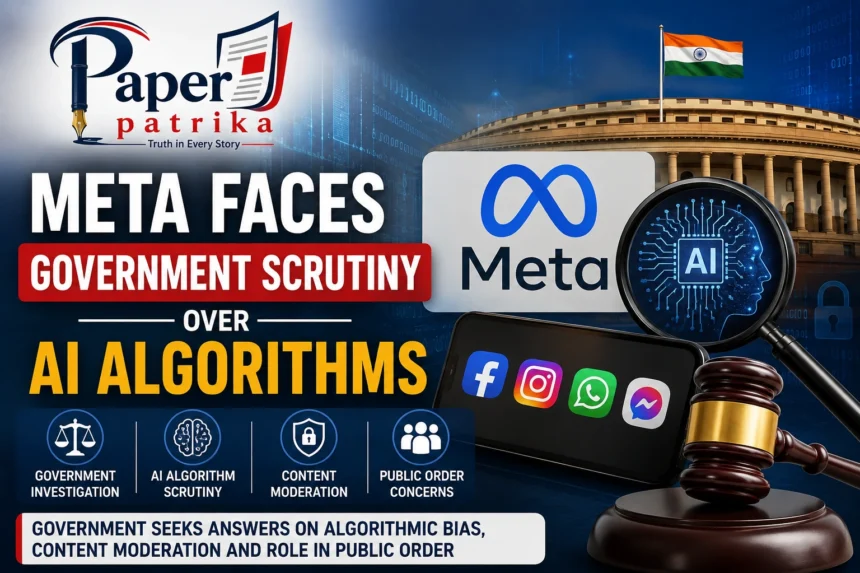
Government to Question Meta’s Global Team Over Algorithmic Bias, Content Moderation and Public Order Concerns.
By PaperPatrika Technology Desk
The Government of India has intensified its scrutiny of global technology companies by summoning Meta’s global team to address concerns about algorithmic bias, content moderation practices, and the platform’s role in maintaining public order. The move follows controversy surrounding the temporary restriction of a Facebook post by Prime Minister Narendra Modi, which Meta later restored, saying it had been removed in error. Government officials, however, have indicated that the explanation is insufficient and that broader issues surrounding Meta’s automated moderation systems need closer examination. (The Times of India)
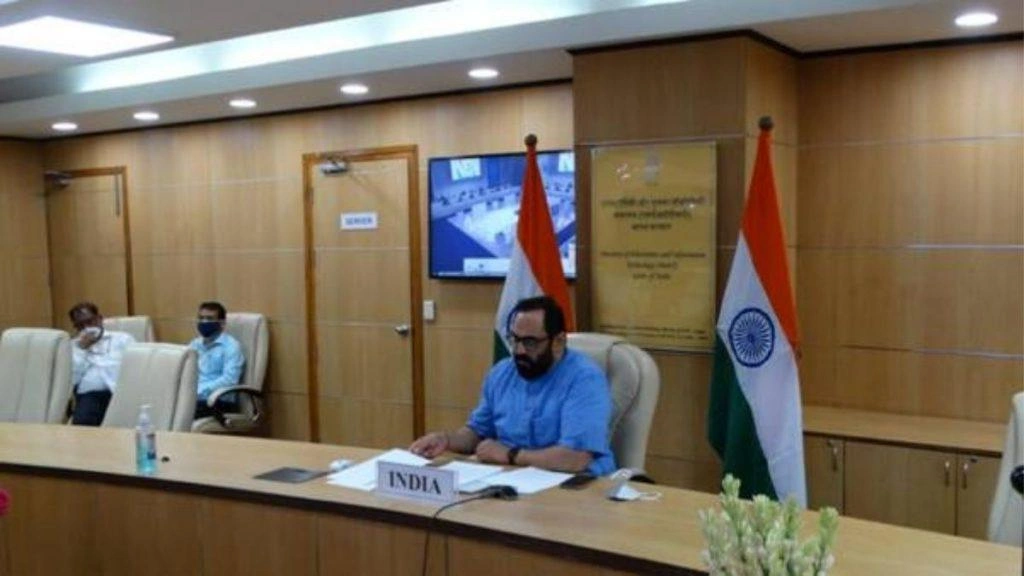
The meeting is expected to focus not only on the specific incident but also on how Meta’s artificial intelligence and recommendation algorithms influence content visibility, whether moderation systems exhibit algorithmic bias, and whether the company’s policies comply with India’s Information Technology (IT) Rules.
Centre Seeks Answers on Algorithmic Bias
According to government sources, officials from the Ministry of Electronics and Information Technology (MeitY) will question Meta’s global representatives regarding:
- Alleged algorithmic bias in content moderation.
- Transparency of AI-driven recommendation systems.
- Compliance with India’s Information Technology Rules.
- Mechanisms for handling high-profile public-interest content.
- The role of Meta platforms in preserving public order during sensitive situations. (The Times of India)
Officials reportedly believe these concerns extend beyond a single moderation error and require deeper institutional discussions with the company’s global leadership.
Background: PM Modi’s Facebook Post Controversy
The latest action follows the temporary restriction of a Facebook post by Prime Minister Narendra Modi related to youth and measures against paper leaks. Meta later restored the content and stated that the removal occurred because of an operational error.
Despite the apology, government officials said the explanation did not fully address concerns about how automated moderation systems function and whether important public communications can be incorrectly restricted. (The Economic Times)
The Centre has indicated that the matter remains under review rather than being considered resolved.
Focus on AI-Powered Content Moderation
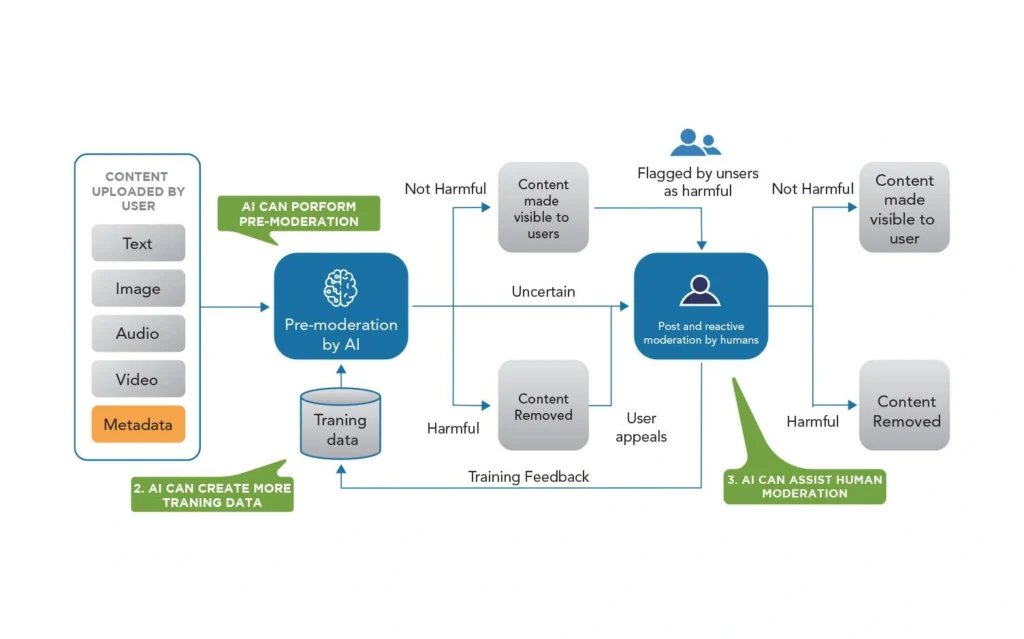
Modern social media platforms rely heavily on artificial intelligence to detect spam, misinformation, harmful content, copyright violations, and policy breaches.
Meta’s moderation systems use machine learning models to:
- Detect potentially harmful content.
- Recommend posts to users.
- Limit the visibility of policy-violating material.
- Prioritize news feed rankings.
- Identify coordinated harmful behaviour.
Government officials are expected to seek greater clarity on how these algorithms make decisions and whether sufficient human oversight exists for sensitive cases. (The Oversight Board)
Concerns Over Algorithmic Bias
One of the key issues expected to dominate discussions is algorithmic bias.
Algorithmic bias refers to situations where automated systems consistently favor or disadvantage certain types of content, users, or viewpoints because of the way the algorithms are designed or trained.
The government is reportedly interested in understanding:
- Whether political content receives different treatment.
- How AI determines content visibility.
- What safeguards exist against erroneous removals.
- How appeals are reviewed.
- Whether human intervention is available in high-impact cases. (The Times of India)
Public Order and Platform Responsibility
Officials are also expected to examine Meta’s responsibilities in relation to public order.
Social media platforms increasingly influence public discourse during elections, protests, emergencies, and other sensitive events.
The Centre is likely to seek information about:
- Emergency response mechanisms.
- Coordination with Indian authorities.
- Detection of harmful misinformation.
- Prevention of violence-inciting content.
- Compliance with lawful government requests.
The discussions form part of India’s broader effort to strengthen digital governance while balancing free expression with public safety.
IT Rules Compliance
Government sources have also linked the meeting to compliance with India’s Information Technology Rules.
The IT Rules require significant social media intermediaries to:
- Exercise due diligence.
- Respond to lawful government directions.
- Maintain grievance redressal mechanisms.
- Remove specified unlawful content within prescribed timelines.
- Cooperate with law enforcement where legally required.
Officials are expected to assess whether Meta’s global policy decisions adequately reflect India’s regulatory requirements. (hindustantimes.com)
Meta’s Position
Meta has maintained that the restriction of the Prime Minister’s Facebook post resulted from an operational mistake rather than intentional moderation.
The company restored the content and issued an apology, emphasizing that it remains committed to improving transparency and the handling of AI-generated and moderated content. Meta has also recently announced additional commitments toward transparency in AI-generated content under international regulatory initiatives. (About Facebook)
However, Indian officials have stated that broader concerns surrounding moderation systems remain unresolved.
Parliamentary Oversight
Apart from the Ministry’s engagement with Meta, reports indicate that a parliamentary panel is also expected to examine issues related to the incident and digital platform accountability.
The discussions may include:
- Algorithmic transparency.
- Platform accountability.
- Digital governance.
- AI moderation practices.
- Regulatory compliance.
Such reviews reflect growing global attention on how large technology companies manage online content and automated decision-making. (The Times of India)
Global Debate on AI Moderation
India is not alone in examining AI-powered moderation systems.
Governments and regulators worldwide are increasingly seeking:
- Greater transparency in recommendation algorithms.
- Clearer explanations of automated decisions.
- Better appeal mechanisms.
- Human oversight for high-impact moderation.
- Stronger accountability for large digital platforms.
These issues have become central to international discussions on digital governance and responsible AI.
Implications for Digital Platforms
The outcome of the government’s discussions with Meta could influence future expectations for technology companies operating in India.
Possible areas of emphasis include:
- Enhanced transparency reports.
- Stronger human review mechanisms.
- Improved compliance procedures.
- Better communication during moderation incidents.
- Greater accountability for AI-driven decisions.
Any regulatory or policy changes could also affect how other major digital platforms manage content moderation.
Looking Ahead
The meeting between the Government of India and Meta’s global representatives is expected to shape the next phase of dialogue on algorithmic accountability and platform governance.
While no immediate regulatory action has been announced, the discussions underscore the government’s growing focus on ensuring that AI-powered digital platforms operate transparently, comply with Indian laws, and safeguard both public discourse and public order.
Conclusion
India’s decision to question Meta’s global team reflects a broader shift toward stronger oversight of artificial intelligence, algorithmic decision-making, and digital platform governance. Although the immediate trigger was the temporary restriction of a high-profile Facebook post, the government’s concerns extend to larger questions about algorithmic bias, transparency, and compliance with Indian regulations.
As AI increasingly determines what billions of users see online, the outcome of these discussions could have significant implications not only for Meta but also for the future regulation of digital platforms operating in India.
Also Read: – Meta Faces Lawsuit Over Alleged AI Bias in Employee Layoff Decisions