

Brussels / London | Special Report
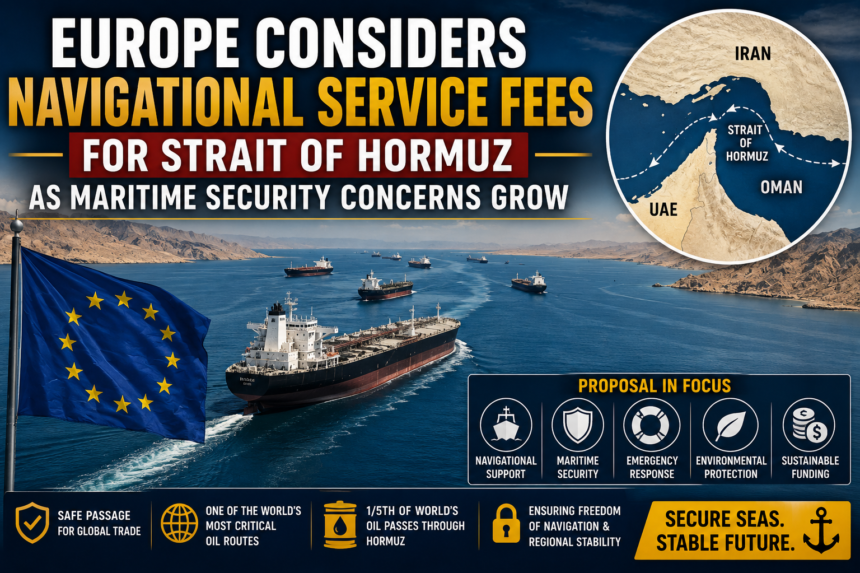
European governments are considering a new proposal that could allow voluntary navigational service fees for ships passing through the Strait of Hormuz, one of the world’s most strategically important maritime chokepoints. The discussions come amid heightened security concerns following renewed tensions between the United States and Iran and repeated threats to commercial shipping in the region. Unlike compulsory transit tolls, the proposal would allow ships to pay for additional navigation and safety services designed to improve secure passage through the waterway.
The proposal is reportedly being discussed with support from the International Maritime Organization (IMO) and is inspired by cooperative maritime safety models used in other strategic waterways, such as the Strait of Malacca. European officials stress that the objective is not to restrict freedom of navigation, but to create a sustainable system that finances navigational assistance, environmental protection, emergency response, and maritime safety infrastructure.
Why the Strait of Hormuz Matters
The Strait of Hormuz is one of the most critical maritime trade routes in the world.
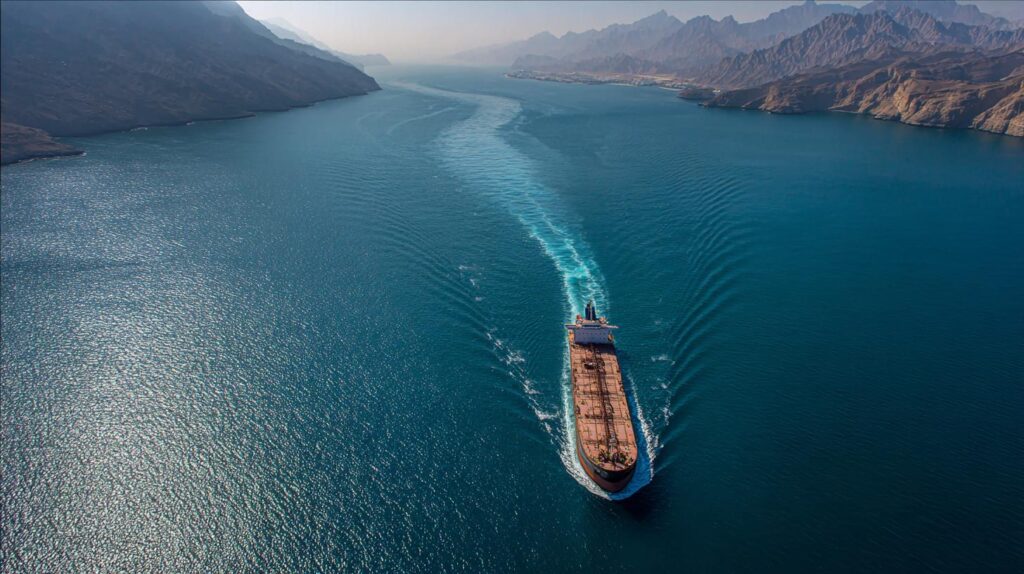
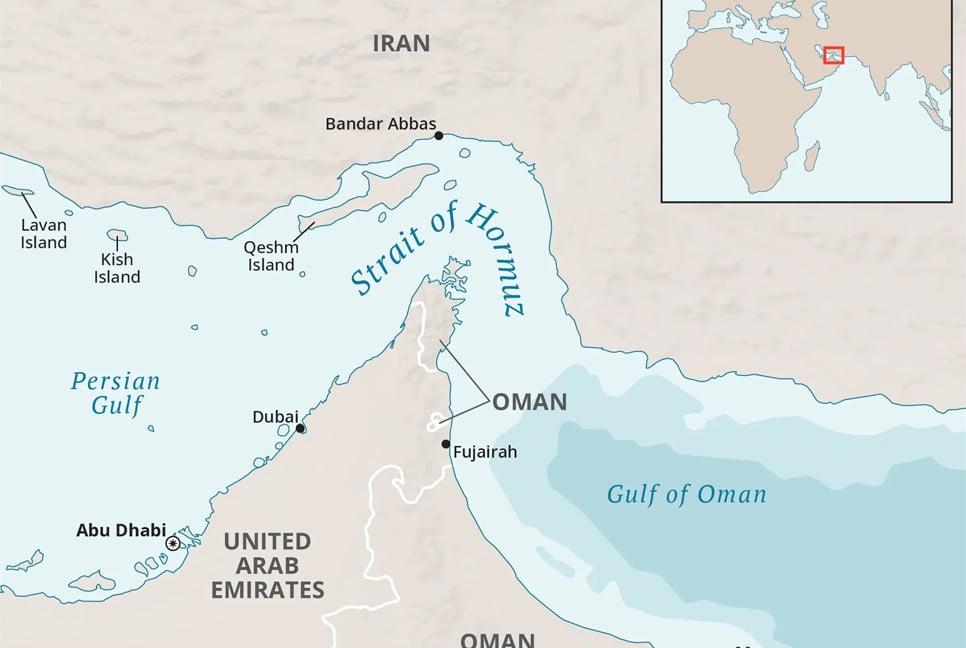
Located between Iran and Oman, it connects the Persian Gulf with the Gulf of Oman and the Arabian Sea.
Every day, millions of barrels of crude oil, liquefied natural gas (LNG), and commercial goods pass through this narrow waterway.
Approximately one-fifth of the world’s seaborne oil trade depends on the Strait of Hormuz, making it indispensable for global energy security. Any disruption immediately affects oil prices, shipping costs, and international supply chains.
Background to the Proposal
The latest discussions follow months of geopolitical instability in the Gulf.
Following military exchanges between the United States and Iran, commercial vessels operating in the Strait have faced increasing security risks, including missile attacks, drone threats, electronic interference, and concerns over maritime mines.
To improve navigational safety, Oman proposed adopting a cooperative model similar to that used in the Strait of Malacca.
Under the proposal:
- Ships would continue enjoying freedom of navigation.
- Any payment would relate to optional navigational and safety services rather than a mandatory transit fee.
- Funds would support maritime infrastructure, emergency response capabilities, environmental protection, and traffic management systems.
Europe’s Position
European governments have not endorsed compulsory tolls.
Instead, officials are considering whether voluntary contributions for navigation services could improve safety without violating international maritime law.
British Deputy Prime Minister Angela Rayner reportedly warned that compulsory charges would be economically damaging and politically controversial.
European diplomats believe any arrangement must:
- Protect free navigation.
- Avoid legitimizing unilateral control of the Strait.
- Comply with international law.
- Receive broad international support.
Difference Between Transit Fees and Navigation Service Charges
One of the key issues in the debate is distinguishing between mandatory transit tolls and fees for specific maritime services.
According to maritime law experts:
Transit Toll
A compulsory payment simply for passing through an international strait.
Many governments argue such charges would violate the principle of transit passage under international law.
Navigation Service Fee
A payment for optional services, such as:
- Vessel traffic management
- Pilotage assistance
- Mine detection
- Emergency rescue capability
- Environmental monitoring
- Weather information
Similar systems already exist in some international waterways for particular maritime services.
Why Oman Supports the Proposal
Oman controls much of the internationally recognized southern shipping route through the Strait.
Officials argue that increased shipping risks require greater investment in:
- Navigation systems
- Rescue vessels
- Maritime surveillance
- Oil spill response
- Environmental monitoring
The proposed funding mechanism could provide long-term financial support without restricting international shipping.
Iran’s Position
Iran remains internally divided over how the Strait should be managed.
Some officials advocate greater international cooperation to ensure safe navigation.
However, hardline elements within the Islamic Revolutionary Guard Corps (IRGC) continue to argue that Iran should play a stronger role in regulating maritime traffic.
Earlier proposals from Tehran suggested introducing broader maritime charges, which generated strong opposition from several governments.
European countries continue to insist that no nation should exercise exclusive control over one of the world’s most important international waterways.
United Nations and IMO Involvement
The International Maritime Organization (IMO) has become central to ongoing negotiations.
According to reports, IMO officials have been working with regional governments to improve navigation safety while preserving the internationally recognized principle of freedom of navigation.
Discussions reportedly include:
- Coordinated traffic management
- Mine-clearing cooperation
- Emergency response systems
- Navigation guidance
- Environmental protection measures
However, diplomatic negotiations remain complex because major powers continue to disagree over how responsibilities should be shared.
Impact on Global Shipping
The shipping industry is closely monitoring the negotiations.
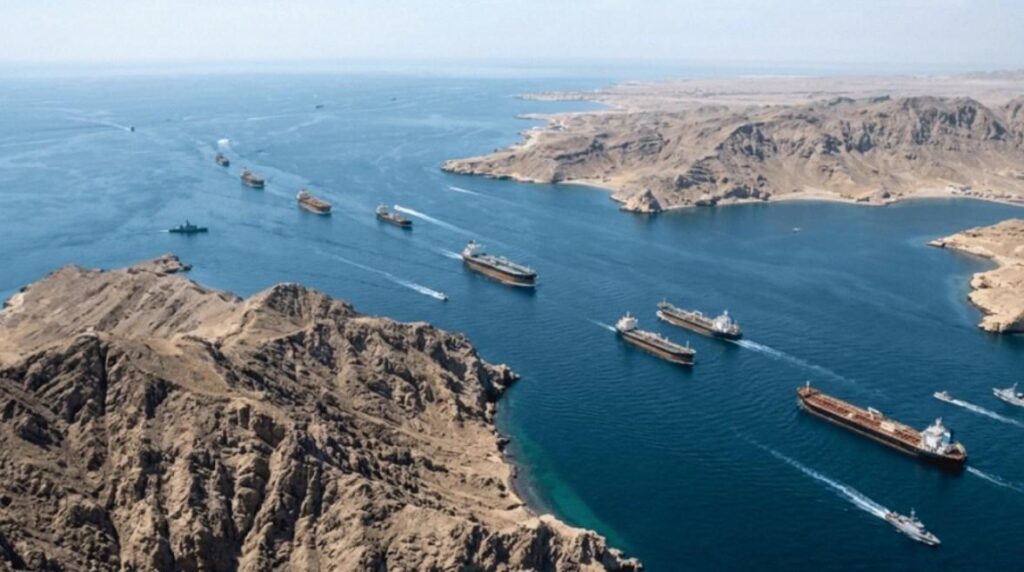
If voluntary navigation service fees are introduced, shipping companies may experience:
- Higher voyage costs
- Better navigational support
- Improved maritime security
- Lower insurance risks
- Faster emergency response
Many shipping operators argue that modest service fees may be preferable to the massive financial losses caused by attacks or prolonged disruptions.
Oil Markets Watching Closely
Energy markets remain highly sensitive to developments in the Strait of Hormuz.
The waterway is used by major oil exporters including:
- Saudi Arabia
- Iraq
- Kuwait
- United Arab Emirates
- Qatar
Even temporary disruptions can increase:
- Crude oil prices
- Shipping insurance premiums
- Freight rates
- Global inflationary pressure
Financial analysts therefore view the negotiations as economically significant beyond the maritime sector.
International Legal Debate
Legal experts emphasize that the Strait of Hormuz is governed by principles of international maritime law.

Many countries argue that:
- Freedom of navigation must remain protected.
- Transit passage cannot be subjected to compulsory tolls.
- Charges may only apply to clearly defined services provided to vessels.
This distinction explains why European officials are discussing service-based navigation fees rather than mandatory transit payments.
Challenges Ahead
Despite growing support for improving maritime safety, several obstacles remain.
Key challenges include:
- Political disagreements between Iran and Western countries.
- Legal interpretation of international maritime law.
- Funding mechanisms.
- Coordination among Gulf states.
- Acceptance by global shipping companies.
Diplomats acknowledge that reaching a universally accepted agreement may take considerable time.
Possible Benefits
If implemented successfully, the proposal could provide:
- Safer navigation.
- Better emergency response.
- Enhanced environmental protection.
- Reduced risk of maritime accidents.
- Improved confidence for international shipping.
Supporters argue that cooperative management would strengthen regional stability without restricting international commerce.
Conclusion
Europe’s consideration of voluntary navigational service fees in the Strait of Hormuz reflects the growing need to balance maritime security with the long-standing principle of freedom of navigation. Rather than introducing compulsory tolls, policymakers are exploring a cooperative system that would fund navigation assistance, environmental protection, and emergency response while keeping one of the world’s busiest shipping lanes open to global trade.
As geopolitical tensions continue in the Gulf, the outcome of these discussions could have significant implications for international shipping, energy markets, and global economic stability. Whether a consensus can be reached among regional powers, maritime organizations, and shipping companies will determine the future management of this vital strategic waterway.