

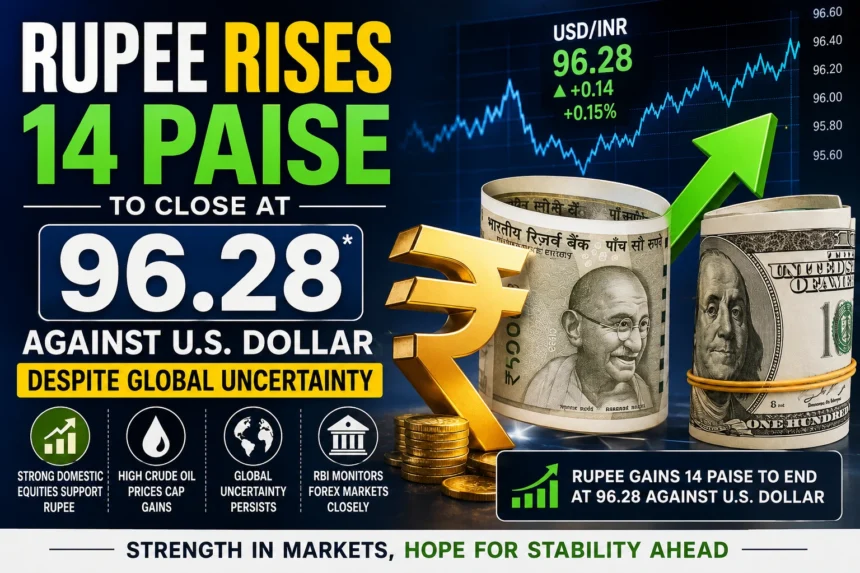
The Indian rupee strengthened by 14 paise, closing at 96.28 against the U.S. dollar, recovering from losses recorded in previous trading sessions. The appreciation came as domestic equity markets witnessed strong buying interest, improving investor sentiment even as global financial markets remained cautious because of geopolitical tensions in West Asia and elevated crude oil prices. (Business Standard)
Although the rupee ended the day on a positive note, currency traders cautioned that persistent foreign fund outflows, firm demand for the U.S. dollar, and uncertainty surrounding global oil supplies continue to pose challenges for the Indian currency. The latest movement highlights the delicate balance between supportive domestic factors and external economic risks influencing India’s foreign exchange market. (Reuters)
Positive Opening Boosts the Rupee
Trading began on an optimistic note in the interbank foreign exchange market, with the rupee opening at 96.35 per U.S. dollar before strengthening to 96.28 during the session. The gain followed four consecutive sessions of weakness, during which the domestic currency had depreciated due to rising crude oil prices and heightened geopolitical uncertainty. (Business Standard)
Market participants attributed the recovery primarily to positive momentum in Indian equity markets, where benchmark indices attracted fresh buying.
Strong Equity Markets Support the Currency
A major factor behind the rupee’s appreciation was the rally in Indian stock markets.
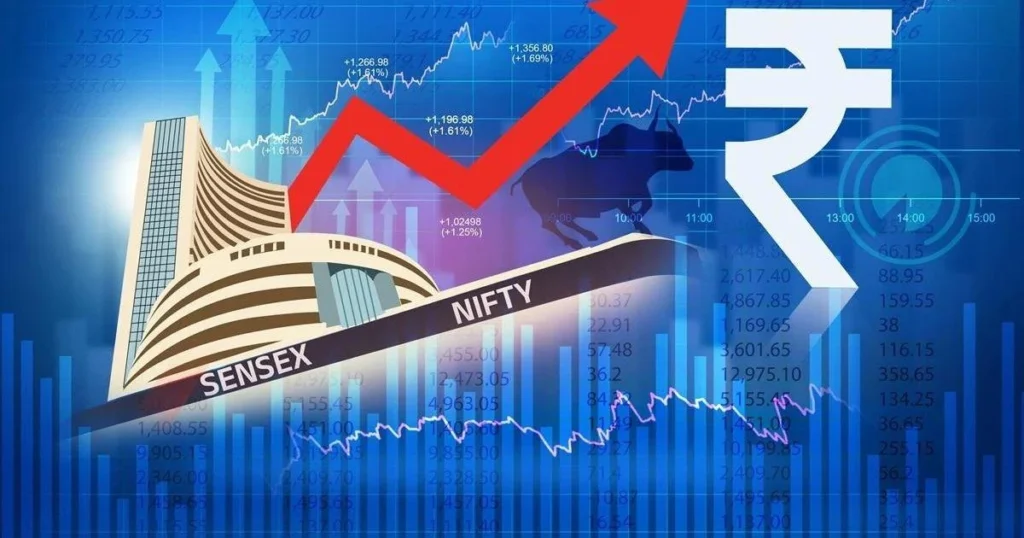
During the trading session:
- Sensex gained sharply in early trade.
- Nifty also traded firmly in positive territory.
- Banking and financial stocks led the gains.
- Improved domestic investor confidence supported the currency.
When equity markets perform well, foreign and domestic investors often increase capital flows into Indian assets, creating demand for the rupee. Although foreign institutional investors (FIIs) remained net sellers overall, the positive sentiment from equities helped offset some of the pressure on the currency.
Oil Prices Continue to Cap Gains
Despite the rupee’s rise, analysts noted that higher global crude oil prices prevented a stronger appreciation.
Brent crude traded around $85 per barrel, reflecting supply concerns amid escalating tensions in West Asia. Since India imports nearly 85% of its crude oil requirements, rising oil prices increase the country’s import bill and raise demand for U.S. dollars, putting pressure on the rupee. (Reuters)
Higher oil prices also contribute to imported inflation, making currency stability an important concern for policymakers.
Impact of Geopolitical Tensions
Currency markets worldwide have been reacting to renewed geopolitical tensions involving the United States and Iran.
Concerns over disruptions in shipping through the Strait of Hormuz, a critical route for global oil exports, pushed energy prices higher and increased demand for safe-haven assets such as the U.S. dollar. These developments have created volatility across emerging-market currencies, including the Indian rupee.
While the rupee recovered modestly during the session, traders said the external environment remains uncertain.
Foreign Institutional Investor Outflows
Another factor limiting the rupee’s gains was continued selling by Foreign Institutional Investors (FIIs).
Exchange data showed that overseas investors remained net sellers of Indian equities, reflecting caution amid global market uncertainty. FII outflows generally increase demand for dollars because investors convert rupee holdings back into foreign currencies when exiting Indian markets.
Sustained foreign investment inflows remain an important driver of long-term currency stability.
Role of the Reserve Bank of India
Market participants continue to closely monitor the actions of the Reserve Bank of India (RBI).
Although the RBI did not announce any fresh policy measures, traders believe the central bank remains prepared to intervene in the foreign exchange market if excessive volatility threatens financial stability. Previous interventions through state-run banks have helped smooth fluctuations in the rupee during periods of market stress. (Reuters)
The RBI’s objective is not to maintain a fixed exchange rate but to prevent sharp and disorderly movements in the currency.
Why Exchange Rates Matter
The value of the rupee against the U.S. dollar influences many sectors of the Indian economy.
A stronger rupee can:
- Reduce the cost of imported goods.
- Lower crude oil import expenses.
- Help contain inflation.
- Reduce overseas education and travel costs.
- Benefit companies dependent on imported raw materials.
However, a stronger currency can also reduce export competitiveness because Indian products become relatively more expensive in global markets.
Conversely, a weaker rupee benefits exporters but increases import costs.
Impact on Businesses and Consumers
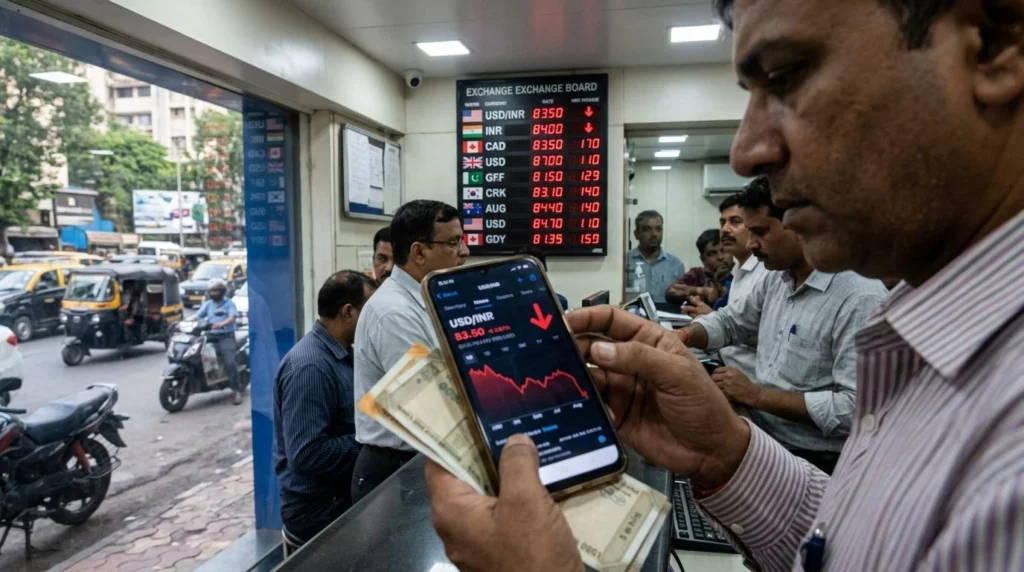
Currency movements affect businesses and households in different ways.
Beneficiaries of a Stronger Rupee
- Airlines importing aviation fuel.
- Automobile manufacturers using imported components.
- Electronics companies.
- Consumers purchasing imported products.
- Students studying abroad.
Businesses Facing Challenges
- IT exporters.
- Textile exporters.
- Pharmaceutical exporters.
- Engineering goods exporters.
These sectors earn revenues in dollars, and a stronger rupee can reduce the value of those earnings when converted into Indian currency.
Global Factors Driving Currency Markets
Several international developments continue to influence the rupee:
- U.S. Federal Reserve policy.
- Dollar Index movements.
- Global inflation trends.
- Oil prices.
- Geopolitical conflicts.
- International capital flows.
Any significant change in these variables can quickly impact the exchange rate.
Outlook for the Rupee
Forex analysts expect the rupee to remain within the 96.00–96.50 range in the near term.
Key factors to watch include:
- Brent crude oil prices.
- RBI intervention.
- Foreign investment flows.
- Global risk sentiment.
- Developments in the Middle East.
- Performance of domestic equity markets. (Business Standard)
If oil prices stabilize and foreign investments return, the rupee could strengthen further. However, prolonged geopolitical tensions may continue to support the U.S. dollar and keep pressure on emerging-market currencies.
India’s Economic Fundamentals Remain Supportive
Despite recent currency volatility, India’s macroeconomic fundamentals remain relatively strong.

The country continues to benefit from:
- Robust domestic consumption.
- Stable banking sector.
- Strong foreign exchange reserves.
- Expanding manufacturing sector.
- Infrastructure investments.
- Growing digital economy.
These structural strengths help cushion the rupee against prolonged periods of external volatility, even when global financial conditions become challenging.
Expert Opinion
Currency experts believe the latest appreciation reflects improved domestic sentiment rather than a complete reversal of recent weakness.
According to market analysts, the rupee’s future direction will depend largely on whether crude oil prices moderate and geopolitical tensions ease. A sustained rally in domestic equities and renewed foreign investment could provide additional support, while elevated energy prices and continued demand for dollars may limit further gains.
Conclusion
The Indian rupee’s 14-paise appreciation to close at 96.28 against the U.S. dollar offers a positive signal after several sessions of weakness. Strong domestic equity markets helped lift investor confidence and supported the currency, but persistent challenges—including high crude oil prices, foreign investor outflows, and geopolitical tensions—continue to weigh on the broader outlook. (Business Standard)
Going forward, the trajectory of the rupee will depend on a combination of domestic economic resilience and global developments. Policymakers, businesses, and investors will closely monitor oil prices, international capital flows, and the Reserve Bank of India’s response as India navigates an increasingly uncertain global financial environment.
Also Read: – Europe Considers Navigational Service Fees for the Strait of Hormuz as Maritime Security Concerns Grow
Iran’s New Strait of Hormuz Transit Charges Raise Global Concerns Over Oil Supply, Shipping Costs, and Energy Security