

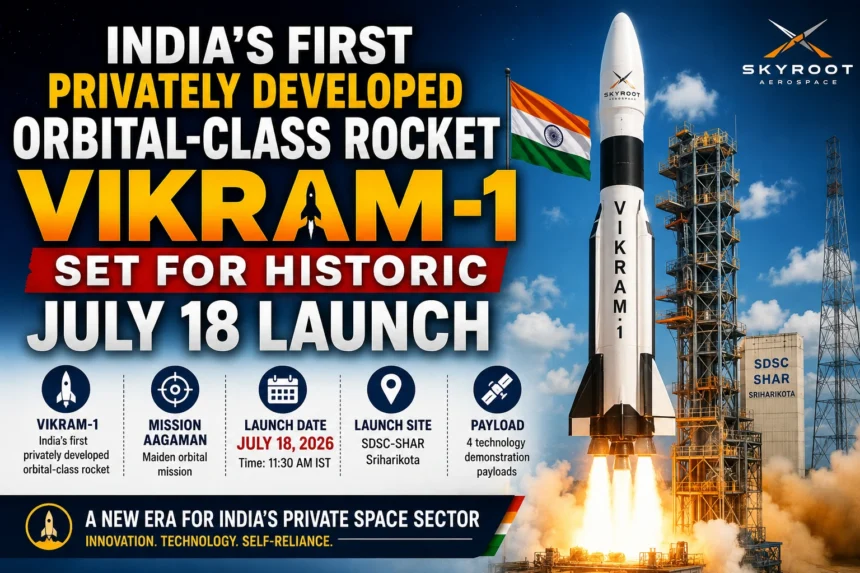
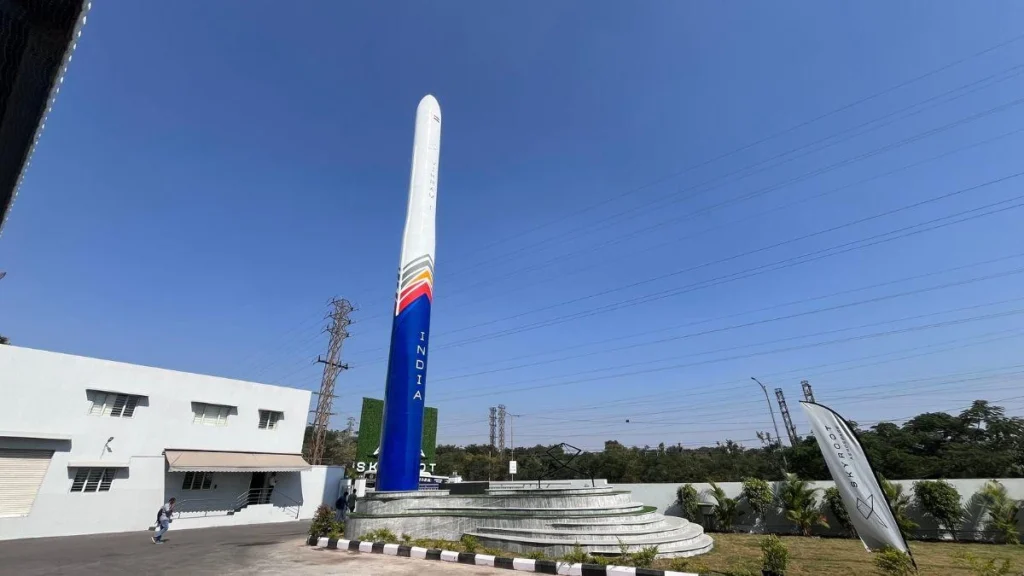
India is on the verge of creating a new chapter in its space history as Skyroot Aerospace prepares to launch Vikram-1, the country’s first privately developed orbital-class rocket. The maiden mission, named “Mission Aagaman,” is scheduled to lift off on July 18 at 11:30 AM IST from the First Launch Pad at the Satish Dhawan Space Centre (SDSC-SHAR), Sriharikota. If successful, it will become the first orbital launch attempted by an Indian private company from Indian soil. (Hindustan Times)
The mission represents a major milestone for India’s rapidly growing commercial space industry, demonstrating how government reforms and private innovation are working together to expand the country’s presence in the global space economy.
A Historic Moment for India’s Private Space Sector
For decades, India’s space missions have been led by the Indian Space Research Organisation (ISRO). However, policy reforms introduced in recent years have opened the sector to private participation through organizations such as IN-SPACe, enabling Indian startups to develop launch vehicles, satellites, and other space technologies.
Skyroot Aerospace, founded in Hyderabad by former ISRO engineers in 2018, has emerged as a pioneer of this new era. After successfully launching the suborbital Vikram-S rocket in 2022, the company is now preparing for its first orbital mission with Vikram-1.
What Is Vikram-1?
Vikram-1 is a multi-stage orbital launch vehicle designed primarily for launching small satellites into Low Earth Orbit (LEO).
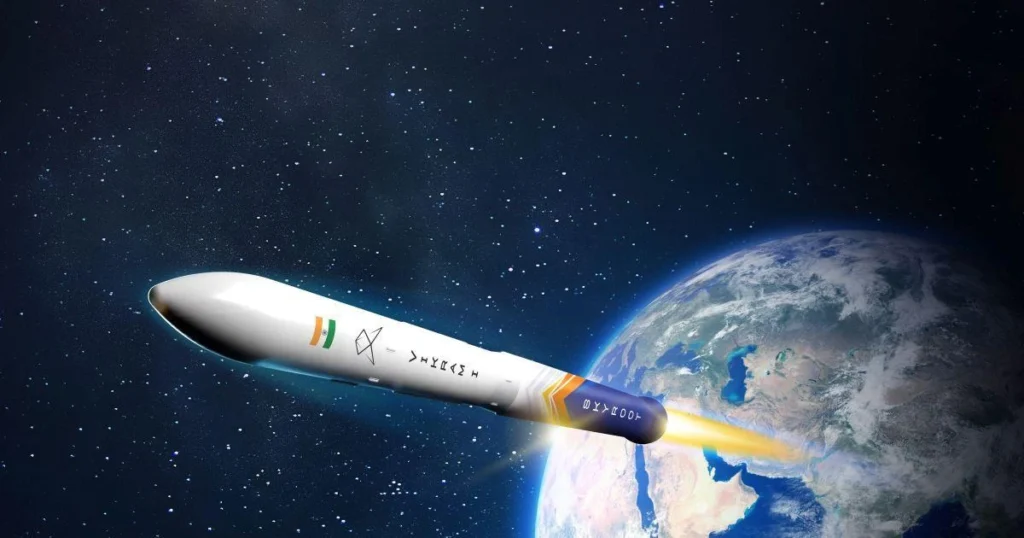
Key features include:
- Height of approximately seven storeys.
- Three solid-fuel propulsion stages.
- Restartable liquid-fuel upper stage.
- Designed for commercial satellite launches.
- Built largely using advanced composite materials.
- Capable of deploying multiple payloads in a single mission. (Space)
The rocket has been named after Dr. Vikram Sarabhai, the father of India’s space programme.
Mission “Aagaman”
The maiden launch has been named Mission Aagaman, meaning “arrival” in Sanskrit.
The mission aims to validate:
- Rocket performance.
- Guidance and navigation systems.
- Flight software.
- Stage separation.
- Orbital insertion capability.
- Payload deployment systems.
Unlike operational commercial launches, the primary objective of this flight is to verify the rocket’s design and demonstrate orbital capability before future commercial missions. (The Economic Times)
Launch Details
According to Skyroot Aerospace:
- Launch Date: July 18
- Time: 11:30 AM IST
- Launch Site: First Launch Pad, SDSC-SHAR, Sriharikota
- Mission Name: Aagaman
- Orbit: Approximately 450 km Low Earth Orbit
Authorities have already issued airspace and maritime advisories to ensure safe launch operations. (ABP Live English)
Technology Demonstration Payloads
The maiden mission will carry four technology demonstration payloads from Indian and international partners.
These payloads are intended to test new technologies in orbit rather than conduct large-scale scientific missions.
The launch will demonstrate that Indian private companies can reliably deliver commercial payloads into orbit—an important requirement for attracting future customers. (Hindustan Times)
Why Vikram-1 Matters
The success of Vikram-1 would have significance far beyond a single launch.
It would demonstrate that:
- Indian startups can independently build orbital rockets.
- Private companies can support national space objectives.
- India can compete in the global commercial launch market.
- More affordable launch services may become available for satellite operators.
The mission also reflects India’s transition from a government-led space programme to a broader ecosystem involving both public and private players.
Role of ISRO and IN-SPACe
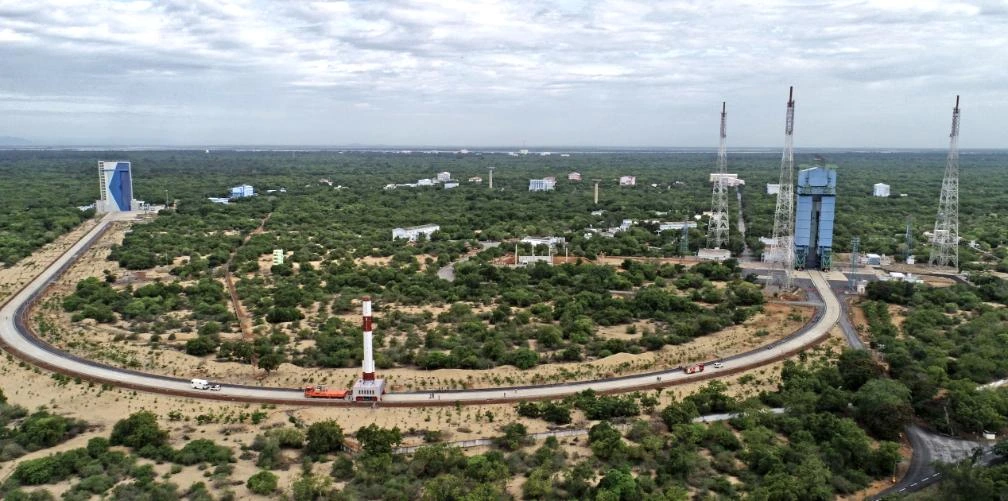
Although Vikram-1 has been designed and developed by Skyroot Aerospace, the mission benefits from the institutional support provided by ISRO and IN-SPACe.
ISRO has made launch infrastructure available at Sriharikota, while IN-SPACe has facilitated regulatory approvals and integration with India’s national space ecosystem.
This collaborative model is expected to encourage more private companies to enter the space sector.
Expanding India’s Commercial Space Economy
The global market for launching small satellites has grown rapidly in recent years.
Applications include:
- Earth observation.
- Weather monitoring.
- Internet connectivity.
- Agriculture.
- Disaster management.
- Defence communications.
Private launch providers aim to offer more flexible, cost-effective launch opportunities for these missions.
Industry analysts expect India’s space economy to grow substantially over the next decade, with startups playing an increasingly important role.
From Vikram-S to Vikram-1
Skyroot’s journey began with the successful launch of Vikram-S, India’s first privately developed suborbital rocket, in 2022.
That mission validated several technologies now incorporated into Vikram-1.
According to the company, nearly 80% of Vikram-1’s systems have already been tested through earlier development programmes, reducing technical risk for the maiden orbital attempt. (Space)
Challenges of an Orbital Launch
Launching an orbital rocket is significantly more complex than conducting a suborbital flight.
Engineers must successfully execute:
- Multiple stage separations.
- Precise guidance throughout ascent.
- Upper-stage ignition.
- Accurate orbital insertion.
- Safe payload deployment.
Any failure during these phases could prevent the mission from reaching orbit, making test flights essential before commercial operations begin.
Boost for Indian Startups
The launch is expected to inspire India’s growing deep-tech startup ecosystem.
Success could encourage investment in:
- Aerospace manufacturing.
- Rocket propulsion.
- Satellite technology.
- Space robotics.
- Artificial intelligence for space applications.
It may also strengthen India’s position as a competitive destination for commercial satellite launches.
Looking Ahead
Skyroot Aerospace has indicated that Mission Aagaman is the first of three planned developmental flights for Vikram-1.
Future launches are expected to:
- Increase payload capacity.
- Improve reliability.
- Expand commercial launch services.
- Support international satellite customers.
The company is also exploring upgraded versions of the Vikram launch vehicle for higher payload capabilities. (Reddit)
Conclusion
The scheduled launch of Vikram-1 on July 18 marks a defining moment in India’s journey toward a vibrant commercial space industry. Developed by Skyroot Aerospace, the rocket symbolizes the growing capabilities of India’s private sector in advanced aerospace technology.
Whether measured in terms of technological achievement, economic opportunity, or national innovation, Mission Aagaman represents much more than a rocket launch—it reflects India’s ambition to become a leading player in the global space economy. If successful, Vikram-1 will open a new era in which Indian private companies work alongside ISRO to shape the future of space exploration and satellite launch services.
Also Read: – India’s First Private Orbital Rocket Ready for Launch: ‘Mission Aagaman’ Marks a Historic Milestone in India’s Space Journey