


19 July 2026 | International News | PaperPatrika Special
Artificial Intelligence (AI) has rapidly transformed from an emerging technology into one of the world’s most influential strategic assets. Governments, businesses, defense organizations, and research institutions are integrating AI into nearly every aspect of modern life, including healthcare, finance, transportation, education, manufacturing, and national security. However, this technological revolution has also introduced unprecedented cybersecurity challenges.
As AI systems become increasingly powerful, cybercriminals are exploiting the same technology to launch more sophisticated cyberattacks, generate convincing deepfakes, automate phishing campaigns, and target critical infrastructure. Consequently, AI and cybersecurity have emerged as central themes in international strategic discussions, with governments worldwide working together to establish stronger digital Défense mechanisms and responsible AI governance. Recent global forums and cybersecurity conferences have highlighted that digital resilience is now considered as important as military and economic security.
AI Has Become a Strategic National Priority
Over the past decade, AI has evolved beyond simple automation. Today’s advanced Large Language Models (LLMs), generative AI systems, autonomous agents, and machine learning platforms can perform complex tasks that once required human expertise.
Organizations are using AI to analyze massive datasets, improve customer services, accelerate scientific research, optimize supply chains, and enhance productivity. Governments are also deploying AI to improve public administration, healthcare systems, transportation management, and defense operations.
This rapid adoption has transformed AI into a strategic national asset. Countries now view AI leadership as a key factor in determining future economic growth, military capability, and technological competitiveness.
However, with greater dependence on AI comes greater vulnerability. A cyberattack targeting AI-driven infrastructure could disrupt banking systems, power grids, hospitals, transportation networks, or government services, making cybersecurity an equally important priority.
Rising Cyber Threats in the AI Era
Cybersecurity experts warn that artificial intelligence is becoming a double-edged sword. While it significantly improves defensive capabilities, it also empowers cybercriminals.
AI enables attackers to:
- Generate highly personalized phishing emails.
- Create realistic deepfake videos and voice recordings.
- Automate malware development.
- Conduct intelligent password attacks.
- Identify software vulnerabilities more quickly.
- Launch coordinated cyberattacks at unprecedented speed.
Unlike traditional cyberattacks that often require extensive manual planning, AI-powered attacks can adapt in real time, making them far more difficult to detect and stop.
Security analysts believe that cyber warfare has entered a new phase where AI-driven offensive and defensive technologies compete against each other continuously.
Global Cybersecurity Conferences Focus on AI
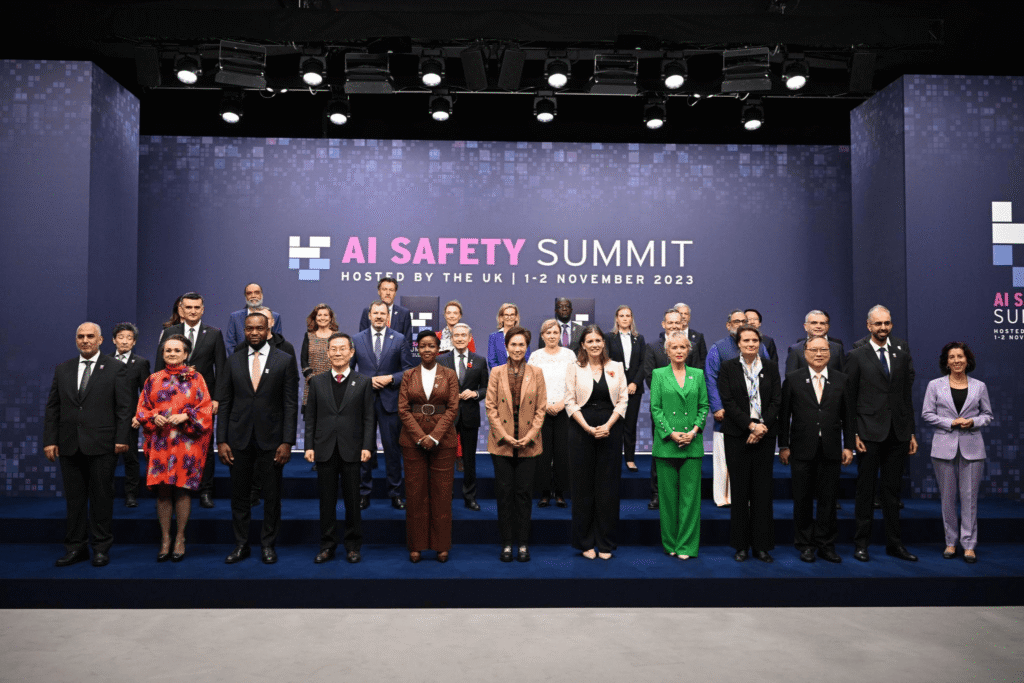
International cybersecurity forums held throughout 2026 have placed AI at the center of strategic discussions.

Experts from governments, defense agencies, technology companies, financial institutions, and academia have emphasized the need for stronger collaboration to address rapidly evolving cyber threats.
Key topics discussed include:
- AI-powered cyber defense
- Cloud security
- Digital identity protection
- Data privacy
- Critical infrastructure protection
- Zero Trust Architecture
- AI governance
- Cyber resilience
Participants agreed that traditional antivirus software and conventional firewalls are no longer sufficient against modern AI-driven attacks.
Instead, organizations must adopt intelligent cybersecurity systems capable of monitoring networks continuously, detecting suspicious behavior instantly, and responding automatically before significant damage occurs.
United States Strengthens AI-Cyber Cooperation
The United States has recently announced new initiatives to improve cooperation between AI developers, cybersecurity experts, and critical infrastructure operators.

The objective is to establish stronger information-sharing mechanisms regarding AI-discovered software vulnerabilities and emerging cyber threats affecting sectors such as:
- Energy
- Healthcare
- Financial services
- Telecommunications
- Transportation
- Government networks
Federal agencies are working alongside leading AI companies to ensure that AI technologies are developed with security considerations integrated from the earliest stages of design.
This collaborative approach aims to reduce cybersecurity risks while encouraging responsible AI innovation.
China’s Expanding AI Strategy
China has also identified AI as one of its highest national priorities.
During international AI forums, Chinese officials emphasized global cooperation, open-source AI innovation, and international AI governance.
China advocates for broader participation of developing countries in AI research and has proposed stronger international cooperation to ensure equitable access to AI technologies.
Chinese policymakers argue that AI should become a shared technological resource rather than remaining concentrated within a small number of technologically advanced nations.
The country continues investing heavily in AI research, semiconductor development, robotics, and smart manufacturing as part of its long-term national strategy.
AI Is Revolutionizing Cyber Defense
Artificial intelligence is not only creating new risks but also providing powerful defensive capabilities.
Modern AI-powered cybersecurity platforms can:
- Detect abnormal network behavior.
- Analyze billions of security events every day.
- Predict cyberattacks before they occur.
- Identify ransomware activity within seconds.
- Automate incident response.
- Reduce false security alerts.
Security Operations Centers (SOCs) increasingly rely on AI systems to monitor enterprise networks around the clock, allowing human analysts to focus on complex investigations rather than routine monitoring.
This combination of AI and human expertise is becoming the standard model for advanced cybersecurity operations worldwide.
Deepfakes and Digital Disinformation
One of the fastest-growing cybersecurity concerns involves AI-generated deepfakes.
Highly realistic fake videos, synthetic voices, and manipulated images are becoming increasingly difficult to distinguish from authentic content.
Governments fear that deepfake technology could be used to:
- Influence elections.
- Spread misinformation.
- Damage diplomatic relations.
- Conduct financial fraud.
- Impersonate government officials.
- Manipulate stock markets.
Experts believe combating digital misinformation will require both technological solutions and stronger public awareness.
Quantum Computing Adds Another Challenge
Cybersecurity researchers are also preparing for the arrival of practical quantum computing.
Future quantum computers may eventually break many of today’s widely used encryption methods, threatening global digital communications.
To address this challenge, governments and technology companies are investing in Post-Quantum Cryptography (PQC), which aims to develop encryption algorithms resistant to quantum attacks.
Many experts believe quantum-safe cybersecurity standards will become essential over the next decade.
Governments Prioritize Digital Sovereignty
Beyond cybercrime, governments are increasingly focused on digital sovereignty—the ability to control national digital infrastructure, data, and AI capabilities.
Countries are introducing new regulations concerning:
- Data protection
- AI accountability
- Privacy rights
- Critical infrastructure security
- National cyber defense
- Ethical AI deployment
Many governments now recognize cybersecurity as an essential component of national security alongside traditional military defense.
Technology Companies Increase Investment
Major technology companies, including Microsoft, Google, OpenAI, NVIDIA, IBM, and others, continue investing billions of dollars in AI safety and cybersecurity research.
Industry priorities include:
- Secure AI Development
- Responsible AI
- Explainable AI
- AI Risk Assessment
- AI Governance Frameworks
- AI Security Testing
Technology leaders increasingly emphasize that innovation must be accompanied by transparency, accountability, and strong cybersecurity protections.
Opportunities for India
India’s rapidly expanding digital economy makes cybersecurity increasingly important.

Digital platforms such as UPI, Aadhaar, DigiLocker, ONDC, and AI-powered public services have transformed governance and financial inclusion.
As AI adoption accelerates, India has an opportunity to become a global leader by investing in:
- AI research
- Cybersecurity startups
- Skilled cybersecurity professionals
- Secure digital infrastructure
- International AI cooperation
Strengthening cybersecurity capabilities will be essential to protecting India’s growing digital ecosystem.
Why AI Governance Matters
Global leaders agree that AI must remain transparent, accountable, and aligned with human values.
Current international discussions focus on:
- Ethical AI
- Human oversight
- Algorithm transparency
- Privacy protection
- Bias reduction
- Responsible innovation
- International regulatory cooperation
Without effective governance, AI’s enormous benefits could be overshadowed by security risks and misuse.
The Road Ahead
Experts predict that AI and cybersecurity will become inseparable over the coming years.
Future priorities are expected to include:
- Autonomous cyber defense systems
- AI-powered threat intelligence
- Zero Trust security models
- Quantum-resistant encryption
- International cyber cooperation
- Secure AI infrastructure
- Responsible AI regulation
Countries capable of combining technological innovation with strong cybersecurity will likely shape the future global digital order.
Conclusion
Artificial Intelligence is transforming economies, governments, industries, and societies at an unprecedented pace. At the same time, it has introduced a new generation of cyber threats that demand international cooperation and continuous innovation.
Governments, technology companies, cybersecurity experts, and international organizations now recognize that AI and cybersecurity cannot be treated separately. Secure, ethical, and resilient AI systems will determine the success of the digital economy and the stability of global security in the years ahead. As nations race to lead the AI revolution, cybersecurity has become one of the defining strategic priorities of the 21st century.
Also Read: – Human-Centred AI Gains Global Momentum: Shaping the Future of Technology Around People