

Bordeaux/Madrid | World News | PaperPatrika
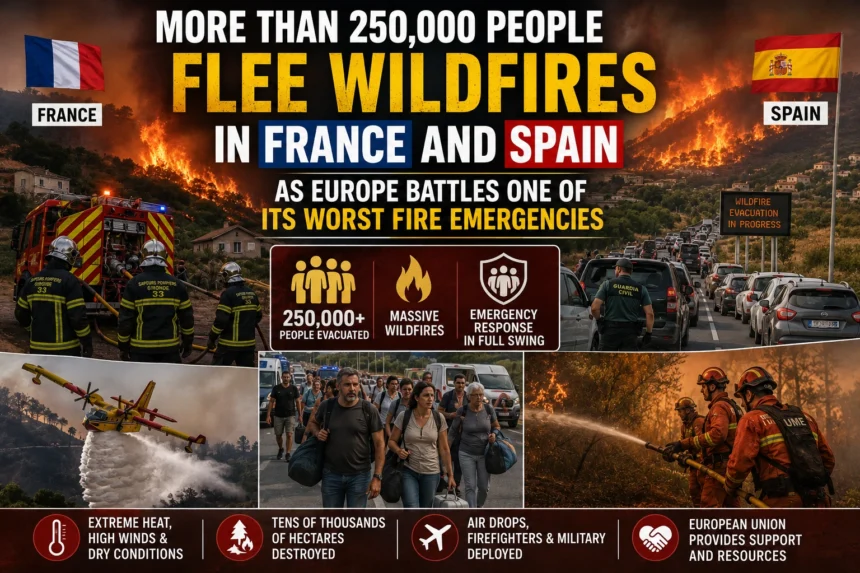
Europe is facing one of its most severe wildfire disasters in recent history as more than 250,000 people have been forced to evacuate their homes across France and Spain, with massive blazes spreading rapidly through forests, residential communities, and agricultural land. Authorities in both countries have described the fires as unprecedented, warning that high temperatures, prolonged drought, and strong winds have created conditions that continue to fuel the flames despite an enormous firefighting effort.
The crisis has prompted large-scale emergency evacuations, military deployments, international assistance from the European Union, and public health warnings as thick smoke blankets several regions. Officials say the coming days will be critical in determining whether firefighters can prevent the fires from reaching additional urban areas.
France Faces Its Largest Wildfire Evacuation
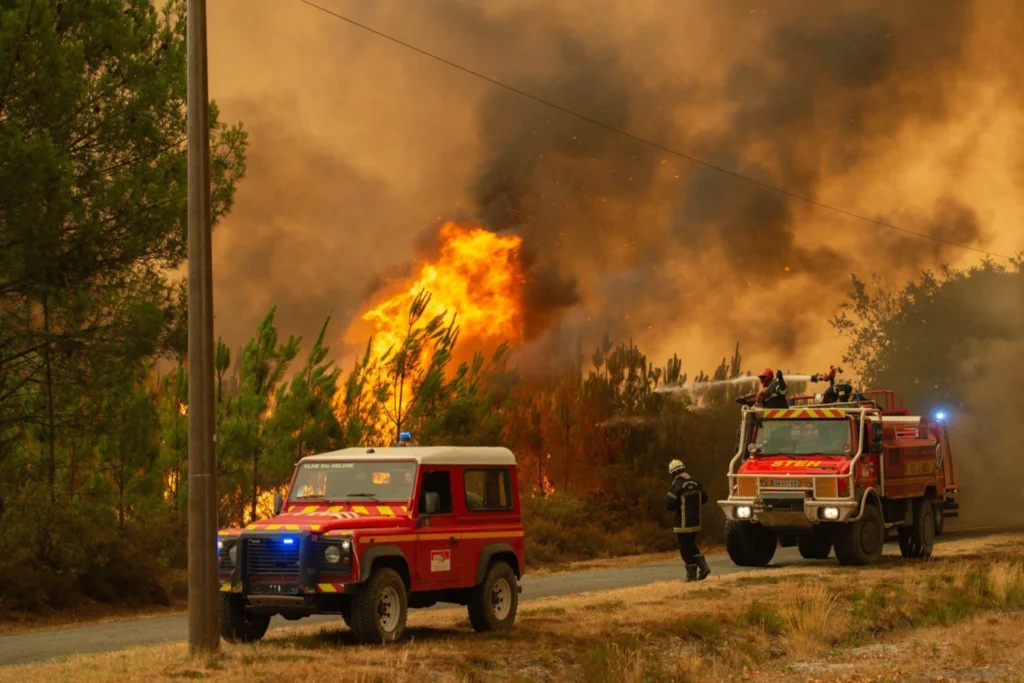
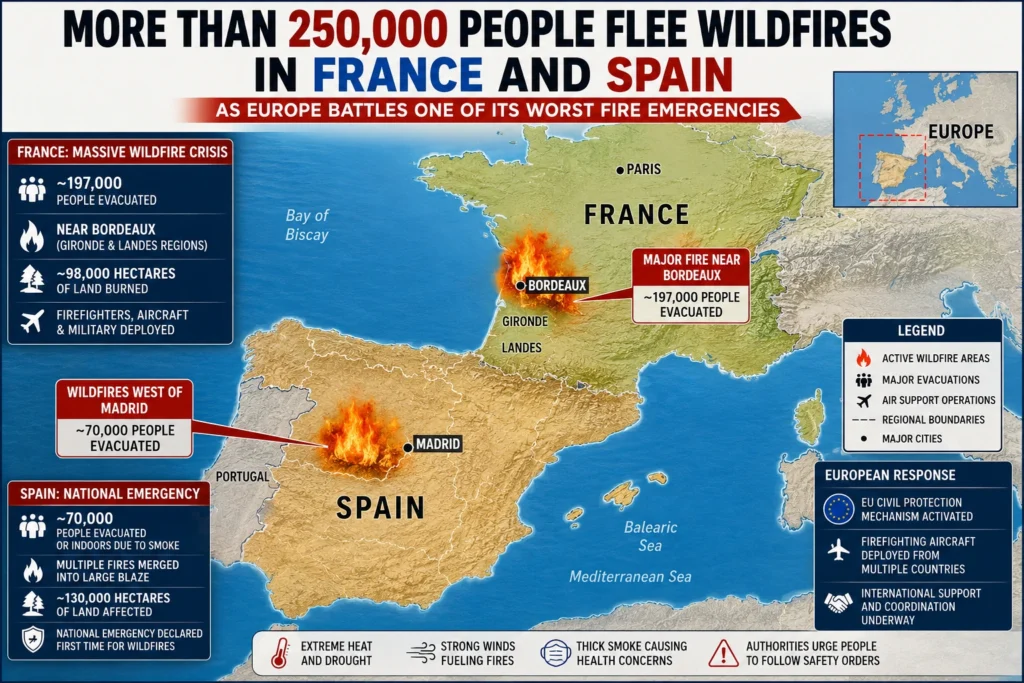
The most dramatic situation has unfolded in southwestern France, where a rapidly expanding wildfire near Bordeaux has forced authorities to evacuate approximately 197,000 residents from the Gironde and Landes regions.
French officials ordered the evacuation of entire communities after shifting winds pushed the fire closer to populated areas. Emergency shelters were established in nearby towns, while thousands of families left with only essential belongings as firefighters worked to establish containment lines. (Reuters)
Authorities described the operation as one of the country’s largest peacetime evacuations, reflecting the extraordinary scale of the emergency.
Bordeaux Under Threat
The wildfire has moved dangerously close to the outskirts of Bordeaux, one of France’s most important cities and the center of the country’s famous wine-producing region.
To slow the advance of the flames, emergency crews have:
- Built firebreaks.
- Used heavy machinery to clear vegetation.
- Deployed military personnel.
- Dropped thousands of litres of water and fire retardant from aircraft.
- Protected critical infrastructure and residential neighborhoods.
Officials temporarily closed Bordeaux Airport and warned that changing wind conditions could further complicate firefighting operations. (Reuters)
Spain Declares Historic National Emergency

Spain is simultaneously battling multiple major wildfires west of Madrid, prompting the government to declare what officials described as the country’s first national emergency specifically for a wildfire event.
Several separate fires merged into larger fire fronts, creating an exceptionally difficult situation for emergency responders.
Approximately 70,000 people have either been evacuated from their homes or instructed to remain indoors because of dangerous smoke and rapidly changing fire conditions. (The Guardian)
Fires Merge Into Massive Blaze
Emergency officials reported that two of the largest fires outside Madrid combined into a single enormous wildfire, dramatically increasing the affected area.
High winds, low humidity, and extremely dry vegetation have enabled the flames to spread rapidly across forests, farmland, and mountainous terrain.
Although cooler overnight temperatures briefly slowed the fires, authorities warned that strong winds could quickly reverse those gains.
Hundreds of Firefighters on the Frontline
Thousands of emergency personnel are involved in firefighting operations across both countries.
The response includes:
- Professional firefighters.
- Military engineering units.
- Emergency medical teams.
- Police forces.
- Volunteer rescue organizations.
- Water-dropping aircraft.
- Helicopters.
- Bulldozers creating firebreaks.
France has also prepared military transport aircraft modified to release large quantities of fire retardant over advancing fire lines. (The Washington Post)
European Union Mobilizes Support
Recognizing the severity of the disaster, the European Union Civil Protection Mechanism has coordinated international assistance.
Several member states have supplied:
- Firefighting aircraft.
- Helicopters.
- Additional firefighters.
- Technical experts.
- Emergency coordination teams.
The coordinated response demonstrates Europe’s increasing reliance on cross-border cooperation as climate-related disasters become more frequent.
No Civilian Deaths Reported
Authorities have confirmed that, despite the enormous scale of the evacuations, no civilian fatalities have been reported so far.
However, dozens of firefighters have suffered injuries while battling the flames under extremely hazardous conditions.
Medical teams continue monitoring emergency personnel for:
- Heat exhaustion.
- Smoke inhalation.
- Burns.
- Dehydration.
- Fatigue-related injuries.
Officials have praised firefighters for preventing greater loss of life despite rapidly changing conditions. (The Guardian)
Smoke Creates Public Health Concerns
Beyond the immediate fire danger, thick smoke has become a major public health concern.
Authorities in both France and Spain have advised residents to:
- Remain indoors whenever possible.
- Wear protective masks outdoors.
- Keep windows closed.
- Avoid strenuous physical activity.
- Follow local evacuation instructions.
Hospitals have reported increased numbers of patients experiencing respiratory irritation, particularly elderly residents and those with pre-existing lung conditions.
Heatwaves Fuel the Disaster
Meteorologists say prolonged heatwaves across southern Europe created ideal conditions for the rapid spread of wildfires.
Several contributing factors include:
- Exceptionally high temperatures.
- Very low humidity.
- Months of below-average rainfall.
- Strong seasonal winds.
- Extremely dry forests and grasslands.
Climate researchers note that such weather patterns significantly increase wildfire intensity and make suppression efforts far more difficult. (The Guardian)
Environmental Damage Continues to Grow
The fires have already destroyed extensive areas of woodland and natural habitat.
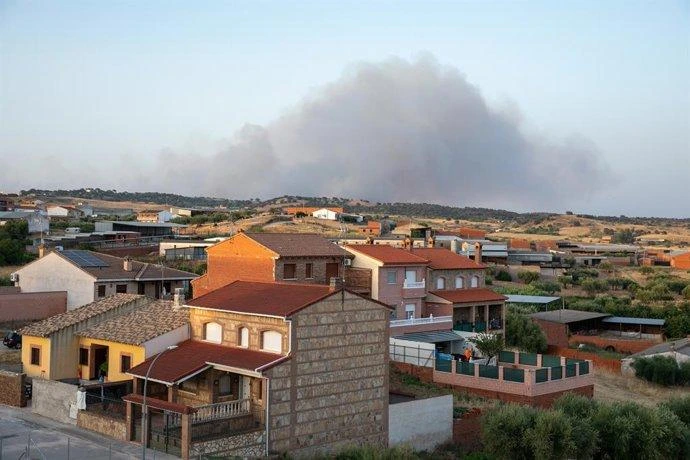
Authorities estimate that:
- Nearly 98,000 hectares have burned in France.
- Around 130,000 hectares have been affected in Spain.
The fires have damaged biodiversity, wildlife habitats, agricultural land, vineyards, and tourism infrastructure, with economic losses expected to reach billions of euros. (The Guardian)
Climate Change Under Fresh Scrutiny
Scientists have cautioned against attributing any single wildfire solely to climate change, but they say rising global temperatures are increasing the likelihood of the hot, dry conditions that allow fires to spread more rapidly.
Southern Europe has experienced repeated extreme heatwaves in recent years, with wildfire seasons becoming longer and more destructive.
Experts argue that adaptation measures—including better forest management, stronger emergency planning, and investments in firefighting capacity—will become increasingly important as climate risks intensify.
Communities Displaced
For many residents, the evacuation orders came with little warning.
Families abandoned homes, farms, and businesses as emergency alerts instructed them to leave immediately.
Temporary shelters have been established in schools, sports facilities, and community centers, where displaced residents are receiving food, medical care, and psychological support.
Authorities have promised assistance for families whose homes or livelihoods have been affected by the disaster. (Reuters)
Economic Impact
The wildfire crisis is expected to have significant economic consequences.
Key sectors likely to be affected include:
- Agriculture.
- Forestry.
- Wine production.
- Tourism.
- Transportation.
- Local businesses.
- Insurance.
Temporary airport closures, damaged infrastructure, and disruptions to road networks have also affected travel across parts of France and Spain.
Outlook
Fire officials say weather conditions over the next several days will determine whether firefighters can begin containing the largest blazes.
A slight drop in temperatures and increased humidity have provided some optimism, but strong winds remain the greatest concern.
Authorities continue urging residents to follow official instructions and avoid returning to evacuated areas until it is declared safe. (Reuters)
Conclusion
The evacuation of more than 250,000 people from France and Spain underscores the growing threat posed by extreme wildfires across Europe. With firefighters, military personnel, and international partners working around the clock, the immediate priority remains protecting lives and preventing further destruction. As investigations into the full environmental and economic impact continue, the disaster is likely to intensify discussions about climate resilience, emergency preparedness, and long-term wildfire management across the continent.
Also Read: – 60 Years After Disappearing from Gir, Indian Grey Hornbills Breed for Fourth Consecutive Year in Major Conservation Success