

FCRA Bill 2026 Sparks Debate: Supporters Cite Transparency, Critics Warn of Risks to Civil Society.
By PaperPatrika National Desk
The Foreign Contribution (Regulation) Amendment Bill, 2026 (FCRA Bill 2026) has emerged as one of the most closely watched pieces of legislation during Parliament’s Monsoon Session, igniting a nationwide debate over the balance between national security, financial transparency, and the autonomy of civil society organisations.
Supporters of the Bill argue that the proposed amendments are essential to strengthen oversight of foreign funding, prevent misuse of overseas donations, and safeguard national interests. Critics—including opposition parties, some faith-based organisations, and civil society groups—contend that several provisions could expand executive powers in ways that may affect the functioning and independence of non-governmental organisations (NGOs). (The Times of India)
What is the FCRA?
The Foreign Contribution (Regulation) Act (FCRA) governs how individuals, associations, charities, educational institutions, and NGOs in India receive and use foreign contributions. The law seeks to ensure that overseas funding is used transparently and does not adversely affect national security or public interest.
Over the years, the FCRA framework has undergone multiple amendments aimed at tightening compliance requirements and improving financial accountability. (PRS Legislative Research)
Key Features of the FCRA Amendment Bill, 2026
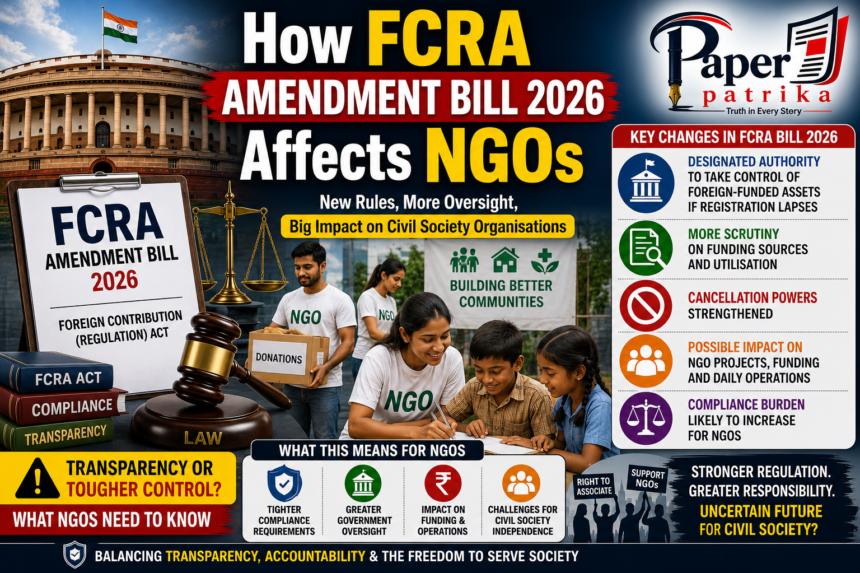
One of the most significant proposals in the Bill is the creation of a Designated Authority that would supervise foreign-funded assets when an organisation’s FCRA registration is cancelled, surrendered, expires, or is not renewed.
According to the Bill, the authority would temporarily manage such assets until the organisation’s legal status is resolved. If registration is ultimately not restored, the legislation provides a framework for disposal of those assets for public purposes, while requiring that the religious character of places of worship be preserved where applicable. (PRS Legislative Research)
Other proposed changes include:
- A legal framework for supervision and management of foreign-funded assets.
- Clarification of circumstances in which an organisation is deemed to have ceased holding an FCRA certificate.
- Revised administrative procedures for organisations that lose or surrender registration.
- Changes to penalties for certain violations under the Act. (PRS Legislative Research)
Why Supporters Back the Bill
The Union government maintains that the Bill is not aimed at restricting legitimate charitable work but at strengthening regulatory oversight.
Officials argue that tighter controls are needed to:
- Prevent diversion or misuse of foreign contributions.
- Improve financial transparency and accountability.
- Ensure compliance with FCRA regulations.
- Protect national security from unlawful foreign influence.
The Centre has also stated that the amendments are not directed against any religion or community, but are intended to create a stronger regulatory framework applicable to all organisations receiving foreign funds. (Hindustan Times)
Why Critics Are Concerned
The Bill has drawn criticism from several civil society organisations, church bodies, and opposition leaders, who argue that some provisions may have unintended consequences for genuine charitable and voluntary organisations.
Among the concerns raised are:
- Increased executive control over foreign-funded assets.
- Administrative uncertainty if registrations lapse or renewal is delayed.
- Possible disruption of humanitarian, educational, and healthcare projects funded through overseas contributions.
- Questions about safeguards and avenues for appeal before assets come under government management. (Onmanorama)
Some opposition leaders have described the amendments as excessive and have urged the government to reconsider provisions they believe could affect the independence of NGOs. (The Indian Express)
Concerns from Religious and Civil Society Organisations
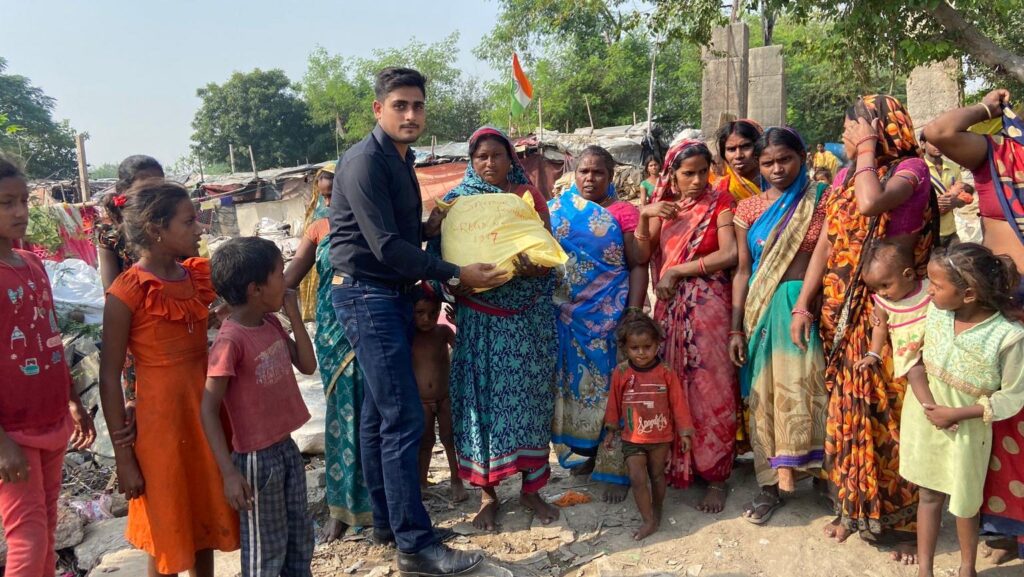
Several Christian organisations, including church bodies in different states, have publicly expressed apprehension about the proposed amendments.
Their concerns include the possibility that tighter regulatory controls could affect institutions involved in education, healthcare, disaster relief, and charitable work that rely partly on foreign contributions.
For example, church organisations in Mizoram have called for the Bill to be reconsidered, arguing that it could make it more difficult for legitimate faith-based charities to operate. (The Times of India)
Government’s Response
The government has rejected suggestions that the Bill targets any specific community or organisation.
According to officials, the objective is to create a clear legal process for handling assets purchased through foreign contributions when an organisation is no longer authorised to receive such funding.
The government argues that introducing a designated authority provides administrative continuity and prevents uncertainty over ownership or management of foreign-funded assets. (Hindustan Times)
Legal and Policy Debate
Policy analysts note that the debate reflects two legitimate public interests:
On one hand, governments have a recognised interest in regulating foreign funding to ensure transparency, prevent money laundering, and protect national security.
On the other hand, many experts argue that civil society organisations require adequate operational independence to carry out charitable, educational, developmental, and humanitarian work.
The challenge, they say, is ensuring that regulatory oversight remains proportionate and is accompanied by appropriate procedural safeguards and opportunities for appeal. (PRS Legislative Research)
Potential Impact on NGOs
If enacted, organisations registered under FCRA may need to:
- Review governance and compliance systems.
- Ensure timely renewal of registrations.
- Maintain detailed records of foreign-funded assets.
- Strengthen financial reporting and documentation.
- Prepare for revised compliance requirements under the amended law. (PRS Legislative Research)
For organisations already maintaining strong compliance systems, legal experts suggest that the operational impact may be limited. Others may face additional administrative responsibilities.
What Happens Next?
The Bill continues to attract significant political and public attention as Parliament debates its provisions.
If approved in its present form, implementing rules and administrative guidelines will play a crucial role in determining how the legislation affects NGOs, charitable institutions, educational organisations, and other recipients of foreign contributions.
Future judicial interpretation may also clarify the scope of the proposed powers and the safeguards available to affected organisations.
Conclusion
The FCRA Amendment Bill, 2026 has become a focal point in India’s broader discussion about the relationship between regulatory oversight and civil society. Supporters view it as a necessary step to enhance transparency, accountability, and national security. Critics argue that some provisions may grant broad administrative powers that could affect the functioning of genuine charitable organisations.
As parliamentary deliberations continue, the central policy question remains how India can ensure robust oversight of foreign funding while preserving the legitimate work of organisations that contribute to education, healthcare, social welfare, humanitarian relief, and community development. The eventual impact of the legislation will depend not only on its final wording but also on how it is implemented and interpreted in practice.
Also Read:-
Public Examinations Amendment Bill backlog issues