
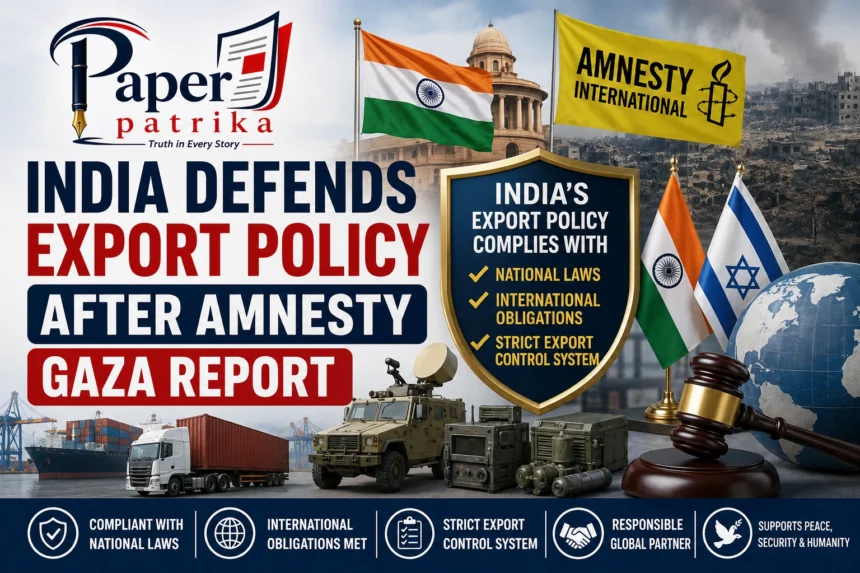
India Risks Complicity in Israel’s Alleged War Crimes in Gaza, Amnesty Report Claims; Government Rejects Allegations.
By PaperPatrika World Affairs Desk
A new report by Amnesty International has sparked international debate by alleging that India’s continued exports of certain military and dual-use components to Israel could risk making the country complicit in alleged war crimes committed during the ongoing conflict in Gaza. The report urges India to suspend such transfers, arguing that there is a substantial risk they could contribute to violations of international humanitarian law. (Amnesty International)
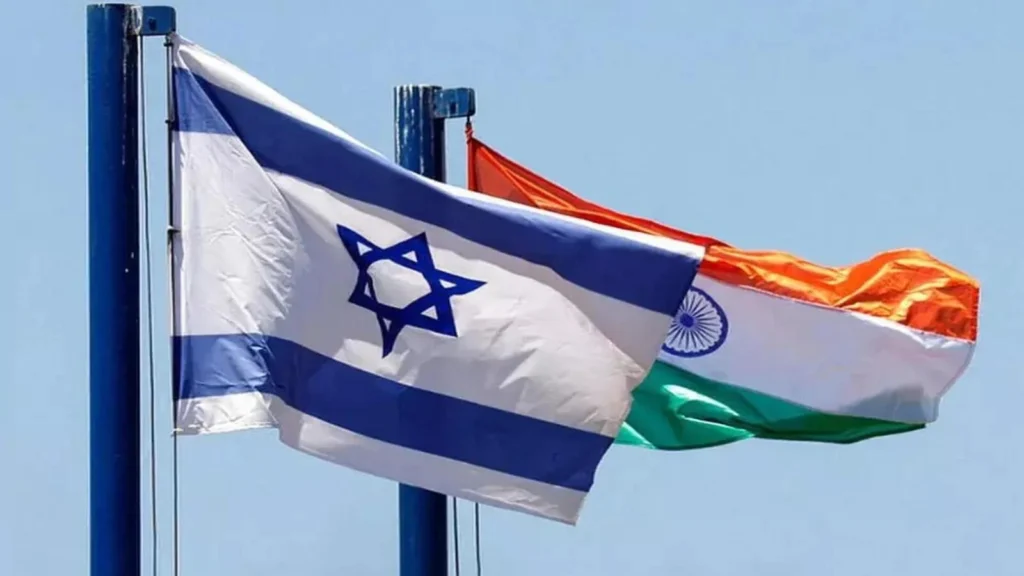
The Government of India, however, has firmly rejected the allegations. Responding through the Ministry of External Affairs (MEA), officials stated that India’s exports are governed by a robust legal and regulatory framework and comply with both domestic laws and international obligations governing strategic and dual-use trade. (The Economic Times)
Amnesty International’s Findings
According to Amnesty International, the organization examined exports made by Indian state-owned and private companies to Israel during the Gaza conflict. Amnesty argues that some exported items—including military components and dual-use technologies—could potentially be incorporated into Israeli defence systems being used during military operations in Gaza. Based on this assessment, it warns that continuing such exports may expose supplier states to legal and ethical questions under international humanitarian law. (Amnesty International)
The report calls on governments to halt transfers where there is a clear risk that exported equipment could be used in serious violations of international law.
India’s Official Response
The Ministry of External Affairs strongly disputed the report’s implications.
MEA spokesperson Randhir Jaiswal stated that India’s export control system is comprehensive and operates under a strict legal and regulatory framework. According to the government, exports of strategic and dual-use items are evaluated in accordance with Indian laws and the country’s international commitments, and suggestions that India is violating its obligations are not accepted by the government. (The Economic Times)
The response emphasizes that India’s export decisions are subject to established licensing and compliance procedures.
Understanding “Dual-Use” Exports
A central issue in the debate is the concept of dual-use items.
Dual-use goods are products, technologies, or components that have both civilian and military applications. Examples can include advanced electronics, specialized materials, navigation equipment, and industrial components. Such items are traded internationally under export-control regimes because of their potential military use.
The MEA stressed that exports of these items are not unrestricted and are regulated through licensing and oversight mechanisms. (The Economic Times)
The Broader Human Rights Debate
Amnesty International has repeatedly argued that governments and companies should avoid transferring arms or related technologies when there is a significant risk that they could be used in violations of international humanitarian law. The organization has published multiple reports on the humanitarian situation in Gaza and the occupied Palestinian territories, urging stronger international action. (Amnesty International)
Israel has consistently rejected accusations that it is committing genocide or intentionally targeting civilians, maintaining that its military operations are directed against Hamas and conducted in self-defence while seeking to comply with international law.
India’s Position on the Gaza Conflict
India has maintained a carefully balanced diplomatic approach throughout the conflict.
The government has:
- Condemned terrorism.
- Called for the protection of civilians.
- Supported humanitarian assistance to Gaza.
- Continued diplomatic engagement with both Israel and the Palestinian Authority.
- Reiterated support for a negotiated two-state solution.
This policy reflects India’s longstanding effort to maintain constructive relations with both sides.
International Legal Context
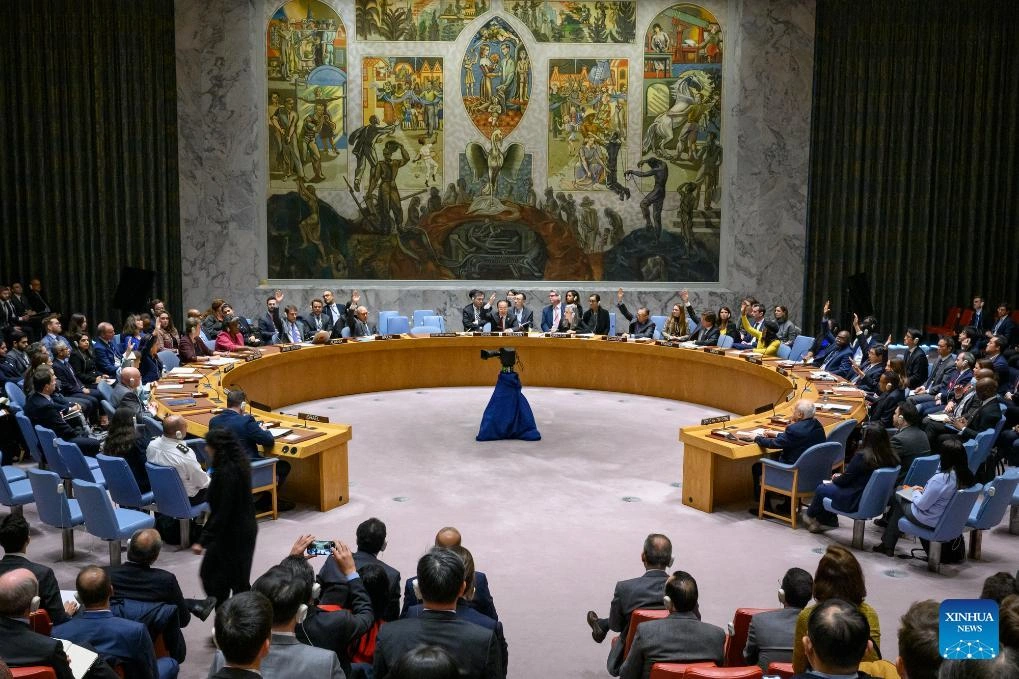
International humanitarian law places obligations on states regarding arms transfers where there is knowledge or substantial risk that exported equipment could be used in serious violations. Human rights organizations often invoke these principles when calling for restrictions on military exports.
Whether a particular transfer breaches international law depends on complex legal and factual assessments, and such questions are often the subject of international debate rather than universally agreed conclusions.
Strategic Importance of India–Israel Relations
India and Israel have developed close strategic ties over the past three decades, particularly in:
- Defence cooperation.
- Agriculture.
- Water management.
- Cybersecurity.
- Artificial intelligence.
- Innovation.
- Space technology.
Israel remains an important defence partner for India, while bilateral trade has expanded into multiple civilian sectors.
Humanitarian Situation in Gaza
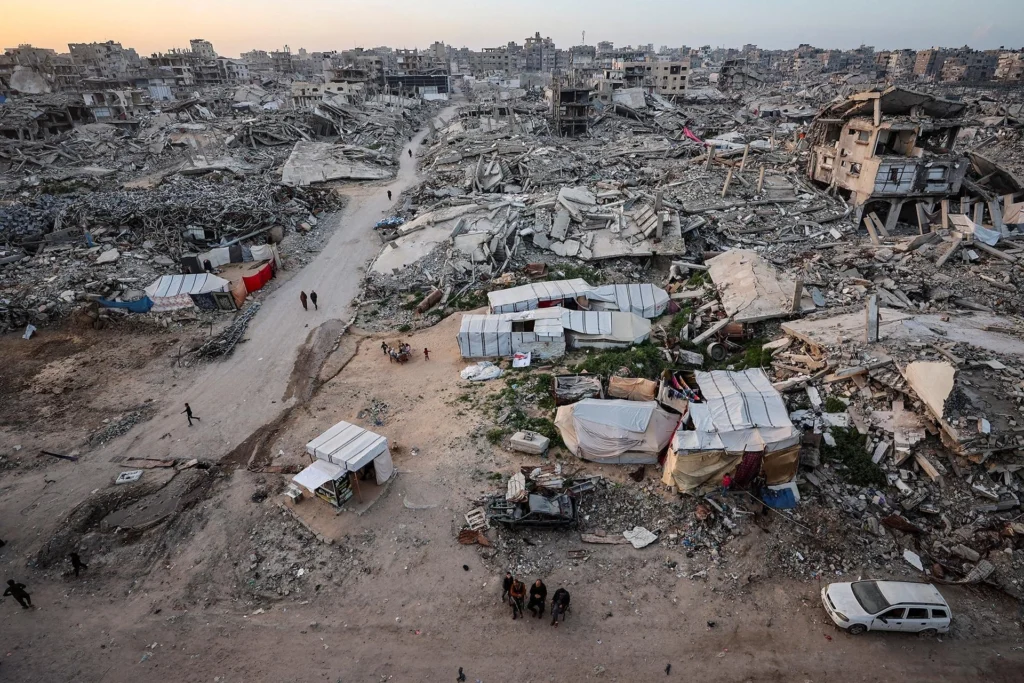
The conflict in Gaza has resulted in extensive humanitarian consequences, including civilian casualties, displacement, infrastructure destruction, and shortages of food, fuel, and medical supplies. Numerous international organizations—including the United Nations and humanitarian agencies—have repeatedly called for greater protection of civilians and increased humanitarian access.
At the same time, differing legal and political interpretations continue regarding responsibility for the conflict and compliance with international law.
Potential Diplomatic Impact
The Amnesty report is unlikely by itself to alter India’s foreign policy immediately, but it may contribute to broader international discussions on:
- Arms export controls.
- Corporate responsibility.
- Human rights compliance.
- International humanitarian law.
- Government oversight of strategic exports.
The government’s prompt response indicates that New Delhi intends to defend its existing export-control framework.
Looking Ahead
The debate surrounding the report illustrates the growing scrutiny faced by governments involved in defence exports during armed conflicts. As international organizations continue monitoring the humanitarian situation in Gaza, discussions about export controls, legal accountability, and ethical responsibilities are likely to remain prominent.
India has maintained that its export policies are transparent, rules-based, and consistent with international obligations, while Amnesty International continues to argue for stronger restrictions where there is a perceived risk of misuse.
Conclusion
The latest Amnesty International report has intensified international discussion over the responsibilities of states exporting defence-related and dual-use technologies during armed conflicts. While the organization argues that India’s exports could risk complicity in alleged violations in Gaza, the Government of India has categorically rejected the claim, emphasizing that all strategic exports are regulated under a robust legal framework and comply with national and international obligations. (The Economic Times)
As the humanitarian crisis in Gaza continues to draw global attention, the issue is likely to remain part of wider debates on international law, arms-transfer policies, and the balance between strategic partnerships and human rights considerations.
Also Read: –
India Condemns Commercial Ship Attacks Amid Ukraine Conflict