

New Delhi | PaperPatrika News Desk
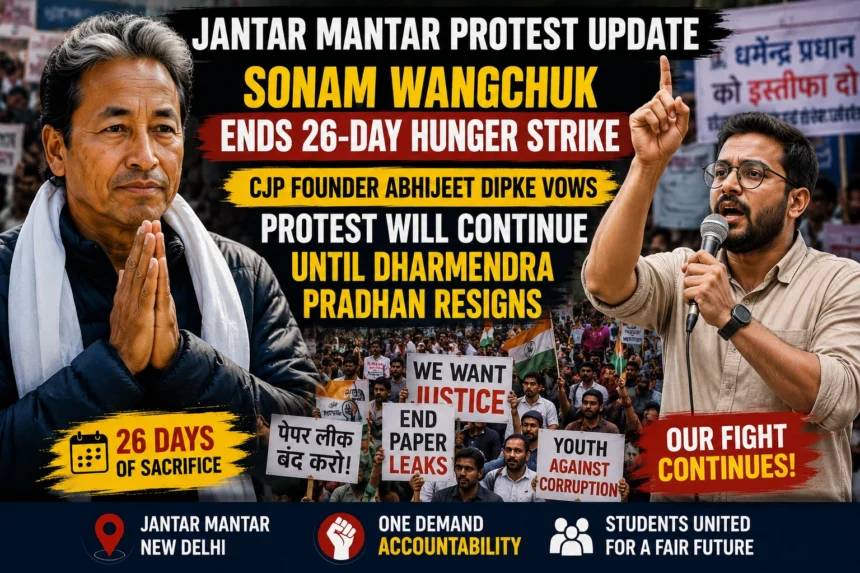
A major development has unfolded in the ongoing protest at Delhi’s Jantar Mantar, where environmental activist and education reform advocate Sonam Wangchuk has officially ended his 26-day hunger strike, marking a significant turning point in one of India’s most closely watched public movements. However, despite Wangchuk calling off his fast, the protest itself remains far from over.
The Cockroach Janata Party (CJP), which has been spearheading the movement demanding accountability over repeated examination paper leaks and reforms in India’s recruitment and education system, has declared that the agitation will continue until Union Education Minister Dharmendra Pradhan resigns.
Speaking after Wangchuk ended his fast, CJP founder Abhijeet Dipke expressed relief over the activist’s health but reiterated that the movement’s primary objective has not yet been achieved.
A Historic Hunger Strike Comes to an End
Sonam Wangchuk began his indefinite hunger strike nearly a month ago in solidarity with students protesting against repeated examination paper leaks and demanding greater transparency in India’s education and recruitment systems.
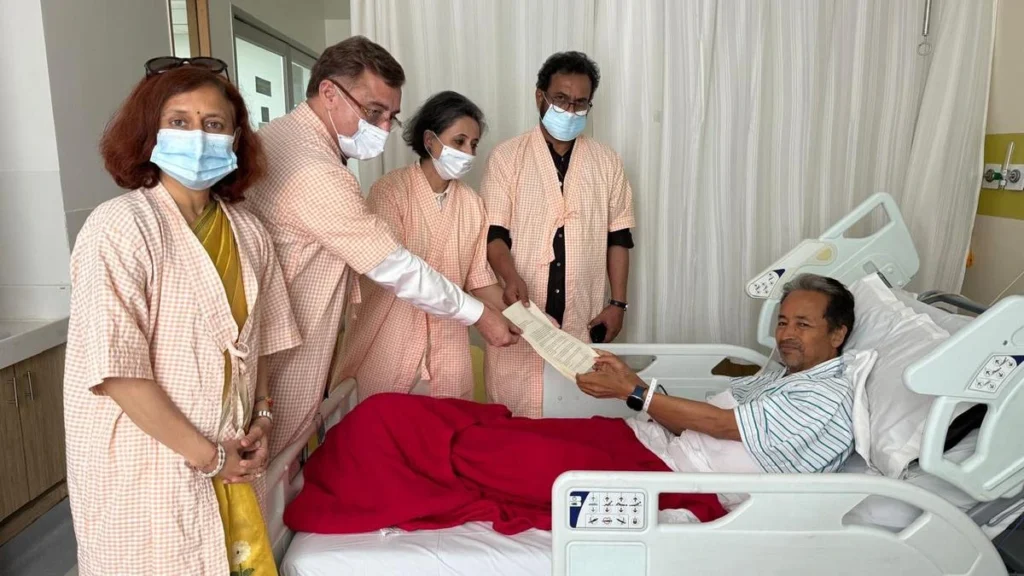
Over the course of 26 days, his health reportedly deteriorated, prompting doctors and supporters to urge him to end the fast. Medical teams remained on standby throughout the protest as concerns over his physical condition intensified.
Following discussions involving representatives of the central government, Ladakh Apex Body members, and senior political leaders, Wangchuk agreed to conclude his hunger strike, stating that dialogue should now be given an opportunity.
Although he has ended his fast, Wangchuk emphasized that the struggle for educational reforms and accountability must continue through democratic and peaceful means.
Abhijeet Dipke: “Relieved, But Our Fight Continues”
Soon after Wangchuk ended his hunger strike, CJP founder Abhijeet Dipke addressed supporters gathered at Jantar Mantar.
Dipke described Wangchuk’s decision as a moment of relief for millions of supporters across the country.
According to him, preserving Wangchuk’s health and life was of paramount importance because he has emerged as one of the strongest voices demanding educational justice in India.
However, Dipke made it clear that ending the hunger strike does not signal the end of the protest.
“Our movement is alive. Our demand remains unchanged. Until Education Minister Dharmendra Pradhan resigns and accountability is fixed, our protest will continue,” Dipke declared before hundreds of demonstrators.
Why the Protest Began
The agitation at Jantar Mantar emerged after a series of major examination paper leak controversies that affected millions of aspirants preparing for government jobs and higher education entrance examinations.
Students alleged that repeated security failures had destroyed years of hard work and preparation.
Protesters argued that while investigations were initiated and arrests made, political accountability had remained absent.
The movement gradually transformed into a nationwide campaign demanding structural reforms rather than temporary administrative measures.
Students, teachers, education activists, civil society organizations, and youth groups from several states joined the protest, turning Jantar Mantar into the movement’s symbolic center.
Demand for Dharmendra Pradhan’s Resignation
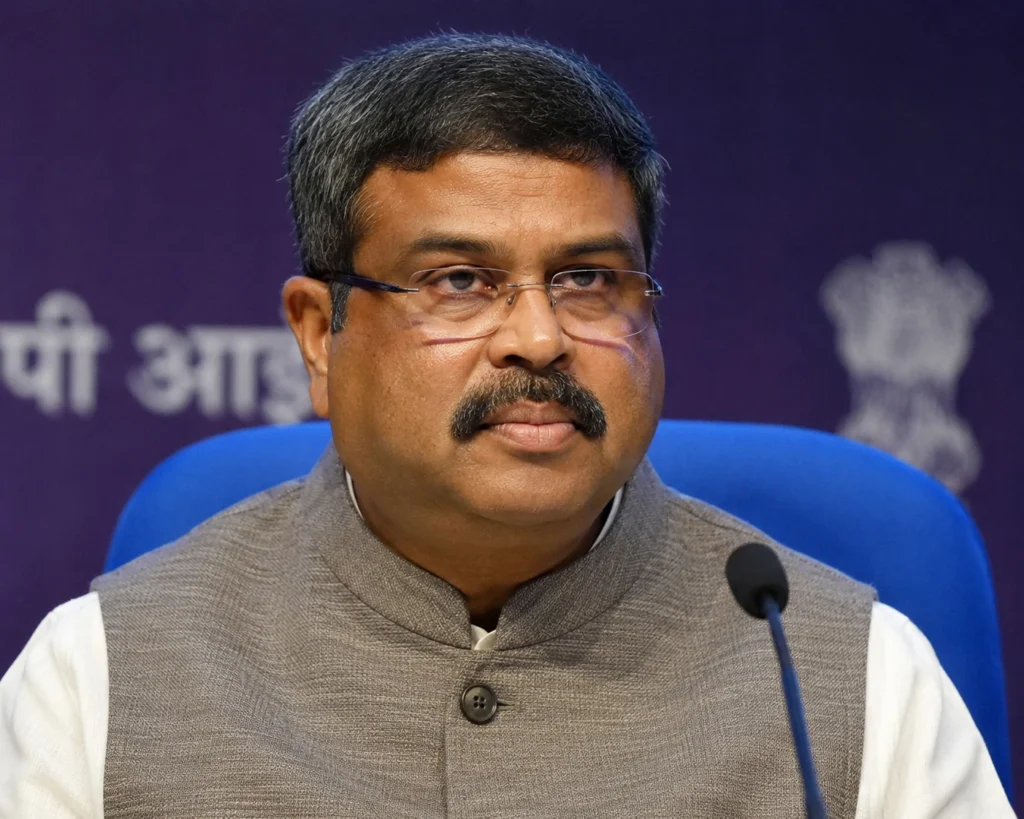
One of the principal demands of the protesters is the resignation of Union Education Minister Dharmendra Pradhan.
According to CJP leaders, repeated examination failures reflect systemic administrative shortcomings that require political accountability at the highest level.
Protest organizers argue that meaningful reforms cannot begin unless responsibility is accepted by those overseeing the country’s education and recruitment systems.
The government, however, has maintained that extensive corrective measures are already underway and has shown no willingness to consider the minister’s resignation.
This difference remains the biggest obstacle preventing a complete resolution of the protest.
Government Announces Reform Measures
Over the past several weeks, the Union Government has announced several initiatives aimed at strengthening examination security and restoring public confidence.
These measures reportedly include:
- Enhanced digital monitoring of examination centers.
- Stronger cybersecurity mechanisms.
- Faster investigations into paper leak cases.
- Strict punishment for organized cheating networks.
- Proposals for fast-track courts to hear examination-related offences.
- Improved coordination among examination agencies.
Prime Minister Narendra Modi has also assured students that those responsible for compromising examination integrity would face stringent legal action.
Despite these announcements, protest leaders argue that administrative reforms alone are insufficient without political accountability.
Jantar Mantar Remains the Epicenter
Although Wangchuk’s fast has concluded, Jantar Mantar continues to witness large gatherings of students and activists every day.
Volunteers have established information desks, medical camps, legal assistance booths, and peaceful discussion forums to sustain the movement.
Speeches, cultural performances, student testimonials, and awareness campaigns continue to attract participants from across the country.
Security arrangements have also been strengthened following earlier confrontations between protesters and police during attempts to march toward Parliament.
Authorities continue to monitor the situation closely while allowing peaceful demonstrations under regulated conditions.
The Role of Sonam Wangchuk
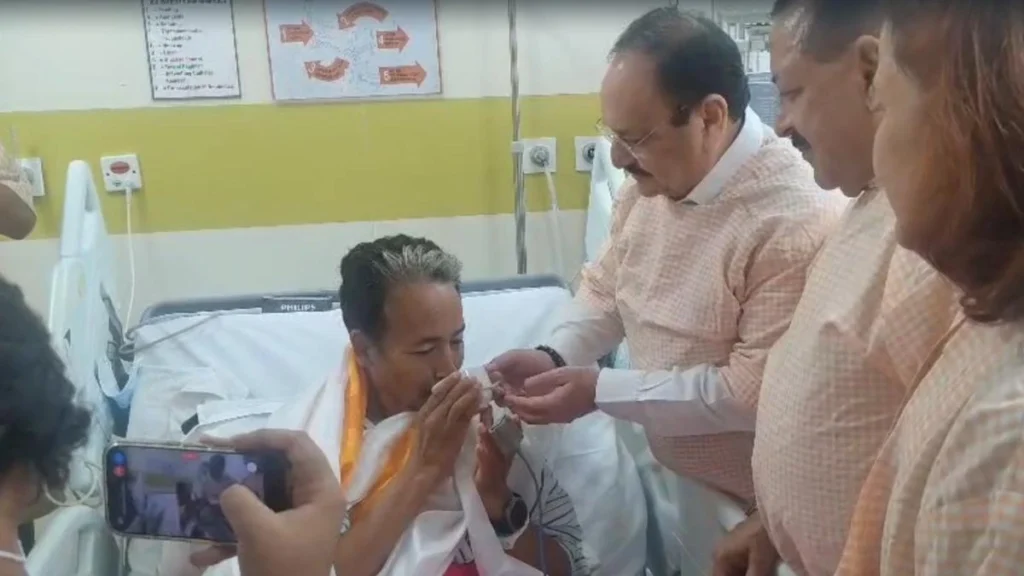
Widely respected for his work in sustainable development and education, Sonam Wangchuk has increasingly emerged as a prominent public voice on governance and policy issues.
His decision to undertake a prolonged hunger strike significantly increased public attention toward the concerns of students.
Throughout the protest, Wangchuk consistently emphasized that the movement was not directed against any individual but against systemic failures affecting millions of young Indians.
Even after ending his fast, he appealed to supporters to remain peaceful, disciplined, and committed to democratic methods of protest.
He stated that true reform can only be achieved through constructive dialogue combined with public participation.
Abhijeet Dipke’s Leadership
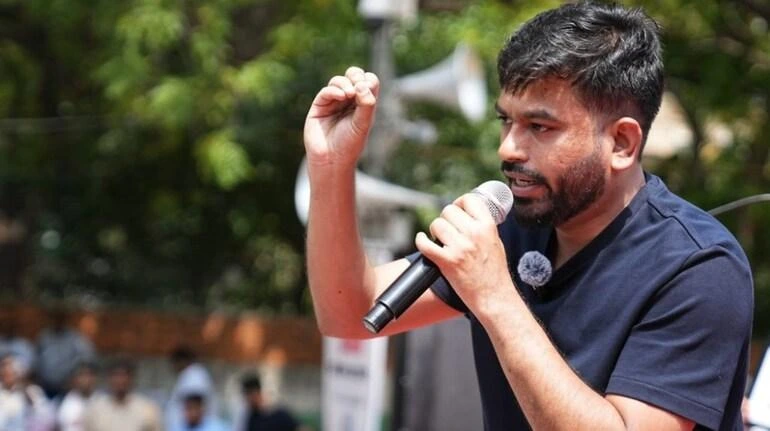
As Wangchuk’s health declined, Abhijeet Dipke assumed a more prominent leadership role within the movement.
Dipke coordinated volunteers, interacted with student organizations, addressed daily gatherings, and represented the protest during discussions with officials.
His speeches repeatedly focused on restoring fairness, transparency, and trust in India’s examination system.
He also urged protesters to avoid violence and maintain the movement’s peaceful character, emphasizing that public support remains its greatest strength.
Nationwide Support Continues
The protest has received support from various student organizations, educators, retired civil servants, social activists, and opposition leaders.
Several universities have witnessed solidarity demonstrations, while youth groups in multiple states have organized candle marches and signature campaigns.
Social media has also played a crucial role in amplifying the movement, with hashtags related to examination reforms and student justice trending repeatedly over recent weeks.
Supporters argue that the issue extends beyond individual examinations and concerns the future of millions of young people seeking fair opportunities.
Dialogue Still Underway
Government representatives and protest organizers continue to engage in discussions aimed at finding common ground.
While both sides reportedly agree on the need for examination reforms, disagreement persists over political accountability and the resignation demand.
Observers believe further negotiations are likely in the coming days as authorities attempt to prevent prolonged unrest while maintaining institutional stability.
Whether these discussions lead to a breakthrough remains uncertain.
What Lies Ahead
CJP leaders have announced that the movement will now expand beyond Jantar Mantar through nationwide awareness campaigns, student meetings, and public outreach programs.
The organization plans to continue mobilizing students while pressing for comprehensive examination reforms and institutional accountability.
Meanwhile, Wangchuk is expected to focus on recovery while remaining actively involved in guiding the movement through non-violent means.
The coming weeks are likely to determine whether negotiations produce meaningful reforms or whether the protest escalates into a broader nationwide campaign.
Conclusion
Sonam Wangchuk’s decision to end his 26-day hunger strike marks an important milestone in the ongoing Jantar Mantar movement, but it does not signal the conclusion of the protest. Instead, it represents a strategic transition from personal sacrifice to sustained public mobilization.
With Abhijeet Dipke reaffirming that the agitation will continue until Union Education Minister Dharmendra Pradhan resigns, the movement enters a new phase focused on maintaining public pressure while pursuing institutional reforms.
As millions of students continue demanding transparency, accountability, and fairness in India’s examination system, the Jantar Mantar protest has evolved into one of the country’s most significant youth-led democratic movements, raising broader questions about governance, educational integrity, and public trust.
Also Read: – Jantar Mantar Protest: CJP Demands Dharmendra Pradhan’s Resignation Despite PM Modi’s Assurance of Paper Leak Probe