

New Delhi | July 20, 2026 | PaperPatrika Special Report
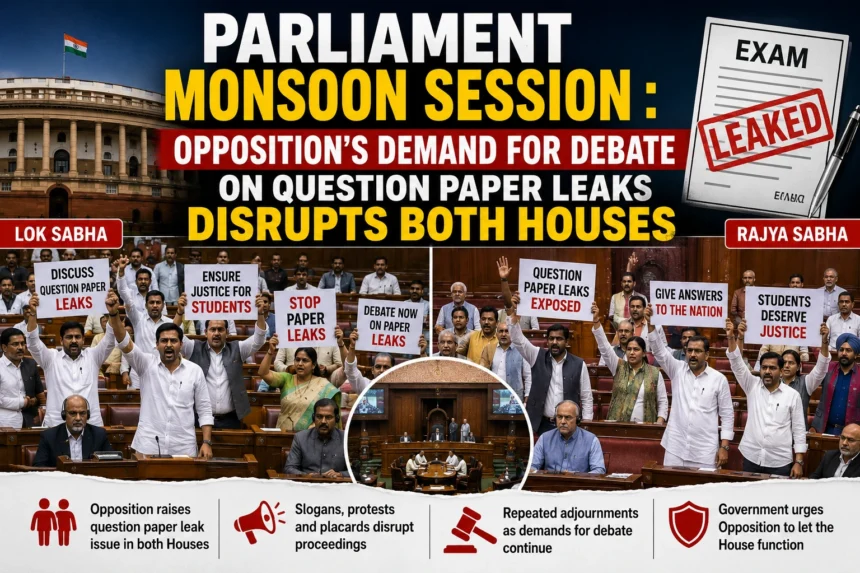
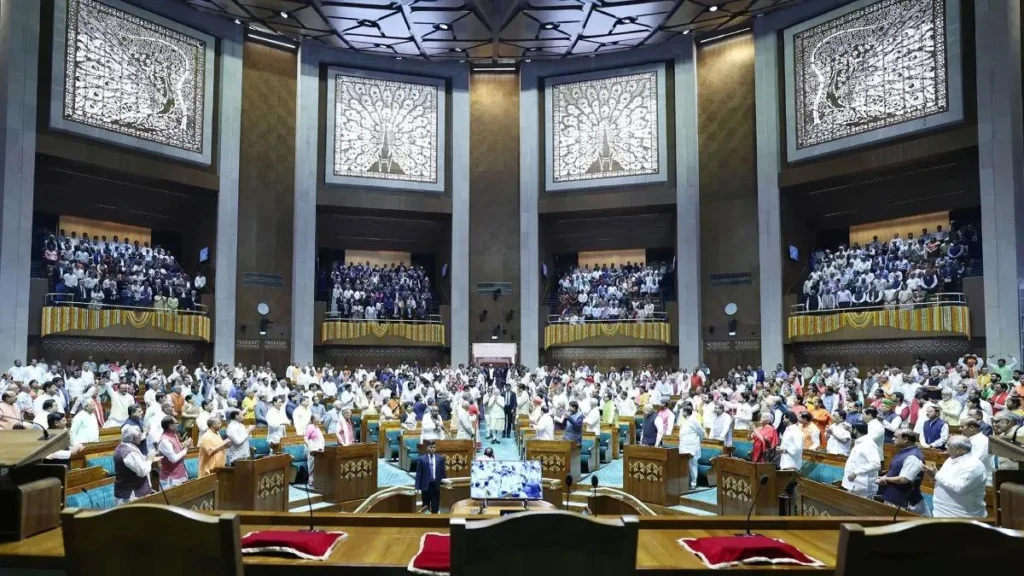
India’s Monsoon Session of Parliament 2026 began amid intense political confrontation as the Opposition demanded an immediate discussion on alleged question paper leaks in competitive examinations, including NEET, along with other national issues. The protests led to repeated disruptions in both the Lok Sabha and the Rajya Sabha, forcing multiple adjournments on the very first day of the session. Reports indicate that Opposition MPs also sought discussions on the Ayodhya temple trust controversy and the ongoing student-led demonstrations at Jantar Mantar.
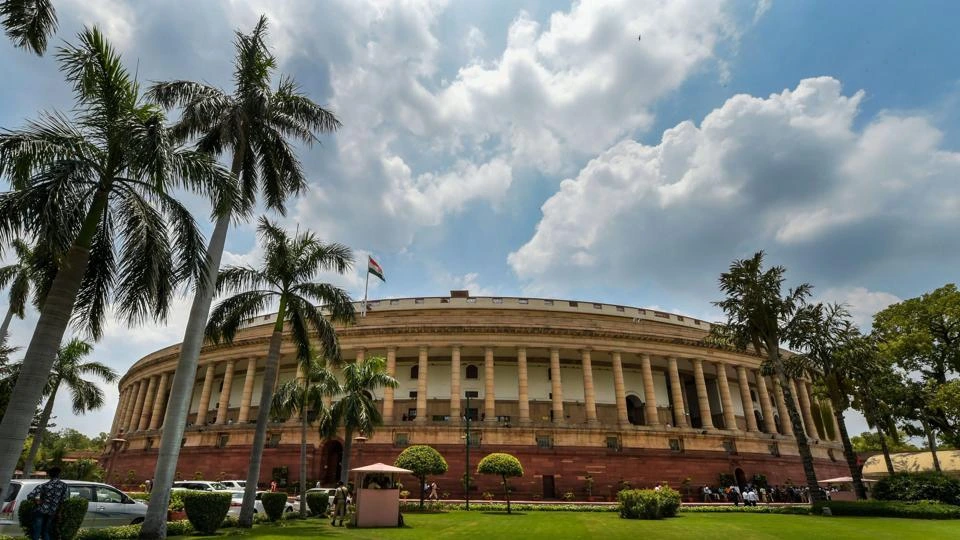
Outside Parliament, the political atmosphere remained equally charged. Thousands of protesters gathered at Jantar Mantar ahead of the proposed CJP “Chalo Parliament” march, prompting Delhi Police to deploy extensive security arrangements across central Delhi and around Parliament House.
Opposition Raises Question Paper Leak Issue
As Parliament assembled for the opening day of the Monsoon Session, Opposition MPs insisted that alleged examination paper leaks affecting millions of students deserved immediate parliamentary debate.
Leaders argued that repeated irregularities in competitive examinations have undermined public confidence in India’s recruitment and education systems. According to them, the issue concerns not only students but also the credibility of government institutions.
The Opposition demanded:
- A detailed parliamentary debate on examination paper leaks.
- Accountability of officials responsible for irregularities.
- Stronger safeguards for future examinations.
- Transparent investigation into recent cases.
- Comprehensive reforms in the examination system.
Proceedings Disrupted in Lok Sabha
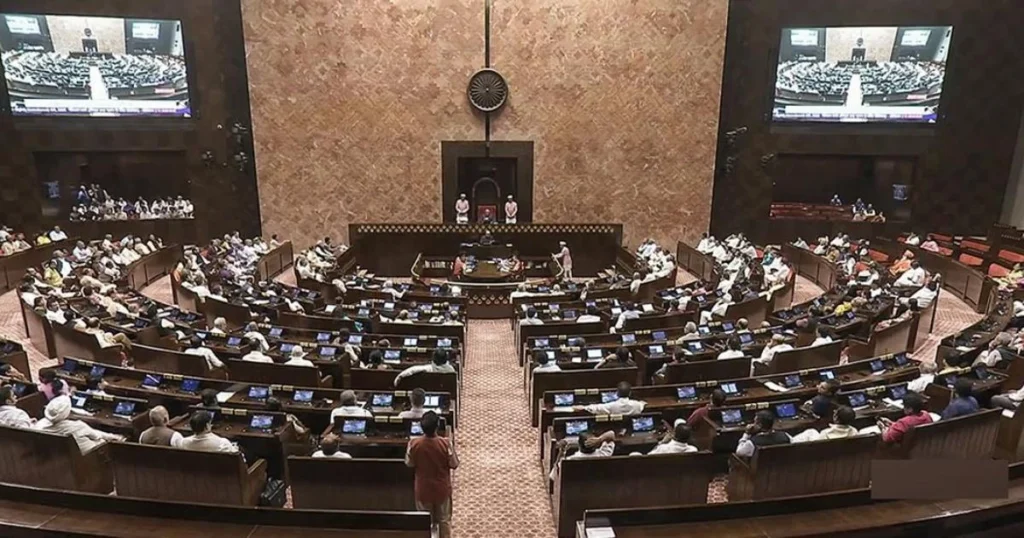
Soon after Question Hour commenced, Opposition MPs began raising slogans demanding discussion on examination irregularities.
Speaker of the Lok Sabha repeatedly appealed to members to maintain order and allow scheduled business to continue. However, continuous protests prevented normal proceedings, forcing repeated adjournments throughout the day.
Several MPs displayed placards while demanding that student-related issues receive priority over legislative business.
Similar Scene in Rajya Sabha
The Rajya Sabha also witnessed repeated disruptions.
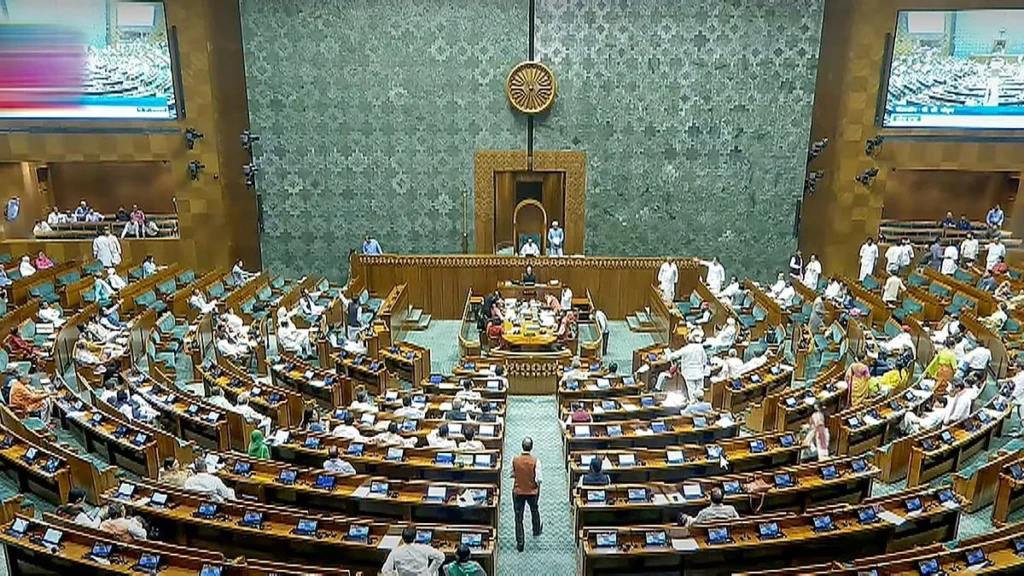
Opposition members insisted that the examination leak controversy and related public concerns should be discussed immediately.
Despite repeated appeals from the Chair to return to their seats and follow parliamentary procedure, protests continued, resulting in multiple adjournments.
Government’s Position
The government maintained that it is willing to discuss important national issues in accordance with parliamentary rules.
Ministers argued that repeated disruptions prevent Parliament from functioning effectively and delay legislative business scheduled during the Monsoon Session.
Government representatives urged Opposition parties to cooperate so that debates could take place under established parliamentary procedures.
Security Tightened Around Parliament
Parallel to the disruptions inside Parliament, authorities significantly strengthened security arrangements in New Delhi.
Delhi Police deployed additional personnel across Parliament Street, Vijay Chowk, and surrounding areas due to the planned “Chalo Parliament” march.
Major security measures included:
- Multi-layer barricading.
- Additional Delhi Police deployment.
- Rapid Action Force personnel.
- CCTV surveillance.
- Drone monitoring.
- Traffic restrictions around Parliament House.
Officials described these measures as precautionary to maintain law and order.
Protests Continue at Jantar Mantar
Thousands of students, civil society groups, and activists assembled at Jantar Mantar demanding greater accountability in the examination system.
The demonstrations were linked to the proposed CJP “Chalo Parliament” march, although police clarified that permission for a march towards Parliament had not been granted.
Authorities closely monitored the gathering while maintaining tight security around the national capital’s administrative zone.
Major Issues Expected During the Monsoon Session
Political observers expect several contentious issues to dominate Parliament over the coming weeks, including:
- Alleged examination paper leaks.
- Education reforms.
- Student protests.
- Employment concerns.
- Inflation.
- Delimitation-related discussions.
- Governance and accountability.
These issues are likely to shape parliamentary debates throughout the session.
Opposition’s Stand
Opposition leaders accused the government of avoiding discussion on issues affecting millions of students.
They argued that Parliament must prioritize debates on examination integrity, educational reforms, and accountability, calling them matters of national importance rather than routine political disagreements.
Government Appeals for Smooth Functioning
The ruling coalition responded by emphasizing that Parliament remains the appropriate forum for discussion but stressed that disruptions prevent meaningful debate.
Government leaders appealed to Opposition members to allow normal functioning of both Houses so legislative business could proceed alongside discussions on public concerns.
Political Significance
The first day of the Monsoon Session has set the tone for what could become a highly confrontational parliamentary session.
With student protests continuing outside Parliament and Opposition parties aggressively raising the examination leak issue inside both Houses, political tensions are expected to remain high in the coming days.
Analysts believe that the government’s ability to manage legislative business while addressing Opposition concerns will significantly influence the overall productivity of the session.
What Happens Next?
According to the parliamentary agenda, several important bills are scheduled for discussion during the Monsoon Session.
Meanwhile, Opposition parties have indicated that they will continue pressing for a dedicated debate on examination paper leaks and other public-interest issues until the government agrees to address them comprehensively.
Security agencies are also expected to remain on high alert as protests continue around central Delhi.
Conclusion
The opening day of India’s Monsoon Session 2026 was marked by sharp political confrontation, repeated adjournments, and intense debate over alleged examination paper leaks. While the Opposition demanded immediate discussion on issues affecting millions of students, the government insisted that debates should take place within parliamentary rules and appealed for uninterrupted proceedings. Simultaneously, heightened security outside Parliament reflected growing public demonstrations surrounding education reforms and governance, setting the stage for an eventful parliamentary session in the weeks ahead.
Also Read: – Thousands Gather at Jantar Mantar Ahead of CJP’s ‘Chalo Parliament’ March; Security Tightened as Protest Gains Momentum