

Introduction
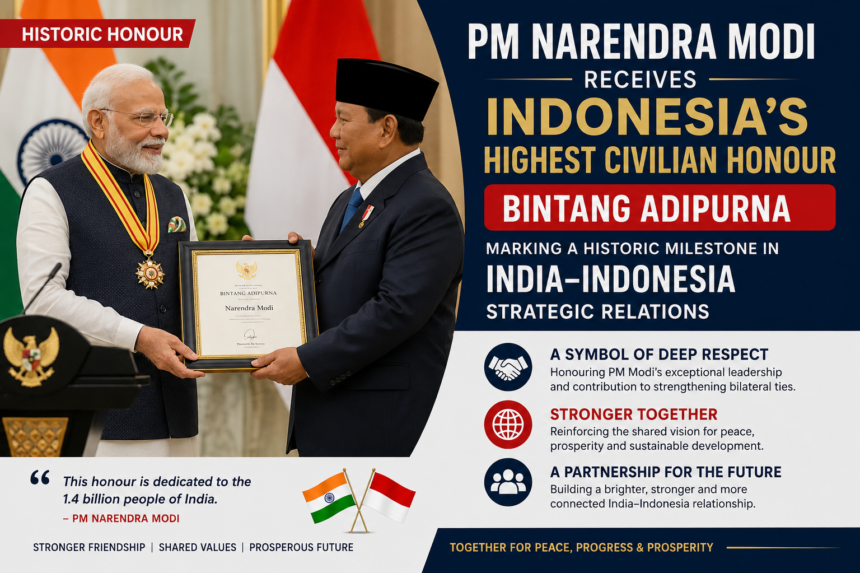
Prime Minister Narendra Modi was conferred Indonesia’s highest civilian honour, the “Bintang Adipurna of the Republic of Indonesia,” during his official visit to Jakarta on 7 July 2026. The prestigious award was presented by Indonesian President Prabowo Subianto at the historic Istana Merdeka (Presidential Palace) in recognition of Modi’s contribution to strengthening India–Indonesia relations and expanding cooperation across strategic sectors. The honour marks another significant diplomatic achievement for India and reflects the growing partnership between the two major Indo-Pacific democracies.
Indonesia’s Highest Civilian Honour
The Bintang Adipurna is the highest class of the Star of the Republic of Indonesia, the country’s highest national honour established in 1959. It is awarded to individuals who have rendered extraordinary service to the unity, prosperity, and international standing of Indonesia.
The decoration is presented by the President of Indonesia and is among the nation’s most prestigious recognitions for distinguished national and international personalities.
Ceremony at Istana Merdeka
The award ceremony took place at Istana Merdeka, the Presidential Palace in Jakarta, where President Prabowo Subianto formally presented the medal and sash to Prime Minister Modi during a ceremonial event attended by senior ministers and officials from both countries.
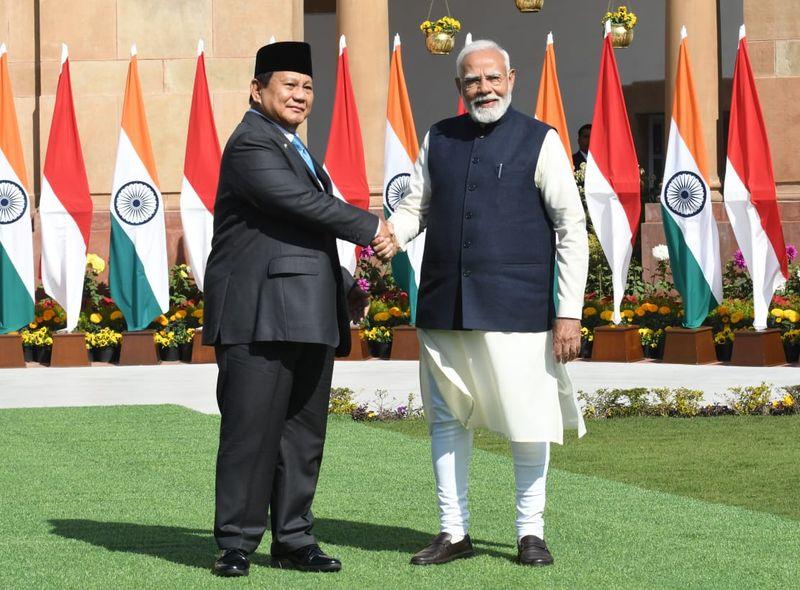
Following the presentation, the two leaders held delegation-level talks focusing on expanding bilateral cooperation in several priority areas.
Recognition for Strengthening Bilateral Relations
According to Indonesian officials, the award recognizes Prime Minister Modi’s role in deepening the strategic partnership between India and Indonesia.
Over the past decade, cooperation between the two countries has expanded significantly in areas including:
- Maritime security
- Defence cooperation
- Digital technology
- Trade and investment
- Manufacturing
- Food security
- Renewable energy
- Education
- Cultural exchanges
Both nations also continue to cooperate closely under regional and multilateral platforms such as the G20, ASEAN, the East Asia Summit, and the Indo-Pacific framework.
Key Agreements During the Visit
During the bilateral meeting, India and Indonesia exchanged several Memoranda of Understanding (MoUs) aimed at strengthening long-term cooperation.
The discussions focused on:
- Expanding manufacturing partnerships
- Promoting digital transformation
- Enhancing food security
- Increasing investment opportunities
- Strengthening maritime cooperation
- Advancing clean energy initiatives
- Improving connectivity between businesses
Both leaders emphasized the importance of building resilient supply chains and increasing economic engagement.
Modi Dedicates the Honour
After receiving the award, Prime Minister Modi dedicated the honour to the people of India and Indonesia, describing it as recognition of the centuries-old civilizational ties between the two countries.
He stated that the award symbolizes the shared democratic values, mutual respect, and enduring friendship that continue to strengthen bilateral relations.
Importance for India–Indonesia Relations
India and Indonesia share one of the Indo-Pacific region’s most important strategic partnerships.
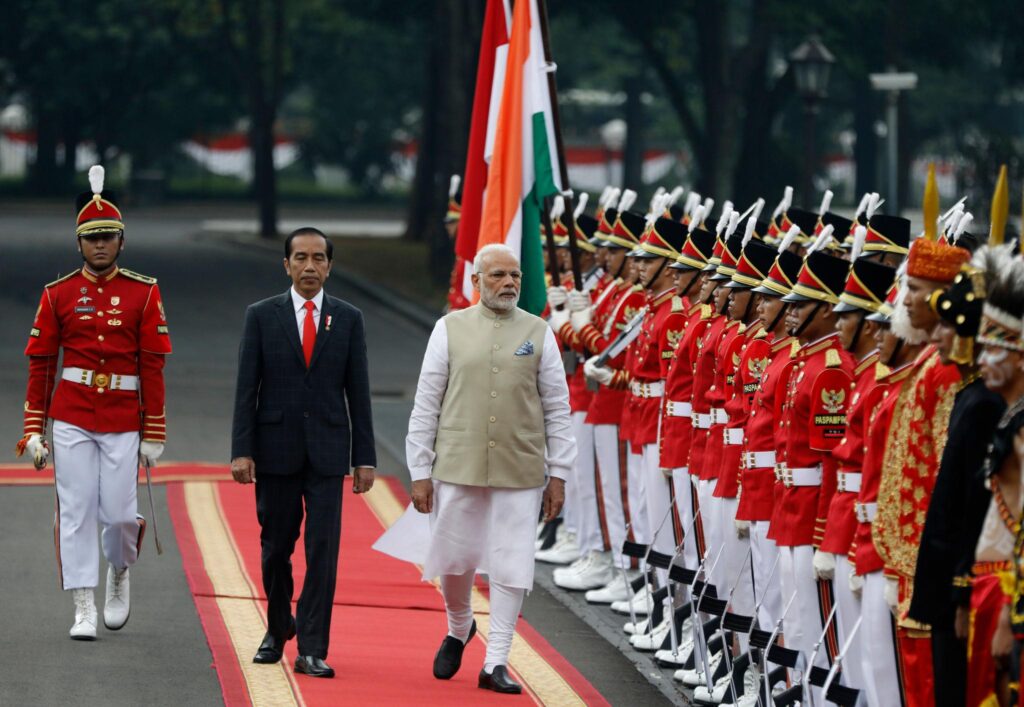
The two countries cooperate extensively in:
- Maritime security in the Indian Ocean
- Counter-terrorism
- Defence training
- Blue economy
- Digital innovation
- Renewable energy
- Infrastructure development
- Regional stability
Their strategic location along major international sea lanes also makes bilateral cooperation particularly important for global trade and maritime security.
Significance in the Indo-Pacific
The recognition comes at a time when the Indo-Pacific region is becoming increasingly important for global economic growth and geopolitical stability.
India and Indonesia are viewed as two major maritime democracies capable of contributing to:
- Secure sea lanes
- Regional economic integration
- Sustainable development
- Climate cooperation
- Disaster management
- Supply-chain resilience
Analysts believe closer cooperation between the two countries will contribute to a more stable and prosperous Indo-Pacific region.
Growing International Recognition
The Bintang Adipurna adds to the series of international honours conferred upon Prime Minister Modi by several countries in recognition of diplomatic engagement and bilateral cooperation.
Foreign policy experts say such honours reflect India’s expanding role in global diplomacy and its growing strategic partnerships across Asia, Africa, Europe, and the Middle East.
Economic Opportunities
Beyond symbolism, the visit is expected to strengthen commercial cooperation.
Potential areas of future collaboration include:
- Green energy projects
- Semiconductor manufacturing
- Artificial intelligence
- Critical minerals
- Port development
- Digital payments
- Tourism
- Pharmaceutical cooperation
Business leaders from both countries have welcomed efforts to expand trade and investment opportunities.
Future Outlook
Officials from both governments expressed confidence that the visit would open a new chapter in bilateral relations.
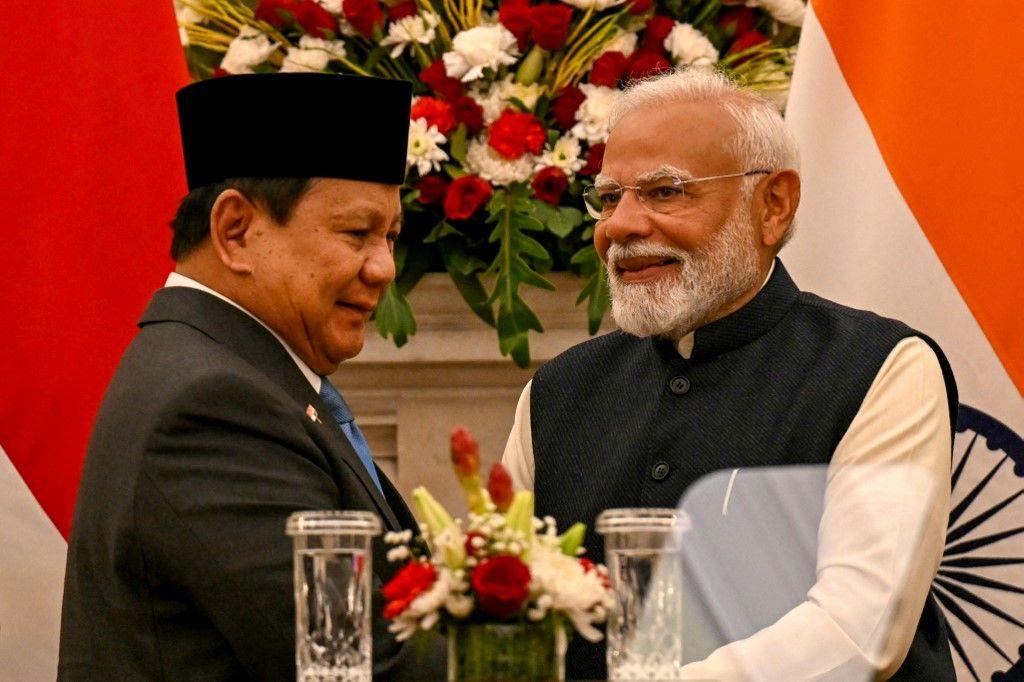
Future cooperation is expected to focus on:
- Defence modernization
- Maritime connectivity
- Clean energy
- Digital economy
- Innovation partnerships
- Education and skill development
- Sustainable infrastructure
These initiatives are expected to further elevate the India–Indonesia Comprehensive Strategic Partnership in the coming years.
Conclusion
Prime Minister Narendra Modi’s conferment of Indonesia’s highest civilian honour, the Bintang Adipurna, represents more than an individual recognition—it symbolizes the deepening friendship and strategic trust between India and Indonesia. Presented by President Prabowo Subianto during an official ceremony in Jakarta, the award reflects years of expanding cooperation in defence, trade, technology, maritime security, and regional diplomacy.
As both nations continue to strengthen their partnership across the Indo-Pacific, this recognition is expected to reinforce political goodwill and encourage greater collaboration in economic development, regional security, and global governance, marking another important milestone in one of Asia’s most significant bilateral relationships.