

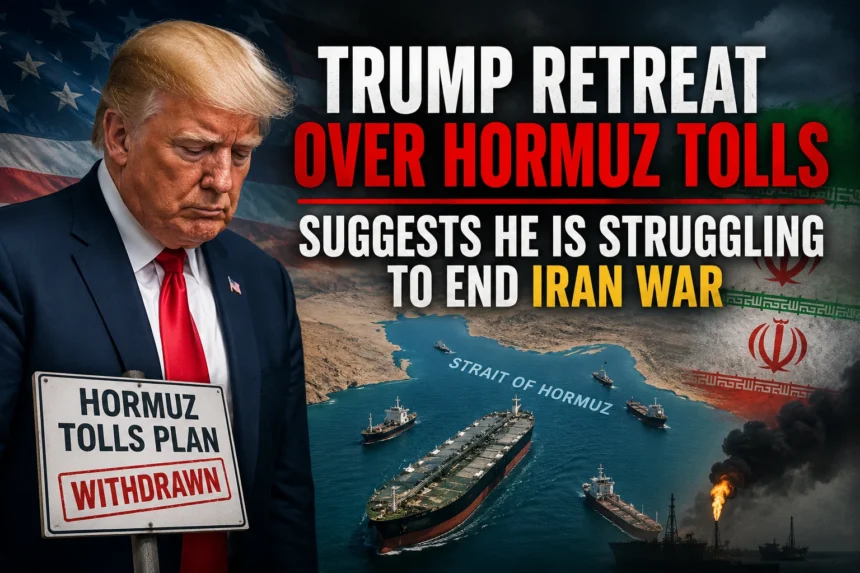
President Donald Trump’s decision to abandon his controversial proposal to impose a 20% transit toll on commercial vessels passing through the Strait of Hormuz marks a significant shift in U.S. policy during one of the most volatile periods in the Middle East. While the proposal was initially presented as a strategic measure to pressure Iran and demonstrate American control over one of the world’s most important maritime chokepoints, its withdrawal has raised fresh questions about Washington’s broader strategy and Trump’s ability to bring the prolonged Iran conflict to a decisive end. (The Economic Times)
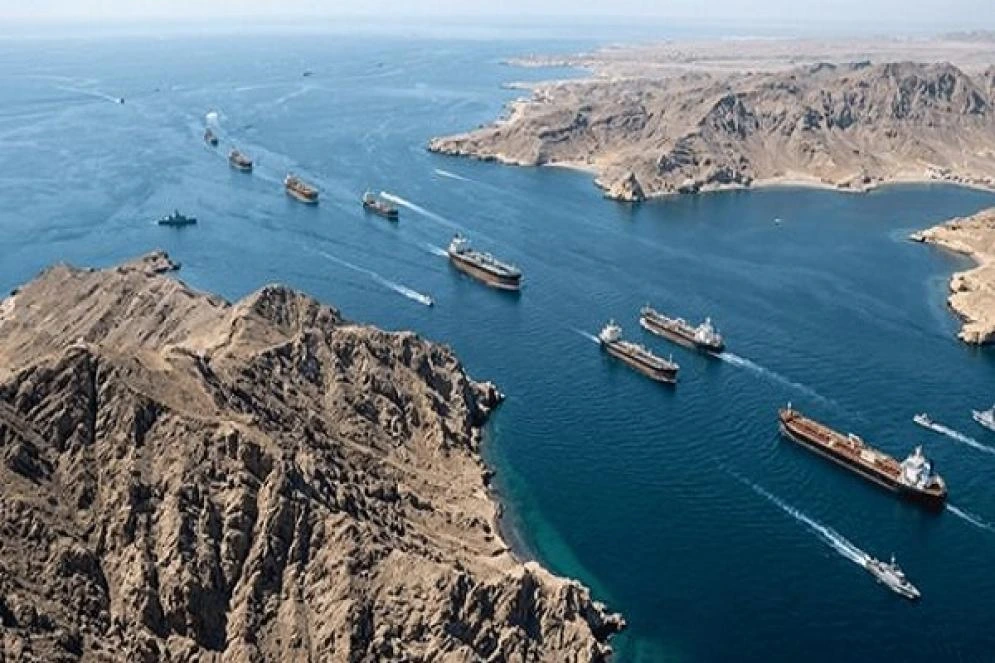
The Strait of Hormuz remains the world’s most strategically important energy corridor. Nearly one-fifth of global oil supplies move through this narrow passage connecting the Persian Gulf with international markets. Any disruption immediately affects oil prices, shipping insurance, freight costs, and global inflation.
Trump’s retreat from the toll proposal does not necessarily signal a reduction in military pressure. Instead, it reflects the growing complexity of balancing military objectives, diplomatic negotiations, economic stability, and domestic political considerations simultaneously.
Why Trump Proposed the Hormuz Toll
Earlier this week, President Trump announced an ambitious plan under which the United States would become the “guardian” of the Strait of Hormuz and collect a 20% transit fee from commercial shipping in exchange for guaranteeing maritime security.
The proposal had multiple objectives:
- Increase economic pressure on Iran.
- Finance U.S. naval operations.
- Demonstrate American military dominance.
- Discourage Iranian interference with commercial shipping.
- Strengthen Washington’s negotiating position.
However, the proposal immediately faced criticism from legal experts, shipping companies, Gulf allies, and international observers.
International maritime law generally does not permit unilateral toll collection in natural international waterways like the Strait of Hormuz. Critics argued that such a move would undermine decades of established freedom-of-navigation principles. (Al Jazeera)
Why Trump Backed Down
Within just a short period, the White House reversed course.
Instead of pursuing the toll proposal, Trump announced that the United States would focus on expanding investment partnerships with Gulf nations while maintaining military pressure on Iran.
Several reasons explain the reversal.
1. International Opposition
Major shipping companies questioned both the legality and practicality of the proposal.
European governments also expressed concern that charging ships for passage through an international waterway could create a dangerous global precedent. (Reuters)
2. Oil Market Concerns
Oil prices quickly reacted to the announcement.
Markets feared additional transportation costs, reduced shipping traffic, and further instability in global energy supplies.
With inflation already affecting many economies, higher energy prices would have carried major political consequences for Washington.
3. Gulf Diplomacy
Reports indicate Gulf allies proposed increased American investment opportunities instead of supporting the toll plan.
The White House ultimately chose economic cooperation over a policy that risked alienating regional partners.
Iran’s Strong Response
Iran quickly rejected Trump’s proposal.
Iranian officials argued that the United States has no legal authority to impose charges in the Strait of Hormuz and accused Washington of attempting to dominate regional maritime routes.
Tehran also mocked the proposed 20% fee, suggesting that if any charges were imposed, Iran—not the United States—would determine them. (The Times of India)
Although diplomatic rhetoric intensified, military tensions have remained high.
Iran continues to view the Strait as one of its strongest strategic bargaining tools against Western pressure.
The Iran War Remains Unresolved
Trump entered the conflict promising a rapid military success followed by a negotiated settlement.
Instead, the conflict has evolved into a prolonged confrontation.
Recent weeks have witnessed:
- Renewed missile exchanges.
- Naval confrontations.
- Attacks on commercial shipping.
- Continued U.S. airstrikes.
- Iranian retaliatory operations.
Despite temporary ceasefire efforts earlier this year, both sides remain far apart on core issues involving security guarantees, sanctions, maritime control, and regional influence. (Reuters)
Why Ending the War Is So Difficult
Several structural challenges prevent a quick resolution.
Iran Still Has Leverage
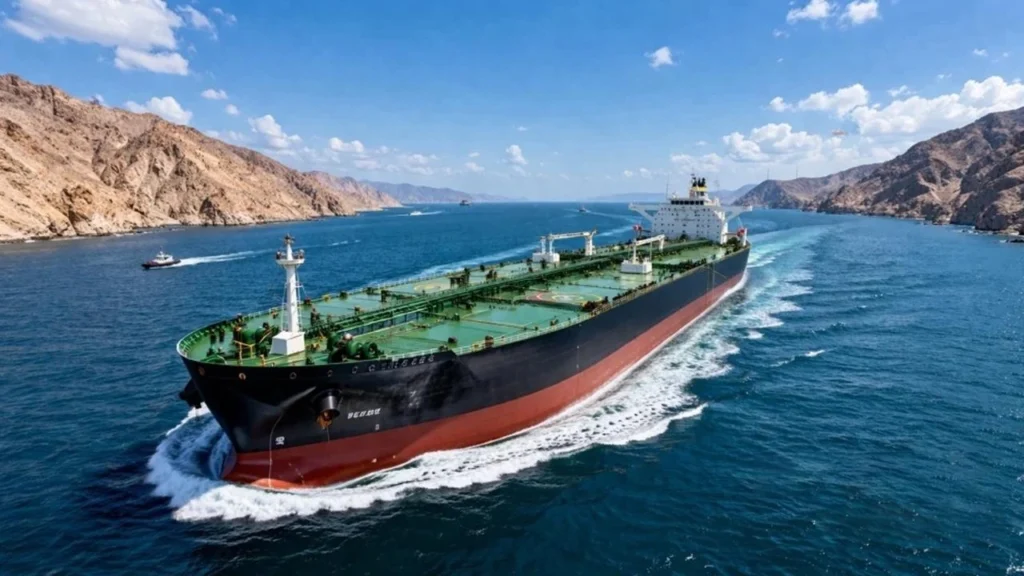
Although Iran has suffered military damage, it retains significant influence over maritime security in the Persian Gulf.
Even limited disruptions near the Strait of Hormuz can send oil markets into turmoil.
Domestic Political Pressure
President Trump also faces domestic challenges.
American voters increasingly expect reduced overseas military commitments while also demanding lower fuel prices and economic stability.
Balancing these competing expectations has become increasingly difficult.
Regional Actors Have Different Priorities
Saudi Arabia, the UAE, Oman, Israel, and European governments all have distinct strategic interests.
Achieving a unified diplomatic framework has proven extremely challenging.
Global Economic Impact
The continuing uncertainty surrounding Hormuz affects far more than the Middle East.
Oil Prices
Every escalation raises fears of supply disruptions.
Oil traders closely monitor military developments because even small interruptions can significantly increase crude prices.
Shipping Costs
Insurance premiums for vessels entering the Persian Gulf have increased.
Freight companies continue adjusting routes and risk assessments.
Inflation
Higher transportation and energy costs eventually affect consumers worldwide through rising fuel, food, and manufacturing prices. (Reuters)
Strategic Importance of the Strait of Hormuz
The Strait of Hormuz is only about 33 kilometers wide at its narrowest point, yet it carries roughly one-fifth of global petroleum trade.
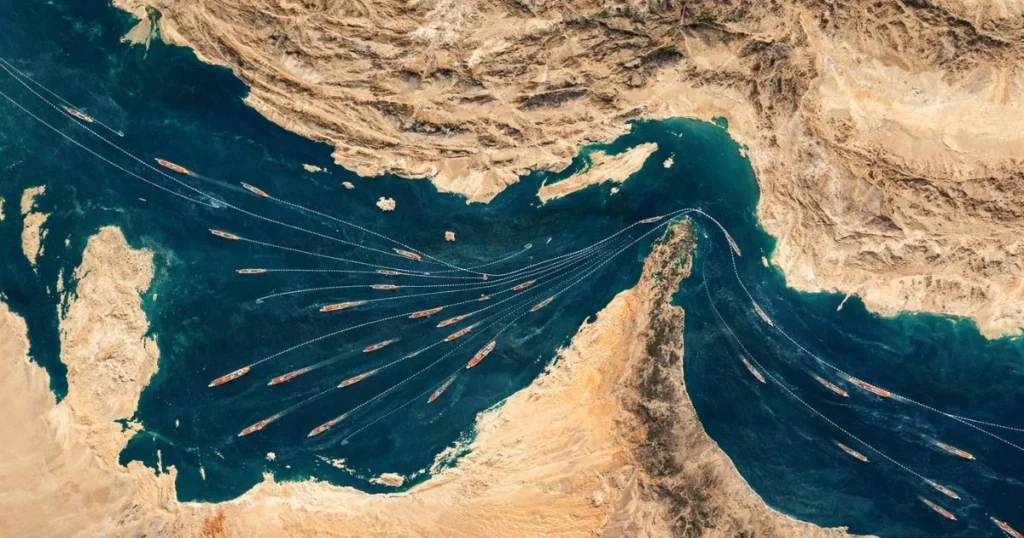
Major exporters using the route include:
- Saudi Arabia
- Iraq
- Kuwait
- Qatar
- United Arab Emirates
- Iran
Any prolonged disruption would have immediate consequences for Asia, Europe, and North America.
Countries such as India, China, Japan, and South Korea are particularly dependent on uninterrupted oil flows through the Strait.
Military Pressure Continues
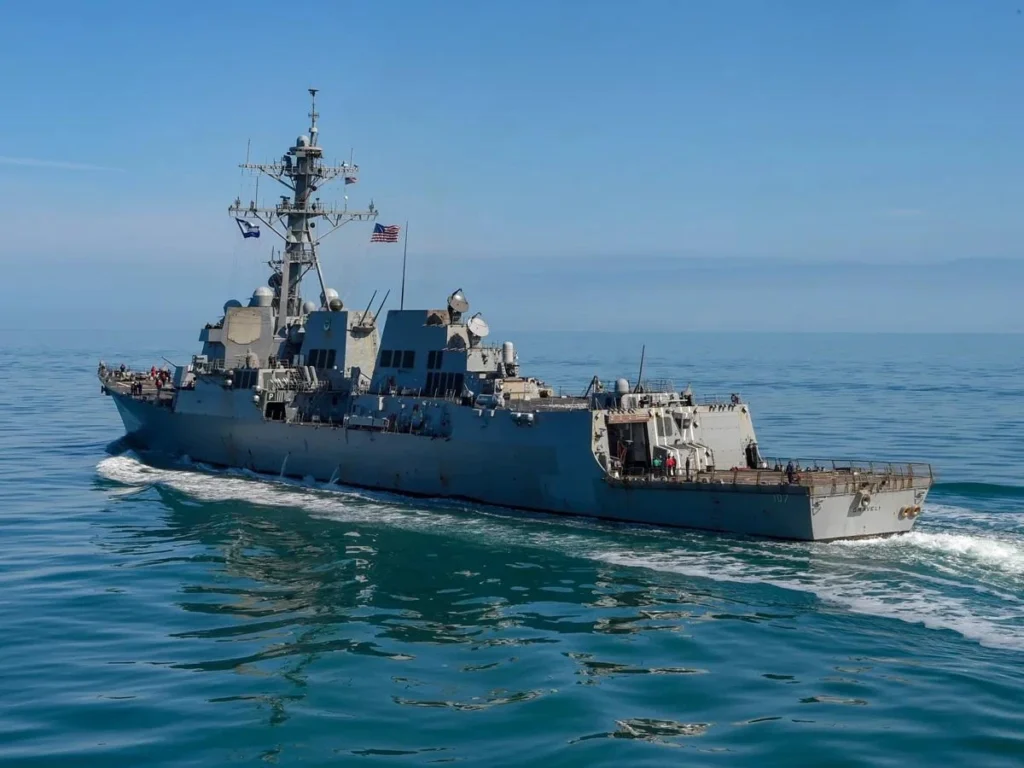
Although Trump abandoned the toll proposal, Washington has not reduced its military posture.
The United States continues:
- Naval patrols.
- Intelligence operations.
- Air surveillance.
- Strategic coordination with Gulf allies.
- Military pressure on Iranian capabilities.
At the same time, Iran continues testing Washington’s resolve through regional proxy networks and maritime activities.
This suggests that while one policy proposal has been abandoned, the broader strategic confrontation remains unchanged. (AP News)
International Reactions
Global reactions have been mixed.
European Allies
Many European governments support freedom of navigation but oppose unilateral toll systems.
Gulf Nations
Regional partners generally prefer diplomatic stability that protects energy exports without creating additional commercial uncertainty.
China and India
Both countries remain primarily concerned with uninterrupted energy imports and avoiding prolonged disruptions to global shipping.
What Happens Next?
Several possible scenarios remain.
Scenario 1: Renewed Negotiations
Regional mediators such as Oman may attempt to restart diplomatic discussions.
Scenario 2: Continued Limited Conflict
The most likely outcome is an extended period of intermittent military exchanges without full-scale escalation.
Scenario 3: Broader Regional Escalation
Any major attack on energy infrastructure or commercial shipping could rapidly expand the conflict.
Analysts increasingly believe that neither Washington nor Tehran currently seeks a full regional war, but both continue using military pressure to strengthen negotiating positions.
Conclusion
Trump’s decision to withdraw the proposed Strait of Hormuz toll illustrates the limits of coercive diplomacy in one of the world’s most strategically sensitive regions. While the proposal aimed to strengthen U.S. leverage over Iran, it instead highlighted the legal, economic, and diplomatic obstacles facing Washington.
The reversal may reduce immediate pressure on global shipping markets, but it does little to resolve the deeper strategic confrontation between the United States and Iran. Military operations continue, ceasefire efforts remain fragile, and the Strait of Hormuz remains at the center of global geopolitical tensions.
For now, Trump’s retreat represents less of a peace breakthrough than a tactical adjustment. The broader challenge of ending the war in Iran—and securing lasting stability in the Gulf—remains unresolved.
Read More : – Iran’s New Strait of Hormuz Transit Charges Raise Global Concerns Over Oil Supply, Shipping Costs, and Energy Security