
Non-Compliance of IT Rules, AI-Generated Content: Why the Centre Summoned Meta’s Global Head and Instagram Chief.
By PaperPatrika Technology Desk
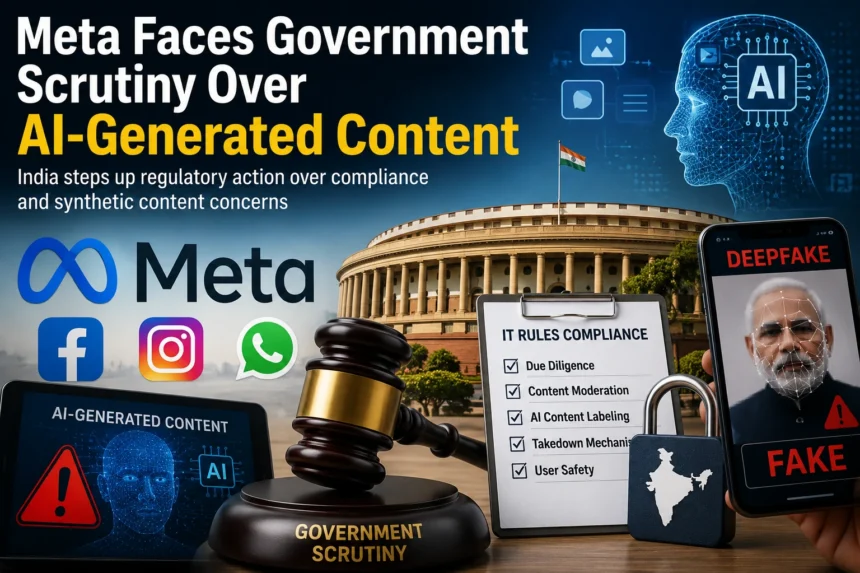
In a significant escalation of India’s regulatory scrutiny of global technology companies, the Ministry of Electronics and Information Technology (MeitY) has summoned Meta’s Global Affairs President Joel Kaplan and Instagram head Adam Mosseri over concerns relating to compliance with India’s Information Technology (IT) Rules and the handling of synthetically generated or AI-generated content on Meta-owned platforms.
The development follows controversy surrounding the temporary removal of an Instagram reel posted by Prime Minister Narendra Modi, which Meta later described as an operational error and restored. However, government officials indicated that the incident was only one aspect of broader concerns regarding Meta’s compliance with India’s digital governance framework. (Hindustan Times)
Why Has the Government Summoned Meta?
According to officials familiar with the matter, MeitY is seeking explanations on two major issues:
- Alleged non-compliance with India’s IT Rules.
- The management and moderation of AI-generated (synthetically generated) content on Meta’s platforms, including Facebook and Instagram.
Officials stated that repeated discussions with Meta’s India policy team had not adequately addressed the government’s concerns, prompting the ministry to directly summon senior global executives. (Hindustan Times)
The PM Modi Video Incident
The immediate trigger was the temporary removal of an Instagram reel featuring Prime Minister Narendra Modi.
The video reportedly discussed the NEET paper leak issue and outlined the government’s intention to introduce stricter punishment and fast-track courts against those responsible.
Meta later acknowledged that the removal occurred due to an error, stating that the content had been restored after the mistake was identified. Reports also indicated that an automated filtering system may have been responsible for the erroneous moderation. (Hindustan Times)
While Meta described the incident as accidental, Indian authorities emphasized that the meeting would address broader platform governance rather than focusing solely on a single post.
Growing Concern Over AI-Generated Content
Artificial intelligence has transformed content creation, enabling users to generate realistic images, videos, voices, and text.
While these technologies have legitimate applications, they also increase the risk of:
- Deepfakes
- Election misinformation
- Identity impersonation
- Financial fraud
- Fake news
- Manipulated public speeches
- Misleading political content
Governments worldwide are developing regulatory frameworks to ensure platforms can rapidly detect, label, and remove harmful synthetic media.
India has emerged as one of the first major digital markets to introduce detailed legal obligations specifically targeting synthetically generated information. (Press Information Bureau)
India’s New IT Rules on Synthetic Content
Earlier this year, the Centre strengthened the Information Technology Rules by introducing specific provisions for synthetically generated information (SGI).
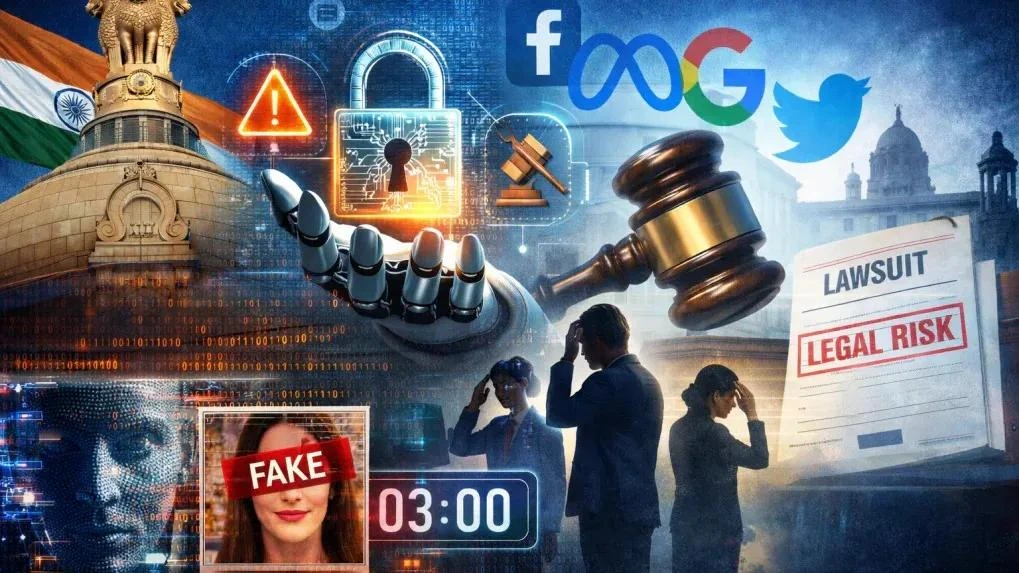
The amended framework requires intermediaries to:
- Exercise enhanced due diligence.
- Clearly label qualifying AI-generated media.
- Prevent publication of unlawful synthetic content.
- Respond rapidly to official takedown requests.
- Deploy technical systems capable of identifying prohibited content.
The government has also issued multiple advisories reminding social media companies of their statutory obligations under the IT Act and IT Rules. (Press Information Bureau)
Why Meta Faces Particular Scrutiny
Meta operates some of India’s largest digital platforms:
- Threads
With hundreds of millions of Indian users, decisions made by Meta’s moderation systems can significantly influence public discourse.
Government officials have increasingly emphasized that platform operators must demonstrate stronger accountability, especially when automated moderation systems affect public-interest communications or fail to curb harmful AI-generated content. (Hindustan Times)
The Challenge of Automated Moderation
Modern social media platforms rely extensively on artificial intelligence to review billions of posts.
Automated systems help identify:
- Spam
- Hate speech
- Copyright violations
- Graphic violence
- Deepfakes
- Terror-related material
However, these systems are not perfect.
False positives—where legitimate content is mistakenly removed—remain a persistent challenge. The temporary removal of the Prime Minister’s video has renewed debate over the transparency and accountability of automated moderation tools.
Balancing rapid enforcement with protection of lawful expression remains one of the industry’s most complex technical and policy challenges.
Implications for Global Technology Companies
The summons reflects India’s increasingly assertive approach toward regulating multinational technology firms.
Rather than relying solely on local representatives, the government has directly engaged senior global executives when issues are considered significant.
This indicates that India expects platform-level policy decisions affecting Indian users to receive attention from top international leadership rather than being handled exclusively through regional offices. (Hindustan Times)
Broader Global Debate
The issues raised in India mirror debates taking place across Europe, the United States, Australia, and other jurisdictions.
Governments are increasingly asking:
- How should AI-generated content be identified?
- Who bears responsibility for harmful deepfakes?
- How quickly should platforms remove illegal synthetic media?
- How transparent should recommendation algorithms become?
- What safeguards should exist for public-interest content?
Meta, Google, X, TikTok, and other major platforms face growing regulatory pressure to improve both transparency and accountability.
What Meta Has Said
Meta acknowledged that the Prime Minister’s video was removed in error and restored after identifying the mistake.
The company has not publicly commented in detail on the government’s broader concerns regarding AI-generated content or the summons itself.
Meta has repeatedly stated that it continues investing heavily in AI moderation, content integrity, and systems designed to identify manipulated media across its platforms.
Why This Matters for Users
For ordinary users, creators, journalists, businesses, and public institutions, the outcome of these discussions could shape future platform rules.
Possible developments include:
- Stronger AI content labeling.
- Faster removal of illegal deepfakes.
- Improved appeals against mistaken removals.
- Greater transparency in automated moderation.
- Additional compliance obligations for technology companies.
As AI-generated content becomes increasingly realistic, regulators worldwide are expected to introduce more comprehensive oversight mechanisms.
Conclusion
The Centre’s decision to summon Meta’s Global Affairs President Joel Kaplan and Instagram chief Adam Mosseri represents more than a response to one mistakenly removed video. It reflects India’s broader effort to ensure that global technology platforms comply with domestic digital laws and responsibly manage the rapidly growing challenge of AI-generated content.
As artificial intelligence continues to reshape online communication, the relationship between governments and technology companies is entering a new phase—one focused on transparency, accountability, and user protection. The discussions between MeitY and Meta are therefore likely to have implications that extend well beyond India, potentially influencing how major social media platforms govern AI-generated content in markets around the world.
Also Read: –
Centre Plans Uniform Rules for WhatsApp, Telegram and Signal After Username Feature Controversy
India and Japan Sign Landmark AI, Defence, and Energy Agreements to Strengthen Strategic Partnership in 2026