


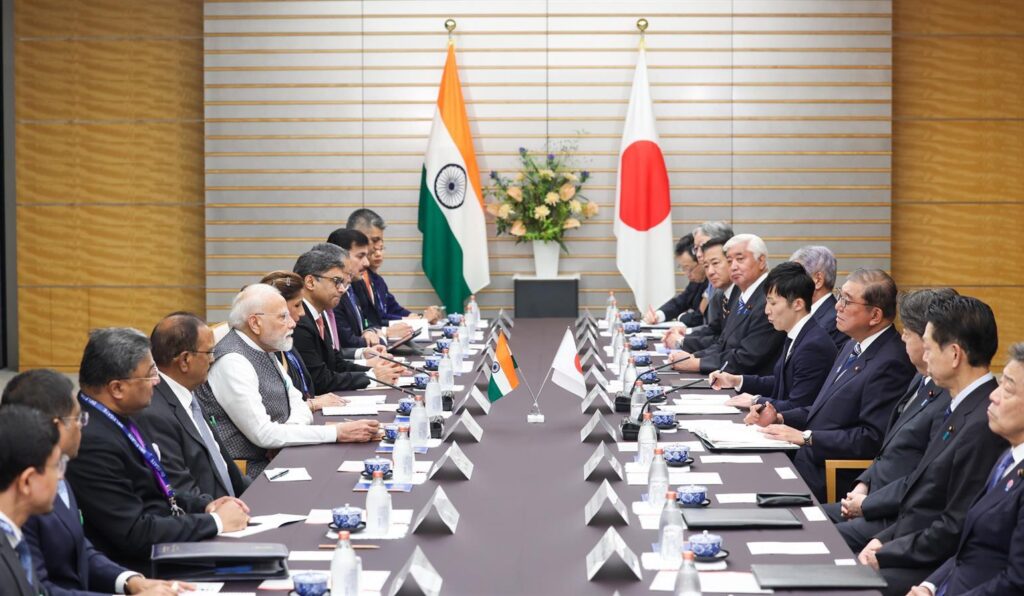
India and Japan have taken another significant step toward deepening their long-standing strategic partnership during the 16th India–Japan Annual Summit, held in New Delhi on 2 July 2026. Prime Minister Narendra Modi and Japanese Prime Minister Sanae Takaichi held comprehensive discussions covering a wide range of issues, including artificial intelligence (AI), defence cooperation, economic security, clean energy, semiconductors, critical minerals, supply chains, and regional stability in the Indo-Pacific.
The summit resulted in several agreements aimed at strengthening cooperation in emerging technologies, enhancing economic resilience, promoting sustainable development, and expanding bilateral investment. Analysts view the meeting as an important milestone in advancing one of Asia’s most influential strategic partnerships.
Strengthening a Special Strategic Partnership
India and Japan have shared a Special Strategic and Global Partnership for more than two decades. During the summit, both leaders reaffirmed their commitment to expanding cooperation beyond traditional diplomacy and trade.
The discussions focused on addressing common global challenges such as technological competition, supply chain disruptions, climate change, regional security, and sustainable economic growth.
Both governments emphasized that trusted partnerships among democratic nations are becoming increasingly important in today’s rapidly changing geopolitical environment.
Artificial Intelligence Takes Center Stage
One of the most significant outcomes of the summit was the decision to deepen collaboration in Artificial Intelligence (AI).
India and Japan agreed to work together in areas such as:
- Responsible AI development
- AI research and innovation
- Digital transformation
- Cybersecurity
- Data governance
- Smart manufacturing
- AI skill development
- Industrial automation
India’s rapidly growing digital ecosystem and large pool of software professionals complement Japan’s strengths in advanced manufacturing, robotics, and precision engineering. Experts believe this partnership could help both countries become global leaders in trustworthy AI technologies.
Expanding Defence Cooperation
Defence cooperation emerged as another major focus of the summit.
The two countries agreed to strengthen collaboration in:
- Defence technology
- Joint research and development
- Maritime security
- Defence equipment cooperation
- Military exchanges
- Joint naval exercises
According to official announcements, India and Japan also signed a new agreement to promote defence co-development, reflecting their growing security partnership amid changing regional dynamics in the Indo-Pacific.
Energy Security and Green Growth
With global energy markets facing continued uncertainty, both countries agreed to expand cooperation in clean and sustainable energy.
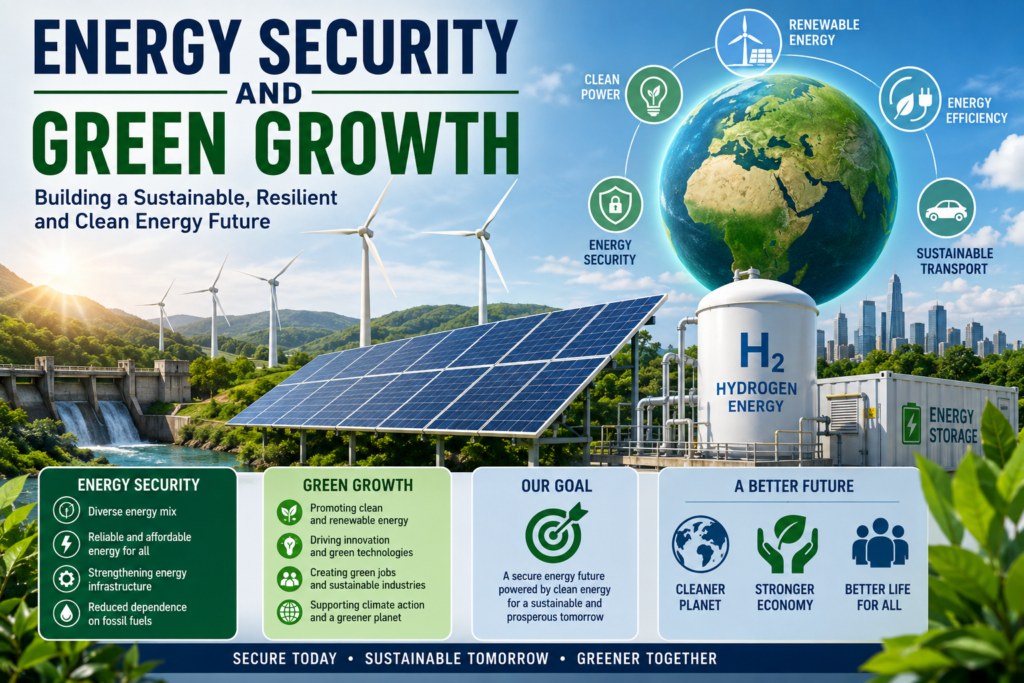
Priority areas include:
- Green hydrogen
- Liquefied Natural Gas (LNG)
- Renewable energy
- Battery storage technologies
- Energy efficiency
- Clean transportation
- Secure energy supply chains
Both leaders emphasized that stronger energy cooperation would improve long-term energy security while supporting global climate goals.
Investment and Economic Cooperation
Japan reaffirmed its commitment to increasing investment in India’s fast-growing economy.
Future investments are expected across several sectors:
- Infrastructure
- Manufacturing
- Electronics
- Artificial Intelligence
- Semiconductors
- Green technology
- Smart cities
- Logistics
Japanese companies continue to view India as one of the world’s most promising investment destinations due to its large consumer market, skilled workforce, and expanding manufacturing base.
Both governments expressed confidence that bilateral trade and investment would continue to grow significantly over the coming years.
Semiconductors and Critical Minerals
Recognizing the importance of resilient global supply chains, India and Japan announced closer cooperation in semiconductor manufacturing and critical minerals.
Areas of collaboration include:
- Chip manufacturing
- Semiconductor research
- Battery materials
- Rare earth minerals
- Electronics supply chains
- Industrial innovation
The initiative aims to reduce supply chain vulnerabilities while supporting advanced manufacturing industries in both countries.
Shared Vision for the Indo-Pacific
The summit also highlighted the shared commitment of both countries to a Free, Open, Inclusive, and Rules-Based Indo-Pacific.
India and Japan agreed to strengthen cooperation in:
- Maritime security
- Freedom of navigation
- Regional peace
- Disaster resilience
- Economic connectivity
- Multilateral cooperation
As members of the Quad partnership alongside the United States and Australia, both countries reaffirmed their support for maintaining peace, stability, and secure maritime trade routes throughout the Indo-Pacific region.
Mumbai–Ahmedabad High-Speed Rail Project
One of the most visible symbols of India–Japan cooperation remains the Mumbai–Ahmedabad High-Speed Rail Project.
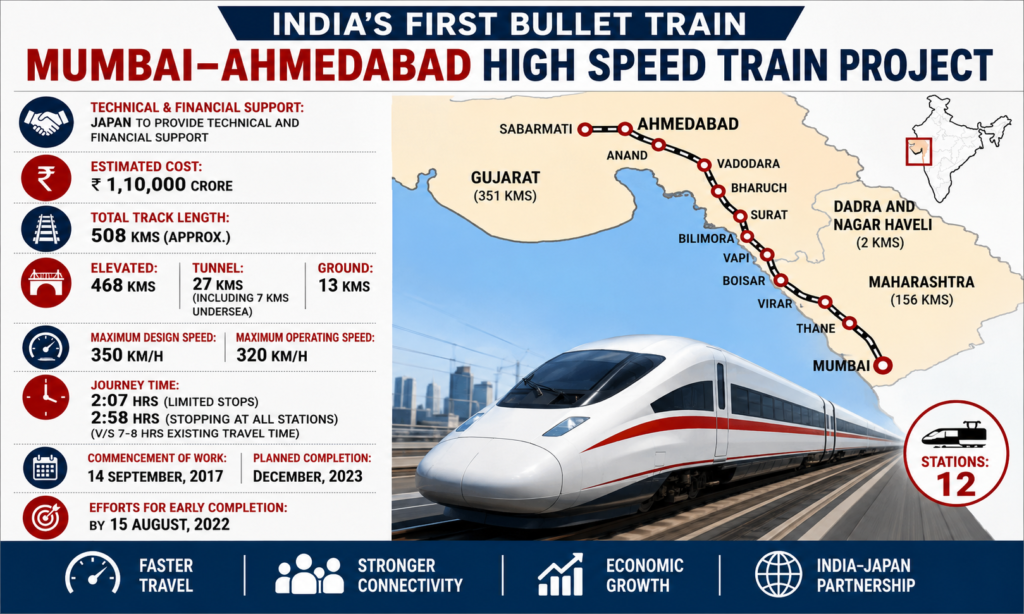
The project:
- Uses Japan’s world-renowned Shinkansen technology.
- Represents India’s first high-speed rail corridor.
- Demonstrates long-term technological collaboration.
- Supports infrastructure modernization.
Both governments reiterated their commitment to ensuring the successful implementation of the project and exploring future opportunities for similar collaborations.
Benefits for Both Countries
Benefits for India
- Access to advanced technology
- Increased foreign investment
- Job creation
- Stronger manufacturing sector
- AI and digital innovation
- Improved infrastructure
Benefits for Japan
- Access to one of the world’s fastest-growing economies
- Highly skilled workforce
- Diversified supply chains
- Expanded investment opportunities
- Stronger presence in South Asia
The partnership is expected to generate long-term economic and technological benefits for both nations.
Global Significance
Analysts believe the summit carries importance beyond bilateral relations.
The agreements could contribute to:
- Global AI governance
- Supply chain resilience
- Energy security
- Regional stability
- Climate action
- Technological innovation
- Economic resilience
As geopolitical competition intensifies, closer India–Japan cooperation is increasingly viewed as a stabilizing force in the Indo-Pacific region.
The Road Ahead
Both governments agreed to continue expanding cooperation in several emerging sectors, including:
- Artificial Intelligence
- Space technology
- Healthcare innovation
- Biotechnology
- Green energy
- Digital infrastructure
- Advanced manufacturing
- Education and skill development
- Smart cities
Officials also agreed to strengthen people-to-people exchanges, academic collaboration, and business partnerships.
Conclusion
The 2026 India–Japan Summit marks another important milestone in the growing relationship between the two Asian democracies. By expanding cooperation in artificial intelligence, defence, energy, semiconductors, critical minerals, infrastructure, and economic investment, both countries have demonstrated their commitment to building a future-oriented strategic partnership.
As global challenges continue to evolve, India and Japan are positioning themselves as trusted partners capable of driving technological innovation, sustainable development, and regional stability. The agreements reached during the summit are expected to create new opportunities for economic growth, strengthen strategic cooperation, and reinforce their shared vision for a secure, prosperous, and resilient Indo-Pacific.