

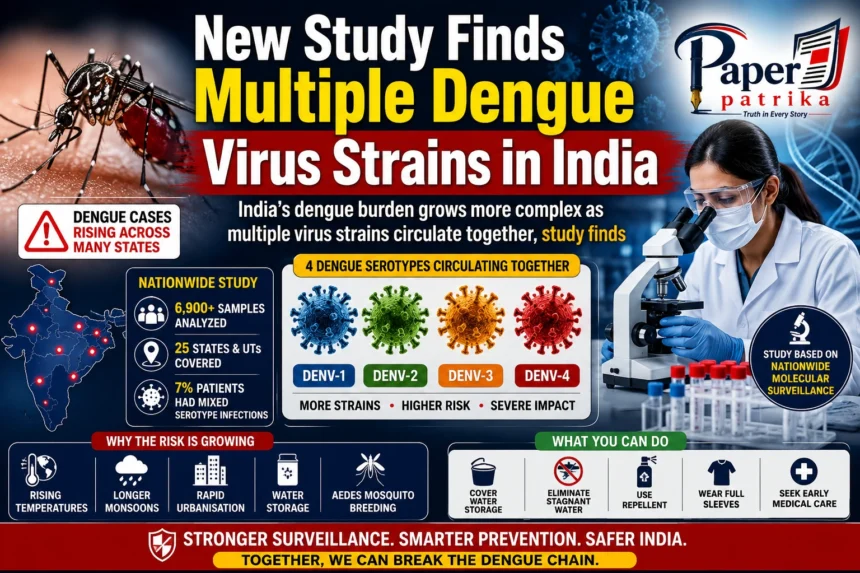
India’s Dengue Burden Grows More Complex as Multiple Virus Strains Circulate Together, Study Finds.
By PaperPatrika Health Desk
India’s fight against dengue is entering a more challenging phase as new scientific evidence reveals that multiple dengue virus strains are circulating simultaneously across many parts of the country. Researchers warn that this changing pattern could make outbreaks more difficult to predict, increase the risk of severe disease in some patients, and complicate vaccination and public health strategies.
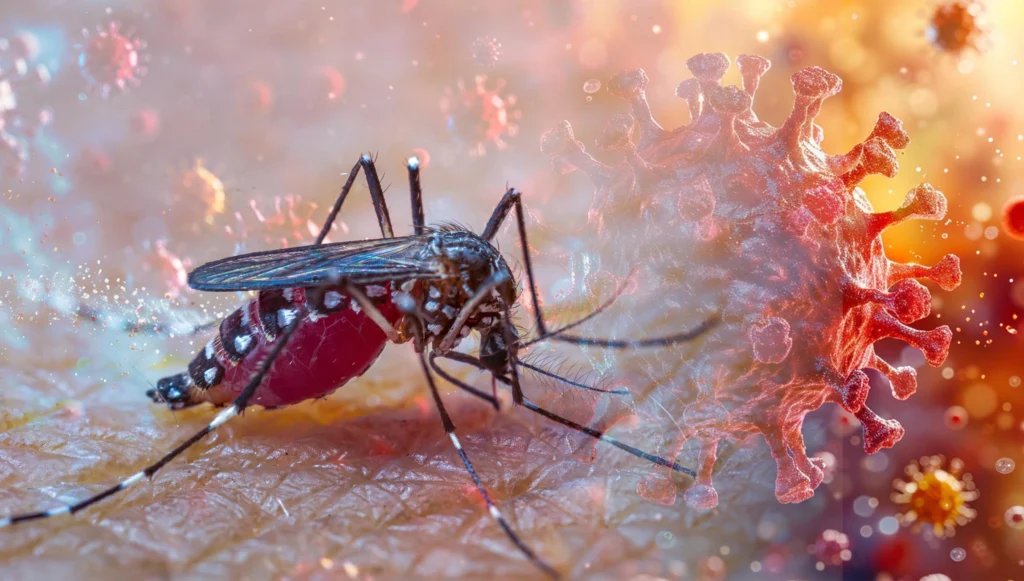
The findings emerge from recent molecular surveillance studies conducted across India, which show that the country has become hyperendemic for dengue—meaning several virus serotypes are now circulating together rather than one dominant strain replacing another. Scientists say this trend highlights the urgent need for continuous genomic surveillance, improved mosquito control, early diagnosis, and expanded public health preparedness. (ScienceDirect)
A New Picture of Dengue in India
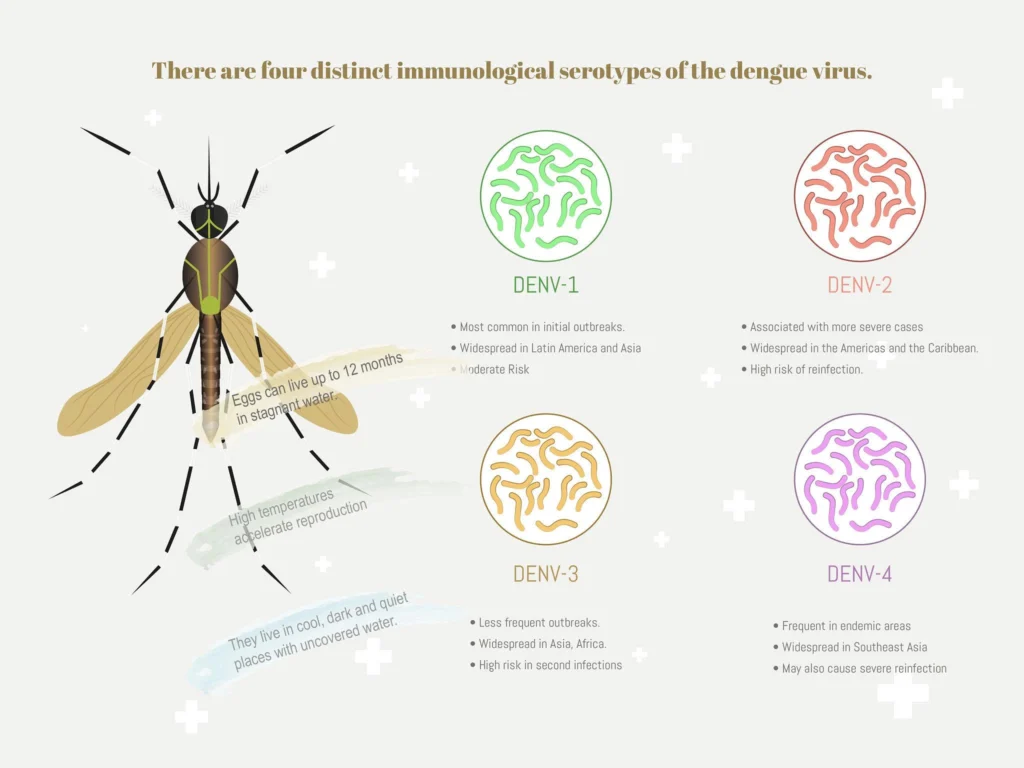
Dengue is caused by four closely related virus serotypes:
- DENV-1
- DENV-2
- DENV-3
- DENV-4
An infection with one serotype usually provides long-term immunity only against that specific strain. A person can still become infected later by another serotype, and such secondary infections sometimes carry a higher risk of severe dengue because of a biological process known as antibody-dependent enhancement (ADE). (The Times of India)
Earlier outbreaks in India were often dominated by one or two serotypes. However, the latest surveillance indicates that several serotypes are now circulating simultaneously in multiple regions.
Nationwide Surveillance Reveals Co-Circulation
One of the largest molecular surveillance studies conducted through India’s Virus Research and Diagnostic Laboratory (VRDL) network analysed nearly 6,900 laboratory-confirmed dengue samples collected from 25 states and Union Territories between 2023 and 2025.
Researchers found:
- DENV-2 remained the most common serotype nationally.
- Several regions reported simultaneous circulation of all four dengue serotypes.
- Around 7% of patients showed concurrent infection with more than one dengue serotype.
- Mixed infections were associated with higher rates of thrombocytopenia, joint pain and haemorrhagic complications compared with single-serotype infections. (ScienceDirect)
Scientists believe these findings represent a significant shift in India’s dengue epidemiology.
Central India Study Highlights Hyperendemicity
Another molecular surveillance study from central India reported similar findings.
Researchers identified circulation of:
- DENV-1
- DENV-2
- DENV-3
DENV-2 accounted for about half of the identified infections, while more than one-quarter of positive cases involved mixed serotype infections.
Although most patients recovered successfully, researchers noted that the presence of multiple circulating serotypes demonstrates the hyperendemic nature of dengue transmission in India. (Frontiers)
Why Multiple Strains Matter
Experts explain that the simultaneous circulation of multiple serotypes creates several public health challenges.
Increased Risk of Secondary Infection
Because infection with one strain does not protect against the others, people remain vulnerable throughout their lives.
A second infection caused by another serotype may trigger stronger immune reactions that can increase the likelihood of severe dengue in susceptible individuals. (The Times of India)
More Difficult Outbreak Prediction
When several serotypes circulate together, disease patterns become less predictable.
Instead of a single dominant virus driving an outbreak, different regions may experience varying transmission dynamics, making forecasting and preparedness more complicated. (ScienceDirect)
Vaccine Challenges
India recently approved its first dengue vaccine, QDENGA (TAK-003), for eligible age groups. However, researchers stress that an ideal dengue vaccine must generate balanced protection against all four serotypes.
Uneven protection could leave individuals vulnerable if another strain becomes dominant in their community. Vaccination therefore complements—but does not replace—mosquito control and early diagnosis. (The Times of India)
Climate and Urbanisation Continue to Fuel Spread
Researchers also point to environmental changes contributing to India’s growing dengue burden.
Several factors are expanding mosquito habitats:
- Rising temperatures
- Longer monsoon seasons
- Rapid urbanisation
- Water storage practices
- Construction activity
- Increased population density
These conditions allow Aedes aegypti mosquitoes to breed more efficiently and transmit dengue across wider geographic areas. The WHO South-East Asia Regional Office has also highlighted climate change and co-circulation of all four serotypes as major drivers making dengue outbreaks harder to predict and control. (World Health Organization)
Genomic Surveillance Becomes Essential
Scientists increasingly recommend genomic surveillance alongside traditional disease reporting.
Sequencing dengue viruses allows researchers to:
- Detect emerging serotypes.
- Monitor viral evolution.
- Identify mixed infections.
- Track geographic spread.
- Support vaccine policy.
- Improve outbreak forecasting.
Public health experts believe India should strengthen genomic surveillance networks across all states to respond more quickly to changing transmission patterns. (World Health Organization)
What This Means for Patients
Doctors emphasize that most dengue infections remain mild when diagnosed early and managed appropriately.
Common symptoms include:
- High fever
- Severe headache
- Pain behind the eyes
- Muscle and joint pain
- Skin rash
- Nausea
- Vomiting
Warning signs requiring urgent medical attention include:
- Persistent vomiting
- Severe abdominal pain
- Bleeding gums
- Blood in vomit or stool
- Difficulty breathing
- Extreme weakness
- Sudden drop in platelet count
Early medical evaluation remains critical, particularly during the monsoon season.
Importance of Mosquito Control
Despite advances in vaccines and diagnostics, mosquito control remains the primary defence against dengue.
Health authorities recommend:
- Eliminating stagnant water.
- Covering water storage containers.
- Using mosquito repellents.
- Installing window screens.
- Wearing full-sleeved clothing.
- Community clean-up campaigns.
- Regular municipal vector-control programmes.
Experts stress that these preventive measures remain effective regardless of which dengue serotype is circulating.
Future Research Directions
Researchers say several important questions remain unanswered:
- Why certain serotypes dominate in different years.
- How mixed infections influence disease severity.
- Whether changing virus genetics affect vaccine performance.
- How climate change may alter future transmission.
- Which surveillance strategies best predict outbreaks.
Ongoing nationwide molecular surveillance is expected to provide answers that could guide future vaccination programmes and public health policy. (Annual Reviews)
Public Health Implications
India continues to shoulder one of the world’s largest dengue burdens. The discovery that multiple virus strains are circulating simultaneously reinforces the need for a more sophisticated public health response.
Experts believe future dengue control must integrate:
- Genomic surveillance
- Rapid diagnostics
- Vaccination where recommended
- Strong mosquito-control programmes
- Community awareness
- Climate-sensitive disease forecasting
Such an integrated strategy could help reduce severe disease, improve outbreak preparedness and protect vulnerable populations.
Conclusion
India’s dengue landscape is becoming increasingly complex as multiple virus serotypes circulate together across large parts of the country. Recent scientific studies reveal widespread co-circulation of dengue strains, occasional mixed infections and regional variations that could influence disease severity and outbreak patterns. While DENV-2 remains the predominant strain in many regions, researchers warn that the simultaneous presence of multiple serotypes demands stronger molecular surveillance, sustained mosquito control and continued public awareness.
As India strengthens its diagnostic capacity, expands genomic monitoring and begins incorporating dengue vaccination into public health policy, experts believe the country’s ability to manage future outbreaks will depend on combining scientific innovation with effective community-level prevention. The evolving nature of the virus underscores that dengue is no longer just a seasonal disease but an increasingly dynamic public health challenge requiring coordinated national action.
Also Read: –
India’s first dengue vaccine arrives with a safety caveat.