

Centre’s Disaster Management Strategy During the 2026 Monsoon
By PaperPatrika | National | August 2, 2026
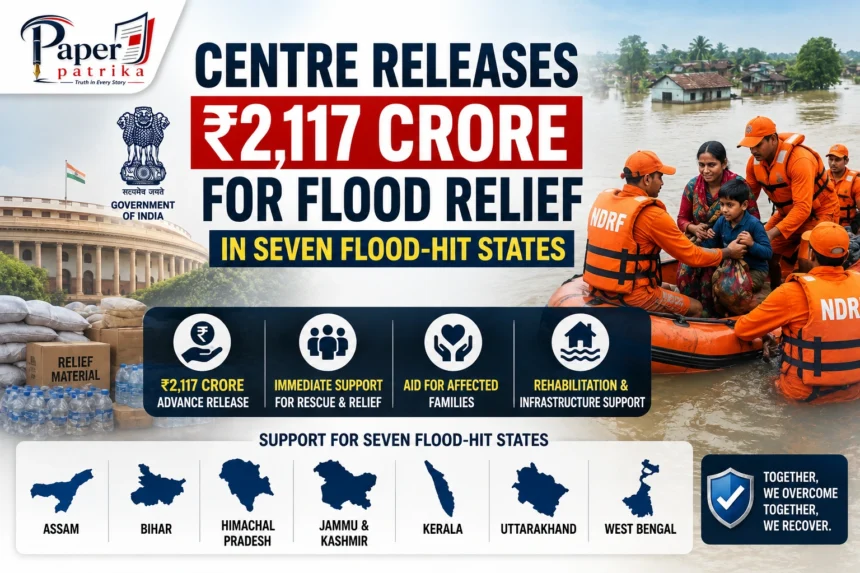
The Union Government has approved the advance release of ₹2,117.85 crore as the Central share of the State Disaster Response Fund (SDRF) to support seven States severely affected by floods during the 2026 southwest monsoon. The decision, approved by Union Home Minister Amit Shah, aims to ensure that State governments have immediate financial resources to carry out rescue, relief, rehabilitation, and restoration work without waiting for the normal release schedule. (The Economic Times)
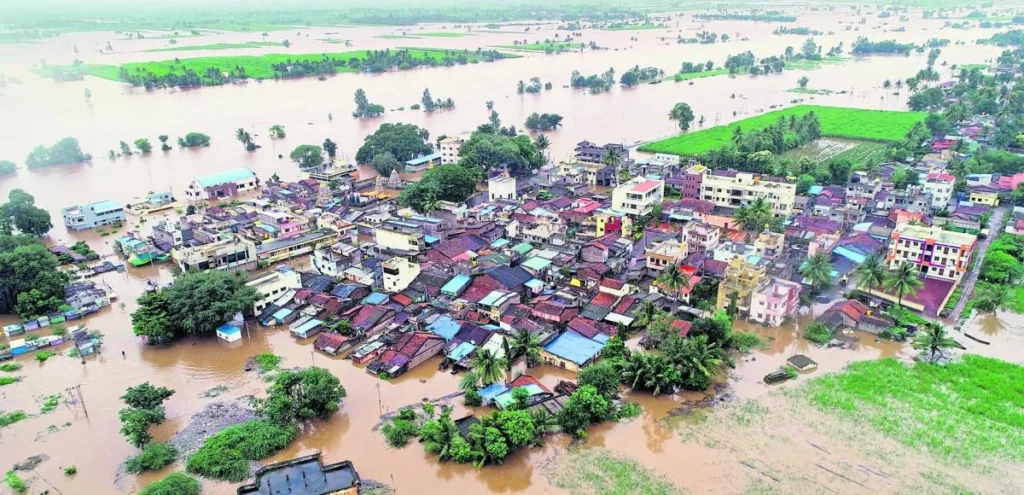
The advance allocation comes as several parts of the country continue to battle heavy rainfall, overflowing rivers, landslides, and widespread flooding that have displaced thousands of families and damaged roads, bridges, agricultural land, and public infrastructure. By releasing funds ahead of schedule, the Centre hopes to strengthen the response capacity of affected States during one of the most challenging phases of the monsoon season. (The Economic Times)
Timely Financial Support During Peak Monsoon
Every year, India experiences intense monsoon rainfall between June and September. While the rains are vital for agriculture and water security, they also trigger floods, landslides, flash floods, and river erosion across several regions.
Recognising the urgency of the situation, the Ministry of Home Affairs approved the early release of SDRF funds rather than waiting for the second scheduled instalment. The move enables State governments to immediately finance evacuation operations, temporary shelters, food distribution, medical services, drinking water supply, restoration of essential infrastructure, and compensation under approved disaster relief norms. (The Economic Times)
What is the State Disaster Response Fund (SDRF)?
The State Disaster Response Fund (SDRF) is the primary financial mechanism available to State governments for providing immediate relief during notified natural disasters such as floods, cyclones, earthquakes, landslides, droughts, cloudbursts, hailstorms, and avalanches.
Under the Disaster Management framework:
- General category States receive 75% of SDRF funding from the Central Government.
- Northeastern and Himalayan States receive 90% Central assistance.
- Funds are normally released in two equal instalments every financial year.
- In exceptional circumstances, the Centre may release funds in advance to help States respond more quickly to disasters.
Why the Advance Release Matters
The 2026 southwest monsoon has caused extensive flooding across multiple regions, leading to:
- Damage to roads, bridges, and public utilities.
- Inundation of agricultural fields.
- Displacement of thousands of residents.
- Disruptions in transportation and communication.
- Increased demand for rescue boats, relief camps, and medical assistance.
By releasing over ₹2,117 crore ahead of schedule, the Centre aims to ensure that affected States do not face financial constraints while responding to the crisis. (The Economic Times)
Relief Operations Underway
State governments, in coordination with the National Disaster Response Force (NDRF), State Disaster Response Forces (SDRF), local administrations, police, and armed forces, have intensified rescue and relief efforts.
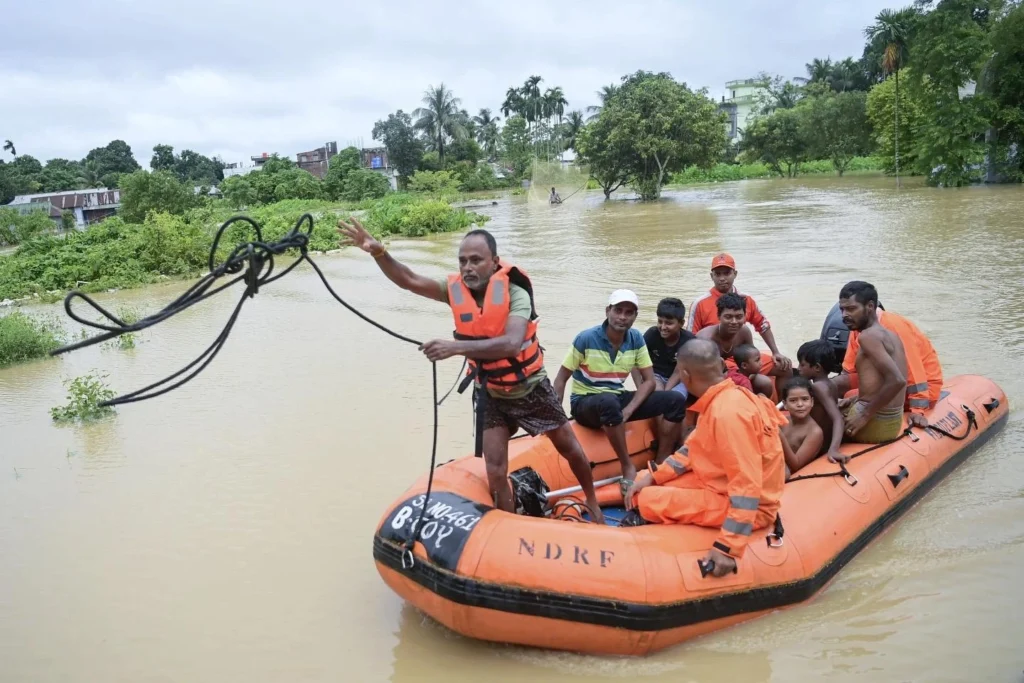
Current operations include:
- Evacuating residents from flood-prone areas.
- Operating temporary relief camps.
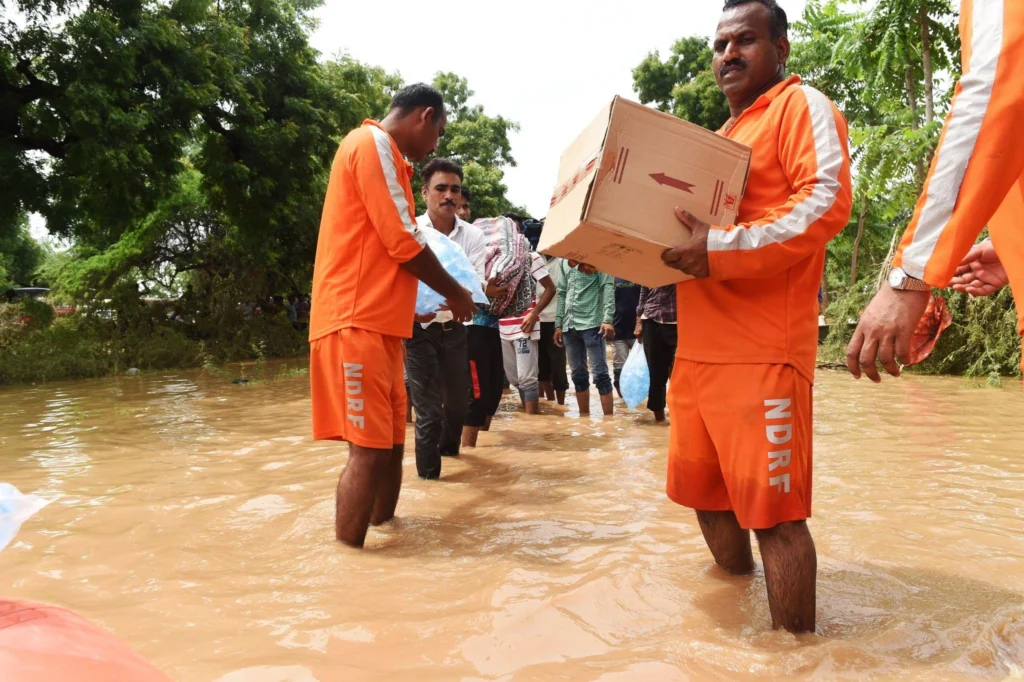
- Providing food, drinking water, medicines, and sanitation facilities.
- Restoring electricity and road connectivity.
- Assessing crop and infrastructure damage.
- Supporting vulnerable communities, including children, elderly citizens, and persons with disabilities.
The advance funding is expected to accelerate these ongoing efforts and reduce delays in emergency spending. (The Economic Times)
Impact on Agriculture and Infrastructure
Floods continue to pose serious challenges to India’s economy.
Agricultural losses often include damaged standing crops, erosion of fertile land, livestock losses, and disruption of irrigation systems.
Infrastructure damage extends to:
- National and State highways.
- Rural roads.
- Bridges and culverts.
- Schools and health centres.
- Water supply systems.
- Electricity transmission networks.
Quick financial support allows States to begin restoration work even before detailed damage assessments are completed.
Centre’s Disaster Management Strategy
The Union Government has repeatedly stated that disaster management involves three parallel priorities:
- Saving lives through rapid rescue operations.
- Providing immediate humanitarian relief.
- Restoring essential services and rebuilding damaged infrastructure.
Financial assistance through SDRF complements the deployment of NDRF teams, helicopters, engineering units, and other logistical resources whenever required.
Climate Change Increasing Flood Risks
Experts note that climate change is contributing to more frequent and intense rainfall events across South Asia.
Rapid urbanisation, encroachment on floodplains, inadequate drainage systems, and changing weather patterns have increased the vulnerability of many districts to flash floods.
As a result, governments are increasingly focusing not only on post-disaster relief but also on long-term mitigation measures such as:
- River management.
- Improved forecasting systems.
- Flood-resilient infrastructure.
- Early warning networks.
- Climate adaptation planning.
Importance of Disaster Preparedness
While financial assistance is crucial during emergencies, experts emphasize that preparedness remains equally important.
Key measures include:
- Modern flood forecasting.
- Community awareness programmes.
- Strengthening embankments.
- Urban drainage improvement.
- Climate-resilient infrastructure.
- Better coordination among disaster management agencies.
Investment in preparedness can significantly reduce both economic losses and human casualties during future disasters.
Looking Ahead
The advance release of ₹2,117.85 crore reflects the Centre’s effort to ensure that flood-affected States have immediate access to financial resources during a critical phase of the monsoon season.
As rescue and rehabilitation operations continue, the effectiveness of these funds will depend on timely utilisation, coordination among agencies, and transparent implementation at the State and district levels.
With climate-related disasters becoming more frequent, India’s disaster management system is expected to place increasing emphasis on resilience, preparedness, and faster emergency response. The latest SDRF allocation represents an important step toward ensuring that affected communities receive timely assistance while governments work to restore normalcy in flood-hit regions.
Also Read: –
What Caused the NHPC Tunnel Disaster in Sikkim’s Namchi? Methane Gas Explosion, Landslide, and Fragile Himalayan Geology Explained