

By PaperPatrika | New Delhi/Gangtok
Introduction
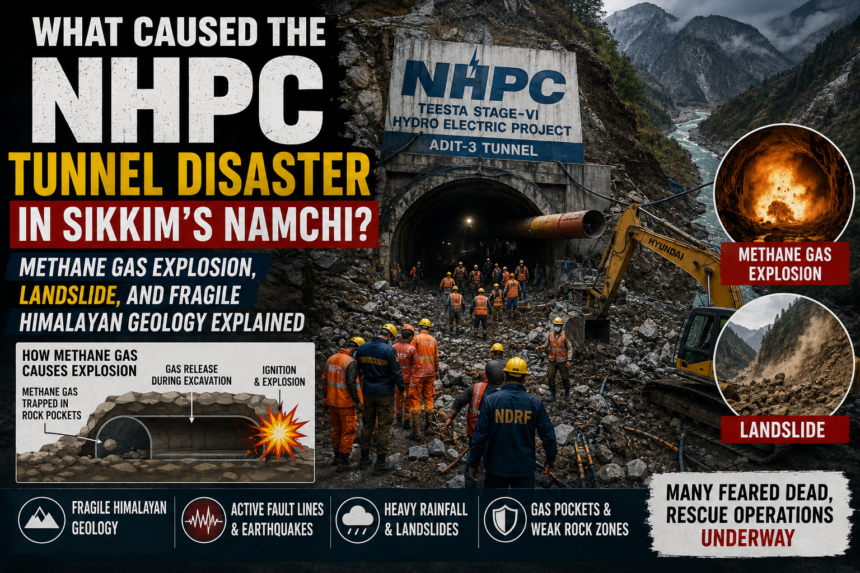
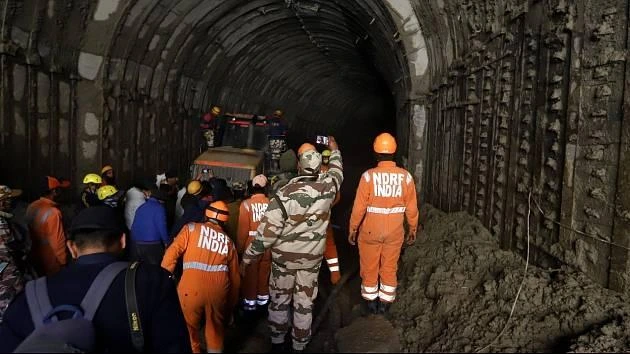
A devastating accident at the under-construction NHPC Teesta Stage-VI Hydroelectric Project in Namchi district, Sikkim, has become one of India’s deadliest tunnel disasters in recent years. The tragedy claimed multiple lives, left several workers trapped, and triggered a massive multi-agency rescue operation involving the National Disaster Response Force (NDRF), State Disaster Response Force (SDRF), Indian Army, and specialized mining rescue teams.
According to preliminary findings released by NHPC and local authorities, the disaster appears to have been triggered by a sudden explosion caused by suspected methane gas trapped within underground rock formations, which generated dense toxic fumes and led to the collapse of a section of the tunnel. Rescue operations were further complicated by poisonous gases, low oxygen levels, water accumulation, and unstable rock conditions.
How Did the Disaster Occur?
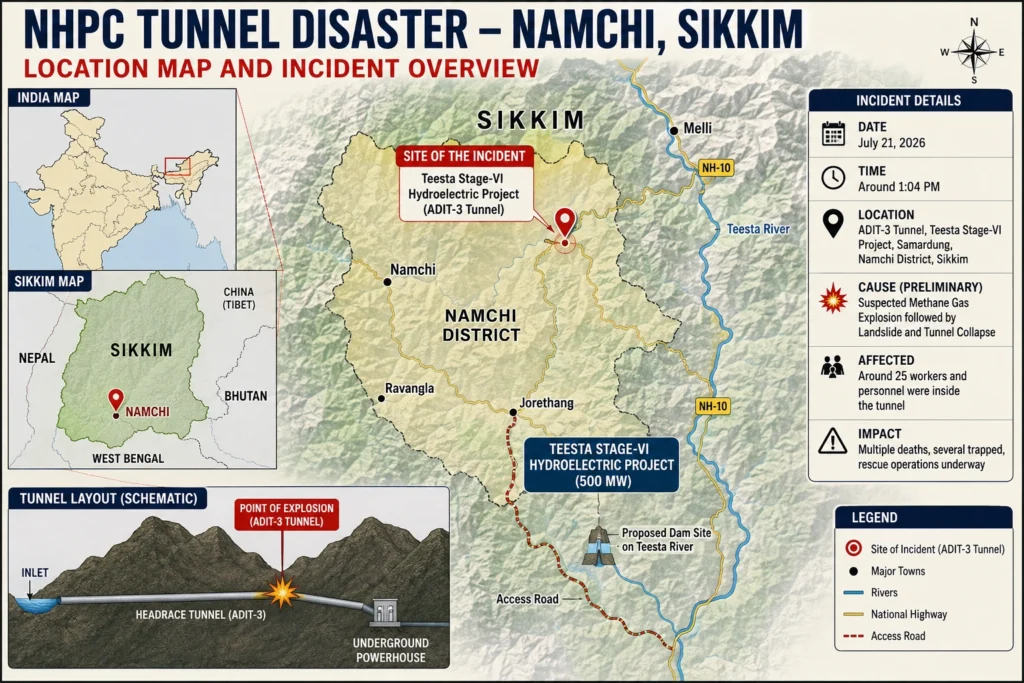
The incident occurred inside the ADIT-3 tunnel of the 500-MW Teesta Stage-VI Hydroelectric Project near Samardung in Namchi district.
Officials stated that workers were carrying out routine excavation work when a powerful explosion was heard from deep inside the tunnel. Moments later, dense smoke filled the passage, followed by the collapse of a significant portion of the tunnel, trapping workers inside.
The accident occurred around 1:04 p.m., when approximately 25 workers and project personnel were inside the tunnel. Only a few managed to escape before the collapse sealed the passage. (@theweek)
Was Methane Gas the Main Cause?
Preliminary investigations indicate that suspected methane gas was the primary cause of the disaster.
According to NHPC:
- Methane gas had accumulated naturally inside rock strata.
- During excavation or an attempt to vent the gas, it suddenly escaped.
- The gas likely ignited, causing an explosion.
- The blast generated dense smoke and toxic gases.
- The explosion destabilized surrounding rocks, leading to a tunnel collapse.
Officials emphasized that the exact cause will be confirmed only after a detailed technical investigation. (The Indian Express)
Why Did the Tunnel Collapse?
Experts believe the explosion alone was not the only factor.
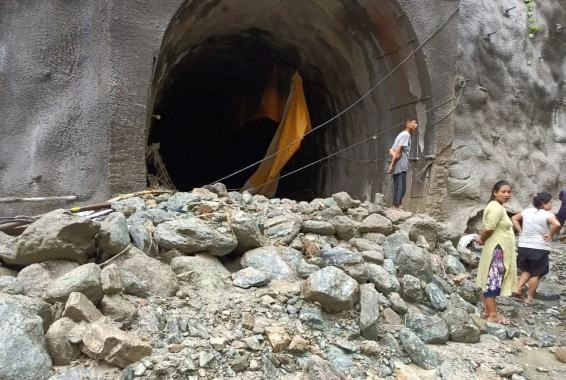
The sequence of events likely included:
- Sudden methane gas release.
- Explosion inside the enclosed tunnel.
- Shockwaves weakening surrounding rock formations.
- Landslide and cave-in blocking the tunnel.
- Heavy debris sealing escape routes.
This combination transformed the incident into a large-scale industrial disaster. (India Today)
Why Was the Rescue Operation So Difficult?
The rescue mission faced extraordinary challenges.
According to rescue officials:
- Toxic gases filled the tunnel.
- Carbon monoxide levels were dangerously high.
- Oxygen concentration was critically low.
- Thick smoke reduced visibility.
- Continuous rockfall threatened rescue teams.
- Water accumulation slowed operations.
Specialized breathing apparatus, gas detectors, thermal imaging devices, and mining rescue equipment had to be deployed. Rescue personnel could work inside the tunnel only for short intervals because of the hazardous atmosphere. (AP News)
Casualties and Rescue Efforts
The number of casualties increased as rescue teams reached deeper sections of the tunnel.
Authorities confirmed that:
- Multiple workers lost their lives.
- Several bodies were recovered during rescue operations.
- Some workers remained trapped for an extended period.
- Search operations continued with support from multiple national and state agencies.
Prime Minister Narendra Modi spoke with Sikkim Chief Minister Prem Singh Tamang and assured all possible assistance from the Central Government. Ex gratia compensation was also announced for the families of the deceased and injured workers. (ETEnergyworld.com)
Government and NHPC Response
NHPC stated that:
- Emergency response protocols were activated immediately.
- Senior officials reached the site.
- Coordination was established with NDRF, SDRF, district authorities, and mining rescue specialists.
- Rescue operations would continue until every trapped worker was accounted for.
The Sikkim Government also announced a high-level inquiry into the methane gas explosion and tunnel collapse.
Why Are Himalayan Tunnel Projects So Risky?
Geologists explain that the Himalayas are among the world’s youngest mountain ranges.
This makes infrastructure construction particularly challenging because of:
- Weak and fractured rock formations.
- Active fault lines.
- Frequent earthquakes.
- Heavy monsoon rainfall.
- Landslides.
- Underground gas pockets.
- Rapid geological movement.
These factors significantly increase the complexity of tunnel excavation and require continuous geological monitoring. (AP News)
Lessons for India’s Infrastructure Sector
The Namchi tunnel disaster has raised serious questions about safety standards in large underground infrastructure projects.
Experts recommend:
- Continuous methane gas monitoring.
- Advanced ventilation systems.
- Real-time geological sensors.
- Artificial Intelligence-based hazard detection.
- Stronger emergency evacuation plans.
- Frequent safety audits.
- Improved worker training for underground emergencies.
Many experts believe that future tunnel projects in geologically sensitive regions should incorporate more advanced risk assessment technologies.
Investigation Underway
The official investigation is expected to examine:
- Whether methane gas accumulation was detected in advance.
- If adequate gas detection equipment was installed.
- Whether ventilation systems were sufficient.
- Compliance with tunnel safety protocols.
- Emergency preparedness at the construction site.
The findings may lead to revised safety regulations for hydropower and tunnel construction projects across India. (ETEnergyworld.com)
Conclusion
The NHPC tunnel disaster in Sikkim’s Namchi district highlights the immense challenges of infrastructure development in fragile Himalayan terrain. Preliminary evidence suggests that a suspected methane gas explosion, followed by a landslide and tunnel collapse, created a deadly chain of events that trapped dozens of workers and complicated rescue efforts.
While investigations are still ongoing, the tragedy has already underscored the urgent need for enhanced geological surveys, advanced gas monitoring systems, stronger tunnel safety standards, and improved emergency preparedness. The lessons learned from this disaster are likely to influence future hydropower and tunnel construction projects throughout India.