

New Delhi | National News | PaperPatrika
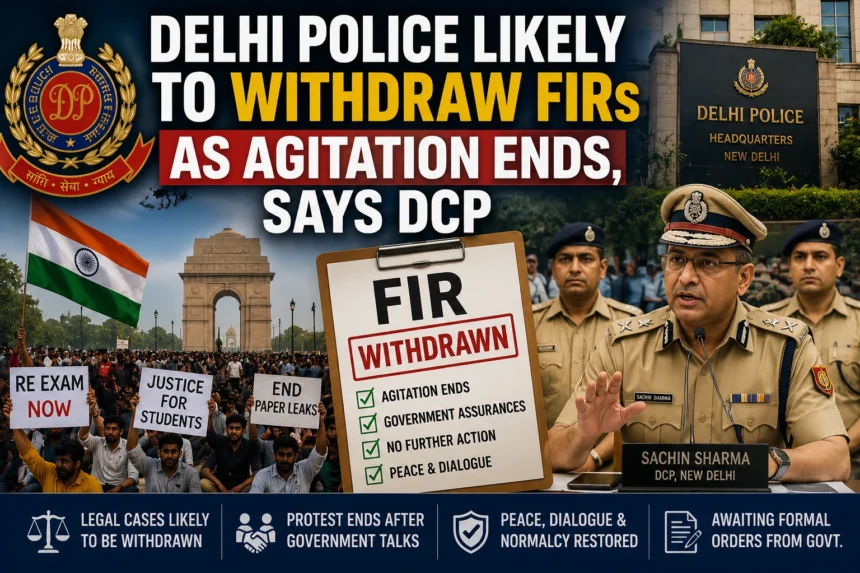
In a significant development following the conclusion of the weeks-long student-led agitation in the national capital, Delhi Police is likely to withdraw the First Information Reports (FIRs) registered against protesters, Deputy Commissioner of Police (New Delhi) Sachin Sharma has indicated. The move comes after the Centre and protest representatives reached an agreement that brought the high-profile agitation to an end, with the government accepting several key demands, including the proposed withdrawal of criminal cases linked to the demonstrations.
The development marks an important step toward easing tensions that had gripped Delhi for over a month. While the police have clarified that the process is subject to formal directions from the Central Government, officials have acknowledged that the FIRs are likely to be withdrawn now that the protest has concluded peacefully. (TheQuint)
Government–Protester Agreement Brings Agitation to an End
The agitation, centred on demands for examination reforms and accountability following the alleged NEET paper leak, concluded after multiple rounds of discussions between representatives of the protesters and the Union Government.
Union ministers J.P. Nadda and Dr. Jitendra Singh held negotiations with the delegation, after which the government announced that it had accepted several major demands. These included:
- Withdrawal of FIRs registered against protesters.
- No further legal action against peaceful demonstrators.
- Consideration of a proposed examination reform charter.
- Financial assistance, in accordance with applicable rules, for families affected by the controversy.
Following the announcement, protest leaders appealed to demonstrators across the country to end their agitation peacefully and return home. (Akashvani News)
Delhi Police Awaiting Official Communication
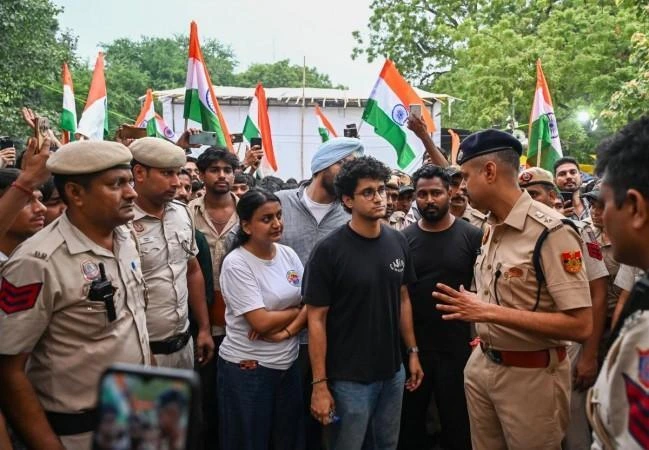
Speaking after the protest ended, DCP Sachin Sharma stated that although the police expect the FIRs to be withdrawn, the official communication has not yet been received.
According to police officials, the withdrawal process can only begin once formal instructions are issued by the competent government authorities. Until then, the FIRs remain legally valid, though no immediate action is expected if the government’s assurances are implemented as announced. (TheQuint)
Officials emphasized that Delhi Police will act strictly in accordance with legal procedures and government directives.
FIRs Registered During the Protest
During the agitation, Delhi Police registered multiple FIRs relating to incidents that occurred during protest marches, particularly the “Sansad Chalo” demonstration.
Police alleged offences including:
- Unlawful assembly.
- Damage to public property.
- Obstructing public servants.
- Assault on police personnel.
- Violations of prohibitory orders.
Authorities had earlier stated that investigations were continuing into incidents of violence reported during the protests. (The Times of India)
Why the Cases May Be Withdrawn
The proposed withdrawal of FIRs forms part of the broader understanding reached between the government and protest representatives.
Government officials indicated that the objective is to encourage reconciliation after the agitation’s conclusion and avoid prolonged legal proceedings against individuals who participated in the demonstrations.
However, legal experts note that the withdrawal of criminal cases is governed by established legal procedures and, in many cases, requires approval from the appropriate court depending on the offences involved. The exact scope of the withdrawal will become clear only after official notifications are issued.
A Protest That Drew National Attention
The agitation became one of the country’s most discussed public movements in recent weeks.
Thousands of students and supporters gathered at Delhi’s Jantar Mantar, demanding:
- Greater transparency in national examinations.
- Action against those responsible for alleged irregularities.
- Structural reforms in the examination system.
- Protection of students’ interests.
The demonstrations remained largely peaceful but witnessed occasional clashes between protesters and security personnel during attempts to march toward Parliament. (The Indian Express)
Police Deployment During the Demonstrations
To maintain law and order, Delhi Police carried out one of its largest security deployments in recent months.
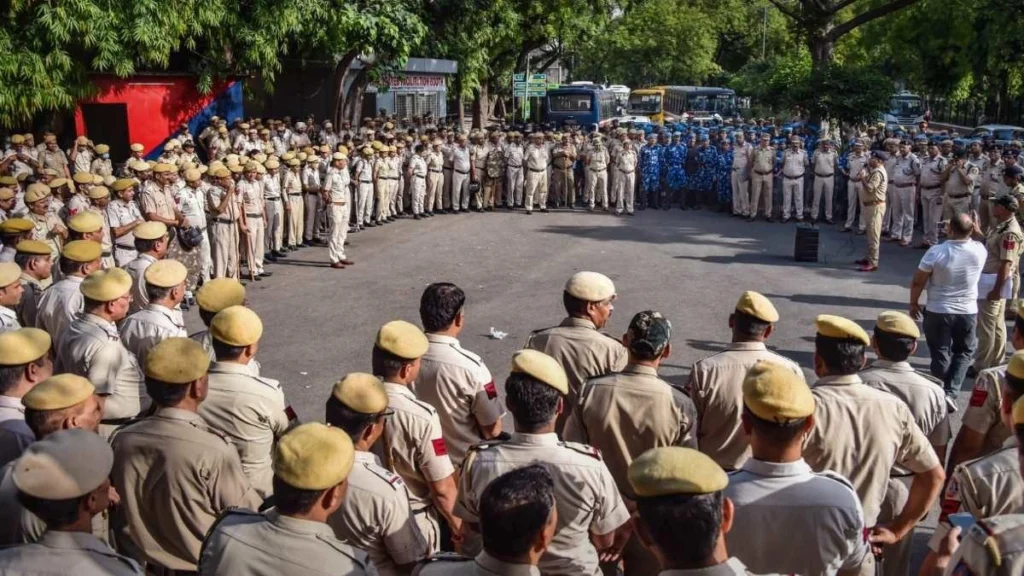
Authorities:
- Cancelled routine leave for many personnel.
- Increased security across central Delhi.
- Imposed movement restrictions in sensitive areas.
- Closed several metro stations temporarily.
- Deployed thousands of officers around protest sites.
Officials said these measures were taken to prevent disruption around Parliament and other high-security government installations. (The Indian Express)
Injuries and Law-and-Order Concerns
Police maintain that several officers sustained injuries during clashes with sections of protesters.
According to officials, incidents of stone-pelting and damage to barricades were reported during parts of the agitation. Police also used crowd-control measures, including barricading and, in some instances, tear gas and lathi charges, to disperse groups when violence allegedly broke out.
At the same time, some protesters alleged excessive use of force by police during the demonstrations. These allegations have received significant public attention, although Delhi Police has not made detailed public comments on each allegation while legal and administrative reviews continue. (Reddit)
Significance of the Withdrawal
If implemented, the withdrawal of FIRs would represent one of the most important confidence-building measures following the end of the agitation.
Analysts believe it could:
- Reduce tensions between protesters and authorities.
- Facilitate reconciliation after weeks of confrontation.
- Prevent prolonged legal battles.
- Encourage constructive dialogue on examination reforms.
The decision also reflects the government’s broader effort to implement commitments made during negotiations with protest representatives.
Legal Process Ahead
Although the political decision has been announced, the legal process will require several procedural steps.
Typically, the sequence includes:
- Formal government communication.
- Police recommendation where applicable.
- Filing of applications before the competent courts (for cases requiring judicial approval).
- Court consideration and final orders.
Therefore, while the announcement signals the government’s intent, the withdrawal of every FIR may not occur simultaneously.
Reactions
The announcement has been welcomed by many students and protest organisers, who described it as recognition that dialogue can resolve prolonged public disputes.
Legal commentators, however, stress that any withdrawal should follow due process to ensure transparency and preserve confidence in the justice system.
Meanwhile, opposition leaders and civil society groups have called for continued examination reforms in addition to the withdrawal of police cases.
What Happens Next?
Attention is now shifting from the protests themselves to the implementation of the assurances made during negotiations.
Key issues expected in the coming weeks include:
- Issuance of official orders regarding FIR withdrawal.
- Consideration of examination reform proposals.
- Administrative review of the accepted demands.
- Continued engagement between government representatives and student organisations.
Observers believe that successful implementation of these commitments will determine whether the resolution produces lasting trust between students and the government.
Conclusion
The likely withdrawal of FIRs against protesters represents a significant turning point following the end of the Delhi agitation. While Delhi Police has indicated that the cases are expected to be withdrawn, officials have made it clear that action will begin only after formal instructions are received from the government. (TheQuint)
The conclusion of the protest, coupled with assurances on legal relief and examination reforms, has opened the door to a more conciliatory phase after weeks of demonstrations, negotiations, and public debate. The coming days will now be crucial as the government and law enforcement agencies move to translate those assurances into formal administrative and legal action.
Also Read:- Top News of the Day: Dharmendra Pradhan Resigns, Centre Proposes Anti-Cheating Law, CJP Withdraws Protest, and More
India’s Education Minister Resigns Amid ‘Cockroach’ Youth Movement Protests