

New Delhi | National Bureau | PaperPatrika
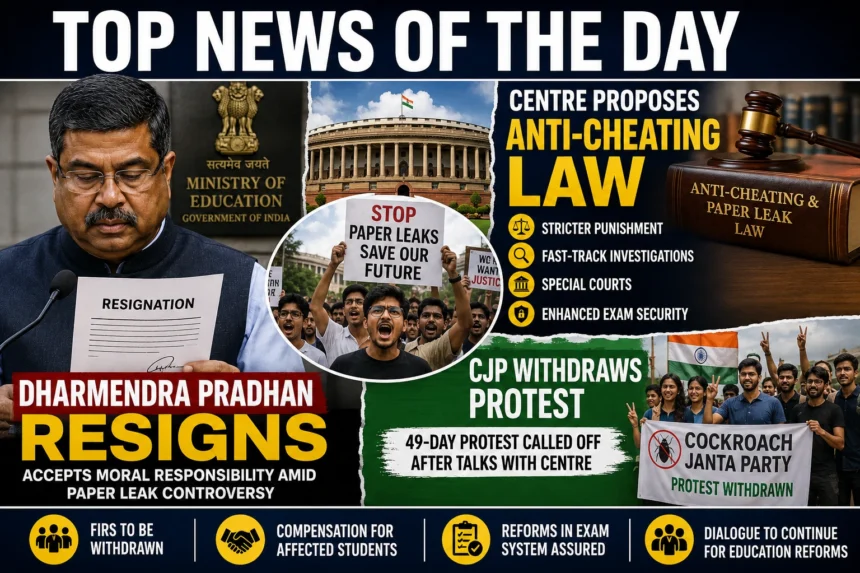
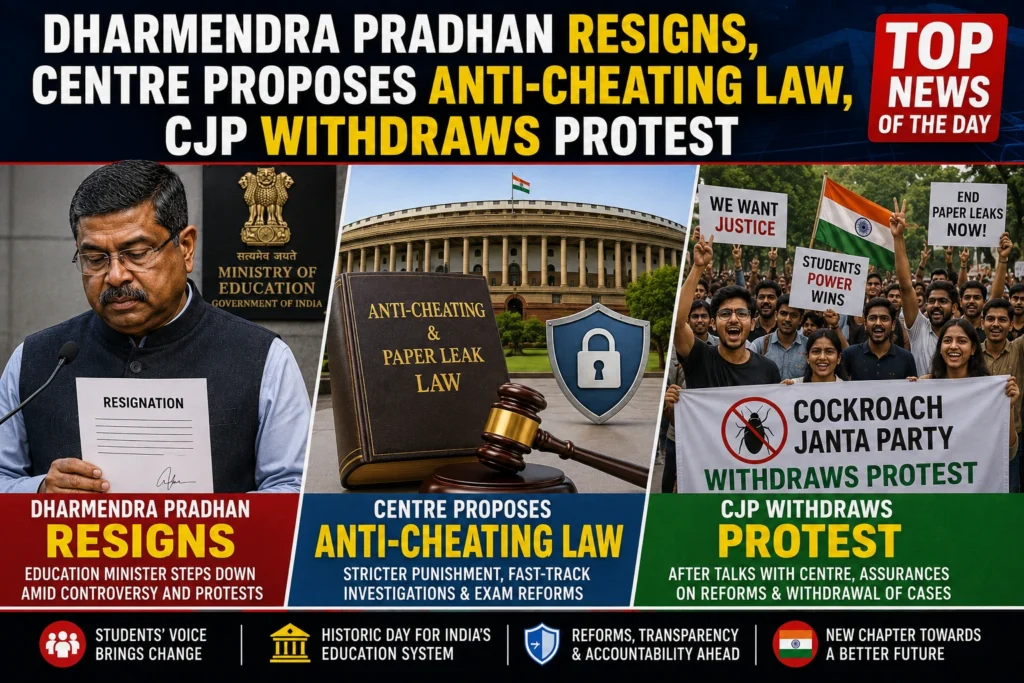
India witnessed a dramatic day in national politics and education policy as Union Education Minister Dharmendra Pradhan resigned, the Central Government unveiled a comprehensive anti-cheating law, and the Cockroach Janata Party (CJP) officially suspended its 49-day nationwide protest following a series of negotiations with the Centre. The developments mark one of the most significant political and policy shifts in recent years, with implications for millions of students, examination agencies, and India’s education system. (The Guardian)
Dharmendra Pradhan Steps Down
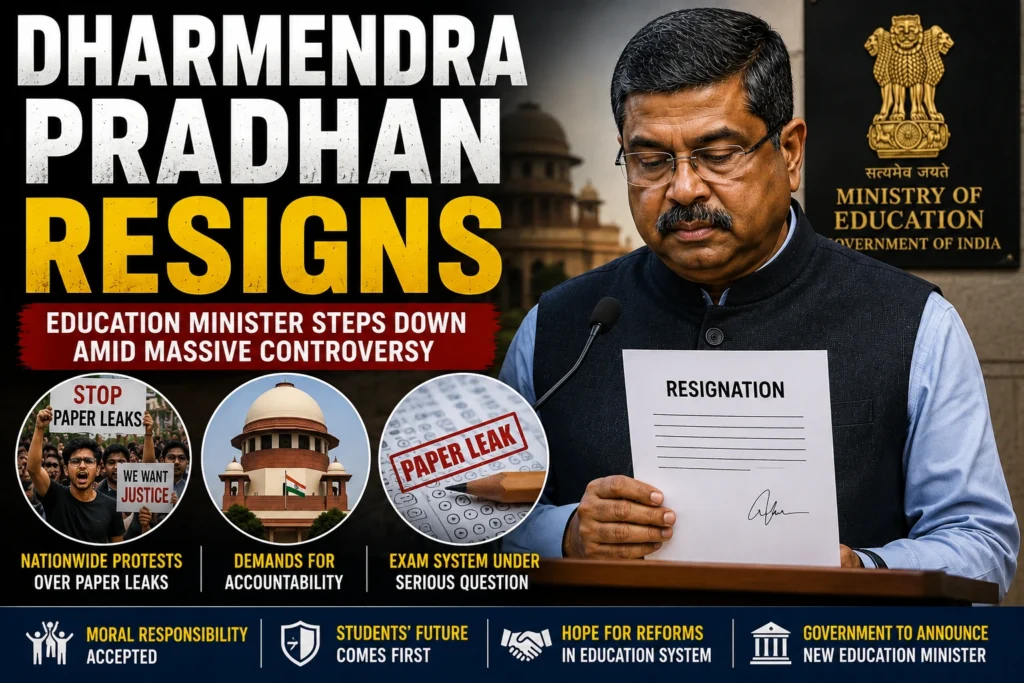
The day’s biggest development came when Dharmendra Pradhan submitted his resignation as Union Education Minister, accepting moral responsibility amid the prolonged controversy surrounding alleged examination irregularities and paper leaks.
In his resignation statement, Pradhan said his decision was intended to safeguard students’ futures and prevent further political polarization over the issue. He emphasized that education should remain above partisan conflict and hoped his resignation would help restore public confidence in the examination system. (Hindustan Times)
His resignation represents one of the most significant ministerial exits under the current government and follows weeks of mounting pressure from students, opposition parties, and civil society organizations.
How the Crisis Escalated
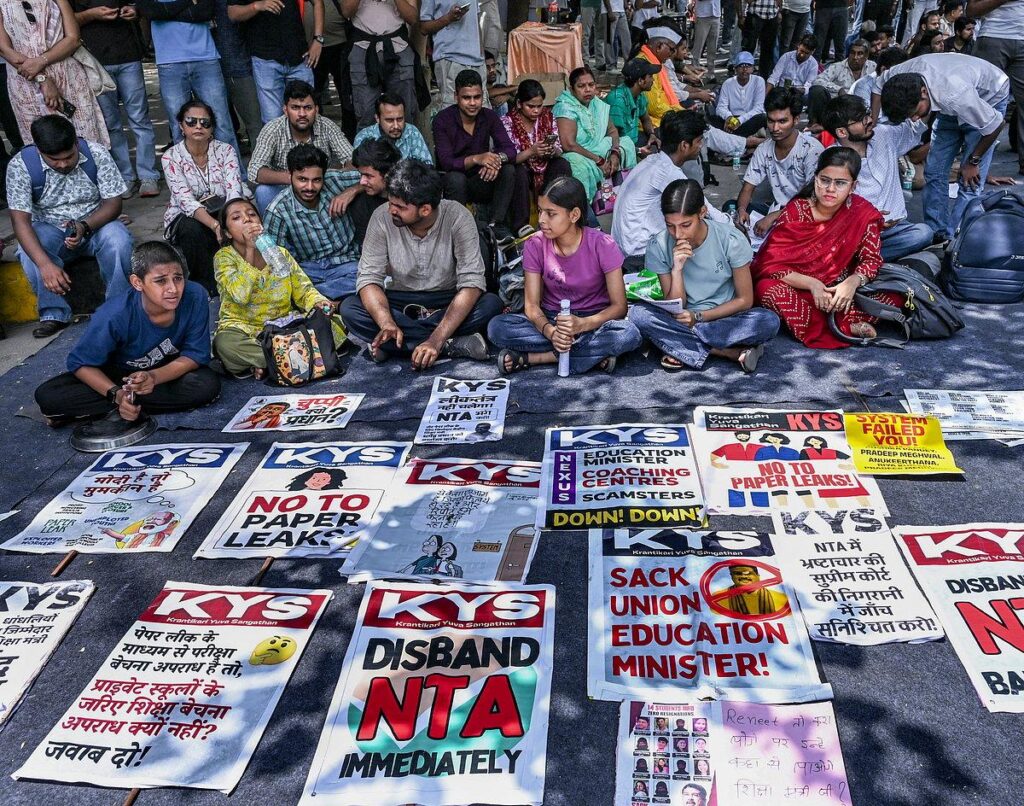
The controversy began with allegations of widespread irregularities in competitive examinations, particularly the NEET-UG examination, affecting lakhs of aspiring medical students.
Students alleged:
- Question paper leaks.
- Organized examination mafias.
- Lack of transparency.
- Delayed investigations.
- Poor accountability within examination authorities.
Public anger intensified after repeated protests spread from Delhi to several major Indian cities, drawing participation from students, parents, teachers, and social activists. (The Times of India)
Cockroach Janata Party Emerges as Youth Voice
The Cockroach Janata Party (CJP), initially a youth-led online campaign, rapidly evolved into one of India’s largest student protest movements.
Its leaders demanded:
- Removal of the Education Minister.
- Judicial investigation into examination leaks.
- Compensation for affected families.
- Withdrawal of cases filed against protesters.
- Long-term reforms in public examinations.
Through social media campaigns, peaceful marches, hunger strikes, and nationwide demonstrations, the movement attracted significant public attention and became a symbol of youth frustration with examination governance. (The Guardian)
Centre Announces Tough Anti-Cheating Law
Even before Pradhan’s resignation became official, the Union Cabinet approved a proposed Anti-Paper Leak and Examination Integrity Bill.
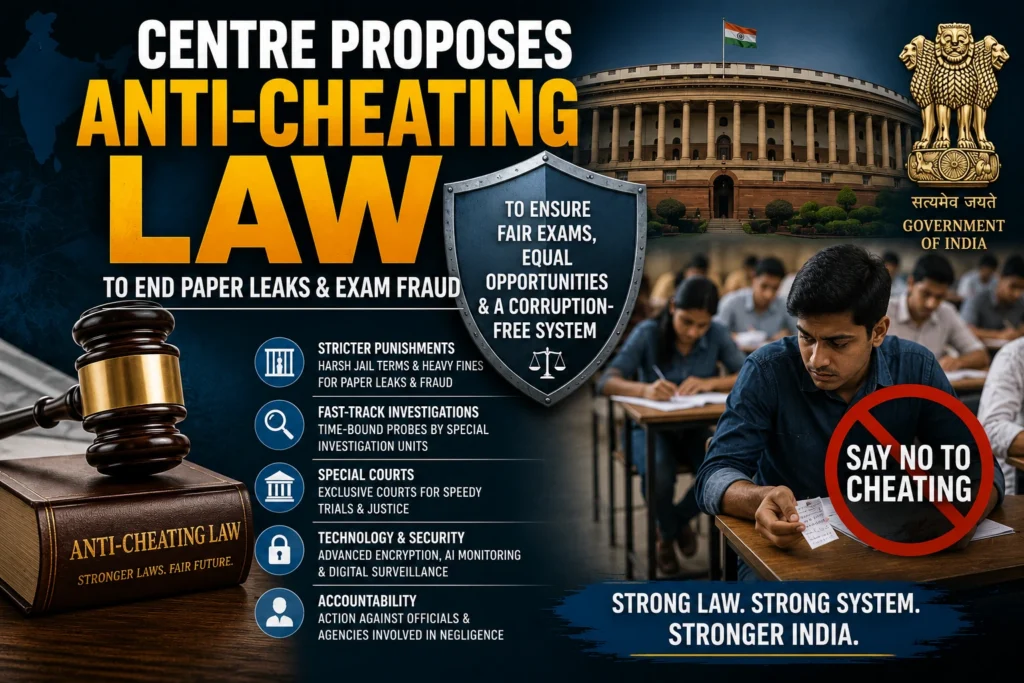
According to government sources, the legislation seeks to strengthen India’s legal framework against examination fraud by introducing:
- Stricter punishment for organized paper leak syndicates.
- Faster investigation timelines.
- Special fast-track courts.
- Enhanced penalties for service providers involved in leaks.
- Stronger digital security standards for examinations.
- Greater accountability for examination authorities.
Officials described the proposed law as one of the toughest anti-cheating measures ever introduced in India’s education sector. (The Times of India)
Major Reforms Proposed
The proposed legislation includes several structural reforms designed to prevent future examination scandals.
Among the key proposals are:
- Modern encryption of examination papers.
- Real-time monitoring systems.
- Digital audit trails.
- AI-assisted examination surveillance.
- Background verification for examination staff.
- Standardized national security protocols.
Education experts believe these measures could significantly reduce opportunities for organized paper leak networks. (The Times of India)
CJP Withdraws 49-Day Protest
Following the government’s decisions, the Cockroach Janata Party announced that it would withdraw its 49-day protest at Jantar Mantar.
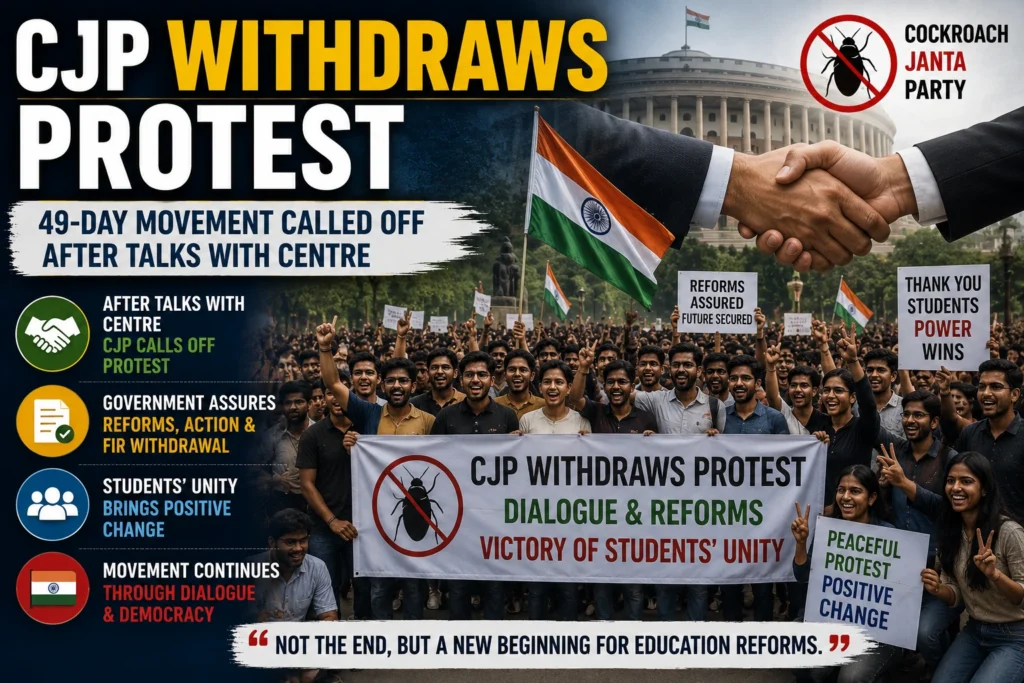
The decision came after three rounds of negotiations between government representatives and CJP leaders.
According to the organization, the withdrawal followed government assurances on:
- Withdrawal of FIRs against protesters.
- Compensation discussions for affected families.
- Continued dialogue on education reforms.
- Review of examination policies.
- Consideration of additional recommendations submitted by the movement.
However, CJP clarified that the suspension of protests does not mean the movement has ended permanently. The organization stated it would closely monitor implementation of the government’s promises. (India Today)
Five-Point Reform Charter
During negotiations, CJP reportedly presented a comprehensive reform charter focusing on long-term improvements.
Its proposals include:
- Independent examination regulator.
- Stronger anti-corruption mechanisms.
- Student representation in oversight bodies.
- Greater transparency in recruitment examinations.
- Permanent anti-paper leak monitoring system.
Government representatives indicated that these proposals would be examined further in upcoming meetings. (India Today)
Political Reactions
Political reactions were swift.
Bharatiya Janata Party leaders thanked Dharmendra Pradhan for his years of service while expressing confidence that reforms would restore public trust.
Opposition parties described the resignation as evidence that sustained democratic protests can influence public policy but argued that institutional reforms remain essential. (The Times of India)
Public Celebrations
Following confirmation of the resignation, celebrations erupted at protest sites across Delhi.
Students distributed sweets, waved the national flag, and chanted slogans celebrating what they described as a victory for peaceful democratic participation.
Despite the celebrations, protest leaders urged supporters to remain vigilant until promised reforms are fully implemented. (AP News)
What’s Next for Education?
Attention now turns to the appointment of a new Union Education Minister.
The incoming minister will likely face immediate priorities, including:
- Restoring confidence in public examinations.
- Implementing the proposed anti-cheating legislation.
- Strengthening the National Testing Agency (NTA).
- Improving examination transparency.
- Coordinating with investigative agencies.
Experts believe rebuilding trust may require sustained institutional reforms rather than isolated administrative changes. (The Times of India)
Impact on Students
For millions of students preparing for competitive examinations, the government’s announcements offer hope for stronger safeguards.
Many education analysts argue that:
- Better security protocols could reduce examination fraud.
- Faster investigations may deter criminal networks.
- Independent oversight could improve credibility.
- Digital reforms may increase transparency.
However, they caution that effective implementation will determine whether these reforms produce meaningful change. (The Times of India)
Governance Lessons
The events demonstrate how sustained civic engagement, digital mobilization, and peaceful public demonstrations can shape policy discussions.
The Cockroach Janata Party transformed from an online youth campaign into a nationwide movement capable of influencing political decision-making.
Analysts suggest this episode may become a significant case study in youth participation, democratic accountability, and education governance in contemporary India. (AP News)
Looking Ahead
Although the immediate confrontation appears to have eased, several important questions remain:
- When will Parliament consider the new anti-cheating legislation?
- Who will become India’s next Education Minister?
- Will all promised reforms be implemented?
- How quickly will investigations conclude?
- Can confidence in India’s examination system be fully restored?
The answers to these questions will shape the future of education policy and determine whether the current crisis ultimately leads to lasting institutional reform. (The Times of India)
Conclusion
The resignation of Dharmendra Pradhan, the Centre’s decision to introduce a tough anti-cheating law, and the withdrawal of the CJP’s nationwide protest collectively mark a turning point in India’s education landscape. While students have achieved several immediate objectives, the long-term success of these developments will depend on the government’s ability to deliver meaningful reforms, strengthen examination integrity, and rebuild public trust in one of the world’s largest education systems.
Also Read: – India’s Education Minister Resigns Amid ‘Cockroach’ Youth Movement Protests