

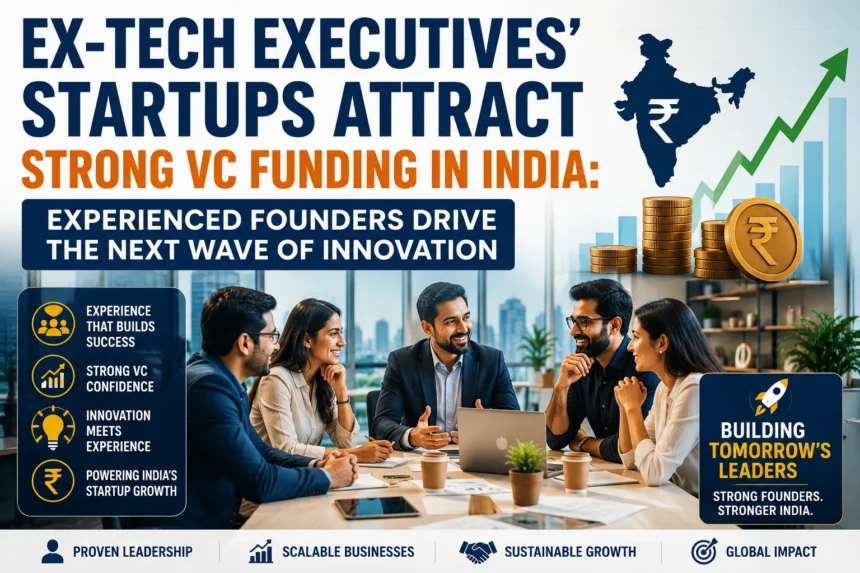
Operator-Led Startups Capture 11% of India’s Tech Funding as Investors Prioritize Experience Over Hype.

New Delhi | July 21, 2026 | PaperPatrika Bureau
India’s startup ecosystem is entering a new phase of maturity, where experience is becoming as valuable as innovation. A recent industry report reveals that startups founded by former senior executives of leading technology companies—commonly known as operator-led or ex-tech executive-led startups—have secured nearly 11% of India’s total venture capital (VC) funding in the technology sector. This trend highlights a major shift in investor preferences, with venture capital firms increasingly backing founders who have previously built, managed, or scaled successful businesses.
The report indicates that investors are no longer chasing rapid growth alone. Instead, they are looking for entrepreneurs with proven operational expertise, strategic leadership, and the ability to build sustainable businesses.
A New Investment Trend Emerges
Over the last decade, India’s startup landscape has evolved rapidly. Earlier, venture capital investors focused primarily on disruptive ideas and high-growth potential. However, changing global economic conditions and increased market competition have prompted investors to become more selective.
Today, founders who have worked in leadership positions at successful companies are viewed as lower-risk investments. These experienced entrepreneurs already understand product development, customer acquisition, scaling operations, fundraising, and team management.
As a result, startups founded by former executives from India’s leading technology firms are attracting a growing share of venture capital investments.
What Does the Report Reveal?
According to the latest report:
- Operator-led startups accounted for approximately 11% of India’s technology VC funding.
- Investors increasingly prefer founders with prior operational experience.
- Experienced entrepreneurs are launching companies across AI, SaaS, FinTech, HealthTech, DeepTech, and enterprise software.
- Venture capital firms believe these founders are better equipped to navigate economic uncertainty.
The findings reflect a broader change in India’s investment ecosystem, where execution capability is becoming as important as innovation.
Why Are Investors Preferring Experienced Founders?
During the funding boom of 2021 and 2022, startups with ambitious growth plans attracted significant investments despite limited profitability.
However, rising global interest rates, economic uncertainty, and tighter capital markets have reshaped investor priorities.
Today’s investors are placing greater emphasis on:
- Sustainable business models
- Revenue generation
- Profitability
- Efficient capital utilization
- Strong corporate governance
- Experienced leadership teams
Because former technology executives have already managed large organizations, investors believe they are more likely to build resilient companies.
What Is an Operator-Led Start-up?
An operator-led startup is founded by professionals who previously held senior leadership positions such as:
- Chief Executive Officer (CEO)
- Chief Operating Officer (COO)
- Chief Technology Officer (CTO)
- Product Head
- Engineering Director
- Business Unit Leader
Unlike first-time entrepreneurs, these founders bring years of real-world business experience.
They have previously:
- Built products for millions of users.
- Managed large engineering teams.
- Led fundraising initiatives.
- Expanded businesses internationally.
- Solved complex operational challenges.
This practical experience significantly improves investor confidence.
India’s Start-up Ecosystem Continues to Grow
India has emerged as one of the world’s most vibrant start-up destinations.
Some key achievements include:
- India remains the third-largest startup ecosystem globally.
- More than 200,000 startups have received official recognition under the Startup India initiative.
- Millions of direct and indirect jobs have been created.
- Innovation is expanding beyond metropolitan cities into Tier-2 and Tier-3 regions.
Government initiatives, improved digital infrastructure, and increasing investor participation have contributed to this remarkable growth.
Sectors Attracting Maximum Investment
According to industry experts, venture capital firms are actively investing in startups working in:
- Artificial Intelligence (AI)
- Software as a Service (SaaS)
- Cybersecurity
- Financial Technology (FinTech)
- HealthTech
- Climate Technology
- DeepTech
- Defence Technology
- Semiconductor Manufacturing
- Space Technology
These industries are expected to shape India’s next generation of innovation-driven companies.
Why Experience Matters
Experienced founders offer several advantages over first-time entrepreneurs.
They generally possess:
- Strong industry relationships
- Proven leadership abilities
- Better understanding of customer needs
- Higher execution capability
- Efficient decision-making
- Established investor networks
These qualities reduce execution risks, making such startups attractive investment opportunities.
Venture Capital Strategy Is Changing
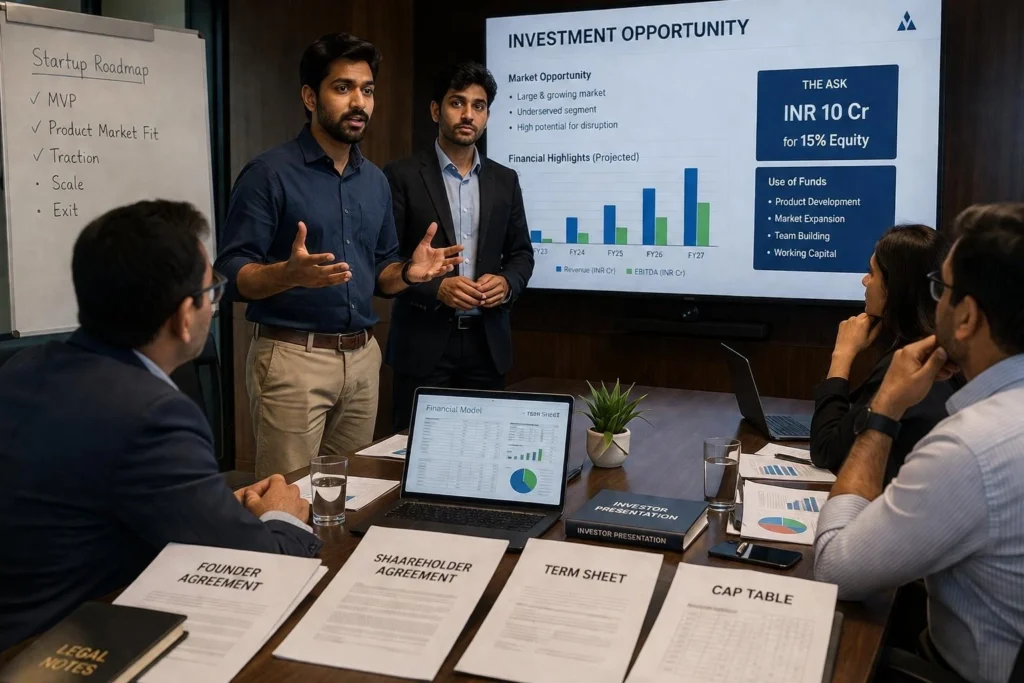
Instead of focusing solely on rapid expansion, venture capital firms are now evaluating startups based on long-term sustainability.
Their key evaluation criteria include:
- Revenue growth
- Customer retention
- Capital efficiency
- Product-market fit
- Founder quality
- Operational excellence
Industry experts believe that “Founder Quality First” is becoming one of the defining investment strategies in India’s startup ecosystem.
Does This Mean First-Time Founders Have Fewer Opportunities?
Not necessarily.
Experts believe first-time entrepreneurs continue to have enormous opportunities.
However, they now need to demonstrate:
- Clear business models
- Strong customer validation
- Sustainable revenue streams
- Practical market solutions
- Disciplined financial management
Investors remain interested in innovative ideas, provided founders can demonstrate effective execution capabilities.
Government Support Continues
The Indian government continues to strengthen the startup ecosystem through several initiatives.
Recent policy developments include:
- Expanded startup incubation support.
- Greater investment in semiconductor innovation.
- Increased funding for research and development.
- Promotion of DeepTech and DefenceTech startups.
- Entrepreneurship programs through leading educational institutions.
These initiatives aim to make India one of the world’s leading innovation hubs over the coming decade.
Expert Opinions
Industry analysts believe the Indian startup ecosystem is transitioning from the “Unicorn Race” to building financially sustainable businesses.
Instead of celebrating high valuations alone, investors now prioritize companies capable of generating consistent revenues and long-term profitability.
Experts also believe that experienced founders can mentor younger entrepreneurs, strengthening the overall startup ecosystem.
Future Outlook
Analysts expect experienced entrepreneurs to continue attracting substantial venture capital in the coming years.
Artificial Intelligence, DeepTech, Defence Technology, Climate Technology, Semiconductor Manufacturing, and Enterprise Software are likely to remain the fastest-growing investment sectors.
At the same time, India is expected to witness increasing collaboration between experienced founders, research institutions, venture capital firms, and government innovation programs.
Conclusion
The growing success of operator-led startups marks an important evolution in India’s entrepreneurial journey. Venture capital firms are increasingly backing founders with proven operational expertise, recognizing that experience often translates into better execution, stronger governance, and more sustainable growth.
While innovative ideas remain essential, today’s investment landscape rewards founders who can combine vision with practical leadership. As India’s startup ecosystem continues to mature, experienced entrepreneurs are likely to play a defining role in shaping the country’s next generation of globally competitive technology companies.
This shift signals that India’s startup success story is no longer driven only by bold ideas—it is increasingly powered by experienced leadership, disciplined execution, and sustainable innovation.