
International Technology Report | PaperPatrika
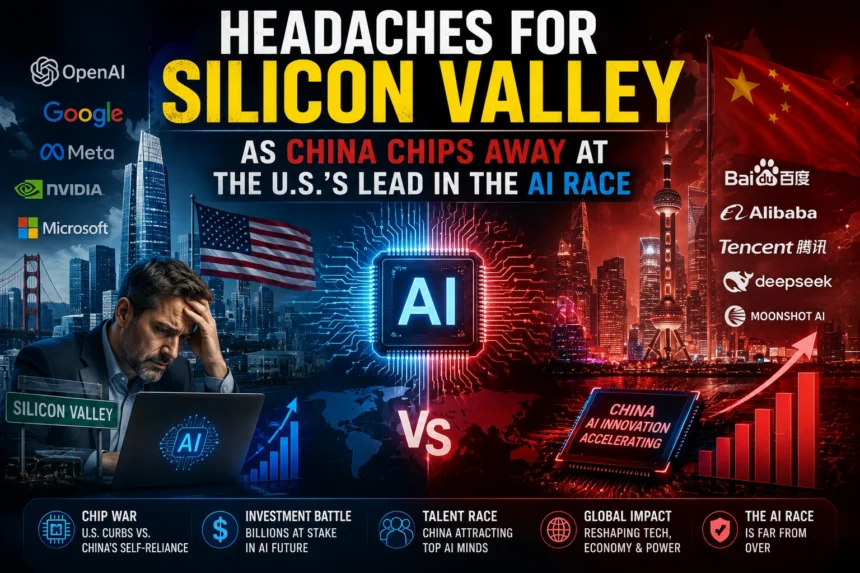
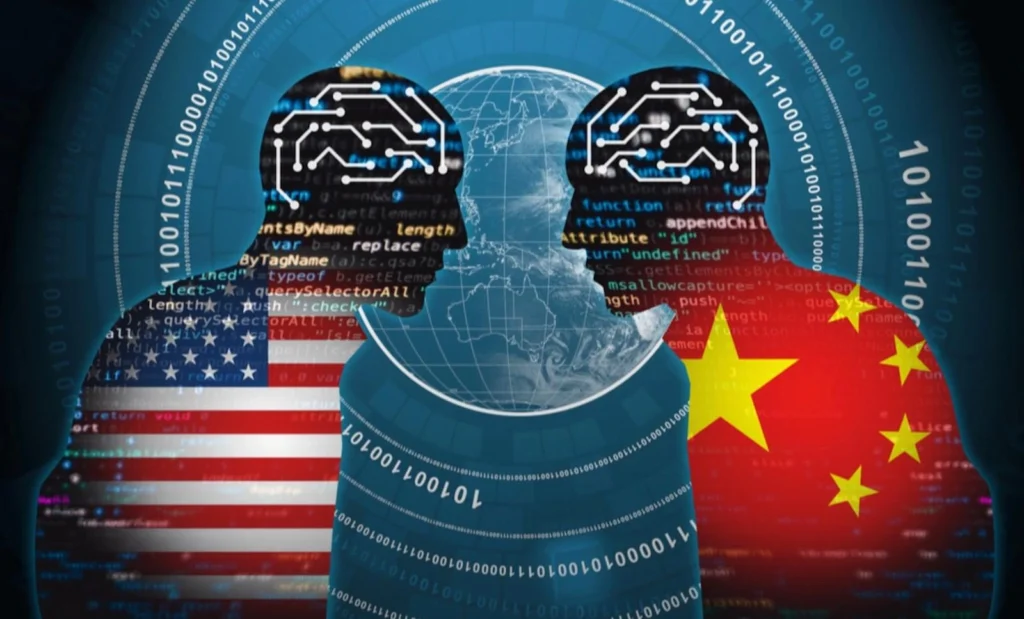
The global race for artificial intelligence (AI) has entered a new and more competitive phase. For the past several years, the United States has maintained a commanding lead through companies such as OpenAI, Google DeepMind, Anthropic, Meta, Microsoft, and Nvidia. However, China’s rapid progress in AI models, semiconductor development, and government-backed innovation is beginning to narrow that gap, creating growing concerns across Silicon Valley.
Recent developments, including the emergence of powerful Chinese AI models such as Moonshot AI’s Kimi K3, have demonstrated that Chinese firms are capable of delivering advanced AI systems at significantly lower costs. Industry analysts believe this trend could reshape the competitive landscape of the global AI industry, forcing American technology companies to rethink their strategies on pricing, innovation, and long-term investment.
A Changing Balance in the AI Race
Since the launch of ChatGPT in late 2022, American companies have largely dominated the AI revolution. Massive investments in cloud infrastructure, high-performance computing, and advanced graphics processing units (GPUs) allowed U.S. firms to stay ahead.
Today, however, China is rapidly catching up.
Chinese technology companies—including Moonshot AI, DeepSeek, Alibaba, Baidu, Tencent, and others—are investing heavily in large language models, AI infrastructure, and enterprise AI applications. Their ability to build competitive models while reducing operational costs is attracting attention from developers and businesses worldwide.
Why Kimi K3 Has Attracted Global Attention
One of the biggest developments in recent weeks has been the launch of Kimi K3, developed by Beijing-based startup Moonshot AI.

According to technology analysts, Kimi K3 stands out because:
- It performs strongly in coding and reasoning tasks.
- It is available at considerably lower operating costs.
- It follows an open-weight approach that allows developers greater flexibility.
- It has quickly gained popularity within the global AI developer community.
Its success suggests that China is no longer simply following American innovation—it is beginning to compete directly in frontier AI development.
Silicon Valley Faces New Competitive Pressure
The rise of Chinese AI firms has created several concerns for Silicon Valley.
Major technology companies are now facing:
- Lower-cost AI competitors.
- Increasing adoption of open-source and open-weight models.
- Growing competition for enterprise customers.
- Pressure on subscription-based AI business models.
- Rising expectations from investors for continued technological leadership.
Industry observers believe that if Chinese companies continue innovating at their current pace, American firms may have to accelerate product development while reducing prices to remain competitive.
The Semiconductor Battle Is Equally Important
Artificial intelligence depends heavily on advanced semiconductor chips capable of training and running increasingly complex AI models.
The United States has imposed export restrictions on advanced AI chips to limit China’s technological progress. Despite these restrictions, China has significantly increased domestic investment in semiconductor research and manufacturing.
Reports indicate that Chinese AI startup DeepSeek is working on developing its own AI chips, reducing dependence on imported American technology and strengthening China’s long-term technological independence.
Impact on Financial Markets
The growing competition has also affected investor sentiment.
Technology stocks, particularly semiconductor companies closely linked to AI, have experienced periods of volatility as investors reassess long-term growth expectations.
Market analysts note that while AI remains one of the fastest-growing industries globally, competition from China introduces new uncertainties regarding pricing power, market share, and future profitability for American companies.
China’s Different Development Strategy
Unlike the United States, where AI innovation is largely driven by private companies and venture capital, China combines private-sector innovation with substantial government support.
China’s strategy includes:
- Large-scale public investment.
- Support for domestic semiconductor manufacturing.
- National AI development policies.
- Expansion of industrial AI applications.
- Encouragement of local technology ecosystems.
This coordinated approach has accelerated China’s ability to compete across multiple segments of the AI value chain.
Talent Returning to China
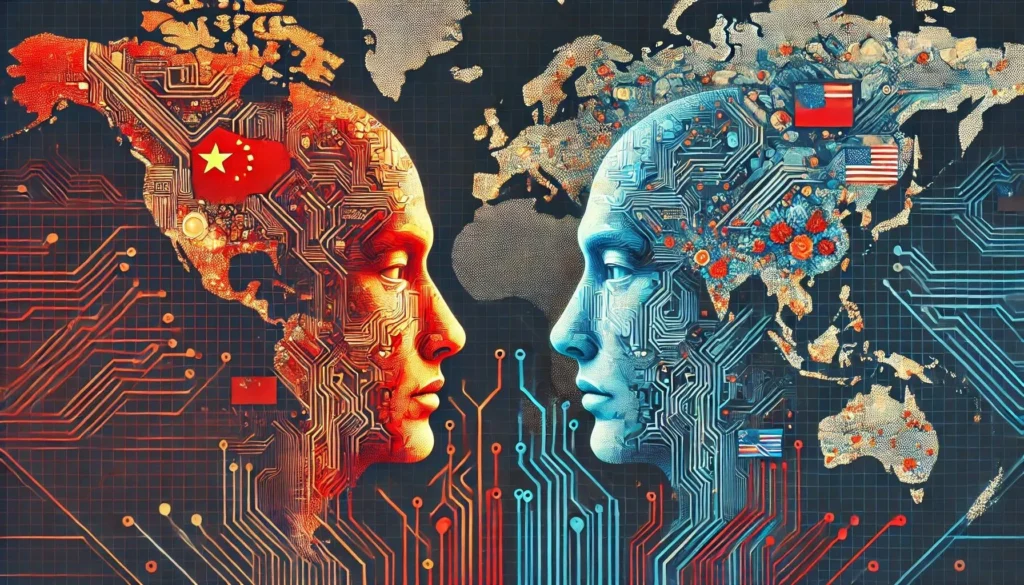
Another significant trend is the return of highly skilled Chinese AI researchers from overseas.
Many researchers who previously studied or worked in Silicon Valley are choosing to build AI startups in China, attracted by increased investment opportunities, supportive government policies, and a rapidly growing domestic technology market.
The founder of Moonshot AI, Yang Zhilin, is often cited as an example of this growing reverse talent migration. Analysts believe this trend could further strengthen China’s AI ecosystem over the coming years.
Is the United States Still Ahead?
Despite China’s rapid progress, experts agree that the United States continues to maintain significant advantages.
America still leads in:
- Advanced AI research.
- High-performance GPU technology.
- Cloud computing infrastructure.
- Venture capital investment.
- Frontier AI companies.
- University-based AI innovation.
However, analysts also emphasize that America’s lead is becoming narrower rather than disappearing entirely.
Global Implications
The AI competition between the United States and China extends far beyond technology.
Its outcome could influence:
- Global economic growth.
- Semiconductor supply chains.
- National security.
- International AI regulations.
- Digital trade.
- Cybersecurity.
- Scientific research.
- Future employment patterns.
Many countries are now attempting to balance partnerships with both technological superpowers while developing their own AI capabilities.
America’s Likely Response
Experts expect the United States to strengthen its AI leadership through several measures:
- Increased investment in AI research.
- Expansion of domestic semiconductor manufacturing.
- Greater collaboration with allies.
- Continued export controls on sensitive technologies.
- Faster commercialization of next-generation AI models.
- Policies designed to attract top global AI talent.
These initiatives are intended to preserve America’s competitive advantage while responding to China’s rapid technological progress.
The Road Ahead
The global AI race is no longer simply about developing better chatbots or more powerful language models.
It has become a strategic competition involving:
- Economic leadership.
- Technological sovereignty.
- National security.
- Industrial competitiveness.
- Global influence.
As both countries continue investing billions of dollars into AI infrastructure and semiconductor technology, competition is expected to intensify throughout the remainder of this decade.
Conclusion
China’s accelerating progress in artificial intelligence has created new challenges for Silicon Valley and America’s technology leadership. The emergence of advanced models such as Moonshot AI’s Kimi K3, combined with China’s expanding semiconductor capabilities and government-backed innovation strategy, demonstrates that the global AI race is becoming increasingly competitive.
Although the United States still holds significant advantages in research, computing infrastructure, investment, and cutting-edge AI development, the gap is narrowing. The next phase of AI competition will likely determine not only technological leadership but also economic strength, geopolitical influence, and the future direction of the global digital economy.