

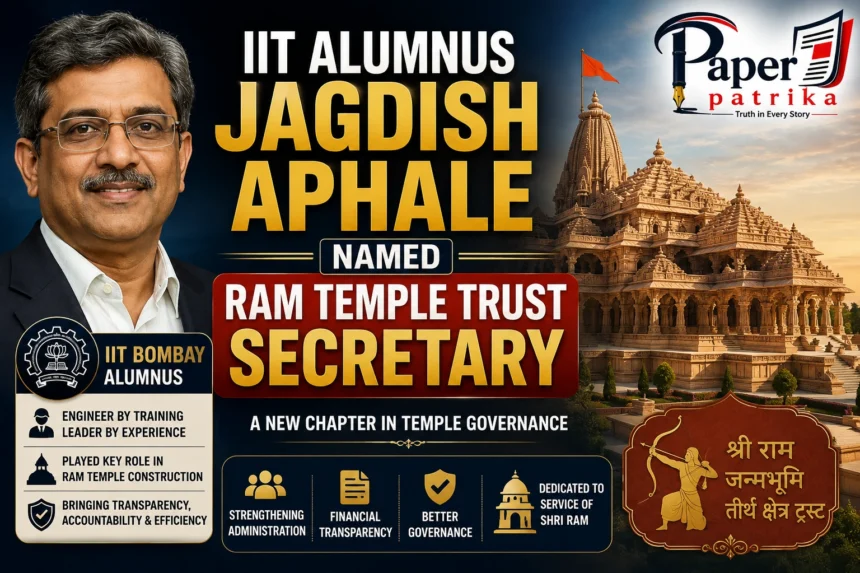
IIT Alumnus Jagdish Aphale Appointed Secretary of Ayodhya Ram Temple Trust, Marking a New Phase in Temple Governance.
By PaperPatrika National Desk
The Shri Ram Janmabhoomi Teerth Kshetra Trust has appointed Jagdish Aphale, an IIT Bombay alumnus and senior engineer closely associated with the construction of the Ayodhya Ram Temple, as the first Secretary of the Trust. The appointment represents a significant administrative restructuring aimed at strengthening governance, financial oversight, and day-to-day management of one of India’s most important religious institutions.
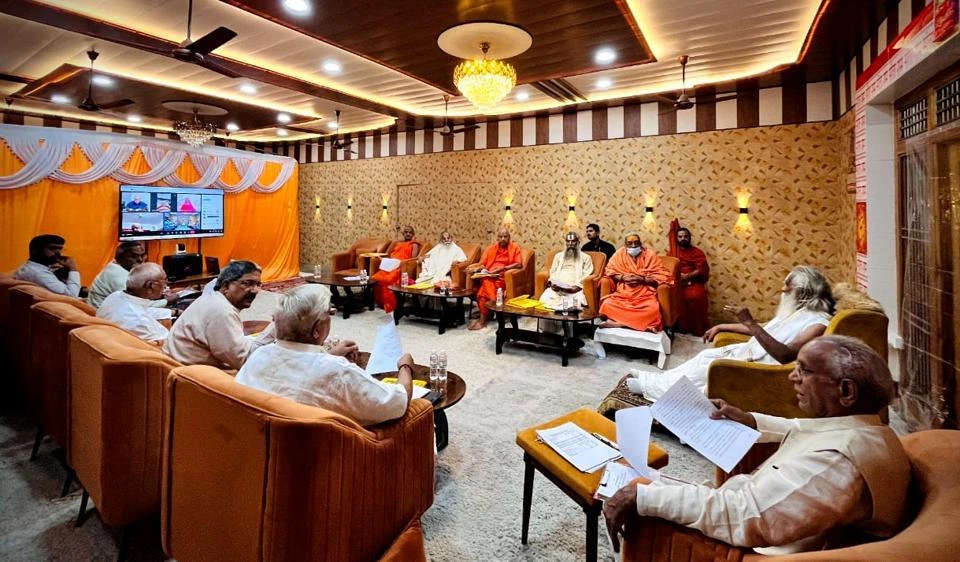
The decision comes during a period of organizational reforms following recent controversies over alleged irregularities involving temple donations. Trust officials believe the creation of the secretary’s post will introduce greater transparency, accountability, and professional management while ensuring smoother coordination among trustees, administrators, financial institutions, and construction agencies. (The Times of India)
A Landmark Administrative Appointment
For the first time since the Trust was constituted in 2020, the position of Secretary has been formally created.
Unlike the General Secretary, whose responsibilities traditionally centered on overall organizational leadership, the new Secretary is expected to oversee administrative coordination, documentation, institutional communication, and financial processes while working alongside the Trust’s interim leadership.
According to reports, Aphale will also become a joint signatory for the Trust’s banking and financial transactions, an important responsibility introduced to improve checks and balances after recent administrative reforms. (The Times of India)
Who is Jagdish Aphale?
Jagdish Aphale is widely recognized as one of the key engineering professionals associated with the construction of the Ayodhya Ram Temple.
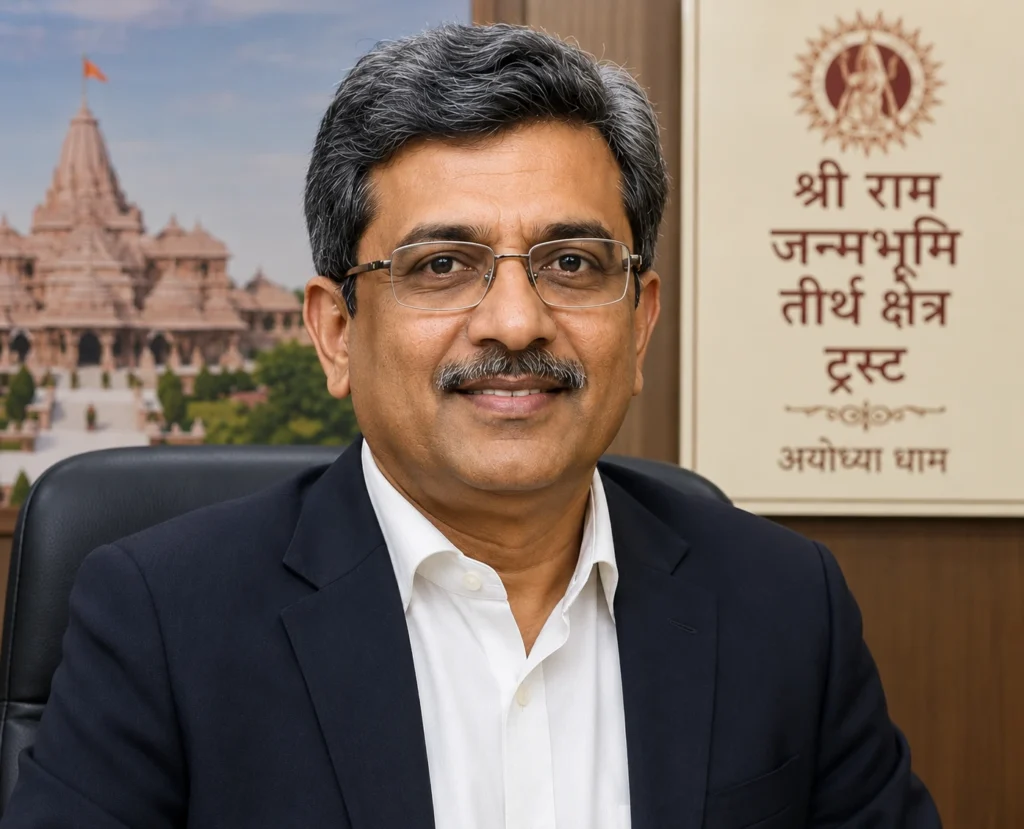
Originally from Maharashtra and currently based in Pune, Aphale is an alumnus of the Indian Institute of Technology (IIT Bombay). Trained as an engineer, he has decades of experience in infrastructure and project management.
When construction of the Ram Temple began, he joined the project as an honorary project manager and played an important role in supervising engineering execution—from foundation work to the temple’s superstructure. His technical expertise earned him considerable respect among architects, engineers, and Trust members involved in the historic project. (Moneycontrol)
Why the Appointment Matters
The appointment comes at a crucial moment for the Trust.
Over the past several weeks, the Trust has undertaken its most significant organizational restructuring since its formation. Earlier this month, senior office-bearers, including former General Secretary Champat Rai and trustee Anil Mishra, stepped down following controversy surrounding alleged misappropriation of temple donations.
In response, the Trust initiated a broad governance overhaul that includes:
- Creation of the Secretary’s post.
- Recruitment of a professional Chief Executive Officer (CEO).
- Strengthening financial monitoring.
- Reorganizing committees responsible for rituals and administration.
- Modernizing operational systems. (The Indian Express)
The appointment of Aphale is viewed as part of this broader effort to improve institutional management while maintaining public confidence.
Financial Oversight and Accountability
One of Aphale’s most important responsibilities will involve supervising financial transactions.
Reports indicate he will serve as a joint signatory with interim General Secretary Krishna Mohan for banking operations. The arrangement has been introduced to ensure stronger financial oversight and better accountability in handling donations received from millions of devotees every year. (The New Indian Express)
The Trust has also been working with public sector banks and other institutions to strengthen accounting procedures and streamline payments to agencies responsible for temple operations.
Officials believe these measures will reduce administrative delays and improve transparency in financial management.
Engineering Expertise Meets Temple Administration
Unlike many traditional appointments in religious institutions, Aphale’s background combines engineering, project management, and organizational leadership.

His involvement throughout the temple’s construction has provided him with deep knowledge of:
- Structural engineering.
- Construction planning.
- Vendor coordination.
- Quality assurance.
- Infrastructure management.
- Long-term maintenance requirements.
These skills are expected to prove valuable as the Ram Temple transitions from a major construction project into a permanently managed religious and cultural institution serving millions of visitors annually. (Moneycontrol)
The Trust’s Larger Reform Agenda
The appointment is only one part of an extensive modernization plan.
The Trust has already announced that it intends to appoint a professional CEO to oversee daily administration, recruit experienced managers for various departments, and establish clearer institutional procedures.
In addition, specialized committees are being created to supervise religious rituals, security, infrastructure, visitor management, donations, and public communication.
These reforms are designed to align the Ram Temple’s governance with management practices followed by several of India’s largest temple institutions while preserving its religious traditions. (India Today)
Challenges Ahead
Although the appointment has generally been welcomed, Aphale assumes office at a challenging time.
The Trust faces several priorities:
- Restoring public confidence after recent controversies.
- Managing millions of annual pilgrims.
- Ensuring transparent handling of donations.
- Completing remaining infrastructure projects.
- Coordinating with government agencies on security and urban development.
- Preparing for future expansion of temple facilities.
His engineering background and familiarity with the temple project may help address many of these operational challenges.
Why IIT Expertise Matters
Aphale’s appointment also reflects an emerging trend in the governance of major religious institutions.
Increasingly, organizations managing large pilgrimage centers require expertise not only in religious affairs but also in finance, engineering, technology, logistics, public administration, and project management.
The Ram Temple today functions as one of India’s largest pilgrimage destinations, attracting enormous visitor numbers and handling complex operational requirements.
Professional administrators with technical expertise are therefore expected to play a growing role alongside religious leaders.
Public and Institutional Response
Temple supporters have largely welcomed the appointment, viewing Aphale as someone who has already demonstrated commitment through years of involvement in the construction project.
Observers believe his familiarity with every stage of the temple’s development could enable smoother coordination between trustees, engineers, administrators, contractors, and government authorities.
Trust officials have indicated that his appointment will be formally ratified during the executive committee meeting scheduled for September 2, even as he begins assuming key administrative responsibilities. (Moneycontrol)
Looking Ahead
The appointment of Jagdish Aphale marks an important transition in the evolution of the Shri Ram Janmabhoomi Teerth Kshetra Trust.
With construction of the grand Ram Temple substantially complete, the institution is entering a new phase focused on governance, financial accountability, visitor services, infrastructure maintenance, and long-term institutional development.
By bringing an experienced engineer and IIT alumnus into a senior administrative role, the Trust appears to be signaling its intention to combine traditional religious leadership with professional management practices.
Conclusion
Jagdish Aphale’s appointment as the first Secretary of the Ayodhya Ram Temple Trust is more than a personnel change—it represents a strategic step toward institutional modernization. As one of the engineers closely associated with the temple’s construction, he brings technical expertise, administrative experience, and continuity to an organization undergoing significant reform.
With enhanced financial oversight, planned recruitment of professional executives, and broader governance reforms underway, the Trust aims to strengthen transparency while ensuring that the Ayodhya Ram Temple continues to serve millions of devotees efficiently and responsibly in the years ahead.
Also Read: –
Ayodhya Ram Temple Donation Theft Case Reignites Debate on Transparency and Temple Governance