


New Delhi | Special Report
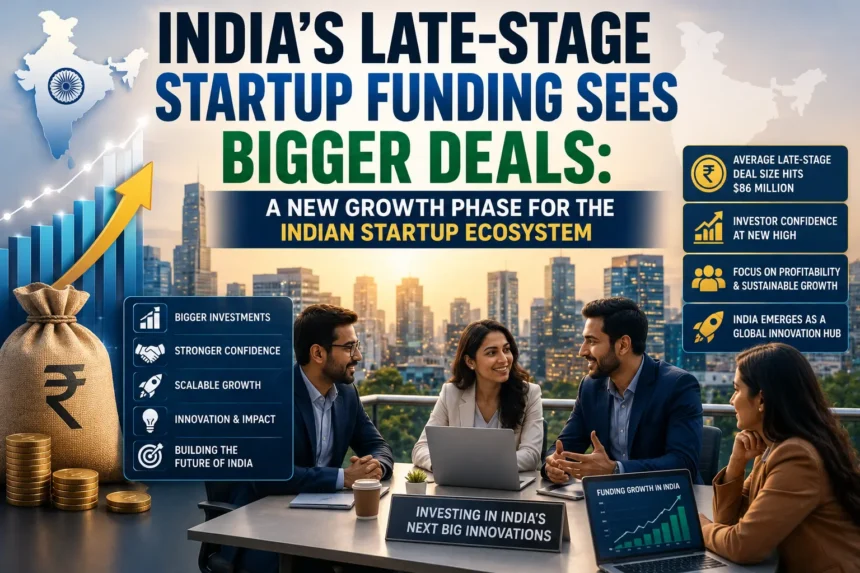
India’s startup ecosystem is entering a new phase of maturity as late-stage startup funding witnesses a remarkable increase in deal sizes during 2026. According to recent industry data, the average late-stage investment round has grown to nearly $86 million, reflecting renewed confidence among domestic and global investors despite continued economic uncertainty. This trend suggests that investors are becoming more selective, preferring to invest larger amounts in startups with proven business models, sustainable revenues, and a clear path to profitability. (The Economic Times)
Unlike the funding boom of 2021, when capital flowed freely across startups of all stages, today’s investment landscape is driven by discipline, profitability, and long-term value creation. Venture capital firms, sovereign wealth funds, private equity investors, and institutional investors are increasingly backing companies that have already established strong market positions.
Experts believe that India’s improving macroeconomic environment, digital transformation, expanding internet user base, and supportive government policies are creating favorable conditions for another wave of startup growth.
Understanding Late-Stage Startup Funding
Startup funding generally progresses through several stages:
- Seed Funding
- Pre-Series A
- Series A
- Series B
- Series C
- Series D and beyond
- Pre-IPO Funding
Late-stage funding refers to investment rounds conducted after a startup has already demonstrated:
- Stable revenue
- Strong customer base
- Market leadership
- Scalable operations
- Clear profitability roadmap
Companies at this stage typically seek funding for expansion rather than survival.
Bigger Deals Signal Investor Confidence
According to industry reports, the average size of India’s late-stage funding rounds has increased significantly in 2026.
Instead of spreading capital across hundreds of early-stage startups, investors are making fewer but much larger investments.
This reflects several important changes:
- Reduced investment risk.
- Preference for profitable companies.
- Greater focus on sustainable growth.
- Increased due diligence.
- Better governance standards.
Industry analysts believe this represents a healthier startup ecosystem compared to the rapid funding cycles seen during the pandemic years. (The Economic Times)
Why Investors Are Returning
Several factors are driving renewed investment activity.
1. Improved Profitability
Many Indian startups have shifted their focus from rapid expansion to sustainable profitability.
Companies are reducing unnecessary spending while improving operational efficiency.
This has increased investor confidence.
2. Strong Digital Economy
India continues to experience rapid digital transformation.
Key growth drivers include:
- UPI payments
- E-commerce
- Artificial Intelligence
- Cloud Computing
- SaaS
- Digital Banking
- Online Healthcare
These sectors continue attracting significant venture capital investment.
3. Large Consumer Market
India remains one of the world’s fastest-growing consumer markets.
With over 1.4 billion people, increasing smartphone penetration, and affordable internet access, startups have enormous opportunities for expansion.
4. Government Support
Government initiatives continue supporting entrepreneurship through programs such as:
- Startup India
- Digital India
- Make in India
- ONDC
- IndiaAI Mission
These initiatives have improved the country’s innovation ecosystem and encouraged both domestic and foreign investment.
Which Sectors Are Receiving the Most Investment?
Late-stage investors are focusing on startups operating in high-growth industries.
Artificial Intelligence
AI startups remain the biggest attraction for global investors.
Applications include:
- Enterprise AI
- Generative AI
- Healthcare AI
- Financial AI
- Industrial automation
FinTech
India’s fintech sector continues expanding through:
- Digital lending
- Payment solutions
- Wealth management
- Insurance technology
Software as a Service (SaaS)
Indian SaaS companies are increasingly serving international customers.
Recurring subscription revenues make SaaS businesses particularly attractive to investors.
Climate Technology
Investments in:
- Electric vehicles
- Battery technology
- Renewable energy
- Carbon management
- Sustainable manufacturing
have accelerated significantly.
Deep Technology
Investors are increasingly supporting startups working in:
- Robotics
- Space Technology
- Semiconductor Design
- Cybersecurity
- Defence Technology
Foreign Investors Return
International investment firms are once again increasing exposure to Indian startups.
Major global investors include:
- SoftBank
- Accel
- Sequoia Heritage (Peak XV Partners)
- Lightspeed Venture Partners
- Tiger Global
- General Catalyst
- Prosus Ventures
Global investors increasingly view India as one of the world’s strongest long-term technology markets.
Record Growth in Funding Size
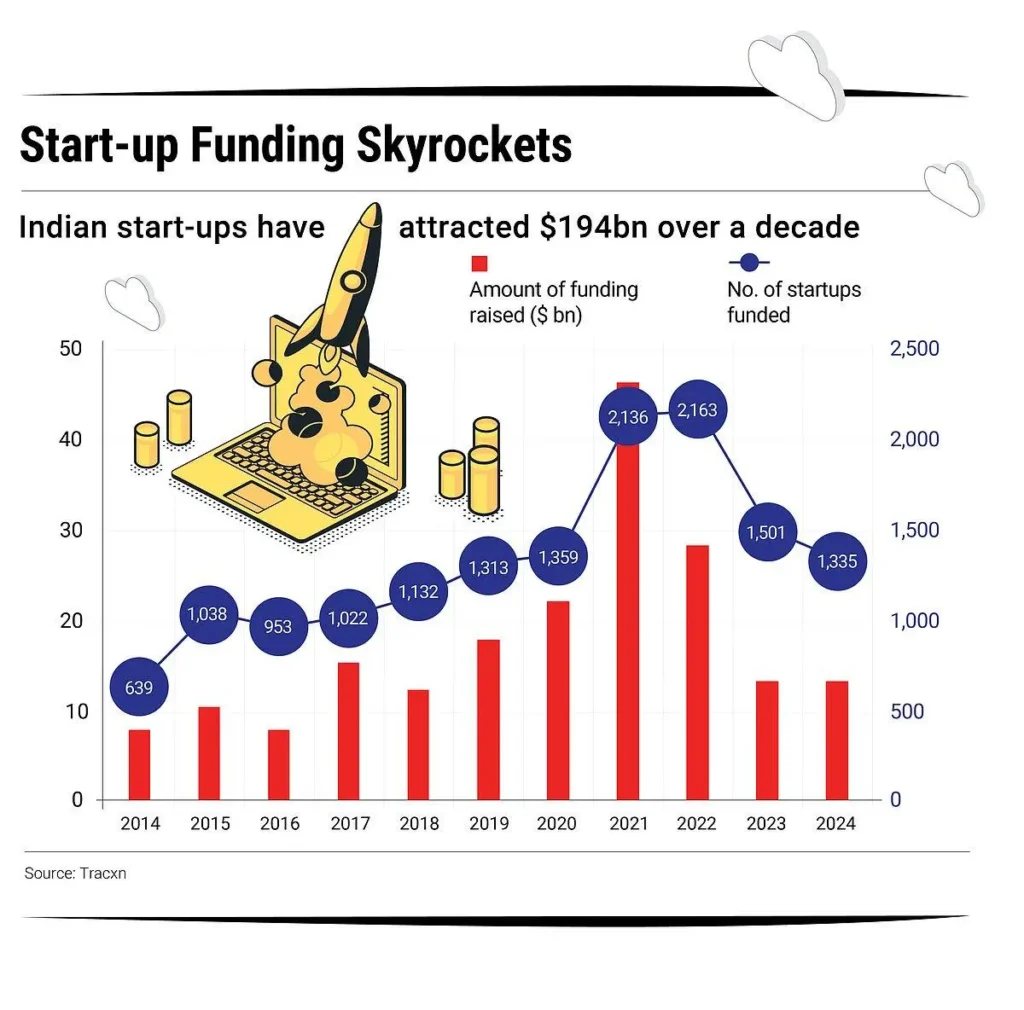
Industry reports indicate that although the number of funding rounds has declined compared with the peak years, the average cheque size has increased substantially.
This means investors are backing fewer startups but committing significantly larger amounts to companies with strong fundamentals.
Experts consider this trend a sign of a more mature and disciplined venture capital market.
IPO Market Becoming Attractive Again
Several successful Indian startups are preparing for public listings.
Companies planning IPOs encourage investors to participate in late-stage funding because public market opportunities provide potential exit routes.
The improving IPO environment has further strengthened investor confidence.
Challenges Still Remain
Despite positive trends, startups continue facing several challenges.
These include:
- Global economic uncertainty.
- High interest rates in some international markets.
- Competition for talent.
- Regulatory compliance.
- Pressure to achieve profitability.
Investors now expect startups to demonstrate sustainable financial performance rather than relying solely on rapid growth.
Impact on India’s Economy
The increase in late-stage funding is expected to generate multiple economic benefits.
These include:
- Job creation.
- Technology innovation.
- Higher exports.
- Increased tax revenues.
- Expansion of research and development.
- Growth of India’s digital economy.
Experts believe strong startup activity will contribute significantly to India’s ambition of becoming a $5 trillion economy.
India’s Position in the Global Startup Ecosystem
India is currently among the world’s largest startup ecosystems.
The country has:
- More than 120,000 DPIIT-recognized startups.
- Hundreds of unicorn companies created over the past decade.
- One of the fastest-growing venture capital markets globally.
Cities leading innovation include:
- Bengaluru
- Delhi-NCR
- Mumbai
- Hyderabad
- Pune
- Chennai
These cities continue attracting entrepreneurs and investors from around the world.
Future Outlook
Industry experts expect startup funding to remain strong throughout 2026.
Future investment is likely to focus on:
- Artificial Intelligence
- Semiconductor manufacturing
- DeepTech
- Climate technology
- Healthcare innovation
- Defence technology
- Enterprise software
Rather than chasing rapid expansion, investors are expected to prioritize sustainable growth, governance, and profitability.
Conclusion
India’s growing late-stage startup funding reflects the increasing maturity of one of the world’s most dynamic innovation ecosystems. With average deal sizes reaching record levels, investors are demonstrating confidence in startups that combine strong financial performance with scalable business models.
As government support, digital infrastructure, and entrepreneurial talent continue to expand, India is well positioned to remain a global hub for technology innovation. While funding strategies have become more disciplined, the rise in larger late-stage investments signals that investors are increasingly betting on long-term value rather than short-term growth. This shift could define the next decade of India’s startup success story and strengthen its position as one of the world’s leading destinations for innovation and venture capital. (The Economic Times)
Read More :- Europe’s Helsing Becomes an $18 Billion Defence AI Startup: A New Era for European Military Innovation.