

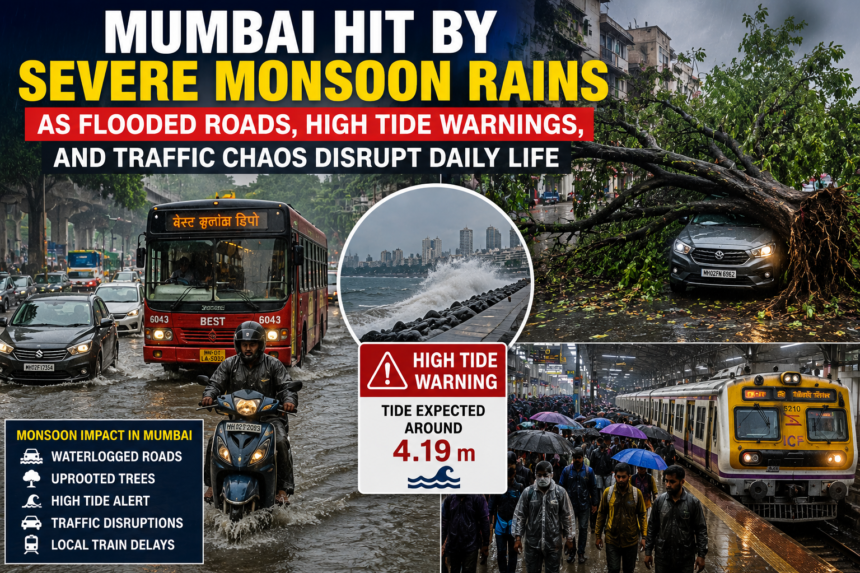
Mumbai, India’s financial capital, has once again come to a standstill as relentless monsoon rains triggered widespread flooding, traffic congestion, uprooted trees, and disruption to transport services. Heavy rainfall over the past several days has severely affected normal life across the city and neighboring districts. The India Meteorological Department (IMD) has issued a Red Alert, warning of extremely heavy rainfall, while authorities have also cautioned residents about a high tide of around 4.19 metres, which could worsen flooding in low-lying areas.
The Brihanmumbai Municipal Corporation (BMC), disaster response teams, and emergency services remain on high alert as rescue operations, drainage clearance, and traffic management continue across the city.
Heavy Rain Brings Mumbai to a Halt
Continuous rainfall since the beginning of July has overwhelmed several parts of Mumbai. Roads, railway stations, residential colonies, and commercial areas witnessed severe waterlogging, making daily commuting difficult for millions of residents.
According to weather officials, Mumbai received an exceptionally high amount of rainfall within just a few days. The Santacruz observatory recorded nearly 80% of the city’s average July rainfall in only four days, while the Colaba station also reported unusually heavy precipitation. These figures have pushed Mumbai’s seasonal rainfall well beyond the 1,000 mm mark early in the monsoon season.
IMD Issues Red Alert
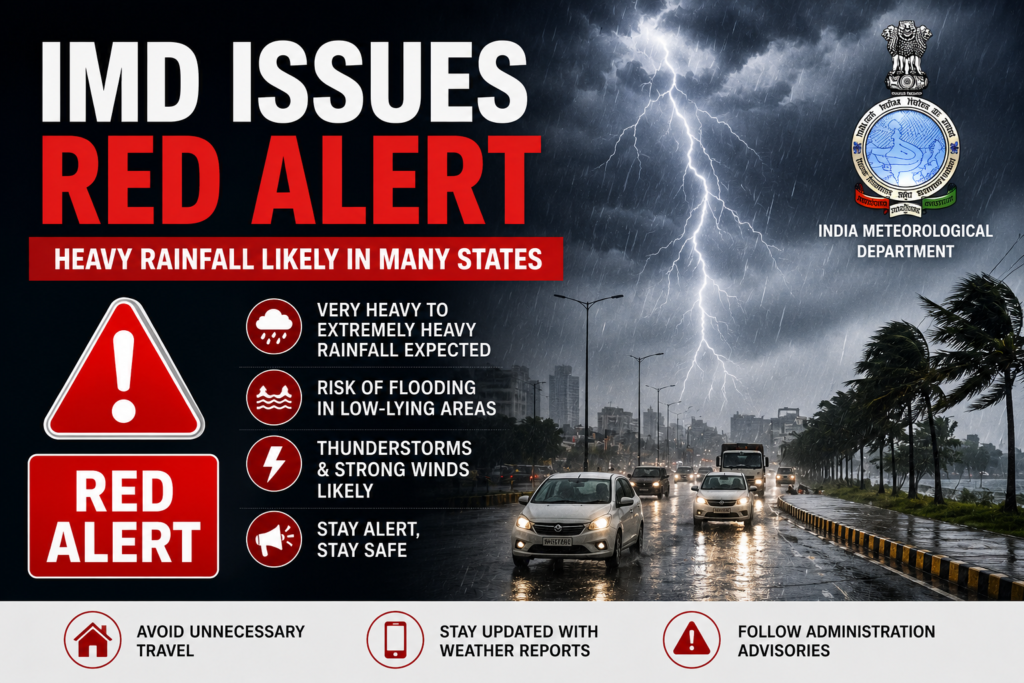
The India Meteorological Department upgraded its weather warning to a Red Alert, forecasting:
- Extremely heavy rainfall
- Thunderstorms
- Strong winds reaching 50–60 km/h
- Waterlogging in low-lying areas
- Reduced visibility
- Possible flooding
Authorities advised citizens to remain indoors unless travel is absolutely necessary. Emergency control rooms have been activated to monitor rainfall and coordinate relief efforts.
High Tide Raises Flood Risk
Along with heavy rainfall, meteorologists warned of a 4.19-metre high tide, creating additional concerns for coastal areas.
When heavy rain coincides with high tide, rainwater cannot drain efficiently into the sea. This often causes severe flooding in low-lying parts of Mumbai, including areas that experience chronic waterlogging during the monsoon season.
Municipal authorities closely monitored tidal conditions while deploying pumps to reduce flooding wherever possible.
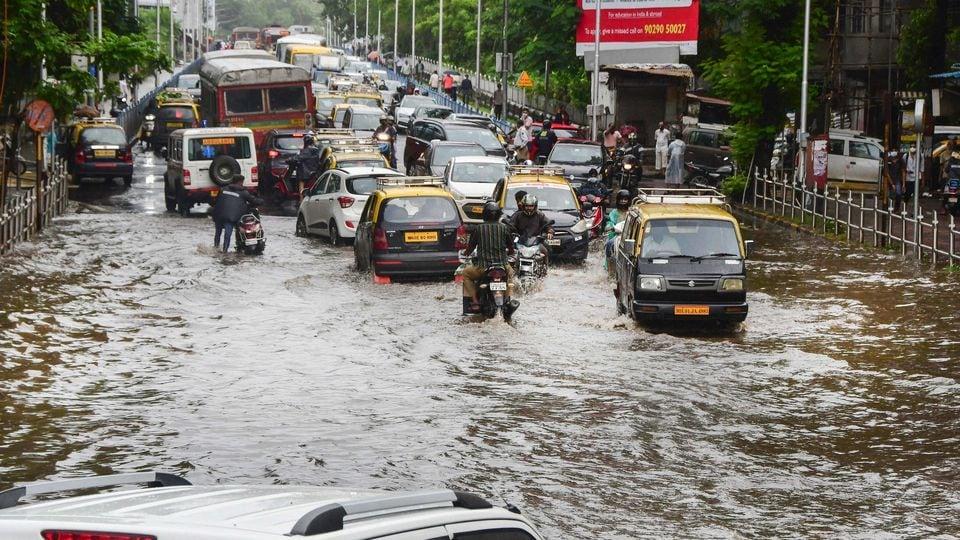
Roads Turn into Rivers
Several major roads across Mumbai remained submerged for hours after intense rainfall.
Among the worst-affected areas were:
- Andheri
- Sion
- Dadar
- Chembur
- Kurla
- Wadala
- Hindmata
- Parel
- Bandra Kurla Complex (BKC)
Heavy waterlogging significantly slowed traffic, leaving thousands of commuters stranded for extended periods.
Traffic police diverted vehicles away from flooded stretches while emergency teams worked continuously to clear blocked drainage systems.
Uprooted Trees and Infrastructure Damage
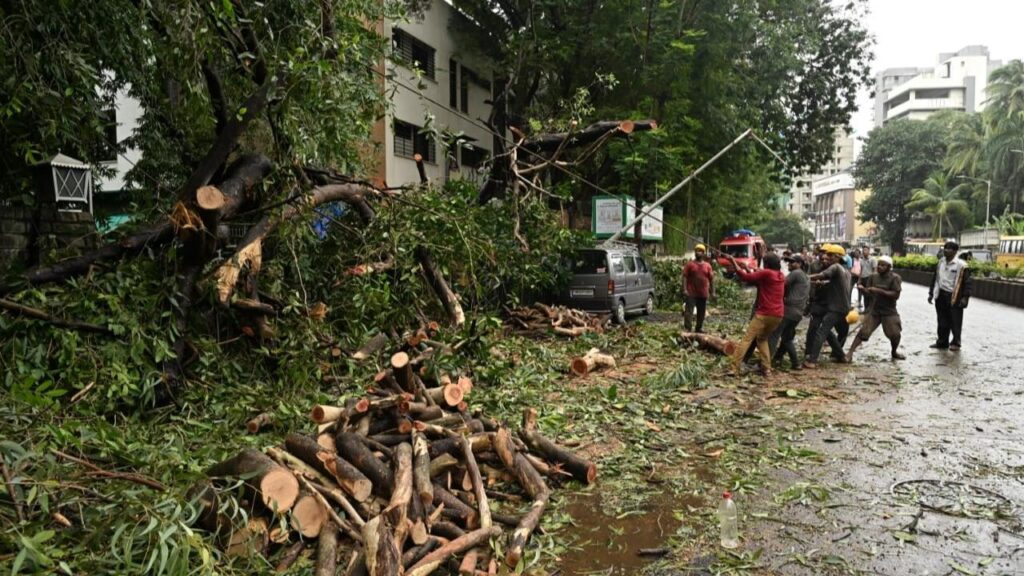
Strong winds accompanying the heavy rain uprooted numerous trees across Mumbai and nearby suburbs.
Several incidents were reported where:
- Trees fell on parked vehicles.
- Roads were blocked.
- Electricity lines were damaged.
- Public transport routes were disrupted.
Municipal workers and fire brigade personnel were deployed throughout the city to remove fallen trees and restore normal traffic movement.
Heavy rain also led to isolated incidents of wall collapses and electrical short circuits in some localities.
Impact on Public Transport
Mumbai’s extensive transport network experienced significant disruption.
Road Transport
- Long traffic jams developed on major highways.
- Bus services were delayed.
- Many commuters experienced travel times several times longer than usual.
Railway Services
Heavy rainfall affected sections of Mumbai’s suburban railway network, leading to slower train operations and delays during peak hours.
Air Travel
Some flights were delayed due to poor visibility and adverse weather conditions, although airport operations continued under close monitoring.
Emergency Response
The Brihanmumbai Municipal Corporation activated emergency response teams across the city.
Authorities:
- Cleared blocked drains
- Removed fallen trees
- Monitored flood-prone areas
- Deployed pumping stations
- Issued weather advisories
- Coordinated with disaster management agencies
Police also appealed to residents to avoid unnecessary travel and stay away from waterlogged locations where open manholes or damaged infrastructure could pose serious risks.
Why does Mumbai flood during heavy rain
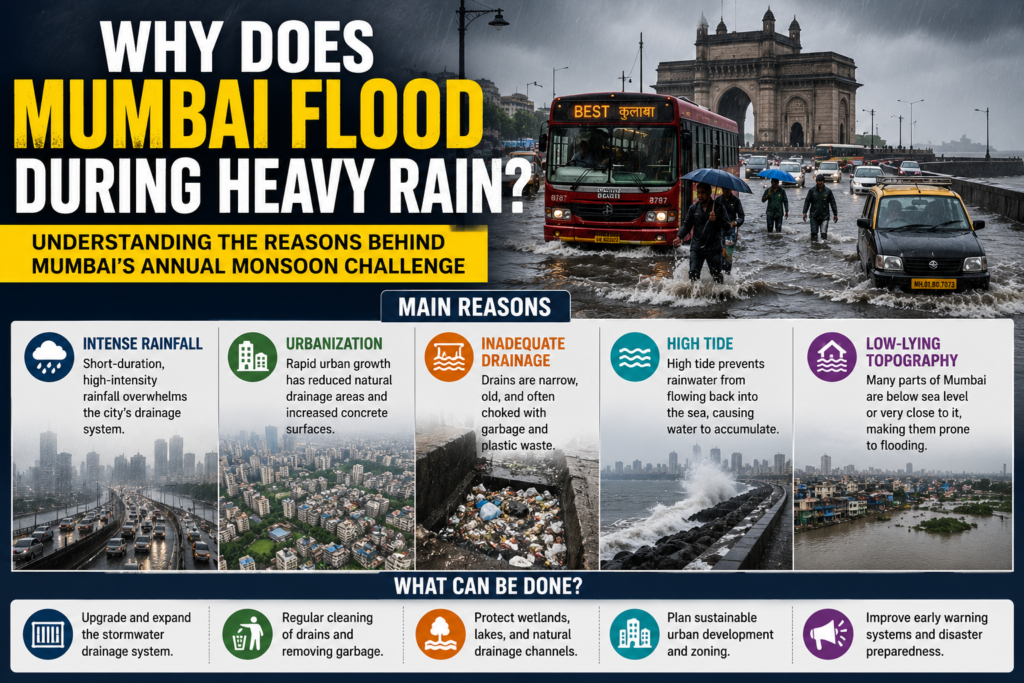
Experts say several factors contribute to recurring monsoon flooding:
High Tide
During high tide, seawater limits the drainage of rainwater into the Arabian Sea.
Urban Expansion
Rapid urbanization has reduced natural drainage areas and increased surface runoff.
Drainage Capacity
Although Mumbai’s drainage infrastructure has improved over the years, extremely intense rainfall within a short period can exceed its capacity.
Low-Lying Geography
Many neighborhoods are located close to sea level, making them particularly vulnerable to flooding.
These factors together create severe waterlogging whenever exceptionally heavy rainfall coincides with high tide.
Economic Impact
The heavy rainfall has affected multiple sectors:
- Retail businesses
- Financial services
- Manufacturing
- Transportation
- Logistics
- Hospitality
Delivery services slowed considerably, while office attendance dropped as many employees worked remotely or faced commuting difficulties.
Small businesses operating in flooded markets also reported temporary losses due to disrupted customer movement.
Public Safety Concerns
Authorities urged residents to remain cautious because heavy rainfall increases several risks, including:
- Flooding
- Falling trees
- Electrocution
- Landslides in nearby hilly areas
- Open manholes hidden beneath floodwater
- Building wall collapses
Emergency services advised people not to walk through deep water unless absolutely necessary.
Weather Outlook
According to the India Meteorological Department, heavy rainfall is expected to continue over Mumbai and neighboring districts for the next few days.
Forecasts indicate:
- Continued moderate to heavy showers
- Intermittent thunderstorms
- Strong winds
- Possibility of additional waterlogging
- Continued tidal influence along the coast
Officials have asked residents to regularly monitor official weather updates before planning travel.
Long-Term Challenges
Every monsoon season highlights Mumbai’s ongoing urban infrastructure challenges.
Urban planners believe long-term improvements require:
- Modern stormwater drainage systems
- Better flood forecasting
- Expansion of pumping infrastructure
- Protection of natural wetlands
- Improved solid waste management
- Climate-resilient urban planning
Experts also note that climate change is increasing the frequency of short-duration, high-intensity rainfall events, making adaptation increasingly important.
Conclusion
Mumbai’s latest spell of intense monsoon rain once again demonstrates both the resilience of its residents and the challenges facing one of the world’s most densely populated coastal cities. With flooded roads, uprooted trees, transport disruptions, and a high-tide warning occurring simultaneously, emergency agencies continue working around the clock to restore normalcy.
While authorities have responded with emergency measures and public advisories, the situation also underscores the need for long-term investments in drainage, flood management, and climate-resilient infrastructure. As the monsoon continues, residents are advised to stay informed through official weather bulletins, avoid unnecessary travel during periods of intense rainfall, and follow safety instructions issued by local authorities.