

Introduction
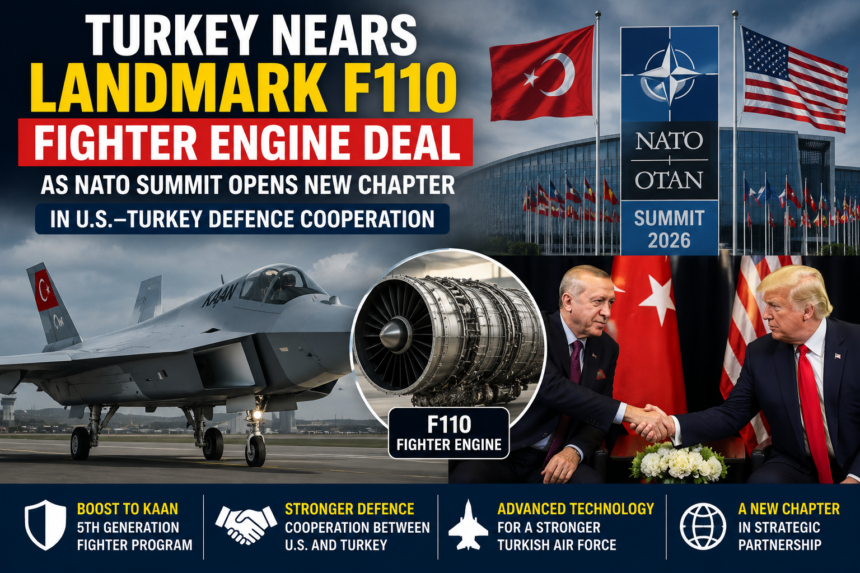
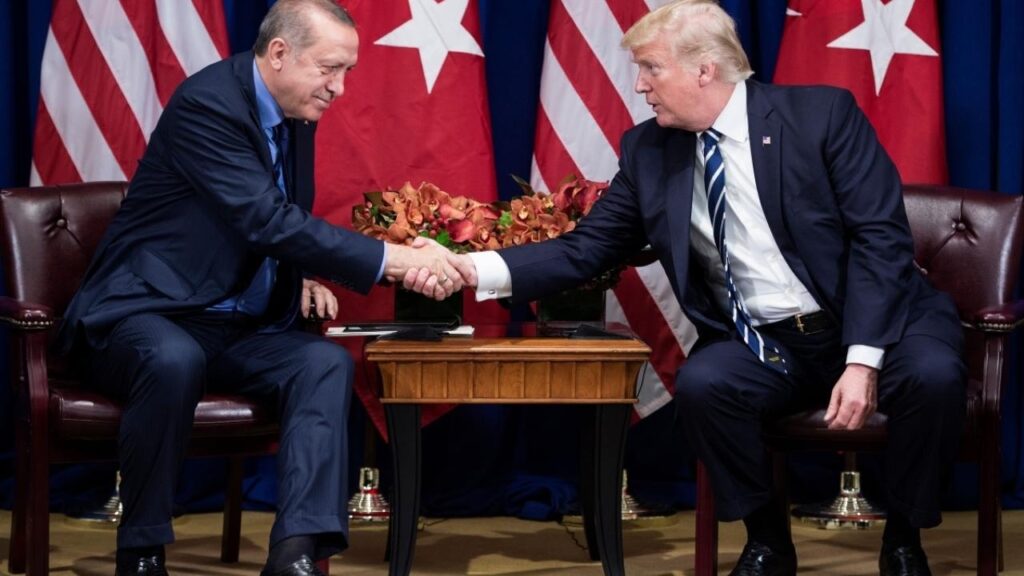
Turkey is seeking to strengthen its indigenous defence capabilities by moving closer to securing General Electric (GE) F110 fighter jet engines for its next-generation KAAN stealth fighter aircraft. The development comes just days before U.S. President Donald Trump’s planned visit to Ankara for the NATO Summit, where defence cooperation is expected to feature prominently on the agenda. Analysts believe the proposed engine sale could represent a significant step forward in U.S.–Turkey defence relations, although it is unlikely to resolve the long-running dispute surrounding Turkey’s exclusion from the F-35 fighter jet programme.
Turkey’s Push for Advanced Fighter Engines
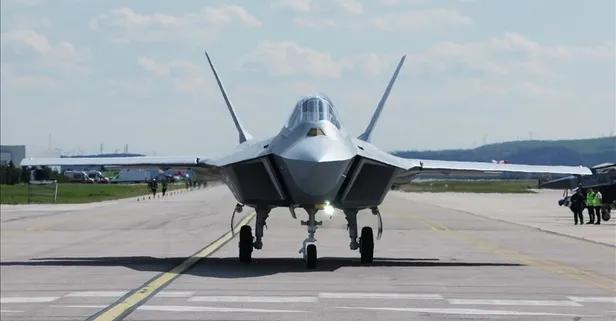
Turkey has been developing the KAAN fifth-generation stealth fighter as part of its broader effort to modernize its air force and reduce dependence on imported military technology. While Ankara plans to eventually equip KAAN with a domestically developed engine, the project remains under development.
To keep the programme on schedule, Turkey is seeking additional GE F110 afterburning turbofan engines, which currently power the aircraft’s prototypes. Reports indicate that Washington is preparing to move ahead with the sale of dozens of these engines, valued at more than $700 million.
Why the F110 Engine Matters
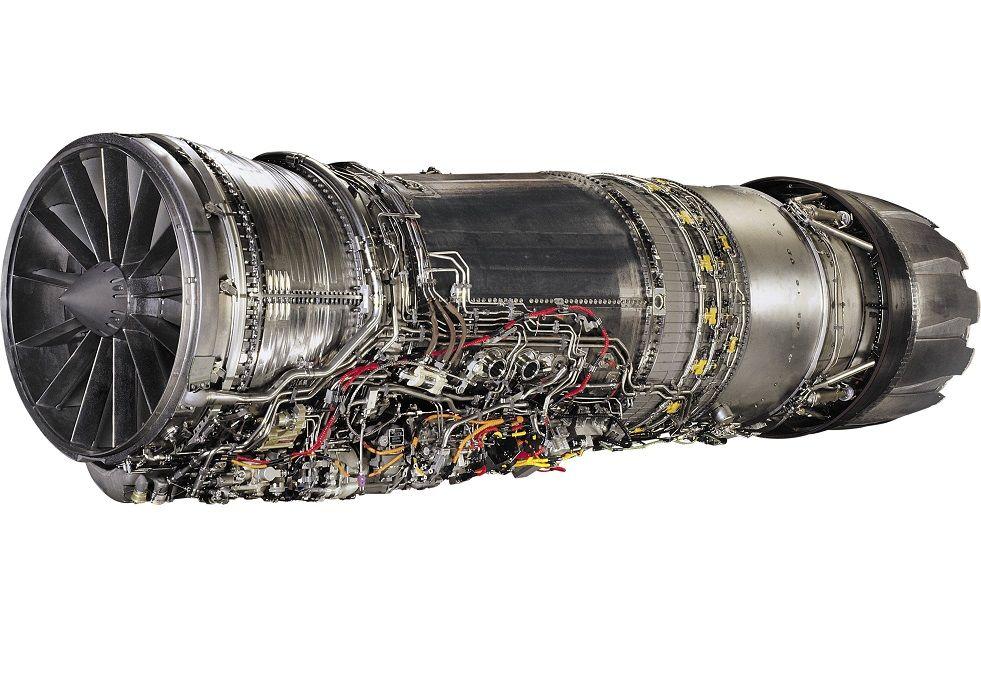
The F110 is one of the world’s most widely used military jet engines and powers several combat aircraft, including versions of the F-16 Fighting Falcon and F-15 Eagle.
For Turkey, receiving additional F110 engines would allow:
- Expansion of KAAN flight testing.
- Development of additional prototype aircraft.
- Faster progress toward serial production.
- Continued modernization of the Turkish Air Force.
Although Turkey intends to replace the F110 with an indigenous engine in the future, defence officials have acknowledged that domestic engine development will take several more years.
Trump’s NATO Visit
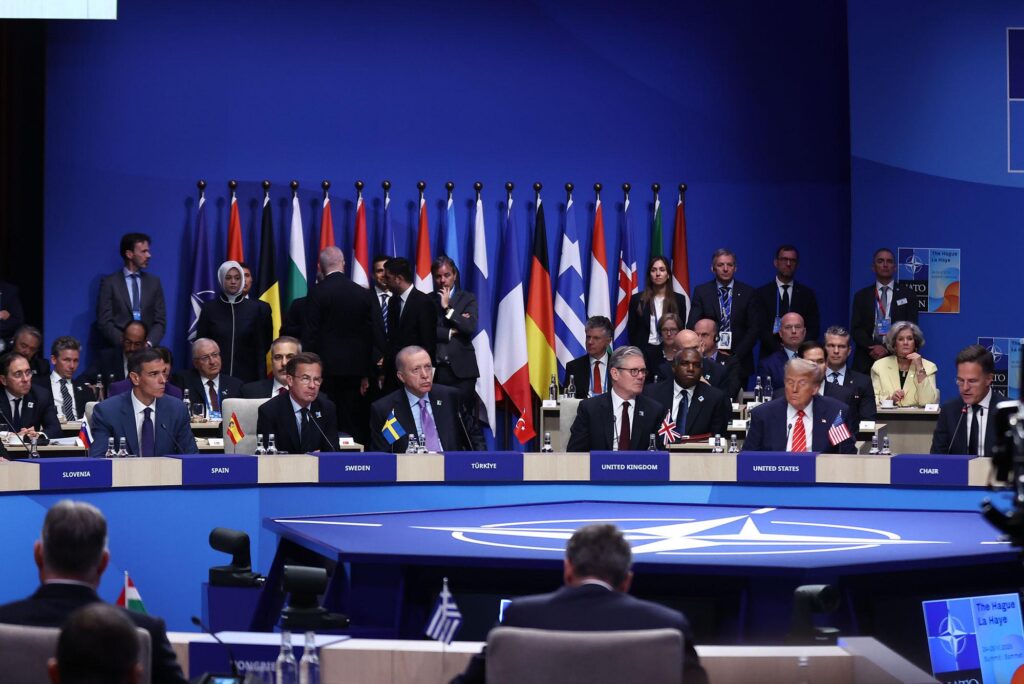
The proposed engine deal has gained attention because it coincides with President Trump’s expected visit to Ankara for the NATO Summit on 7–8 July 2026.
The summit is expected to focus on:
- NATO’s collective defence strategy.
- Security challenges in Europe and the Middle East.
- Defence spending commitments.
- Military cooperation among alliance members.
- Regional security issues.
Observers believe Trump’s visit provides an opportunity to improve defence cooperation between Washington and Ankara after several years of strained relations.
The Long Shadow of the F-35 Dispute
Despite progress on the engine issue, experts caution that the proposed sale does not automatically resolve Turkey’s exclusion from the U.S.-led F-35 Lightning II programme.
The dispute dates back to Turkey’s purchase of the Russian-made S-400 air defence system, which prompted the United States to remove Ankara from the F-35 programme and impose sanctions under the CAATSA framework.
Congressional restrictions linked to the S-400 issue continue to complicate any potential return of Turkey to the F-35 programme.
Turkey’s Indigenous Defence Vision
Over the past decade, Turkey has significantly expanded its domestic defence industry.
Major indigenous programmes include:
- KAAN fifth-generation fighter aircraft.
- Bayraktar unmanned combat drones.
- ATAK helicopters.
- Naval warship programmes.
- Indigenous missile systems.
The KAAN project is considered one of Turkey’s most ambitious aerospace initiatives, aimed at replacing the country’s aging fleet of F-16 fighter jets while increasing defence self-reliance.
Strategic Importance for NATO
Turkey occupies a strategically important position within NATO due to its location between Europe, the Middle East, and the Black Sea region.
Its military plays a significant role in:
- Regional security.
- Counter-terrorism operations.
- Black Sea stability.
- Mediterranean security.
- NATO’s southern flank.
Strengthening Turkey’s defence capabilities is viewed by some analysts as beneficial for the alliance, although political disagreements between Ankara and several Western allies remain.
Possible Economic Impact
The proposed engine sale would benefit multiple stakeholders:
For Turkey
- Accelerated KAAN development.
- Growth of domestic aerospace manufacturing.
- Increased defence exports in the future.
- Greater technological independence.
For the United States
- Expansion of defence exports.
- Stronger industrial cooperation.
- Reinforced strategic ties with a NATO ally.
Industry experts believe the agreement could also create opportunities for future collaboration in aerospace technologies.
Challenges Remain
Despite positive signals, several issues remain unresolved:
- Congressional approval processes in the United States.
- Ongoing CAATSA sanctions.
- The future of Turkey’s S-400 missile system.
- Long-term F-35 negotiations.
- Balancing Turkey’s strategic ties with both NATO and Russia.
Analysts note that while the engine deal appears achievable, broader defence disputes are likely to require longer-term diplomatic engagement.
What Comes Next?
If approved, the engine sale would allow Turkey to continue expanding flight tests of the KAAN programme before transitioning to its planned indigenous powerplant later in the decade.
Officials from both countries are expected to hold further discussions during the NATO Summit, where defence cooperation, regional security, and alliance priorities will remain central topics.
Conclusion
Turkey’s efforts to secure F110 fighter jet engines represent an important milestone in its ambition to build an independent fifth-generation fighter aircraft. While the anticipated U.S. approval could significantly advance the KAAN programme and improve bilateral defence cooperation, it is unlikely to resolve the deeper political disagreements surrounding Turkey’s removal from the F-35 programme.
As NATO leaders gather in Ankara, the proposed engine deal is expected to be closely watched as an indicator of the future direction of U.S.–Turkey strategic relations and defence cooperation.