

New Delhi | National Desk | PaperPatrika
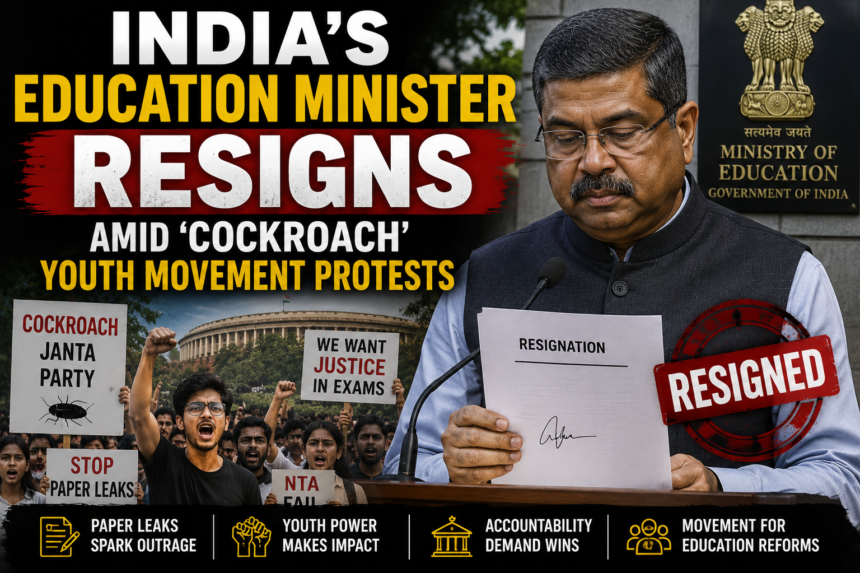
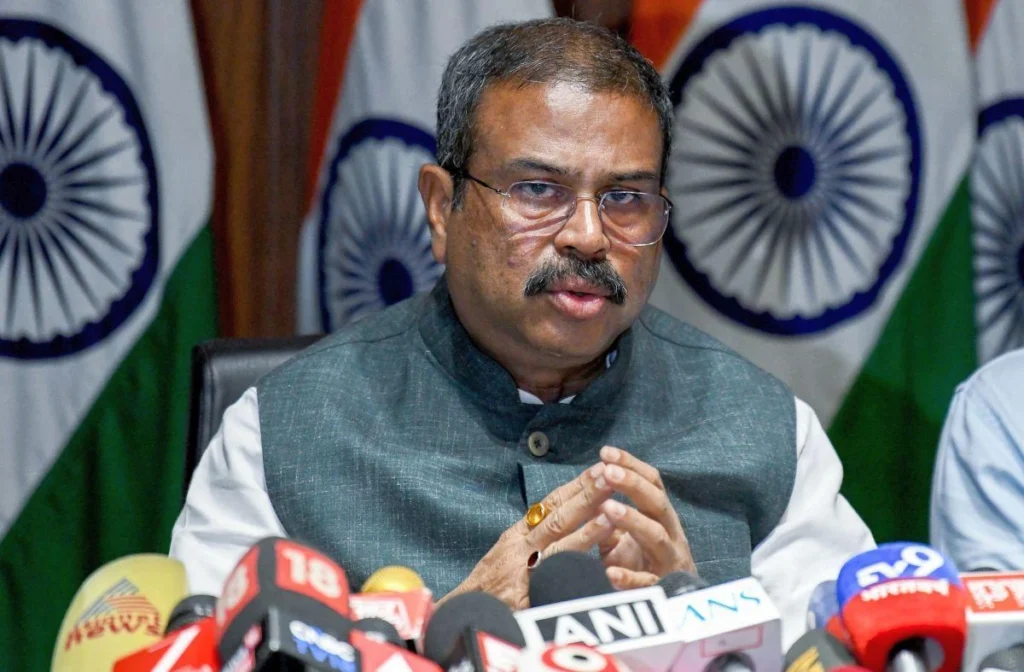
In one of the most significant political developments of 2026, Union Education Minister Dharmendra Pradhan resigned on Saturday after weeks of nationwide student-led demonstrations demanding accountability over examination paper leaks and alleged irregularities in India’s education system. The resignation marks a major victory for the youth-led Cockroach Janta Party (CJP) movement, whose protests evolved from an online campaign into one of the country’s largest civic mobilisations in recent years.
A Political Turning Point
The resignation came after sustained protests across several Indian cities, with demonstrators accusing the Education Ministry of failing to prevent repeated examination paper leaks, particularly surrounding the NEET-UG 2026 examination.
For weeks, students gathered at Jantar Mantar in New Delhi, joined by opposition leaders, civil society activists, teachers, and parents. The movement gained further momentum following police action against protesters, which drew widespread criticism and intensified public pressure on the government. (Reuters)
Why Were Students Protesting?
The protests were triggered by allegations of serious irregularities in India’s competitive examination system.
Students demanded:
- Accountability for examination paper leaks.
- Greater transparency in recruitment and entrance examinations.
- Stronger action against examination mafias.
- Comprehensive reforms in public examination systems.
- The resignation of Education Minister Dharmendra Pradhan.
Many students argued that repeated examination cancellations and alleged leaks had jeopardised the future of millions of candidates preparing for highly competitive professional courses. (NDTV Profit)
Rise of the ‘Cockroach’ Movement
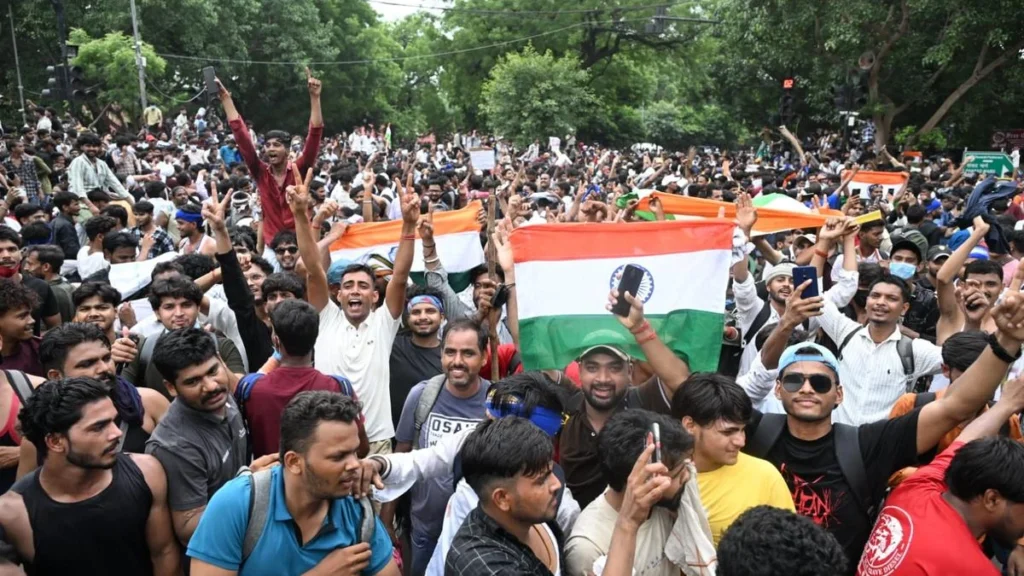
The Cockroach Janta Party (CJP) began as an online satirical campaign but rapidly transformed into a nationwide youth movement.
Using memes, humour, and social media, thousands of young Indians criticised corruption, examination failures, unemployment, and governance issues. The movement attracted massive support among Generation Z and soon expanded from digital platforms to street demonstrations across multiple states. (Time)
Dharmendra Pradhan Announces Resignation
In a public letter shared on social media, Dharmendra Pradhan stated that he had submitted his resignation to Prime Minister Narendra Modi.
He wrote that his decision was taken to ensure that students’ futures were not adversely affected and to prevent further escalation of tensions.
Pradhan maintained that he had accepted responsibility from the beginning of the controversy and hoped his resignation would help restore confidence in the education system while allowing students to focus on their careers.
Government’s Position
The Union Government has maintained that several corrective measures had already been initiated after the examination controversy emerged.
Among the actions highlighted were:
- Transfer of investigations to the Central Bureau of Investigation (CBI).
- Cancellation of the affected examination.
- Scheduling of fresh examinations.
- Stronger monitoring mechanisms for future tests.
However, student organisations argued that administrative reforms alone were insufficient without political accountability.
Celebrations at Protest Sites
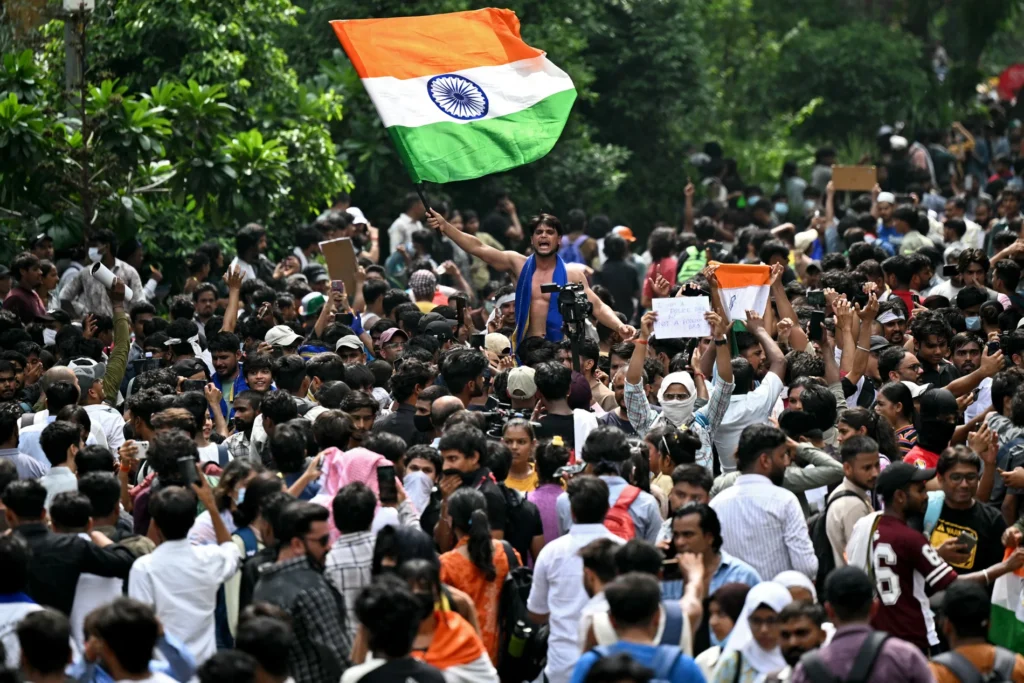
Soon after news of the resignation became public, celebrations broke out at Jantar Mantar and other protest locations.
Supporters waved the national flag, distributed sweets, chanted slogans, and described the resignation as a victory for democratic participation and peaceful public pressure.
Abhijeet Dipke, one of the prominent faces of the movement, declared that the decision reflected the power of organised youth voices. Protest leaders, however, clarified that the broader campaign for education reform would continue. (Reuters)
Sonam Wangchuk’s Response
Environmental activist Sonam Wangchuk, who had recently concluded a 26-day hunger strike related to education reforms and student protection, welcomed the resignation.
He described it as an important step toward accountability while urging the government to implement structural reforms rather than limiting its response to leadership changes.
Wangchuk also appealed to students to continue pursuing peaceful democratic engagement.
Opposition Reactions
Opposition parties welcomed the resignation but argued that deeper institutional reforms were still necessary.
Several leaders stated that the resignation should be viewed as only the beginning of a broader effort to improve transparency in public examinations, recruitment processes, and educational governance.
They also demanded stronger legal action against examination rackets and officials found responsible for irregularities. (The Indian Express)
Impact on Prime Minister Modi’s Government
Political analysts describe the resignation as one of the most significant ministerial departures during Prime Minister Narendra Modi’s administration.
Many observers believe the episode demonstrates the growing influence of digitally organised youth movements capable of translating online mobilisation into nationwide public demonstrations.
The protests have also highlighted increasing public concern over education, employment opportunities, and institutional accountability. (Reuters)
Education System Under Scrutiny
India’s examination system serves millions of students every year through highly competitive national entrance examinations.
Recent controversies have renewed debate over:
- Digital security of examination papers.
- Recruitment transparency.
- Protection against organised cheating networks.
- Independent examination oversight.
- Technological reforms in testing systems.
Education experts argue that restoring public confidence will require long-term structural reforms rather than isolated administrative measures. (Financial Times)
What Happens Next?
Following Pradhan’s resignation, attention is expected to shift toward:
- Appointment of a new Union Education Minister.
- Ongoing negotiations between the government and protest representatives.
- Implementation of promised examination reforms.
- Progress of CBI investigations into examination irregularities.
- Possible legislative changes to strengthen examination security.
Student organisations have indicated that they will continue monitoring government actions before deciding whether to conclude nationwide demonstrations.
Broader Significance
The Cockroach movement has become more than a campaign against examination irregularities.
It now represents broader concerns among young Indians regarding:
- Educational fairness.
- Employment opportunities.
- Government accountability.
- Democratic participation.
- Institutional transparency.
Political commentators suggest the movement may influence future policy debates on education, governance, and youth engagement across the country. (AP News)
Conclusion
The resignation of Dharmendra Pradhan marks a defining moment in India’s ongoing education reform debate. While student protesters have secured one of their principal demands, the larger challenge now lies in rebuilding trust in the country’s examination system through meaningful institutional reforms.
Whether this political development leads to lasting improvements will depend on how effectively the government implements promised reforms, strengthens examination security, and restores confidence among millions of students whose academic futures depend on a transparent and credible education system.
Also Read: – Jantar Mantar Protest Update: Sonam Wangchuk Ends 26-Day Hunger Strike; CJP Founder Abhijeet Dipke Vows Protest Will Continue Until Dharmendra Pradhan Resigns
Jantar Mantar Protest: CJP Demands Dharmendra Pradhan’s Resignation Despite PM Modi’s Assurance of Paper Leak Probe
‘Don’t Waste Our Time’: CJI Surya Kant Declines to Take Cognisance of Alleged Police Violence During CJP’s Parliament March
Union Education Minister Pradhan Accuses Rahul Gandhi, Congress of Exploiting Students; CJP Protest at Jantar Mantar Draws Opposition Leaders
Parliament Monsoon Session: Opposition’s Demand for Debate on Question Paper Leaks Disrupts Both Houses
Thousands Gather at Jantar Mantar Ahead of CJP’s ‘Chalo Parliament’ March; Security Tightened as Protest Gains Momentum
Sonam Wangchuk Hunger Strike: Refuses Medical Treatment as Dipke Continues Fast
Kejriwal Visits Sonam Wangchuk at Jantar Mantar, Recalls 2011 Anna Hazare Anti-Corruption Movement
Sonam Wangchuk Hunger Strike Enters Day 17: Appeals Grow as Political Leaders Call for an End to the Fast