
By PaperPatrika Business Desk | New Delhi
Introduction
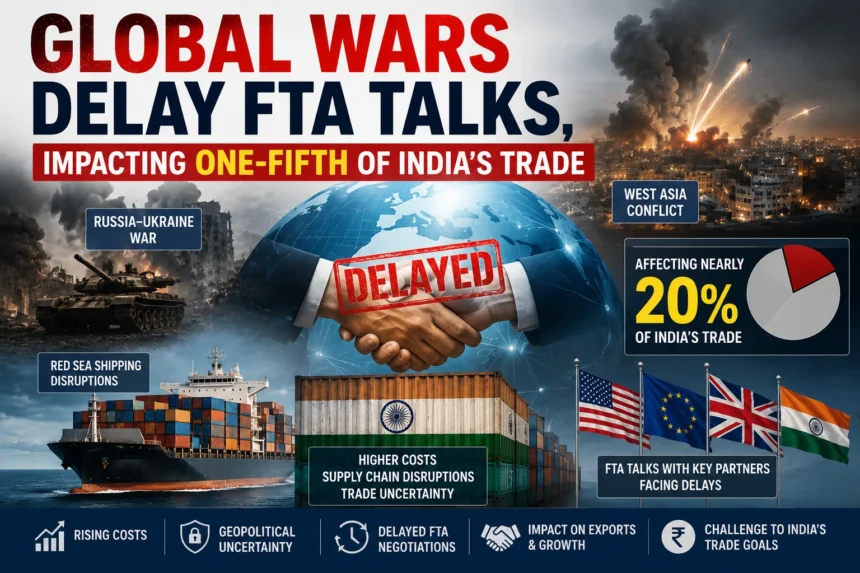
Escalating geopolitical conflicts across the globe are reshaping international trade and slowing negotiations on several major Free Trade Agreements (FTAs) involving India. Ongoing conflicts in West Asia, the Russia–Ukraine war, tensions in the Red Sea, and growing economic rivalry between the United States and China have created significant uncertainty in global commerce.
According to recent developments, these geopolitical disruptions are delaying trade negotiations involving countries that together account for around one-fifth (20%) of India’s total merchandise trade. While India continues to pursue ambitious trade partnerships with major economies such as the European Union (EU), the United States, and Oman, global instability is forcing governments to adopt a more cautious approach.
Experts believe that although India’s long-term trade prospects remain strong, continued military conflicts and supply chain disruptions could postpone several landmark agreements that are crucial for achieving India’s target of becoming a $5 trillion-plus export economy.
What is an FTA?
A Free Trade Agreement (FTA) is a pact between two or more countries that reduces or eliminates tariffs, customs duties, and trade barriers. Such agreements encourage smoother trade, greater investment, technology transfer, and economic cooperation.
India has already signed significant FTAs with:
- United Arab Emirates (UAE)
- Australia
- Mauritius
- United Kingdom
Meanwhile, negotiations continue with:
- European Union
- United States
- Oman
- Peru
- Gulf Cooperation Council (GCC)
These agreements are expected to open new markets for Indian exporters while attracting foreign investment.
Current Global Conflicts Affecting Trade
Several ongoing conflicts have disrupted international commerce.
1. West Asia Crisis
The continuing conflict involving Iran, Israel, and U.S. military operations has increased uncertainty in one of the world’s most important energy corridors.
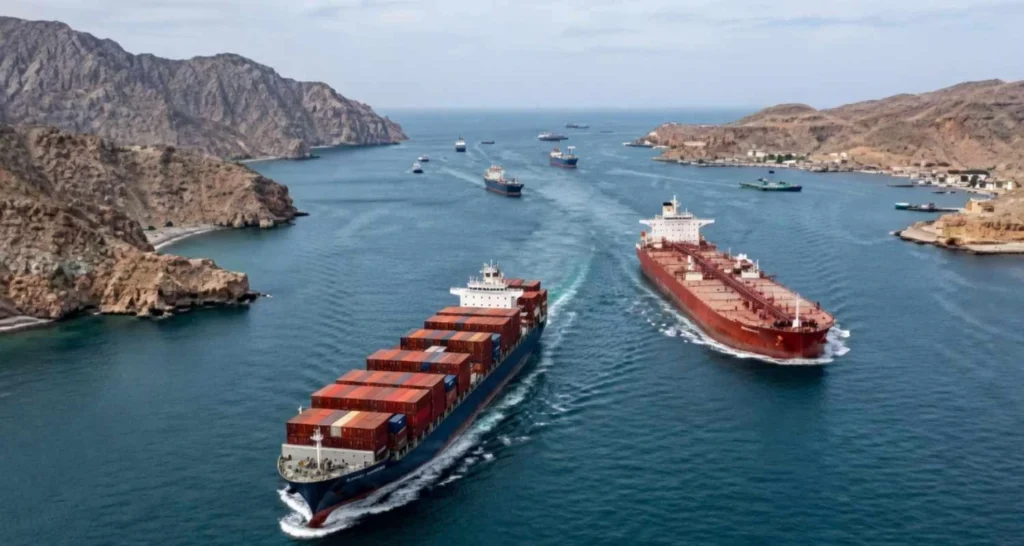
The Strait of Hormuz, through which nearly one-fifth of global crude oil passes, has become increasingly vulnerable to military escalation.
Any disruption here directly impacts:
- Oil prices
- Shipping costs
- Insurance premiums
- Global freight movement
Since India imports nearly 85% of its crude oil, instability in this region significantly raises import costs.
2. Russia–Ukraine War
The prolonged Russia–Ukraine conflict continues to affect:
- Fertilizer supplies
- Food grain exports
- Energy markets
- Metal prices
Sanctions imposed by Western nations have also complicated international payment systems and logistics.
3. Red Sea Shipping Crisis
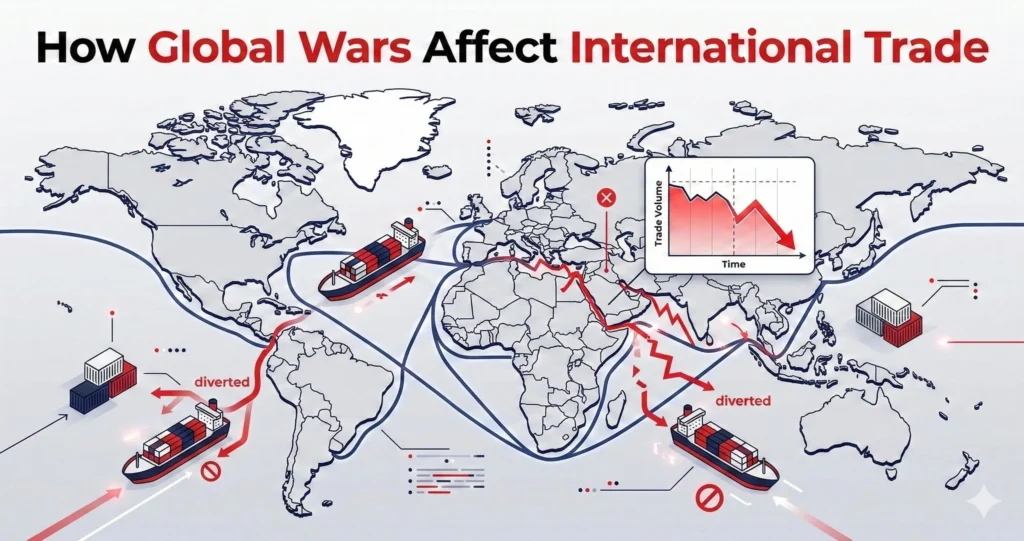
Commercial vessels transiting through the Red Sea have increasingly faced security threats.
As a result:
- Ships are taking longer routes around Africa.
- Freight costs have increased.
- Delivery times have become unpredictable.
This has raised transportation costs for Indian exporters and importers alike.
4. U.S.–China Trade Rivalry
Trade restrictions between the world’s two largest economies continue to reshape global manufacturing.
Countries are increasingly trying to diversify supply chains, creating opportunities for India—but also increasing pressure to finalize trade agreements quickly.
Why Are FTA Negotiations Slowing?
Trade agreements require political stability and predictable economic conditions.
Current conflicts have complicated negotiations because governments are focusing on:
- National security
- Energy security
- Domestic industries
- Supply chain resilience
- Strategic partnerships
Instead of rapidly reducing tariffs, countries are becoming more protective of sensitive sectors such as agriculture, technology, pharmaceuticals, and manufacturing.
India’s Trade Exposure
Commerce experts estimate that countries currently negotiating FTAs with India account for nearly 20% of India’s external trade.
This includes major trading partners such as:
- European Union
- United States
- United Kingdom
- Gulf countries
Any delay in these agreements affects:
- Export competitiveness
- Foreign investment
- Manufacturing expansion
- Job creation
- Supply chain integration
India–United States Trade Talks
India and the United States continue discussions on an interim trade agreement.
Major issues include:
- Agricultural market access
- Digital trade regulations
- Tariff reductions
- Intellectual property
- Industrial goods
Both countries have expressed willingness to deepen economic cooperation, but unresolved differences continue to delay a comprehensive agreement.
India has repeatedly emphasized that any deal must protect domestic farmers, MSMEs, and strategic industries.
India–European Union FTA
Negotiations with the European Union remain among India’s most significant trade priorities.
Major discussion points include:
- Carbon Border Adjustment Mechanism (CBAM)
- Food safety standards
- Environmental regulations
- Digital governance
- Investment protection
If finalized successfully, the agreement could significantly boost exports of:
- Engineering goods
- Pharmaceuticals
- Textiles
- Chemicals
- Processed food
However, meeting European regulatory standards remains a major challenge.
UK FTA Provides Positive Momentum
Despite global uncertainties, India recently implemented its trade agreement with the United Kingdom.
The agreement is expected to benefit sectors including:
- Apparel
- Leather
- Marine products
- Gems and jewellery
- Auto components
- Information Technology
The UK deal demonstrates that mutually beneficial agreements remain possible even during periods of geopolitical instability.
Impact on Indian Businesses
Several industries are closely monitoring the progress of FTA negotiations.
Most affected sectors include:
Manufacturing
Higher logistics costs reduce competitiveness.
Textiles
Delayed tariff concessions affect exports to developed markets.
Pharmaceuticals
Regulatory harmonization under FTAs remains incomplete.
Agriculture
Farm exports await improved market access.
Engineering Goods
Supply chain disruptions increase production costs.
MSMEs
Smaller exporters face greater pressure due to higher freight and insurance expenses.
Energy Prices and Inflation
Global conflicts continue to push crude oil prices higher.
Higher oil prices lead to:
- Increased transportation costs
- Higher manufacturing expenses
- Inflationary pressure
- Reduced export competitiveness
Since energy is a major input across industries, prolonged geopolitical tensions can affect India’s overall economic growth.
Supply Chain Challenges
The pandemic had already exposed vulnerabilities in global supply chains.
Current military conflicts have further intensified concerns by:
- Increasing shipping delays
- Raising insurance costs
- Reducing port efficiency
- Creating shortages of critical raw materials
Companies worldwide are now diversifying production bases, presenting India with both opportunities and challenges.
Government Strategy
The Indian government continues to pursue a balanced trade policy.
Its priorities include:
- Protecting domestic industries.
- Expanding exports.
- Diversifying global markets.
- Strengthening manufacturing under “Make in India.”
- Securing resilient supply chains.
Officials have repeatedly stated that India will not rush into trade agreements that could negatively affect long-term national interests.
Expert Opinion
Economists believe geopolitical conflicts have fundamentally changed the nature of international trade.
Modern FTAs now extend beyond tariff reductions and increasingly include:
- Strategic supply chains
- Critical minerals
- Digital trade
- Climate standards
- Data governance
- National security considerations
As a result, negotiations have become more complex and time-consuming.
Challenges Ahead
India faces multiple challenges in the coming months:
- Managing higher import costs.
- Protecting export competitiveness.
- Finalizing pending FTAs.
- Adapting to changing global supply chains.
- Reducing dependence on vulnerable shipping routes.
Despite these obstacles, India’s strong domestic market and expanding manufacturing sector continue to attract international investors.
Outlook
While global wars have undoubtedly slowed India’s trade negotiations, they have not altered the country’s long-term trade ambitions.
The successful implementation of the India–UK FTA demonstrates that progress remains possible despite geopolitical uncertainty.
If ongoing negotiations with the European Union, the United States, and other partners conclude successfully, India could significantly expand its global trade footprint over the next decade.
However, much will depend on the evolution of conflicts in West Asia, Eastern Europe, and other strategic regions, as well as the ability of nations to restore confidence in international trade and supply chains.
Also Read: – West Asia War: U.S. Strikes Iran for 10th Consecutive Night as Tehran Targets Tanker in the Strait of Hormuz