

New Delhi | Business Desk
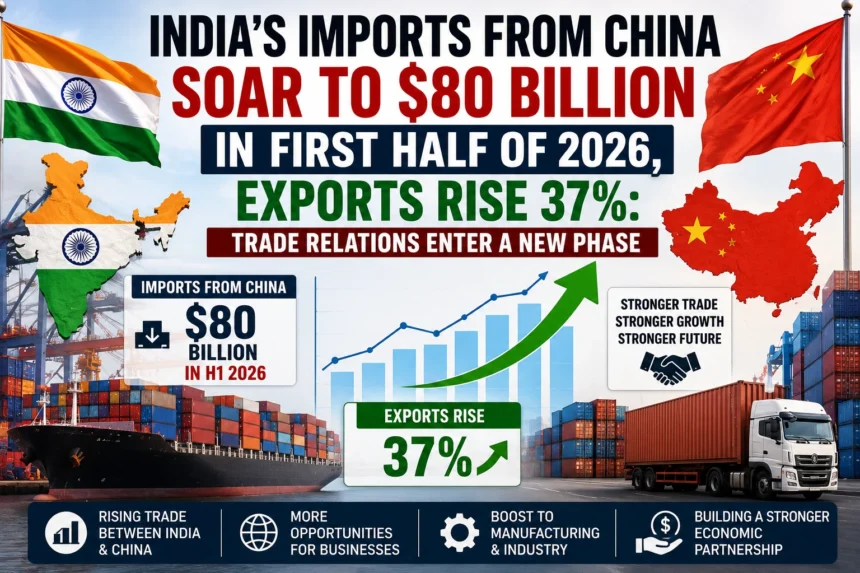
India’s trade relationship with China has reached a new milestone in 2026, with imports from China touching nearly $80 billion during the first six months of the year, while India’s exports to China registered an impressive 37% year-on-year increase. The latest trade figures highlight the growing economic interdependence between Asia’s two largest economies despite ongoing geopolitical differences and efforts by India to diversify its supply chains. According to trade officials, the rise has been driven by strong demand for electronic components, machinery, chemicals, renewable energy equipment, and industrial raw materials, while Indian exports have benefited from increased shipments of engineering goods, iron ore, marine products, agricultural commodities, and specialty chemicals. (The Economic Times)
Economists note that although India’s imports continue to significantly exceed exports, the rapid growth in outbound shipments to China is an encouraging sign for Indian exporters. At the same time, policymakers continue to focus on reducing the trade deficit through domestic manufacturing initiatives such as Make in India, the Production Linked Incentive (PLI) scheme, and efforts to expand exports into high-value sectors.
India’s Trade with China Continues to Expand
China remains one of India’s largest trading partners and a key source of industrial goods.
Trade between the two countries covers a wide range of products, including:
- Electronic components
- Smartphones and accessories
- Industrial machinery
- Solar panels
- Active pharmaceutical ingredients (APIs)
- Chemicals
- Steel products
- Consumer electronics
- Automobile components
Many Indian industries rely on Chinese intermediate goods because of competitive pricing, large production capacity, and integrated manufacturing supply chains.
Imports Reach Nearly $80 Billion.
According to official trade estimates, imports from China during the January–June 2026 period reached approximately $80 billion, representing one of the highest six-month import totals on record.
Several sectors contributed to this increase:
Electronics
India’s expanding electronics manufacturing industry continues to import semiconductors, display panels, batteries, and precision components from China.
Renewable Energy
Solar modules, photovoltaic cells, batteries, and related equipment remain major import categories as India accelerates its clean energy transition.
Pharmaceuticals
Although India is a global pharmaceutical exporter, manufacturers continue to depend heavily on Chinese APIs and chemical intermediates for medicine production.
Industrial Machinery
Factories across India import advanced machinery and manufacturing equipment to expand production capacity.
These imports support industrial growth but also contribute to a widening trade imbalance.
Exports to China Rise by 37%
One of the most significant developments in the latest trade data is the 37% increase in India’s exports to China compared with the same period last year.
Major export categories include:
- Iron ore
- Petroleum products
- Marine products
- Agricultural commodities
- Cotton yarn
- Engineering goods
- Organic chemicals
- Specialty minerals
The increase reflects stronger Chinese demand and improved competitiveness of several Indian export sectors.
Officials say higher exports could help diversify India’s overseas markets while strengthening manufacturing output.
Why Are Imports Growing So Rapidly?
Experts identify several reasons for the surge in imports.
1. Manufacturing Expansion
India’s manufacturing sector is growing rapidly under government initiatives aimed at boosting domestic production.
Many factories still require imported components before finished products can be assembled locally.
2. Electronics Demand
Consumer demand for smartphones, laptops, televisions, and smart devices continues to rise.
Many of these products depend on components manufactured in China.
3. Infrastructure Projects
Large infrastructure developments require heavy machinery, electrical equipment, and industrial materials, many of which are sourced from Chinese manufacturers.
4. Renewable Energy Targets
India’s ambitious renewable energy goals have significantly increased imports of:
- Solar panels
- Solar cells
- Battery storage systems
- Power electronics
Until domestic manufacturing capacity expands further, imports are expected to remain substantial.
The Challenge of the Trade Deficit
Despite rising exports, India continues to run a significant trade deficit with China.
A trade deficit occurs when a country imports more goods than it exports.
Economists caution that a persistent deficit can:
- Increase dependence on foreign suppliers.
- Put pressure on foreign exchange reserves.
- Affect domestic manufacturing competitiveness.
However, they also note that many imported products are used in manufacturing goods that are later exported, making the overall impact more complex.
Government Efforts to Reduce Dependence
The Indian government has introduced several initiatives to strengthen domestic manufacturing and reduce excessive reliance on imports.
These include:
- Make in India
- Production Linked Incentive (PLI) Scheme
- Atmanirbhar Bharat
- Semiconductor Mission
- National Logistics Policy
These programs aim to encourage local production of electronics, solar equipment, batteries, pharmaceuticals, and advanced manufacturing components.
Key Sectors Driving Bilateral Trade
Electronics
India’s electronics industry remains one of the largest contributors to bilateral trade.
Imports include:
- Integrated circuits
- Display panels
- Batteries
- Connectors
- Camera modules
Many of these components are assembled into finished products in India before being sold domestically or exported.
Chemicals and Pharmaceuticals
Chinese suppliers continue to dominate global production of several chemical intermediates and APIs.
Indian pharmaceutical companies rely on these materials for manufacturing affordable medicines.
Engineering Goods
India’s engineering exports have grown steadily due to increasing demand from Chinese industries.
Products include:
- Industrial equipment
- Steel products
- Auto components
- Mechanical tools
Opportunities for Indian Exporters
The rise in exports presents new opportunities.
Potential growth sectors include:
- Processed food
- Pharmaceuticals
- Medical devices
- Information technology services
- Renewable energy equipment
- Precision engineering
- Specialty chemicals
Trade experts believe expanding these sectors could gradually narrow the bilateral trade gap.
Impact on Indian Economy
The increase in bilateral trade has both positive and negative implications.
Positive Effects
- Higher industrial production.
- Greater export earnings.
- Improved supply-chain availability.
- Increased manufacturing activity.
- Employment generation.
Challenges
- Persistent trade deficit.
- Dependence on imported components.
- Exposure to global supply-chain disruptions.
- Competitive pressure on domestic manufacturers.
Global Supply Chain Context
The latest figures come as multinational companies continue diversifying manufacturing locations.
India is increasingly positioning itself as an alternative manufacturing destination while maintaining trade relationships with China.
Many global firms now operate “China Plus One” strategies, expanding production in India while continuing to source components from Chinese suppliers.
Experts’ Views
Trade analysts believe the latest numbers reflect the reality of modern global manufacturing.
Rather than complete decoupling, they expect India and China to remain economically interconnected while simultaneously competing in several industries.
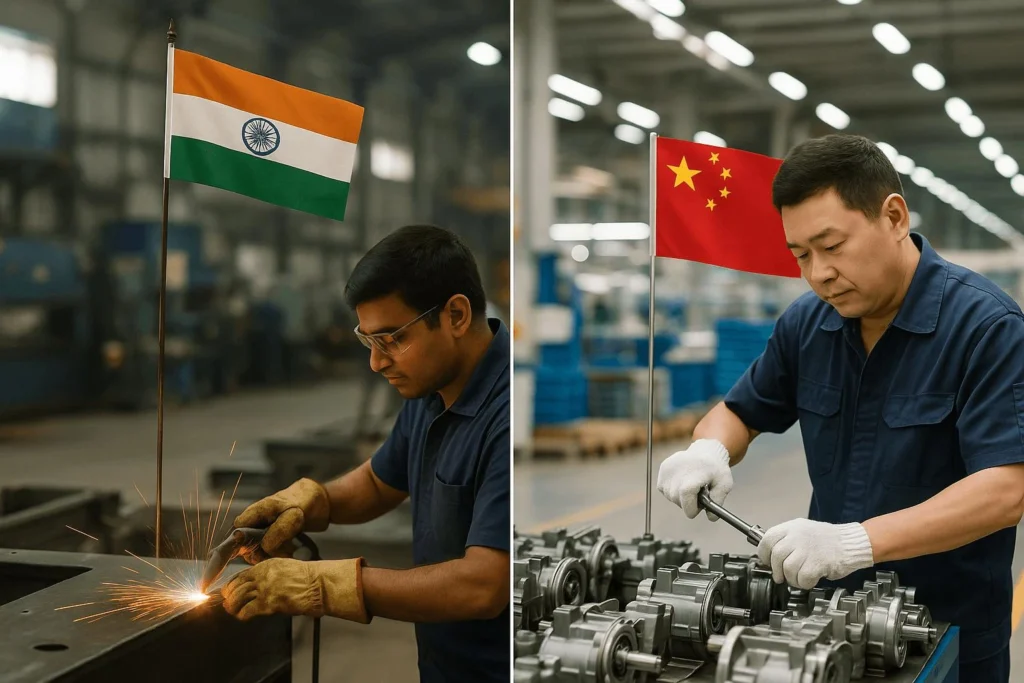
Experts argue that India’s long-term objective should be:
- Increasing value-added manufacturing.
- Expanding exports.
- Developing domestic component production.
- Improving supply-chain resilience.
Future Outlook
Looking ahead, economists expect bilateral trade to remain strong throughout 2026.
Key factors influencing future trade include:
- Global demand.
- Manufacturing growth.
- Semiconductor availability.
- Renewable energy investments.
- Exchange rate movements.
- Trade policy decisions.
If India’s export growth continues at the current pace while domestic manufacturing expands, the trade imbalance could gradually narrow over the coming years.
Conclusion
India’s imports from China reaching $80 billion in the first half of 2026, alongside a 37% rise in exports, underline the complexity of economic ties between the two neighboring nations. While the figures demonstrate robust industrial activity and growing export opportunities, they also highlight the continuing challenge of reducing the trade deficit and strengthening domestic manufacturing.
Government initiatives such as Make in India, PLI, and Atmanirbhar Bharat are expected to play a crucial role in increasing local production and enhancing India’s global competitiveness. As both economies continue to evolve, the focus will remain on achieving a more balanced and resilient trade relationship that supports long-term economic growth while reducing strategic dependencies. (The Economic Times)
Read More :- Global Signals Shape the Indian Rupee and Bond Market: Middle East Tensions and U.S. Policy Keep Investors on Edge